Travel & Culture
An Apgujeong Walking Day, Rachel-Style
My exact loop — three cafés, two vintage stops, one slow lunch, and the back-alley bench I always end up on.
I do this loop almost every trip. Not because it's the most ambitious thing you can do in Apgujeong — it's deliberately not — but because over four or five visits I've narrowed it down to the version that actually feels good. Slow lunch, low miles, a bench in the middle, a few stops for vintage if I'm in the mood. This is the walking day I'd plan if you texted me and said you had a free afternoon in Apgujeong and didn't want a checklist. Here it is.
Why Apgujeong, and not Garosu-gil or Cheongdam
I get asked this a lot. Garosu-gil is the place everyone goes first, and it deserves the attention — the cafes are concentrated, the street is one tree-lined corridor, easy to do in an afternoon. Cheongdam is the upscale shopping district north of the rest of Gangnam and it has its own moment for serious flagship watching. Apgujeong sits in between them, both geographically and in vibe. It's the neighborhood where Cheongdam's polish loosens up and Garosu-gil's youth softens down. The streets are wider than Garosu-gil and quieter than Cheongdam's main strip. You can walk for 15 minutes between cafe stops without it feeling like a slog, which is the magic ratio for me.
The other thing about Apgujeong is the back alleys. The main streets — Apgujeong-ro and the strip near the station — are fine but not where I spend my time. The real walking is on the side streets that run parallel and perpendicular to the main ones. Those are where the small patisseries are, the vintage shops, the cafes with three tables and one window. If you're doing Apgujeong from a guidebook you'll miss them. If you're doing my loop, they're the whole point.
Start: a 10 a.m. flat white at a corner cafe
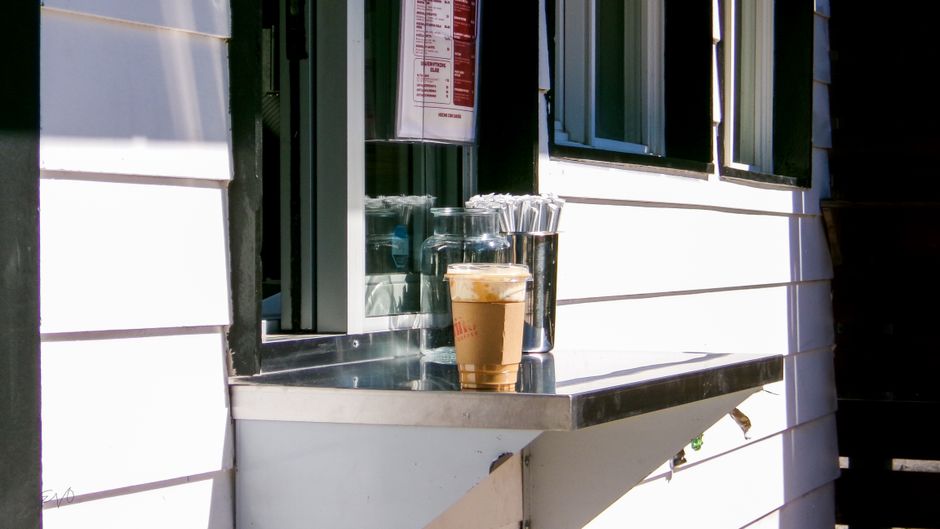
I always start the same way. I take a cab or the metro to Apgujeong Rodeo Station, walk five minutes south, and hit the first cafe stop around 10 a.m. The place changes — Apgujeong cafes have a brutal turnover rate, more on that later — but the criteria don't. I want a corner cafe with morning light, single-origin coffee available, and seats facing the window. The flat white in Korea is genuinely excellent, by the way. Korean specialty coffee has caught up to anywhere I've had it on the West Coast in the past five years. The roast is usually a little lighter than LA averages, which I like.
The move at this cafe is to not be on my phone. I'll bring a book. I'll bring a notebook. I'll watch the street wake up. The neighborhood doesn't really get going until 11, so there's a 45-minute window where you have prime corner seating and the staff is making the day's first pour-overs and the place feels like yours. This is the part of the loop I look forward to most. It's the slow-lunch ethos applied to the morning. If you're a 'maximize the day' person, you'll fight me on it. Fight me. The morning hour is the whole reason this day works.

Mid-morning: vintage, but only if you mean it
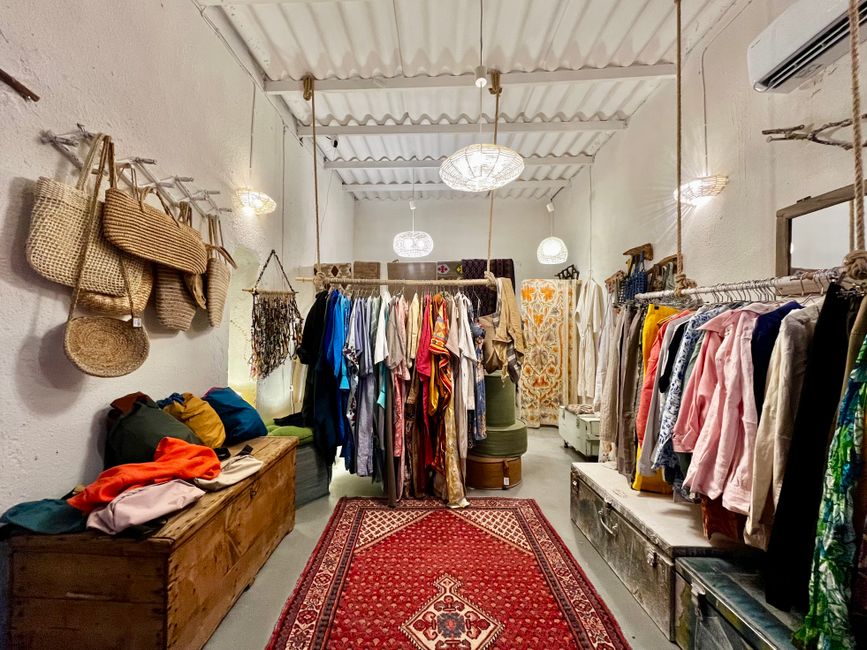
Around 11 I leave the cafe and walk north toward the vintage strip. Apgujeong has a vintage scene that I find more interesting than Garosu-gil's — less curated for Instagram, more for actual archive fashion. The shops cluster in a few small blocks north of Apgujeong-ro. I have two or three favorites I always loop through. The criteria: small shops where the owner is in the store, racks organized by decade or designer rather than just color, and at least one piece that makes me physically stop walking. If a shop fails on all three, I skip it.
A real-talk caveat: vintage in Apgujeong is not cheap. You're not getting LA-flea-market prices. You're getting Brooklyn-flagship-vintage prices for items that are often more interesting. Sample sale prices for archive Japanese and Korean designers run roughly $80-300 for shirts and dresses, more for outerwear. The advantage over NYC or LA vintage is the curation. The owners actually know what they have. They'll tell you the year and which collection. Asking questions is encouraged. I rarely buy more than one thing per trip — sometimes nothing — but the looking is part of the walk. If vintage isn't your thing, skip this section and add a stop at one of the bookshops on the same block instead.
Lunch: slow, single-counter, no rush
Lunch is the anchor. I aim for 12:45-1:00 p.m. so I miss the office rush and get a seat. My move in Apgujeong is a counter-style place — not a destination restaurant, not Korean BBQ, not anywhere with a wait. Solo-friendly. Probably 12-16 seats total. Either a really good handmade noodle place, a kalguksu spot, or an old-school Japanese teishoku set restaurant that's been there for 15+ years. Apgujeong has all three of those formats in abundance.
The rules for lunch on my walking day: I order the chef's recommended set without negotiating. I don't take photos for the first five minutes. I drink the included tea or barley water and not coffee. I let lunch take 50-60 minutes even if the meal itself only takes 25. This is where the day's pace gets set. If lunch becomes a 20-minute pit stop you've broken the loop. If lunch is the centerpiece you've done it right. The cost is also part of why this works — a counter-style Apgujeong lunch runs about $14-22, which is shockingly reasonable for the polish involved. You're getting careful food at a fraction of what the same care would cost in midtown Manhattan or Beverly Hills. That's part of what brings me back.

The bench in the middle
After lunch I always do the same thing. I walk for about 10 minutes and sit on a specific bench in a small plaza off one of the side streets. I'm not going to name the exact location — partly because I'm being precious about it and partly because the right bench for you will be different. The principle, though, is that there should be a 20-minute sitting break in the middle of an Apgujeong walking day. Pick a bench in a park, a stoop, a side-street seating area, a hotel lobby if you're shameless. Sit for 20 minutes. Drink water. Don't shop. Don't scroll.
The reason this part of the loop exists is that Apgujeong is more tiring than it looks. The walking miles are low but the visual density is high. Every shop window is loud. Every cafe has signage. The signage in the cafes inside also has signage. By 2 p.m., if you haven't sat down on purpose, you're going to start zoning out and not enjoying the rest of the afternoon. The bench break is the reset button. I learned this the hard way on my second trip when I tried to push through and ended up wandering into a department store at 3 p.m. just to sit on the demonstration couches in the furniture section. The bench is dignified. The couch was not.
Second café, this time matcha
Around 3:00-3:30 I do the second cafe of the day. This one is the dessert cafe. Apgujeong does pastry better than almost anywhere I've been outside of Paris, and that includes Tokyo. The patisseries here have the technical level of a Tokyo shop but with the willingness to play with Korean flavors that Tokyo mostly doesn't have. I'll get a matcha latte — green tea quality in Korea has gotten very good, by the way, comparable to what you'd pay $9 for in LA but here it's around $5-7 — and one small pastry. Single. Not three. Single.
What to look for at the second cafe: a place with seasonal pastries that change every few weeks. If the menu looks the same as it did six months ago when I last came, I'm probably in the wrong cafe. The Apgujeong pastry scene is competitive and the good places refresh their case constantly. I look for things I haven't seen before — citrus tart with seasonal Korean fruit, savory-leaning brioche, pâte à choux filled with whatever the chef found at the market that morning. If the case is full of generic croissants and cheesecake, I drink the latte and leave. There are too many good places to settle for a mediocre one. The location of this cafe also matters — I want a long table, soft lighting, and a window. Apgujeong cafes mostly understand this. The bar for cafe interior design here is genuinely intimidating.
End the loop: walk back, slow, no agenda
By 4:30 p.m. I'm done with the structured stops. The last hour of the loop is just walking back toward wherever I'm staying — usually southeast, toward the Sinsa or Apgujeong Station area — and not doing anything in particular. This is the part where I'll stop in a bookshop if I pass one, or duck into a small atelier-style boutique if the window catches my eye, or just walk slowly with no destination. Sometimes I detour over to the Dosan Park area for the tree-lined streets. Sometimes I just go back to the hotel and read for an hour before dinner.
The whole loop covers maybe 4-5 kilometers of actual walking over six hours, with most of that being sitting in cafes and lunching. The mileage isn't the point. The pacing is. Apgujeong walking days don't work as marathons. They work as a slow choreography of cafe → walk → vintage → walk → lunch → bench → cafe → walk. If you're a person who needs an itinerary, here's mine, but the better version is to take this as a structure and find your own corners. The neighborhood rewards repeat visits — half the cafes I rely on now were closed or different on my first trip. Things change. The structure of the day stays the same. That's how I keep finding it.
“The mileage isn't the point. The pacing is. Apgujeong walking days don't work as marathons — they work as a slow choreography.”
Rachel Bennett
Frequently asked questions
How long does this Apgujeong loop actually take?
About six hours, 10 a.m. to 4 p.m. — but most of that is sitting in cafes or eating lunch. The actual walking is maybe 4-5 kilometers over the whole day. The pacing is the point. If you try to compress it into three hours you'll just be tired and irritated. If you stretch it to eight hours you can absolutely fill the extra time with bookshops or a hotel-spa nap.
Is Apgujeong walkable in the summer?
Technically yes, but mid-June through August it's brutal — humidity in the high 80s and temperatures in the low 90s Fahrenheit are normal. If you're doing this loop in summer, start earlier (8:30-9 a.m. for the first cafe), do the outdoor walking before noon, and lean on cafes for the afternoon. October and April are the ideal months.
What if I don't drink coffee?
The two cafe stops still work. Korean cafes have excellent tea menus — single-origin matcha, hojicha, and increasingly good herbal options. Many places also do specialty drinks built around seasonal fruit. The first cafe stop is more about the ritual of sitting at a window for an hour than what's in the cup. Tea works perfectly.
Can I do this loop solo as a foreign woman?
Yes, easily. Apgujeong has very high foot traffic during the day, the cafes are full of solo customers (including locals), and the vintage shops and patisseries are accustomed to single visitors taking their time. I've done this loop solo on every trip and never felt out of place. The bench break works especially well solo — nobody bothers a person clearly enjoying their alone time on a bench.
How much should I budget for this day?
Roughly $55-90 USD if you skip vintage shopping — two cafe stops at $8-12 each, a counter-style lunch at $14-22, and a second cafe with pastry at $12-18. Add metro fare round trip for about $3. Vintage can blow the budget in either direction depending on what you find. The base loop is intentionally affordable.
Where else should I look on this site for Gangnam walking content?
I have a few. My <a href="/dosan-park-loop-i-do-every-trip/">Dosan Park loop</a> piece overlaps geographically with this one. The <a href="/best-cafes-near-my-clinic/">cafes near my clinic</a> roundup goes deeper on individual cafes. For the bigger context on the neighborhood, <a href="/cheongdam-its-not-a-mood-its-a-zip-code/">Cheongdam decoded</a> covers the area just north of where this loop happens. For broader Seoul travel info the <a href="https://english.visitkorea.or.kr/svc/main/index.do" rel="dofollow">Visit Korea</a> portal has the official basics.
Is Apgujeong safer for late-evening walking too?
Apgujeong stays well-trafficked until late, and the side streets near the station are well-lit through midnight. I've walked the back alleys around 10-11 p.m. on most trips and found them lower-key than the same streets at 4 p.m. — fewer people, but the cafes and small bars are still open and the area never feels deserted. I wouldn't hesitate to do a slightly modified evening version of this loop.