Editorial Picks
5 Omakase Counters Worth the Splurge in Gangnam
Four trips in, this is the shortlist I send friends when they ask which dinner is actually worth the money in Cheongdam and Apgujeong.
Okay, an honest confession before I get into this. I am not a sushi person back home. In LA I will happily eat a $14 spicy tuna roll at the strip-mall place near my apartment and call it dinner. I do not have a chef I follow. I cannot tell you which fishing port the rice comes from. And then I came to Seoul, sat at a hinoki counter in Cheongdam on a Wednesday night, and watched a man push a single piece of marbled bluefin across a wooden bar toward me with both hands, and something rearranged in my brain. This is the list I have been writing in my notes app across four Gangnam trips. Four omakase counters — Edomae nigiri programs, all in or one step down from the destination-tier — plus one three-MICHELIN-star modern Korean tasting menu I refuse to leave off because it belongs in the same category of meal. I am calling them Featured A through E rather than ranking them, because the right one depends on how much you want to spend, how far in advance you can book, and how tolerant you are of a meal that takes three hours from first bite to last sip of tea. None of these are sponsored. All of these I have either eaten at, or watched a friend eat at while I asked them to text me the bill. Splurge dinners in Seoul are still 30 to 50 percent cheaper than the LA equivalents, which is the only reason I can afford to write a list like this in the first place. Let us get into it.
How I built this shortlist — and what I cut
A Gangnam splurge-dinner list is not a best-of-Seoul restaurant list. The criteria are narrower than I expected on trip one and a little more opinionated than I expected on trip four. What stayed on the list passes four rules. The room has to be in Gangnam-gu specifically — Cheongdam, Apgujeong, Garosu-gil-adjacent Sinsa, or the Gangnam-Station core — because the whole point of a Gangnam stay is that you can walk back to your hotel without negotiating a 45-minute Kakao Taxi after wine. The chef has to run a real counter or tasting program with a known kitchen, not a hotel buffet wearing an omakase costume. The bill has to land somewhere between roughly $110 USD per person at the entry end and about $370 USD per person at the destination end, with all five firmly in splurge territory and none of them what I would call casual. And, the rule I added on trip three: the room has to actually feel like the kind of place you would tell a friend back in LA about, not just deliver the food. A Michelin star is not a requirement and not a disqualifier; two of these have stars, two are mid-premium Edomae counters that are essentially-uncited by the guide, and the last is a three-MICHELIN-star modern Korean tasting that lives one category over from sushi but earns its place because of how seasonal and Edomae-precise the technique is in service of a different cuisine. What did I cut? Pierre Gagnaire Seoul — I keep being asked about it, but it lost its star and I have not been back to confirm the room. Mosu Seoul — currently two stars rather than three, and while it is excellent, the three-star tier shifted to Mingles in the most recent guide so that is where this list points. The Korean BBQ palaces (Samwon Garden, Byeokje Galbi) — different category, different list, different night. Hotel restaurants in general — I have nothing against them, but for a once-a-trip splurge I want a room where the chef is twelve feet away. Now: the five.
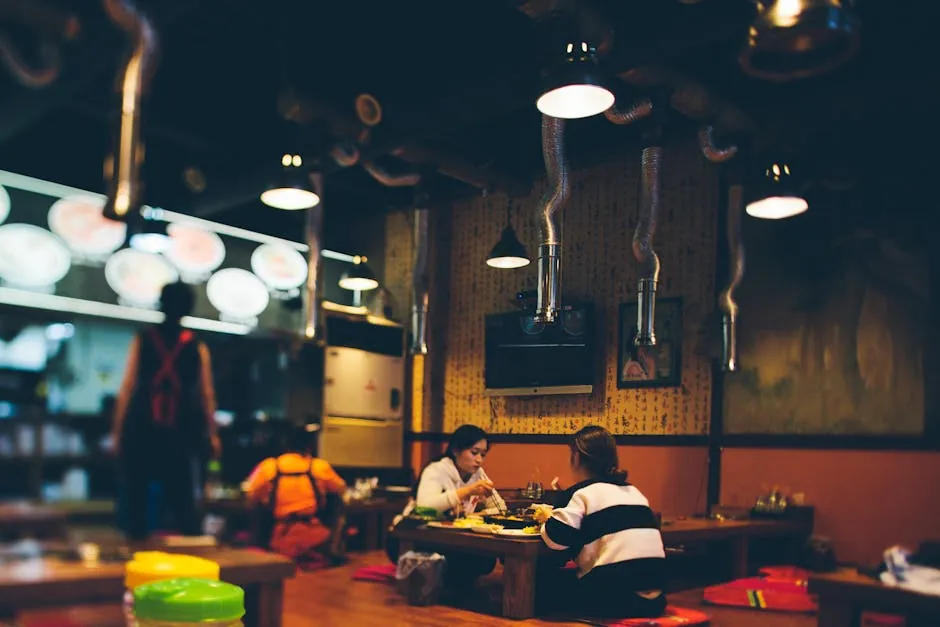
Featured A — Kojima (Cheongdam)
This is the destination meal. Kojima sits on the sixth floor of the Boon the Shop Cheongdam A building — yes, the same Cheongdam luxury retail complex you walked past on day one of your trip wondering whether you were allowed inside — and it is widely recognized as the only Japanese restaurant in Korea currently holding two MICHELIN stars in the 2025-2026 guide. The room is an eight-seat hinoki counter, two seatings per dinner service, and that is the entire experience. Chef Kim Woo-tae works in front of you for the duration of the meal, his back rarely turning, and the omakase runs Edomae nigiri sequencing with Korean wild seafood worked in across the season. Pricing for the omakase lands in the KRW 350,000 to 500,000-plus range per person, or roughly $250 to $370 USD at current rates. Reservations open about four to six weeks out and the dinner seats book out almost immediately when the window opens; lunch is slightly easier but still requires planning. The address is 21 Apgujeong-ro 60-gil in Gangnam-gu, with phone reservations at +82-2-516-3252, and the service is in English-comfortable Korean — the staff handle visiting diners regularly without it being a production. The room itself reads more restrained than the price tag suggests. Pale wood, low lighting, very little decoration besides the counter and a small flower arrangement. Nothing about the space is showing off. The food is the show. Wild domestic flounder cured for a precise number of hours. Tuna with three different levels of fat across three sequential pieces. A hand roll near the end that I described to my mom in a text afterward as 'the single bite that I think about most when I am not in Seoul.' This is the splurge of the trip. I have done it twice across four visits — once with a friend I had not seen in six years, once solo on a quiet trip — and both times I left the room slightly altered, which is not a sentence I write often. If you have one splurge dinner in you on a Gangnam stay, this is where I would put it. Bring a friend, plan around the booking window, and budget accordingly. You can read about <a href="https://guide.michelin.com/en/seoul-capital-area/kr-seoul/restaurant/kojima" rel="dofollow">Kojima's MICHELIN listing</a> for the official write-up if you want the citation.
Featured B — Sushi Motoi (Cheongdam)
If Kojima is the destination meal, Motoi is the version of the experience I recommend more often. The counter is in Cheongdam at 27-10 Seolleung-ro 146-gil, a few blocks from the gallery cluster, and the price comes in noticeably below Kojima while keeping the Edomae omakase format intact. Dinner is in the KRW 200,000 to 350,000 range per person, which translates to roughly $145 to $250 USD — still firmly splurge, but more like an anniversary splurge than a destination splurge. The room is small, the counter is set up in the traditional Japanese-restaurant orientation with the chef facing the diners, and the dinner service runs from 18:00 to about 22:00 with lunch from 12:00 to 14:30. Booking is by phone at +82-2-3445-0024, which I recommend doing through your hotel concierge if your Korean is rusty, and reservations open about three to four weeks ahead. Motoi is one of the longer-established premium Cheongdam counters, which is the polite way of saying the chef has been pulling the same Edomae technique with the same focus for long enough that the meal has a kind of inevitability about it — there is nothing to prove anymore, which makes the room feel different than the newer counters that opened in the post-Kojima wave. Service is in limited English; valet parking is straightforward; the dress code is what I would call 'nice restaurant in any city' rather than 'fashion show.' The seafood program leans wild and seasonal in the same way Kojima does, with slightly less of the destination-tier sourcing and slightly more of the technique-first execution. I would describe the meal as 'the room you take your mother to.' Quiet. Confident. Soft tea at the end. No music to speak of. The Edomae sequence runs at the speed it should run at, and by the end you have spent two-and-a-half hours at a counter without ever wanting to check your phone. This is the room I send people to when they tell me they want the omakase experience but they are not, in their words, ready to spend $370 on dinner. Reasonable. Motoi is the answer.
Featured C — Sushi Hanare (Apgujeong)
Hanare is the small-counter Apgujeong choice on this list, sitting at 75 Apgujeong-ro 30-gil — a short walk from the main Rodeo strip — and I think of it as the omakase room I would go to if I were already in the neighborhood for some other reason and wanted a destination-feeling dinner without crossing into Cheongdam. The price runs KRW 250,000 to 350,000 per person at dinner, or roughly $180 to $250 USD, putting it firmly in the same upper-mid tier as Motoi but with a different room personality. The chef program emphasizes a traditional Edomae nigiri sequence over showpiece presentations — no theatrical garnish work, no plated compositions, just the sequence done well. The counter seats are small and the room is intimate enough that the meal feels close to the chef without quite reaching Kojima's eight-seat compression. Service runs from noon to 14:30 for lunch and 18:00 to 22:00 for dinner daily, with reservations by phone at +82-2-540-7720. English support is limited; Japanese is spoken at the counter, and the staff will work with you in slow Korean if you arrive without either. The Apgujeong location is the practical reason I put this on the list. If you are staying in the Sinsa-Apgujeong-Rodeo corridor — which most Gangnam-staying visitors are — Hanare is the closest of the four omakase rooms by walking distance, and on a trip where I have already burned my one-cab-ride-after-dinner budget on a separate evening, the proximity matters. The food sits comfortably in the Edomae nigiri tradition rather than reaching for the destination-omakase tier; what you are buying is precision and a quiet room, not a showpiece. I have eaten here twice and would happily go back a third time. It is the unfussy choice on the list, which is exactly why I keep it on the list.
Featured D — Sushi Koji (Gangnam Station / Yeoksam)
Koji is the entry-tier omakase room on this list and the one I send people to on their first Gangnam trip when they want to try omakase but they are still mentally adjusting to the idea of a counter dinner costing more than their hotel night. The location is in the Gangnam Station / Yeoksam core rather than out in Cheongdam, which makes it the most accessible of the five on this list for visitors staying near the Gangnam Station hotel cluster. Pricing runs KRW 150,000 to 250,000 per person, or roughly $110 to $180 USD, and the seating is open daily from 12:00 to 14:30 and 18:00 to 22:30. Reservations open one to two weeks ahead and route through AutoReserve or NaverPlace rather than direct phone, which is a friendlier system for English-only visitors than the destination counters. The menu is what I would describe as 'mid-premium with rotation' — seasonal Korean and Japanese seafood, a counter that does not pretend to be Kojima, and a price-per-piece structure that lets you feel the technique without feeling the destination markup. The English menu makes ordering accessible, the staff handle visiting diners frequently, and the room is sized for first-time omakase eaters who want the experience without committing to a four-week booking window. This is the room I would send a friend to on day two of their first Gangnam trip — the one where they are still figuring out the neighborhood, jet-lagged, and looking for a sit-down dinner that is a step above casual without being a 350,000-won leap. It is also a useful room for a group of three or four who want to do omakase together — most of the destination counters seat in twos, and the smaller-counter rooms get awkward at four people. Koji handles it without the math problem.
Featured E — Mingles (Cheongdam)
Mingles is the category bend on this list — modern Korean fine dining rather than sushi — but I keep refusing to leave it off, because if we are talking about Gangnam splurge dinners that earn the spend, Mingles is the room that earns it most clearly. Chef Mingoo Kang opened the restaurant in 2014 and built its reputation on Korean fermentation, jang, and seasonal craft, and in the 2025-2026 MICHELIN Seoul and Busan guide it is the only restaurant in the city holding three MICHELIN stars. The address is 2F, 19 Dosan-daero 67-gil in Gangnam-gu, with phone reservations at +82-2-515-7306 and direct booking through restaurant-mingles.com strongly advised because the website holds slots that do not appear on the third-party platforms. Pricing for the tasting runs KRW 350,000 to 500,000-plus per person, which translates to roughly $250 to $370 USD — same splurge band as Kojima — and the meal runs about three hours from amuse-bouche to the famous jang trio aged-pastes course near the close. Service is Tuesday through Saturday, lunch from 12:00 to 15:00 and dinner from 18:00 to 22:00, closed Sunday and Monday. Why is it on a list dominated by sushi counters? Because the technique is the same kind of technique — seasonal sourcing, Edomae-precise execution applied to a different cuisine, a counter-adjacent dining-room arrangement where you can watch the kitchen work — and the experience of eating a meal at Mingles delivers the same neurological reset as the meal at Kojima. Different ingredients, different palette, identical category of moment. Reservations open weeks ahead and book out almost immediately, particularly for the Saturday dinner service. English menus and full English-speaking service are standard. The room itself is more contemporary-Korean restrained than I had expected on my first visit — pale wood, soft lighting, careful ceramics — and the tasting moves at a deliberate pace that gives each course room to land. I will not pretend I have it figured out. I have eaten here once. The single visit got me onto the booking list for the next trip, and I have been refreshing my calendar for that one since the day I left. If you want the broader Seoul food context, <a href="https://english.visitkorea.or.kr/enu/FOD/FO_EN_6_4_4.jsp?cid=2478892" rel="dofollow">VisitKorea's restaurant directory</a> is a useful starting point for the city's editorial-side dining picks.
Quick-glance comparison — price, room, booking, best for
A short comparison if you want the whole list at a glance. Price band is the single biggest variable, followed by how far ahead you have to book.
| Featured | Style | Price per person | Booking lead time | Best for |
|---|---|---|---|---|
| Featured A — Kojima | Edomae omakase, 8 seats | KRW 350-500K+ (~$250-370 USD) | 4-6 weeks ahead | Destination splurge of the trip |
| Featured B — Sushi Motoi | Edomae omakase, Cheongdam | KRW 200-350K (~$145-250 USD) | 3-4 weeks ahead | Anniversary-tier splurge, quieter room |
| Featured C — Sushi Hanare | Edomae nigiri, small counter | KRW 250-350K (~$180-250 USD) | 2-3 weeks ahead | Already-in-Apgujeong splurge night |
| Featured D — Sushi Koji | Mid-premium omakase | KRW 150-250K (~$110-180 USD) | 1-2 weeks ahead | First omakase, group of 3-4 |
| Featured E — Mingles | Modern Korean tasting, 3 stars | KRW 350-500K+ (~$250-370 USD) | 4-6 weeks ahead | The room that earns the spend |
How I sequence these across a real trip
If you only get one piece of advice from this whole post, take this one: you do not need all five on a single trip. You do not even need two on a single trip. A splurge dinner is a one-evening event that should anchor the rest of the week, not compete with three other splurge evenings for the same attention. On a five-night Gangnam stay I will typically book one of these as the centerpiece of the trip — usually around night three, when jet lag has settled and I have already done the casual nights — and build the rest of the week around it. If it is my first Gangnam trip in a year, I will pick either Kojima or Mingles and accept the price tag. If I have been back recently and the centerpiece-meal slot is filled by something else, I will pick Motoi or Hanare and treat it as the well-executed mid-luxury option. Koji is the trip-two or first-omakase pick rather than the centerpiece. The other four are rotation for the next trip, the next season, the version of this list where I want the room I have not seen in a while. A practical scheduling note. The destination omakase counters open their booking windows at predictable intervals — usually four to six weeks ahead of a given evening — and the Friday and Saturday dinner slots fill the fastest. If your travel dates are flexible by a day or two, target a Wednesday or Thursday dinner, which is when the regulars from out of town tend not to be in Seoul and the room is genuinely easier to get into. If you are traveling for a treatment trip, plan the splurge dinner for treatment-plus-two or treatment-plus-three, when any minor swelling has settled and you are ready to be in a public room for three hours without thinking about your face. I have eaten through several of these splurge nights on a treatment-plus-two timeline and the food has never been the variable; it has always been the room temperature, the lighting, and how long you can comfortably hold a chopstick. All five of these rooms pass that test. Treatment timing is the variable, not the meal. A separate note on what to drink. The destination counters typically pair sake or a small wine program with the omakase rather than offering a full cellar, and I would strongly recommend defaulting to the pairing on a first visit — the chefs have thought through the sequence and the cost adds roughly KRW 80,000 to 150,000 per person depending on the room. On Mingles the wine program is more developed and you can either pair or order by the glass; the pairing is the easier choice on a first visit. I will not write more about sake here than that, because frankly I am still learning the category and the post would get long. For broader Seoul food-tourism context the <a href="https://www.theworlds50best.com/discovery/Establishments/South-Korea/Seoul/Kojima.html" rel="dofollow">World's 50 Best discovery page</a> for Korea is a useful third reference.
What I cut, and why — the honest section
A few rooms I keep being asked about that did not make this five. Pierre Gagnaire Seoul, hosted at the Lotte Hotel — I do not have a current star count to point to and the room has shifted programs since my last meal there, so I am holding off on a recommendation until I can sit at the counter again in the next trip. Mosu Seoul — currently a two-MICHELIN-star room rather than three, which makes it excellent but moves it one tier below Mingles for the specific 'splurge of the trip' slot this list is structured around. I would happily eat at Mosu and have recommended it to friends; it just sits one notch outside this five. Jungsik Seoul, the two-MICHELIN-star modern Korean room in Cheongdam — this is a perfectly good alternative pick if you cannot get into Mingles, and the New Korean fine-dining program is well-regarded; the reason it is not on the five is that the Mingles slot is structured around the three-star tier and adding both Korean fine-dining rooms would skew the list off the omakase center. Gaon, the third of the contemporary Korean fine-dining trio — same logic. The Korean BBQ palaces — Samwon Garden, Byeokje Galbi, and the other premium hanwoo houses — these are excellent and belong on a different list, the one about Gangnam barbecue nights rather than counter dinners. I have a separate note on those for a future post. Hotel buffet brunches — not a splurge dinner, not on this list, not coming. The basement-tier omakase rooms with the 80,000-won lunches — these are great value and I love them but they are not splurge dinners by any working definition, so they sit one category over. I tried to be honest about the cuts because a five-restaurant list is a small set and the omissions matter. If you want a longer breakdown of how I sequence a Gangnam trip in general — including which meals get the splurge slot, which ones get the casual slot, and how the cafes fit between — see my <a href="/best-gangnam-hidden-walks/">hidden walks post</a> and the broader <a href="/why-i-keep-flying-back-to-seoul/">Seoul return-trip essay</a> for the full frame. There is also a separate piece on what I eat the day after a splurge dinner, when my stomach is recalibrating and my wallet is recovering, that I keep meaning to expand into its own post.
The non-obvious part — why splurge dinners are part of the Gangnam frame
Here is the part I did not understand until trip three. A Gangnam trip is not really about any single restaurant. It is about the way a neighborhood organizes itself around the rhythm of a five-night stay — hotel, cafe, walk, appointment, cafe, walk, dinner, cafe, walk, bed — and the splurge dinner is the structural pin that holds the rest of the week in shape. Without it, the trip starts to feel like a sequence of unrelated meals. With one well-chosen splurge night sometime around night three, the rest of the week reads as 'the days before' and 'the days after,' which is a much more pleasant trip to be on. I think this is actually the reason these meals translate the way they do, even at the destination-tier price tags. You are not just paying for the food, although the food is excellent. You are paying for the architectural pin in the middle of your week. Kojima at 250,000 to 500,000 won pins a five-night Cheongdam trip around it. Mingles at the same price tier pins a five-night Sinsa or Apgujeong trip around it. Motoi and Hanare pin slightly less expensive trips around themselves. Koji pins a less ambitious trip with a different center of gravity. The food is the same food, but the function of the meal is different from a casual dinner because of where it sits in the week. This is why I am willing to spend more on one Gangnam dinner than I would on any single dinner in LA, even adjusting for the exchange rate. The dinner is doing more than feeding me. It is structuring the trip. After four Gangnam visits I have stopped fighting this. The splurge night is the point of the trip in some quiet way, and the rest of the week — the cafes, the walks, the appointments, the small daily pleasures — gets to feel like a slow approach and a slow departure from that one evening. If that sounds extravagant, fine. I am extravagant about exactly one dinner per trip. The rest of the week balances itself out.
Frequently asked questions
Do I need to book a Gangnam omakase counter weeks in advance, or can I walk in?
All five rooms on this list require advance booking. Kojima and Mingles open windows about four to six weeks ahead and fill almost immediately for Friday and Saturday dinners; Motoi and Hanare run on three to four weeks; Koji is the most accessible at one to two weeks via AutoReserve or NaverPlace. Walk-ins are not a meaningful option at any of them. If your dates are flexible, target a Wednesday or Thursday dinner — the regulars from out of town tend not to be in Seoul mid-week and the rooms are genuinely easier to get into.
How much do these dinners actually cost in USD?
Destination-tier (Kojima, Mingles) runs roughly $250 to $370 USD per person for the tasting before wine pairing. Upper-mid (Motoi, Hanare) runs $145 to $250 USD per person. Entry-tier (Koji) runs $110 to $180 USD per person. Wine or sake pairings add another $60 to $110 USD per person at the destination rooms and slightly less at the mid-premium counters. Service charge and tax are typically included in the menu price in Korea; tipping is not customary and would be politely refused.
Are these rooms English-friendly for a first-time visitor from the US?
Mingles has full English menus and English-speaking service end-to-end. Kojima and Koji are comfortable in English even though the primary service is Korean and Japanese, and both handle visiting diners frequently. Motoi and Hanare run on limited English with Japanese spoken at the counter — pointing, slow Korean, and a translation app will get you through, and the staff are patient with the language gap. If your Korean is rusty, book Mingles or Kojima first; for the mid-premium counters, having a hotel concierge confirm the booking on your behalf solves the phone-call problem cleanly.
What should I wear to a Gangnam omakase counter?
Smart casual is the safest read across all five rooms. Mingles and Kojima skew slightly more formal — a collared shirt and clean shoes, a dress or jumpsuit, the kind of outfit you would wear to a nice anniversary dinner in any major city. Motoi, Hanare, and Koji are smart casual without being overdressed-friendly. Nobody requires a jacket. Sneakers are fine if they are clean; flip-flops and beach shorts are not. The rooms read more like quiet hotel restaurants than fashion-show settings, so under-dressing slightly is a smaller mistake than over-dressing.
Can I take photos at the counter?
Photos of the food are fine at all five rooms, but the etiquette is to keep them quick and unflash. No staged spreads, no flash, no asking the chef to pause the next piece while you adjust the lighting. Photos of the chef working are usually fine but ask first at Kojima and Motoi where the counter is small enough that the chef's posture matters to the pacing of the meal. Mingles is the most photo-friendly of the five for room and food shots; the small Edomae counters are the most reserved. When in doubt, eat the piece first, then decide if you still want the photo.
What if I am visiting Gangnam in winter — are these dinners still worth it?
Winter is actually one of the better seasons for premium omakase in Seoul. Cold-water fish quality peaks from late autumn through early spring, the cured fish programs are at their strongest, and the rooms — all small, all interior, all heated — feel warmer and more sheltering than they do in summer. Mingles in particular has a winter tasting that leans into Korean fermentation and aged jang trios at their seasonal peak. The only thing I would adjust in winter is the walk back to the hotel — most of these rooms are in Cheongdam and Apgujeong, both walkable from a Sinsa or Apgujeong-area hotel in good weather, but in deep January I will take a five-thousand-won Kakao Taxi rather than walk a 12-minute distance in single-digit Celsius.
Is it weird to do a splurge omakase dinner alone in Seoul?
Not at all. Solo omakase is a normal cultural pattern at Korean and Japanese counters and all five of these rooms seat solo diners comfortably. Kojima and Motoi are particularly solo-friendly because the eight-seat and small-counter formats make a single seat at the counter feel like the intended unit rather than an awkward fit. I have done Kojima solo on a quiet trip and would happily repeat it. Mingles handles solo diners well at the bar-adjacent seating; the formal dining-room tables work better for two or more. Bring a notebook or a book if eating alone feels strange; nobody at the counter will think anything of it.
How do I sequence one of these dinners around a Gangnam treatment day?
Book the splurge dinner for treatment-plus-two or treatment-plus-three at the earliest, never treatment-day-zero. Any minor swelling, sensitivity, or dietary restriction post-treatment has resolved by day two for most non-invasive aesthetic treatments. Avoid wine pairings for the first 24 hours after Ultherapy or laser sessions, and skip the spicier seasonal pickles and the very-cold-water-fish bites if your skin is still slightly reactive. By treatment-plus-three I am back to ordering the full pairing and have never regretted it. The rooms themselves are gentle on a post-treatment face — soft lighting at Kojima, Motoi, Mingles; counter-level intimacy that does not require facing a crowded dining room. The food is precise enough that the texture and temperature of each piece is intentional, which is exactly what you want on a recovery day.