Editorial Picks
10 Gangnam Cafés With Soft Lighting (For Post-Treatment Days)
Ten café categories I rotate through on Gangnam recovery days — soft light, low ceilings, quiet seats, and rooms that do not ask anything of your face.
Lighting is the one thing I underrated about Gangnam cafés on my first two trips. I used to choose them by coffee, by Naver score, by whichever Instagram corner was getting tagged that week. Then I started getting Ultherapy and skin lasers in this neighborhood, and the lighting in a room became the most important variable in the entire café equation. After a treatment my face is mildly flushed and slightly tender for two to four hours, and a brightly lit, white-tile, ring-light-friendly room is genuinely uncomfortable to sit in. Soft lighting, on the other hand, is restorative — warm pendants, low ceilings, a window with a sheer curtain, the kind of room my dermatologist's office in Beverly Hills wishes it were. These ten café categories are the working rotation I have settled on across four trips. None of these are sponsored. Two of them are not on any English-language list I have ever seen.
How I built this list — and what I left off
A soft-lighting café list is not a best-of-Gangnam café list. The criteria are narrower and a little odd. I had to leave off cafés I genuinely love — the all-white concept space near Cheongdam, the floor-to-ceiling-windowed bakery on Garosu-gil, the rooftop on the Apgujeong Rodeo side with the harsh afternoon sun — because none of them belong on a face-just-finished-treatment day. What stayed on the list passes four rules: warm or low-Kelvin lighting (think 2700K to 3000K, which is the temperature of a hotel-room lamp rather than a hospital corridor), some form of soft seating (upholstered bench, fabric chair, or padded banquette — not bare concrete or wire-mesh stool), within roughly a fifteen-minute walk of the Sinsa, Apgujeong Rodeo, or Yeoksam clinic strip, and a room volume that lets you sit for an hour without anyone hovering. I also weighted toward rooms with two qualities I now know matter more than I originally thought. The first is window placement — a north-facing window or a window with a sheer curtain or paper diffuser is gentler on a flushed face than direct south-facing afternoon sun, no matter how good the rest of the room is. The second is the ceiling. Low-ceiling cafés in Seoul are usually retrofitted ground-floor or basement spaces in older mixed-use buildings, and the lower ceilings reflect light differently than the high-ceiling concept spaces favored by Garosu-gil photographers. The light bounces shorter, the room feels more enclosed, and a tender face reads less in a smaller room. These ten are listed in roughly the order I rotate through them — morning to evening, plus a couple of seasonal swap-ins — not in any kind of ranking. Categorical, not ranked. Editorial picks, not a leaderboard.
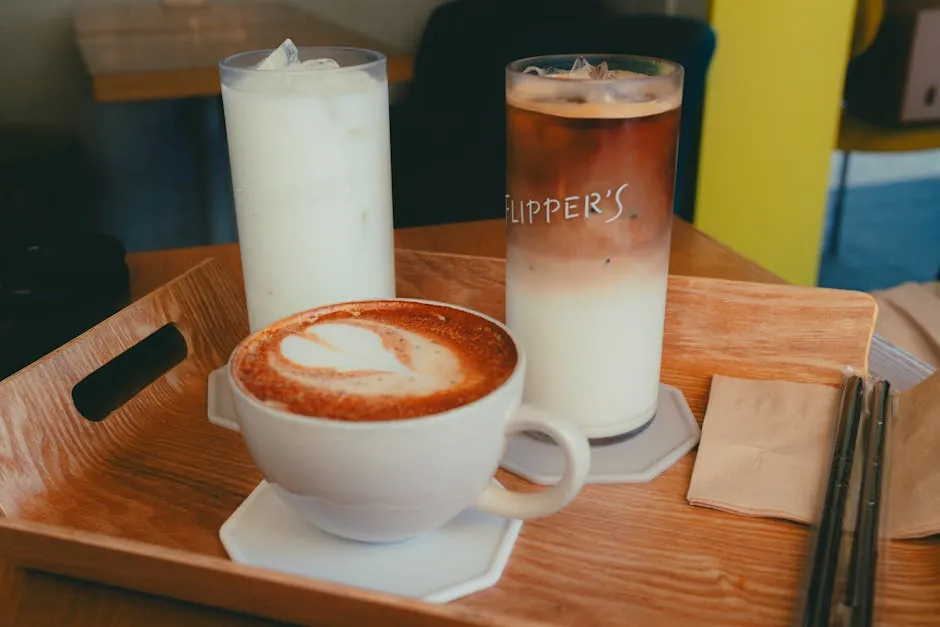
The basement Japanese-style coffee bar with the paper-shade pendants
This is the one I default to in the late morning. It is a sub-ground-floor space about an eight-minute walk from the Sinsa side of the medical strip — down a small flight of concrete stairs from a side alley, with a hand-lettered wood sign you would walk past three times before noticing. The room is maybe twenty seats, a long pour-over bar facing two slow-moving baristas, and a half-dozen washi-paper pendant lamps hung at staggered heights. The light is the color of a hotel reading lamp at 9 p.m. — warm, diffuse, not aggressive. The walls are dark wood, the floor is darker concrete, and the entire room exists at maybe forty percent of the brightness of a normal Seoul café. I come here on the morning of a treatment day, before my appointment, when I want a real pour-over and a quiet hour to myself. The hand-drip Ethiopian is 8,500 KRW, the iced Americano 6,500 KRW, and the small almond financier they sell from a glass case under the counter is 4,000 KRW and one of the better baked goods on this side of the river. The baristas play almost no music — a low jazz guitar loop on a vintage speaker, mostly silence and the sound of the kettle. I have written half my Seoul trip-recap drafts from a corner stool here, and I have never once felt rushed. A technical note worth flagging. The paper-shade pendants are the reason this room works for a flushed-face afternoon, not just a cozy morning. The paper diffuses any direct light source so nothing in the room casts a harsh shadow on your face — useful both because nobody is going to study your slight redness across the room, and because the light around you stops feeling like an interrogation. After a treatment I do not always want to sit at home, but I also do not want to sit under recessed white spots. This is the room that solves both.
The second-floor tea house with the curtain-filtered north windows
Tea houses are a category I started taking seriously on my third trip, and this one is the example I send everyone to. It is on the second floor of a small building near Apgujeong Rodeo, with a long wall of north-facing windows hung with thin off-white linen curtains. The light that comes through is even and grey-white in the morning, gold-touched in the late afternoon, and at no point does it cast directly onto any of the seating. The room is wide rather than deep — maybe thirty seats split between low tatami-style platforms and a few western tables along the back wall — and the average noise level is what you would call library-adjacent. The menu is nearly all tea — single-origin Korean greens, a couple of aged hojicha-style roasted greens, four or five seasonal flowers and herbs like chrysanthemum and mugwort, plus a short list of milky tea lattes for the days you want something heavier. A pot of single-origin green is 9,000 to 14,000 KRW depending on the leaf, refillable with hot water two or three times. The food menu is small and gentle: a mochi plate with red-bean filling, a soft sponge cake, and a seasonal jelly. Nothing on the menu would be hard to eat through a tender jaw. I come here in the early afternoon, after a morning treatment, with a notebook and a pot of hojicha. The combination of the warm tea, the diffused window light, and the quiet has a small structural effect on my heart rate. There is also a cultural note that took me embarrassingly long to absorb: Korean tea culture is closer to Japanese tea ceremony than to a British afternoon-tea register, and the pacing reflects that. You are expected to sit with a single pot for an hour or two. Nobody will bring you a check or a polite reminder. The whole thing is sized for the kind of recovery day where slowing down is the point.
The wood-paneled neighborhood roastery with the warm bulbs
This is the one I send Korean friends to, which is a different recommendation than the one I send California friends to. It is a small roastery about a ten-minute walk from the medical strip, on a residential alley parallel to one of the busier streets, with the entire interior paneled in a warm honey-toned oak. The light fixtures are exposed-bulb pendants in soft amber — closer to candlelight than to LED — and the bulb temperature is genuinely the lowest of any café on this list. At dusk the room glows orange-gold like a 1970s living room. After 4 p.m. it is the most atmospheric room in this part of Gangnam. A pour-over of their house roast is 7,500 KRW, the seasonal single-origin 9,500 KRW, and the espresso is one of the better extractions I have had in Seoul — pulled by a head barista who has been at the same machine for, I am told, eleven years. The food situation is intentional: one or two pastries baked by a partner shop down the street, no actual kitchen on premises. The whole operation is sized for coffee, conversation, and a quiet hour rather than for full-on lunch. That suits a recovery day fine. I come here on the late afternoon of a treatment day, when the light outside is starting to soften and I want to extend the day a little before going back to the hotel. The amber bulbs make even a slightly flushed face read warmer rather than redder, which is an optical trick I have come to appreciate. The seating is mostly small two-person tables with simple wood chairs and a pair of leather armchairs in the back corner that are first-come, first-claimed. I have read entire magazines from those armchairs over a single pour-over and a slow conversation with a friend. Nobody once asked me to order a second drink.
The bookstore café with the reading-lamp tables
Bookstore cafés are a small category in Gangnam — most of the photogenic ones live in Seongsu or Hannam — but the one I rely on is a quiet exception. It is about twelve minutes from the Sinsa clinic strip, on the second floor of an older mixed-use building, with shelves running along three walls and a row of long communal reading tables down the center. Each table has individual brass reading lamps every two seats, with warm-amber bulbs the staff turn on as the natural light fades from the high north window. The combined effect is a room lit at roughly hotel-restaurant levels — soft, even, and almost theatrically intimate after dark. The coffee is genuinely competent rather than special — a clean, predictable Americano at 6,000 KRW, a fine drip pour at 7,500, and a small but careful list of teas. The food list is intentionally short: cheesecake, a dense chocolate cake, two seasonal cookies. I usually skip the food and bring my own milk-bread roll from a bakery on the way over, which the staff have never minded as long as I order a drink. The library-style tables are unspoken-rule WiFi work zones, and I have logged three- and four-hour writing sessions there without anyone asking me to leave. A small note about the lamps. Each desk lamp is a separately-switched brass library fixture, not a cool-white LED swap-in, and the bulbs are the kind of low-Kelvin filament you would put on a bedside table at home. After a treatment, when fluorescent overhead lighting feels actively bad, those individual desk lamps are the gentlest reading light I have found in any working café in this part of Seoul. I have started planning my late-afternoons here on treatment days specifically because the lamps bring the room temperature, in the literal Kelvin sense, down to something my skin tolerates well.
The hotel-lobby café annex on the south side
Hotel lobby cafés are an underrated category in Gangnam, and the one I keep returning to is the lobby-annex space attached to a mid-luxury hotel about nine minutes' walk from the southern edge of the clinic strip. It is technically a café, technically a lounge, technically a lobby — the boundaries are deliberately blurry — and the lighting is the soft, even, hotel-standard 2700K mix you would find in a well-designed hospitality space anywhere from Kyoto to Mexico City. A wall of recessed cove lighting along the ceiling perimeter, plus low table lamps on each two-person table, plus a single backlit bar shelf at the espresso counter. Nothing in the room is a direct downlight onto a seat. The coffee is hotel-priced and hotel-quality — a flat white at 9,000 KRW, an espresso at 6,500, an iced Americano at 7,500. There is also a small menu of cold-pressed juices and a careful pastry case stocked from the hotel's own bakery. I come here on what I would call a soft-luxury recovery day — the kind of treatment afternoon where I want to read a magazine in an upholstered chair, eat a slice of lemon tart, and pretend for ninety minutes that this is what my entire life looks like. The chairs are deep, the music is unobtrusive jazz, and the staff treat lingering as a feature rather than a bug. A non-obvious value here. Hotel-annex cafés are the only Gangnam category where I can reliably find a bathroom that is genuinely clean, well-lit-but-not-too-lit, and equipped with the kind of vanity mirror you would actually want to use to check on your face after a treatment. Most café bathrooms in Seoul are tight and harshly lit; this one is hotel-standard, which on a recovery afternoon is itself a kind of treatment. I will not pretend I do not factor this in. The whole room reads as one continuous, low-key, slightly indulgent recovery environment, and the price per hour of being there works out to roughly the cost of a single overpriced LA coffee.
The wine-bar-shaped café with the late-afternoon transition
This one is a category bend. It is technically a café in the morning and a wine bar in the evening, with a shared room and shared lighting that gets dimmer as the day progresses. The space is about eleven minutes from the medical strip, on a small alley off Apgujeong Rodeo, and the interior is dark wood and ochre velvet with a long bar running the length of the back wall. Coffee service runs from open until 5 p.m., wine service starts at 5, and from about 3 p.m. onward the room is lit primarily by a row of low pendants and a few candles on the longer tables. I come here in the 3-to-5 window on a recovery day, which is the magic hour as far as the lighting is concerned. The pendants are around 2400K — actually warmer than most candle bulbs — and the room has the soft, slow, late-afternoon-into-evening feeling of a Parisian wine bar before the dinner rush. The Americano is 6,500 KRW, the cappuccino 7,500, and a glass of the entry-level Italian white is 14,000 KRW — which is what I order from 5 p.m. onward on the days when one careful glass is the right move. The kitchen does soft cheese plates and a few small bites that work fine on a treatment day. A practical note about wine on a recovery day. I do not drink alcohol on treatment-day-zero, and I generally skip wine for the first 24 hours after Ultherapy or any laser. By treatment day plus one I will sometimes order a single careful glass, sit with it for an hour, and call it the marker for the day shifting from recovery into something closer to normal. This room is sized for that transition. It is also the only café on this list that I would describe as romantic — bring a partner here for the soft-lit late afternoon and you will both think it was a better idea than whatever else you were planning.
The greenhouse-style café with the diffused skylight
Most greenhouse-style cafés in Seoul are too brightly lit for a recovery day, but the one I keep on my list works because of one specific design choice — the entire glass roof is covered in a thin matte film that diffuses the daylight into a soft, even glow rather than letting it punch through directly. The building is a converted single-story space about thirteen minutes from the clinic strip, on a side street with very little foot traffic, and the interior is a mix of mature hanging plants, small fig trees in pots, and rattan-and-fabric chairs grouped around low marble tables. The plants take up the visual texture; the diffused skylight handles the photography. The menu leans seasonal and gentle: a flower latte with edible petals (a little gimmicky, but actually delicious and gentle on the throat), a careful matcha at 7,500 KRW, a cold-brew float that sounds aggressive but is more of a soft vanilla-and-coffee dessert, and a small list of herbal infusions including a chrysanthemum tea that I order more often than I should. Food is light and category-soft: a soft sponge cake, a vanilla pudding, a seasonal mousse. Nothing here would fight your jaw. I come here on what I would call a treatment-plus-one or treatment-plus-two day — not the day of, but the day or two after, when I want to be in a slightly more visually interesting room than my hotel without committing to anywhere actively bright. The diffused light through the matte-filmed glass is the closest a Seoul café comes to the kind of light a portrait photographer would call 'soft north light' — even, shadowless, and forgiving. Sit by the back corner with a chrysanthemum tea and a slice of vanilla sponge and you have a category of recovery afternoon nobody warned you was available.
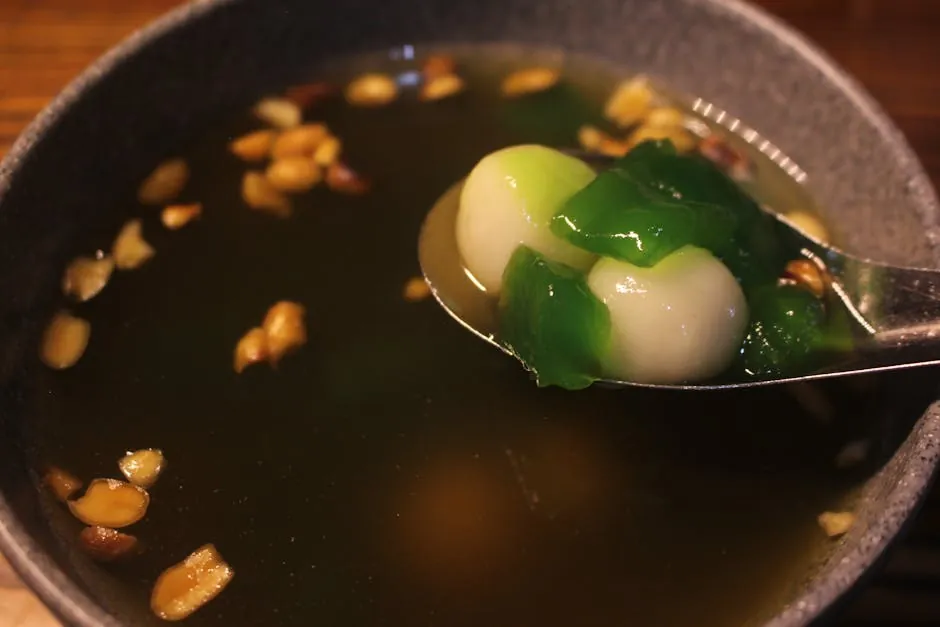
The small dessert atelier with the candlelit shelves
This is the smallest space on the list — six seats total, one pastry chef, a glass case rotating four to five made-that-morning desserts. It is about seven minutes from the southern Sinsa clinic strip, in a converted ground-floor unit of a small building, with a single street-facing window covered in a sheer linen panel and three or four pillar candles on the wall shelves above the seating. The room is lit by the candles, a single warm pendant over the pastry case, and one small accent lamp in the back corner. After dark it is one of the more atmospheric small rooms I have ever sat in, anywhere. The rotation is small but careful. A seasonal fruit tart at 9,500 KRW, a soft chocolate mousse cake at 8,500, a pistachio financier, a daily basque cheesecake at 7,500, and one or two surprise items the chef bakes when she feels like it. Coffee is short and predictable — Americano, espresso, a single latte option — at standard Gangnam prices. I order the basque cheesecake almost every visit because it is soft enough to eat with a spoon, which on a treatment day is exactly the texture I want. A timing note that matters here. The atelier opens at noon and the cheesecake usually sells out by 4:30 p.m. — after which the rotation shifts to the harder pastries and you may not find anything soft enough for a treatment afternoon. Show up between 2 and 3:30 if you want the soft-cheesecake plus tea combination. Also: this is one of the few cafés on this list that I would call genuinely romantic in the literal sense. The candlelit shelves and the small room read more like a Parisian patisserie at night than a Seoul dessert shop, which is part of why I sometimes bring a friend here on a slow recovery evening rather than going alone.
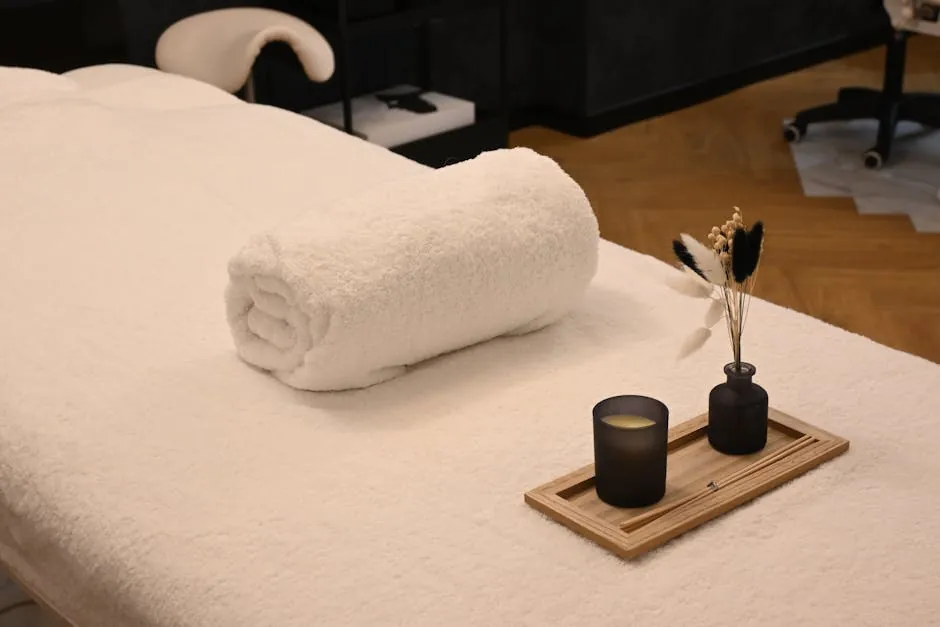
The slow-music workspace café with the dimmable wall sconces
Workspace cafés are usually the wrong category for a recovery afternoon — too bright, too loud, too laptops-everywhere — but this one is the exception that earns its place on the list. It is a third-floor space about ten minutes from the clinic strip, with brass wall sconces every six feet around the perimeter, a row of brass desk lamps on the long communal table down the middle, and zero overhead downlighting at all. The sconces are on a dimmer that the staff lower as the afternoon progresses, and from about 4 p.m. onward the room is lit at maybe forty percent of normal café brightness. It feels like a warm hotel lounge that happens to have power outlets at every seat. The music policy is the other reason I come here — slow, instrumental, mostly classical and ambient, never anything with words. The combination of soft light and slow music makes this the easiest workspace I have found in Gangnam for a face-tender afternoon. The Americano is 6,500 KRW, the small chicken sandwich and the soft tomato pasta are both around 13,000, and the WiFi is unhelpfully fast — useful for actual work, slightly dangerous for an afternoon you meant to spend resting. My default behavior here is to set up at the long communal table around 3:30 p.m., order an Americano and a small bowl of the soft tomato pasta if I am also doing lunch, and write for ninety minutes before walking back to the hotel. The dimmable sconces make the room feel progressively more sheltered as the afternoon goes on, which is exactly the wrong feeling to leave. I have lost entire afternoons here on purpose. There is a corner near the back wall with a single armchair and a low side table that is the best seat in the room — if it is open when you arrive, take it. It is the closest a working café in Gangnam comes to feeling like the corner of a hotel lobby reading nook.
The traditional hanok-style tea space (when I want zero modern light)
The last entry is a category swap rather than a tenth café in the same family — and on the right kind of recovery day it is the most restorative room of any on this list. There is a small cluster of restored hanok-style tea spaces tucked into the residential alleys on the northern edge of the medical strip, and the one I keep returning to is a single converted hanok with maybe twenty seats split between a low platform near the wood-shuttered windows and four floor-cushion tables in the inner room. The lighting is entirely paper-lantern and shoji-filtered daylight — no electric overhead light at all during the day, two warm-bulb lanterns at night. The menu is short, seasonal, and traditional. A pot of single-origin Korean tea, usually a green or a roasted barley, is 8,000 to 12,000 KRW. The tea snack of the day is 4,000 to 6,000 — a soft rice cake, a small persimmon jelly, a seasonal sweet wrapped in pine. Nothing here would be hard to eat through a numb cheek. The room is heated in winter by the original ondol floor system, which gives the whole space a low, dry, restorative warmth, and in summer the wood shutters open onto a small inner courtyard with a pine tree and a stone basin. I come here on a treatment-plus-one day when I want the slowest, quietest, most-architecturally-traditional recovery afternoon Seoul can offer. There is no music. There are no laptops. The phone reception is poor, which I have stopped treating as a flaw. After ninety minutes on a floor cushion with a pot of barley tea and the wood shutters half-open, my heart rate is materially lower and my face feels less reactive, neither of which I would have predicted before I started visiting. There is a separate post on the broader Seoul tea-house category if you want to go deeper on this one. The hanok tea space is the room I send people to when they want to remember that Seoul is also a slow city, in pockets, if you know where to look.
Quick-glance comparison — light, seating, food, best window
A short comparison in case you want the whole rotation at a glance. Light type and seating style are the variables that matter most after a treatment; the rest is preference and timing.
| Café category | Light type | Seating style | Food gentle? | Best window |
|---|---|---|---|---|
| Basement Japanese coffee bar | Paper-shade pendants (warm) | Bar stools, small tables | Light pastries | Late morning |
| Second-floor tea house | North windows, sheer curtain | Tatami platforms, low tables | Mochi, sponge | Early afternoon |
| Wood-paneled roastery | Amber filament bulbs | Wood chairs, leather armchairs | Pastry only | Late afternoon |
| Bookstore café | Brass desk lamps | Communal reading tables | Cake, cookies | Afternoon-evening |
| Hotel lobby annex | Cove + lamp mix (2700K) | Upholstered chairs | Tarts, light pastries | Any (consistent) |
| Café-into-wine-bar | Low pendants, candles | Velvet booths, bar | Cheese plates, small bites | 3-to-5 p.m. transition |
| Greenhouse with film roof | Diffused skylight | Rattan chairs, marble tables | Sponge, mousse, jelly | Mid-day to late afternoon |
| Dessert atelier | Candles + warm pendant | Six bar seats | Soft cake, mousse | 2-to-4 p.m. |
| Workspace café | Dimmable brass sconces | Communal table, armchair | Pasta, sandwich | Afternoon (work) |
| Hanok tea space | Paper lantern, shoji-filtered daylight | Floor cushions, low platforms | Soft rice cake, jelly | Mid-afternoon |
How I sequence these ten across a real recovery week
If you only get one piece of advice from this whole post, take this one. You do not need all ten in a single trip. A real recovery week for me usually pulls four or five — basement coffee bar in the late morning of a treatment day, hotel lobby annex in the early afternoon, wood-paneled roastery at dusk, hanok tea space the next day, dessert atelier on the way back to the hotel that evening. The other half of the list is rotation for the next trip, the next season, the version of this where I am on Seoul time and the light through the matte greenhouse roof at 11 a.m. is the better answer than anything else. The frame is portable. You can run a version of this in any city with good cafés, but Seoul has more low-key, low-Kelvin, low-ceiling rooms within fifteen minutes of a clinic strip than anywhere else I have looked, and Gangnam in particular has stacked the deck. I have written a longer breakdown of how I plan a full Gangnam appointment day if you want the timing in detail, and a shorter one specifically on the cafés near the medical strip if you want the simpler shortlist version. There is also a separate post on what to eat at these cafés specifically post-treatment, if texture and temperature are the variables you are most worried about on day one. None of this is medical advice. All of it is what has worked for me, four trips in, on the afternoons my face is doing a small project and I want to be somewhere that is not asking anything of me.
Frequently asked questions
Why does café lighting matter on a post-treatment day?
After Ultherapy or most laser treatments, your face is mildly flushed and slightly more reactive to heat, glare, and direct light for two to four hours. Bright, white-LED, downlight-heavy rooms can feel actively uncomfortable in that window, and the ambient brightness also makes any redness more visible to you in the bathroom mirror, which feeds the loop. Soft, warm-toned, diffused lighting is the opposite — it makes your face read warmer rather than redder, lets your eyes relax, and reduces the visual stress of being in a public room. None of this is medical advice; it is a comfort observation that has held up across four trips.
Are these cafés safe to visit immediately after Ultherapy?
All ten work within an hour or two of leaving the clinic with a few common-sense rules. Skip the wine-into-evening one for the first 24 hours since alcohol is generally avoided post-treatment. Stick to room-temperature or warm drinks rather than scalding hot for the first hour. Avoid heavy chewing — the food categories I called out for each café are intentionally soft. Always follow your provider's specific aftercare instructions if anything here conflicts with them. The lighting and seating are the appeal; the food is a secondary consideration on day-zero.
How far are these cafés from the main Gangnam clinic district?
All ten are within a fifteen-minute walk of the Sinsa-dong, Apgujeong Rodeo, and Yeoksam clinic strip, with most clustering between seven and twelve minutes. The dessert atelier and the basement coffee bar are the closest, around seven to eight minutes. The hanok tea space and the greenhouse café are the farthest, around twelve to thirteen. None of them require a taxi from the standard clinic-strip hotels in normal weather, and most are flat walks on well-paved sidewalks. In summer or heavy rain I will take a 5,000 KRW taxi rather than walk a flushed face through humid heat.
Do these cafés have English menus or English-speaking staff?
Mixed. The hotel lobby annex, the bookstore café, and the workspace café have full English menus and at least one staff member comfortable in English. The basement coffee bar, the wood-paneled roastery, and the wine-bar café have partial English menus and friendly pointing-and-smiling protocols that work fine. The tea house, the hanok tea space, the dessert atelier, and the greenhouse café are mostly Korean-only menus, but photos and pointing handle most orders. Naver Translate or Papago covers any awkward moments. None of these places have ever made me feel unwelcome for being a foreign customer.
Are any of these cafés good for working with a laptop?
Three primarily, and two as backups. The bookstore café and the workspace café are explicitly laptop-friendly with reliable WiFi and power outlets at every seat — both have hosted three- and four-hour writing sessions for me without anyone hovering. The hotel lobby annex is laptop-tolerant for shorter sessions. The basement coffee bar and the wood-paneled roastery are technically laptop-okay but small enough that I would not camp during peak hours. The tea houses, the dessert atelier, and the greenhouse café are not laptop spaces; come for the room, not the workspace.
What are typical café prices in this part of Gangnam?
Specialty coffee runs 6,000 to 9,000 KRW depending on the café tier. Pour-overs and specialty single-origins are 7,500 to 11,000. Pots of single-origin tea at the dedicated tea houses are 9,000 to 14,000, with free hot-water refills two or three times. Pastries and small bakery items are 4,000 to 9,500. A light café lunch — sandwich, soft pasta, or cheese plate — is 13,000 to 22,000. I budget around 25,000 to 35,000 KRW per café visit including a drink and a bite, which is roughly comparable to specialty café pricing in San Francisco or LA.
Are these cafés family-friendly or adults-only?
Most are quietly all-ages but not actively kid-oriented. The hotel lobby annex and the bookstore café are the most family-comfortable, with space and tolerance for a well-behaved child. The wine-bar café and the dessert atelier are not strictly adults-only but the room sizes and the room mood lean adult-evening, and I would not bring a young child unless they were already settled and quiet. The hanok tea space asks for stillness from everyone, which most kids over six handle fine. The basement coffee bar and the greenhouse are very small rooms where a stroller would not fit comfortably. None of them have explicit age policies; this is just my read after four trips.
What if I am visiting Gangnam in winter — does the list still work?
Most of it, with two seasonal notes. The hanok tea space is actually best in winter because the original ondol floor heating gives the room a dry, low, restorative warmth that you cannot replicate with central heat. The hotel lobby annex and the bookstore café are reliably comfortable year-round. The greenhouse café gets noticeably cooler in deep winter — the matte film helps with light but does little for thermal mass — so dress warmer than you would for a normal Seoul indoor space. The workspace café and the wood-paneled roastery are well-insulated and warm in any season. None of the lighting changes seasonally; the rooms read soft year-round.