Editorial Picks
5 Luxury Jjimjilbang Categories I Trust on a Recovery Day in Korea
Five categorical types of high-end Korean bathhouse I rotate through on the slow days — no harsh saunas, no aggressive scrubs, just long, quiet rooms with the right thermometer settings.
I started going to jjimjilbang in 2018 on my first Seoul trip, and for the first year I did it wrong — I went on the day of treatment, sat in the hottest charcoal kiln I could find, and learned the hard way that post-Ultherapy skin and 90-degree dry heat are not friends. The list below is what I figured out over the next three trips. Five categorical types of luxury Korean bathhouse, each with a recovery-friendly mode I have personally vetted, none of them named because the categories are what matter and clinics rotate. None of these are sponsored, I do not get a referral fee for any of them, and the criteria are narrow: cooler-temperature rooms available, gentle scrub options, no aggressive plunge pools, and a quiet lounge to sit in for ninety minutes after.
How I built this list — and what counts as 'recovery-friendly'
A recovery-friendly jjimjilbang is not the same as a luxury jjimjilbang, and the categories below sit in the overlap on purpose. The criteria I use are narrow and specific. First, the facility has to offer at least one warm room in the 35 to 45 degrees Celsius range — not the standard 70 to 90 degree kilns most jjimjilbangs build their reputation on, because that level of dry heat can prolong post-treatment redness and dehydrate skin that is already in repair mode. Second, the scrub menu has to include a soft or oil-based option, not just the famously aggressive Korean body scrub that uses an itar mitt and removes a meaningful percentage of your stratum corneum in a single session. Third, the cold plunge has to be optional, not architectural — meaning you do not have to pass through it to reach the warm rooms, because cold-shock on a face that is still warm from a treatment is in my experience a bad combination. Fourth, and this is the soft criterion, the lounge has to be quiet. Most jjimjilbangs in Seoul are family destinations — children running, televisions on, ajummas selling roasted eggs from baskets — and that is a wonderful cultural experience but not what I want at hour two of a recovery day. The high-end versions filter for a different demographic: lower lighting, bamboo recliners, herbal tea instead of vending-machine sikhye, and a no-phone policy in the relaxation rooms. That is the kind of space I am looking for. Fifth, the scrub bed has to be a private room or a curtained alcove, not the open-floor scrub theater you find in mid-tier facilities. None of these criteria are about luxury for its own sake. They are about whether the facility has thought carefully enough about wellness — which is the actual category these places are positioning into now — to be a real recovery option. A few categories I left off this list. Day spas inside hotels are wonderful but usually do not include the hot-room and cold-pool architecture that makes a jjimjilbang a jjimjilbang, so they live on a different list. Korean public bathhouses (mokyoktang) are the older, simpler precursor to jjimjilbang and are honest, beloved establishments, but the ones I have used do not control temperature ranges precisely enough for a recovery day. And the famous 24-hour family jjimjilbangs — the ones with sleeping floors and snack counters — are part of why Seoul is Seoul, and you should absolutely go to one on a non-recovery day. None of those are on this list. The five below are luxury wellness-positioned bathhouses, of the kind that have started appearing in Gangnam, Cheongdam, and a handful of hotel-adjacent locations across the city in the last five years.
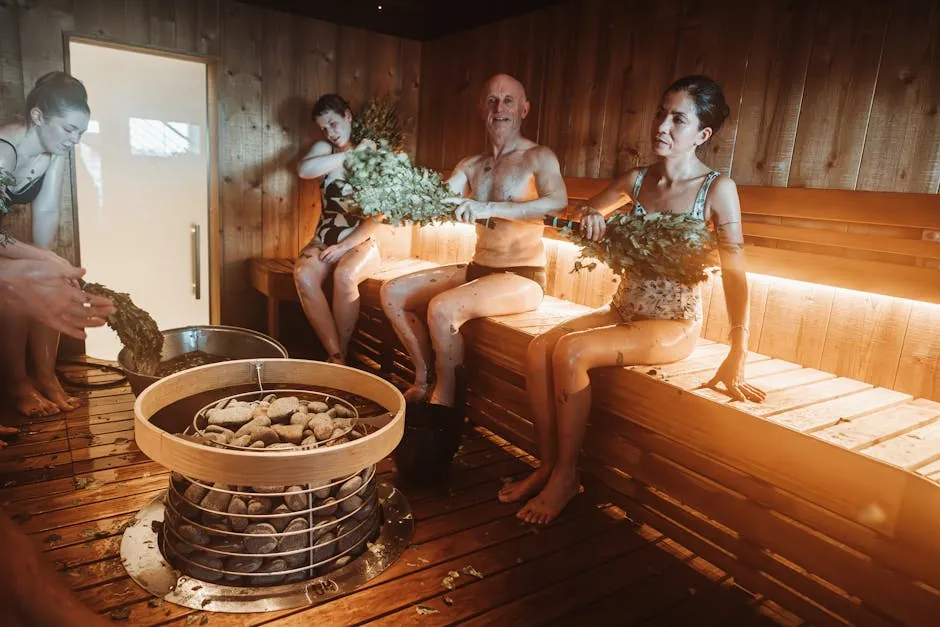
— Hotel-attached luxury jjimjilbang inside a 5-star property
The hotel-attached jjimjilbang is the category I default to on the day after a morning Ultherapy session, when I am still slightly tender and want a controlled environment that is also a five-minute elevator ride from my room. A small handful of Seoul's higher-end international hotel properties — and one or two domestic luxury brands — operate in-house Korean bathhouses on dedicated floors, with the same architectural elements as a traditional jjimjilbang (warm rooms, cold plunge, scrub area, lounge) but executed at hotel-spa standards. The temperatures are calibrated lower across the board, the warm rooms run cooler and more humid than the typical neighborhood jjimjilbang, and the scrub menu has been adapted for an international clientele that does not necessarily want to be exfoliated within an inch of their life. What this category does well on a recovery day is the cumulative quiet of the place. Hotel-attached facilities tend to be smaller in footprint, less crowded, and almost entirely populated by hotel guests and a handful of members. I have spent two-hour stretches in the warm room of one of these without seeing more than four other people. The lounges have proper recliners. The herbal tea is brought to you on a tray, in a ceramic pot, with a small dish of dried fruit. The locker rooms are organized rather than chaotic — fewer people, larger lockers, dedicated vanity counters, and the kind of soft cotton robe that you do not want to give back. None of this is about luxury for its own sake — it is about whether you can actually rest, which is the entire point of a recovery day. I usually sequence this category as a slow morning: lounge first for thirty minutes with a glass of cucumber water, gentle warm room (low temperature) for twenty minutes, a short cool shower (not the cold plunge), soft scrub for forty-five minutes if I am on day three or later post-treatment, lounge again for sixty minutes with whatever book I am pretending to read on the trip, and out by lunch. The whole sequence runs about three and a half hours wall-clock, which is the right length for me on a non-treatment recovery day. A few practical notes on this category. Cost is the highest of the five — usually 150,000 to 280,000 KRW for a half-day pass with a basic scrub, climbing to 400,000 to 600,000 KRW with a fuller treatment package that adds a facial or a body wrap to the bathhouse access. Booking is essential at every property I have used; same-day walk-in is rare, and the better facilities maintain a small membership program that crowds out walk-in availability on weekends. The facilities will almost always require a robe-and-slipper change at the entrance, which means you cannot just stop by between meetings. Plan for it. The other thing worth knowing is that these places have very strict rules about showering before entering the warm rooms and pools, more so than the public jjimjilbangs, and the staff will gently correct you if you skip steps. Treat the rules as part of the experience. A small operational tip I have learned across four trips: ask the concierge to arrange the booking the day before rather than booking yourself online, because the hotel concierge desks frequently have access to a complimentary upgrade tier or a soft-add of a small extra (an extra thirty minutes of scrub, an additional herbal tea service, a private treatment room versus the shared scrub area) that the public booking page does not surface. None of this is medical advice; this is just what has worked for me, four trips in, on the days when I want the quietest possible version of a Korean bathhouse.
— Cheongdam-tier private wellness club with bathhouse access
The members-club category — usually housed in the Cheongdam, Apgujeong, or Hannam districts — is the most discreet of the five, and on the recovery days when I want to disappear for an afternoon I usually default to one of the two I have day-pass access to through hotel concierge. These are not jjimjilbangs in the traditional sense. They are wellness clubs that include a Korean bathhouse component as part of a broader facility — usually with a fitness floor, treatment rooms, occasionally an IV-drip lounge, and a high-end restaurant on a different floor of the same building. The bathhouse element is correspondingly small, often two or three warm rooms instead of the usual six or seven at a public facility, and the temperatures are set for an adult clientele that is using the space as a wellness routine rather than a Sunday family outing. Several of these clubs do not even use the word jjimjilbang in their marketing, preferring 'wellness sanctuary' or 'thermal lounge' or some other Western-leaning translation that says everything about the demographic they are aiming for. What this category does well on a recovery day is the ratio of staff to guests. The members clubs run at very low occupancy by design, the staff have time for you, and the scrub specialists have been trained on adapted-pressure techniques because the membership skews toward a wealthier and more skin-conscious demographic. I have had soft-scrubs at one of these places that took fifty minutes and used six different products in sequence, none of which I could name in Korean, and walked out feeling like my skin barrier had been respected for the first time. The treatment rooms can also be combined with bathhouse access in a single ticket — a quiet facial in a private room, then thirty minutes in a warm room, then the lounge — which is a sequence I cannot get at any other category on this list. The lounge architecture is also worth noticing: most members-club lounges are zoned, with a quiet napping zone, a reading zone, and a tea-service zone, and the zones are enforced softly by the staff so that the napping zone actually stays napping. The access question is real. Most of these clubs are members-only, which is the entire point of their positioning. Day passes exist but are usually arranged through hotel concierge, sometimes by personal introduction from an existing member, and occasionally by direct booking on Naver if you are willing to do the language work to find the page. Some of the higher-end hotels in Gangnam have reciprocal access agreements with one or two of the members clubs, and the concierge will know which is which. Cost runs 200,000 to 500,000 KRW for a day pass, which sounds steep until you compare against an equivalent New York or Los Angeles wellness club where day rates can run double, and most of those LA clubs do not include a proper Korean scrub at all. The scrubbing is gentle by default; you have to actively ask for the standard Korean intensity if that is what you want, and even when you ask the specialists will adapt the pressure to whatever they see on your skin in the first ten minutes. A practical detail: most of these clubs require advance booking by 48 hours and a soft dress code in the non-bathhouse zones (no athleisure, even arriving), so plan for an outfit change. None of this is medical advice. Studies suggest that gentle thermal therapy — warm rooms in the 35 to 45 degree range, not the 70-degree kilns — may help circulation without dehydrating the skin, which is the categorical reason I default to this kind of facility rather than the traditional public bathhouse on a recovery day.
— High-end neighborhood jjimjilbang with a wellness-renovated wing
Several of the larger Seoul jjimjilbangs have, over the last five years, renovated portions of their facilities into wellness-positioned wings — quieter floors, lower-temperature rooms, soft-scrub menus — while keeping the traditional public floors intact. This category is the budget-friendly version of the five, and on the recovery trips where I am being practical with money and time it is what I default to. You enter the same building everyone else enters, you change in the same locker rooms (or sometimes in a smaller upgraded locker area, depending on the facility), and then you take an elevator or staircase to a separate floor that runs at a different temperature ceiling and a different volume level. The architectural separation is the entire reason this works. The renovated wings tend to be marketed under a slightly different name than the rest of the facility — 'wellness floor', 'premium zone', 'private club' — and the price-point shift is usually the easiest signal that you are actually in the right part of the building. What this category does well is a meaningful price-to-quality ratio. Standard admission to the wellness wing usually runs 30,000 to 60,000 KRW for a half-day, plus 30,000 to 60,000 KRW for a soft scrub, which puts a recovery-day visit in the 60,000 to 120,000 KRW range — significantly less than the hotel-attached or members-club categories above. The trade-off is that the experience is less consistent. The crowd in the wellness wing is more variable, the staff are not necessarily trained on the same adapted-pressure scrubs you get at a Cheongdam club, and the noise level depends on whoever else happens to be there that morning. I plan for this by going on weekday mornings — Tuesday or Wednesday between 10 a.m. and 12:30 p.m. — when the facility is at lowest occupancy and the wellness wing tends to have at most six or eight other guests. Avoid Friday afternoons through Sunday evenings entirely on a recovery day; the volume goes up, the staff are stretched, and the wellness floor stops feeling separate from the rest of the building. A few facility-level notes. The renovated wings almost always include at least one warm-room option in the 40 to 45 degree range, which is the temperature window I prefer post-treatment. Some include a humid steam room (mu-eobang, in the Korean) which I find gentler on still-flushed skin than the dry kilns. The scrub options vary; the better facilities offer an oil scrub or a mineral-mud scrub as alternatives to the standard mitt scrub, and you should ask specifically using the words 'soft scrub' or 'oil scrub' (kireum scrub, in romanized Korean) at the desk. The cold plunge is usually still architectural — meaning you walk past it on the way to the warm rooms — but you do not have to use it, and on a recovery day I do not. The amenity quality in the wellness wing is also worth noting; the better wings supply a more substantial amenity kit (cleanser, toner, moisturizer in three or four steps) compared to the basic shampoo-conditioner-soap of the public floor, and on a recovery day this matters because you do not want to layer your hotel skincare on top of an unknown Korean cleanser. Studies suggest that for skin that is in active repair mode, the goal is gentle thermal contrast rather than thermal shock, which is the categorical reason to skip the cold pool on day one or two and reintroduce it gradually. None of these recommendations are medical advice, and I would defer to whatever your treating provider says about heat exposure timing in the first 48 hours specifically.
— Gangnam premium spa-jjimjilbang hybrid with adapted-pressure scrub
The spa-jjimjilbang hybrid is a relatively recent category in Seoul — facilities that started as Western-style day spas and added Korean bathhouse architecture, or vice versa — and the better ones have figured out the integration in a way that makes them especially good for recovery days. The signature feature is the adapted-pressure scrub: a soft, oil-and-cream-based scrub adapted from the Korean tradition but executed by therapists who have also been trained in European spa pressure standards. The result is a forty-five to ninety minute scrub that does meaningful exfoliation work without the aggressive friction of a traditional mitt scrub. On the recovery days when my skin is past the immediate post-treatment window but still in active remodeling — usually day three to day seven post-Ultherapy — this is the category I trust the most. The hybrid spas also tend to think about the sequence of the visit as a designed experience, with a recommended order of services that the staff will walk you through at the desk if you ask, which is genuinely useful when you do not want to be making decisions on a recovery day. The other integration that the better hybrid spas have figured out is the room-temperature gradient. Instead of the traditional jjimjilbang model of multiple specialized hot kilns at fixed temperatures (clay, salt, charcoal, jade, hwangto, and so on), the hybrid model tends to offer a smaller number of rooms at carefully calibrated temperatures: a 35-degree humid room, a 42-degree dry room, sometimes a 50-degree mineral salt room as the only true high-heat option. The rest of the facility is dedicated to treatment rooms — facials, body wraps, massages, occasionally a hammam-style steam treatment — that you can sequence around the bathhouse component. Cost runs 180,000 to 350,000 KRW for a half-day with one treatment, which is mid-range for the five categories on this list, and the better hybrids also offer half-day packages without the bathhouse component for guests who only want the spa side, which is sometimes what I do on the lighter days. The treatment menu in this category is also notable for being more international than at a traditional jjimjilbang; you can find Vichy showers, Watsu pools, mud wraps, and sound therapy alongside the Korean offerings, which gives you optionality for the kind of recovery day you actually want. A few things worth knowing about how this category sequences with a treatment week. Most of the hybrids in the Gangnam district will do a treatment-room booking by appointment and then let you stay in the bathhouse component for the full half-day, sometimes with the option to extend into the evening for a small additional fee. The lounge tends to be quieter than the wellness-wing category above (), louder than the members-club category (), and roughly equivalent to the hotel-attached category () on a weekday. The herbal tea is usually a custom blend the facility has developed in-house, often with ginseng, jujube, and ginger as the base, and several places will serve a small plate of fresh fruit or rice cake alongside if you ask. The robes are heavier than the hotel-spa standard. And the staff will check on you in the warm rooms after a certain number of minutes, which is a thoughtful touch I have not seen at most other categories. A practical note on booking: the better hybrids are now showing up on Naver, KakaoMap, and even some English-language wellness apps, so finding them is easier than it was three years ago, but the booking system frequently does not show real-time availability and you may need to call. The hotel concierge can usually do this in two minutes. Patients report that adapted-pressure scrubs leave skin softer and less irritated than traditional Korean scrubs, which matches my own experience. May help is the right framing for the cumulative effect; the literature on body-scrub skin barrier outcomes is thin, but the lower friction is straightforwardly easier on already-sensitized skin.
— Boutique single-suite jjimjilbang with private booking
The fifth and smallest category on this list is the boutique single-suite jjimjilbang — facilities that operate on a one-party-at-a-time booking model, where a single small group rents the entire bathhouse for a window of two to four hours. There are a handful of these in Seoul, most of them in the Hannam, Cheongdam, or Itaewon hotel-adjacent districts, and they are a relatively new business category that has emerged alongside the broader wellness-tourism category over the last three to five years. The economics are obvious: the facility is small (usually one warm room, one cold plunge, one scrub bed, one lounge), the suite rate is high (300,000 to 800,000 KRW for a two-to-four-hour booking, depending on facility and time of day), and the customer is buying privacy and exclusivity. On the recovery days when I have a friend in town, or on the trips where I am traveling with a partner, this is the category I default to. The customer profile at these places is also worth understanding: it skews toward couples on babymoon-style trips, friend-group trips of two to four, and discerning solo travelers who do not want to share a locker room with a hen party. What this category does well that none of the others do is the absence of strangers. There is no shared locker room with twenty other women, no scrub theater with eight beds in a row, no lounge where you have to position your recliner away from a stranger's gaze. The entire experience is sized for one to four people. The temperature controls on the warm room are usually accessible to the guest, which means you can run the room at the temperature you want rather than the temperature the facility has decided — and on a recovery day this is genuinely useful, because I will sometimes drop the warm-room target down to 38 degrees instead of the typical 42 if my face is still slightly flushed. The scrub specialist comes in for a scheduled window and otherwise leaves you alone. The lounge is yours for the full booking. The lighting is dimmed by default; the music, if any, is selected by the facility's own playlist rather than ambient mall radio. I have had bookings of this category that felt closer to a hotel suite than a bathhouse, in the best way. A few practical notes. Booking is the hard part — most of these facilities are not on Naver Maps in any obvious way, the websites are usually Korean-only, and access is by introduction or by careful research through hotel concierge. The cancellation policies are strict, often requiring 48 hours' notice for a full refund, and the deposit is sometimes the full amount up front. Plan accordingly, because if your treatment day moves you may lose the booking entirely. The cost-per-person ratio gets better with more people, so a four-person booking at the upper-end facility runs roughly the same per person as a two-person booking at the lower-end, which is the math that makes a friend-group trip economically defensible at this category. The food and tea components are usually catered or in-house, sometimes from a partnered restaurant in the same building or down the street, and the better facilities will let you preorder a light meal or fruit plate as part of the booking. A small detail I have learned to ask about specifically: whether the suite has a window. Some of these facilities are basement or interior-floor build-outs without natural light, which is fine for an evening booking but less appealing on a recovery morning when I want some daylight as part of the wind-down. The ones with proper windows command a premium and book out earliest. None of these are medical advice. May help is the right framing for the recovery effect of any thermal therapy; the literature describes a measurable but modest impact on circulation and perceived relaxation, which is the categorical reason these facilities sit on a recovery list at all rather than just a luxury list. The privacy is the actual product.
How I sequence these five across a typical recovery week
If you have read this far, you already know I rotate, not rank. A typical recovery week for me — say, a Sunday-arrival, Monday-treatment, Saturday-departure cadence — usually pulls three of these five categories across the week. Day one (treatment day): nothing, no jjimjilbang at all, just the hotel room and soft food. Day two: the wellness-wing category () for a short visit, no scrub, just a thirty-minute warm room and the lounge. Day three: the hotel-attached category () or the spa-jjimjilbang hybrid (), this time with a soft scrub, three hours total. Day four: rest day, no jjimjilbang. Day five: the members-club category () if I have access, otherwise a return to the spa hybrid for a full half-day with a treatment-room facial added in. The other two categories sit in reserve for the next trip. The frame is portable; the specific sequence I run is a function of energy, redness levels, and which friends are in town with me on a given trip. I have written a longer breakdown of the full Gangnam recovery-day rhythm if you want the meal sequencing and the slow Garosu-gil walk in detail. There is also a separate post on what to eat specifically post-Ultherapy in the first 48 hours, which goes deeper on temperature and texture rules than this list does. None of any of this is medical advice. All of it is what has worked for me, four trips in, on the days my face is doing a small project and I want to be looked after — by a quiet room, a calibrated thermostat, and a herbal tea on a tray — without being bothered.
Frequently asked questions
How soon after Ultherapy can I visit a jjimjilbang?
Most providers I have spoken with recommend waiting at least 48 hours before any heat exposure, and longer for the higher-temperature kilns. On day three I sometimes do a short visit to a wellness-wing facility () with the warm room set to 40 degrees or below, no scrub, and a long lounge afterward. The traditional 70 to 90 degree dry kilns I avoid for the first full week. Cold plunges I avoid for the first 48 hours regardless of the rest of the schedule. None of this is medical advice; defer to whatever your treating provider has told you specifically about heat exposure timing.
Is the traditional Korean body scrub safe after a treatment?
Not in the first 48 to 72 hours, in my experience. The standard mitt scrub uses meaningful friction and removes a measurable amount of stratum corneum, which is exactly the layer that is most sensitive after a non-invasive treatment. The soft and oil-based scrubs offered at categories , , , and above are different — lower pressure, hydrating products, no aggressive mitt — and those I have done as early as day three without issue. If you want any kind of scrub in the first week, ask specifically for the soft or oil scrub option and confirm at the desk that it does not use the traditional itar mitt.
Can I get a luxury jjimjilbang experience without speaking Korean?
Yes, especially in the hotel-attached () and members-club () categories, where staff training includes English service standards as a basic expectation. The wellness-wing category () is more variable; staff English is hit-or-miss and you may need a translation app for the scrub menu. The spa hybrid () usually has English menus and at least one English-comfortable staff member on duty. The boutique single-suite () is the hardest for a non-Korean speaker because access tends to require the kind of phone or message booking that is friction-heavy without the language. Hotel concierge solves most of this for the higher-end categories.
Roughly what should I budget for a recovery jjimjilbang day?
It depends heavily on the category. Wellness-wing () runs 60,000 to 120,000 KRW for a half-day with a soft scrub. Spa hybrid () runs 180,000 to 350,000 KRW including a treatment-room booking. Hotel-attached () runs 150,000 to 280,000 KRW for a half-day, climbing to 400,000-plus with a fuller package. Members-club day pass () runs 200,000 to 500,000 KRW. Boutique single-suite () runs 300,000 to 800,000 KRW for the full suite booking, which divides across the group. My typical recovery-week jjimjilbang spend across two or three visits runs 350,000 to 700,000 KRW total, which is comparable to a similar wellness-week spend in San Francisco, with much better facilities for the price.
Should I bring anything specific to a luxury jjimjilbang on a recovery day?
Most facilities provide everything you need — robes, slippers, towels, basic toiletries, sometimes a sealed amenity kit with shampoo and conditioner. What I bring extra: a hair tie, a small bottle of my own gentle facial cleanser, lip balm because the warm rooms are dehydrating regardless of the temperature ceiling, and a soft cotton t-shirt for the lounge if I want to nap in the recliner. I do not bring my own scrub products; the facility-supplied options at this tier are universally better than what I would pack. I leave makeup and skincare actives in the hotel; the warm rooms are not the place for retinoids or acids.
Can I combine a jjimjilbang visit with my treatment day or should it be separate?
Separate, in my experience. I have learned the hard way that booking a jjimjilbang on the same day as a non-invasive treatment compresses too much into one window — heat, scrubs, lounge time, plus the treatment itself — and the cumulative effect on already-warmed skin is more intense than I want. The cleaner sequence is treatment day plus rest, then a wellness-wing visit on day two or day three, then a fuller jjimjilbang day later in the week once the immediate redness has settled. The recovery week is structured around the treatment, not the other way around, and the bathhouse visits fit into the gaps rather than competing for the same slot.