Editorial Picks
8 Soft Foods in Gangnam I Eat When My Face Hurts
Eight food categories I rotate through on recovery days in Gangnam — soft enough for a numb cheek, real enough to leave me actually fed.
I have been doing recovery days in Gangnam since 2018, and the food list is the part I actually got right after about three trips. The criteria are narrow: soft enough that I am not chewing through a still-tender Ultherapy cheek, warm enough to feel restorative, low-acid enough not to sting, and findable inside a roughly 1.5 kilometer radius around the Sinsa, Apgujeong Rodeo, and Yeoksam clinic strip. These eight categories are the ones I keep coming back to. None of them are sponsored. Two of them are basically grandmother food, and that is the whole point.
How I built this list — and what I left off
A recovery food list is not a Seoul-best-of list. The criteria are narrower and less fun. I had to leave off a lot of food I genuinely love — the Korean fried chicken near Eonju, the spicy braised octopus in Sinsa, the cold buckwheat noodles I order at midnight in summer — because none of them belong on a face-hurts day. What stayed on the list is food that meets four rules: soft texture, warm or room-temperature, low spice, and within a fifteen-minute walk of the clinic strip so I am not taking a taxi when my face is still flushed. I also weighted toward categories that travel well to a hotel room. About half the time I am eating in the restaurant, half the time I am carrying a small container back to the room and eating with the news on low. Both versions matter, and I tried to flag which is which inside each item. Categories below are listed in roughly the order I rotate through them on a real recovery day — morning to evening — not in any kind of ranking.
Juk — Korean rice porridge, the recovery default
Juk is Korean rice porridge — slow-cooked rice in a savory broth, sometimes with abalone, pumpkin, mushroom, or chicken folded in. It is the food my mom would have brought me if I had a fever as a kid, except the Korean version is a whole institutional category, and there are dedicated juk chains and small specialty shops scattered through Gangnam. The porridge is gentle, warm, almost sweet at the edges, and you can eat a full bowl with a spoon and a soft jaw. After a morning Ultherapy session, this is the first real food I eat. I have never regretted it. My rotation: abalone juk on the days I want to feel slightly fancy about it, pumpkin juk when the weather is cold, plain chicken juk if I am still queasy from the flight. A bowl runs roughly 12,000 to 18,000 KRW depending on the protein, comes with mild banchan I usually skip on day one, and the better shops will let you take a takeaway container without making it weird. Eat it within an hour or two of treatment, before your face gets puffy. It travels well to a hotel room if the staff know how to seal the lid. Two small notes I wish someone had told me on my first trip. First, the chain juk shops and the small specialty shops are not the same product. The chains are fine — predictable, clean, totally adequate — but the small specialty shops slow-cook the rice for hours longer, and the difference shows up in the texture. Ask your hotel concierge for the closest small juk shop and you will eat a measurably better bowl. Second, juk pairs perfectly with weak barley tea rather than coffee, which is what most of these shops serve free anyway. Save the coffee for the cafe stop later. The whole point of starting the day with juk is that you are not asking your stomach to do anything difficult yet.
- Texture: smooth, no chewing required
- Temperature: warm, not hot — let it cool 5 minutes
- Where: dedicated juk shops near Sinsa Station and Yeoksam exit 5-7
- Price: 12,000 to 18,000 KRW per bowl
- Best for: morning of a treatment day, jet-lag mornings, the first meal after landing
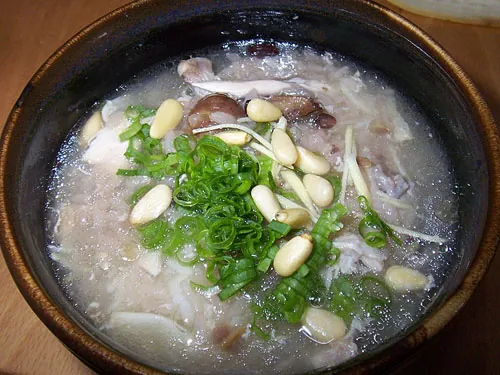

Samgyetang — ginseng chicken soup, the slow reset
Samgyetang is a whole young chicken stuffed with sticky rice, ginseng, garlic, and jujubes, simmered in a clear broth until the meat falls off the bone. There is no chewing involved if you do it right — the meat is so soft you separate it with the side of a spoon. The broth is mild, slightly sweet, faintly herbal from the ginseng, and warm in a way that feels structural. It is the lunch I default to on a recovery day, usually around 12:30 when the office workers are clearing out of the better samgyetang places near Gangnam Station and the Eonju side. A bowl runs 14,000 to 22,000 KRW, takes about thirty-five minutes from order to last spoonful, and gives me roughly the calorie load I need to walk the rest of the afternoon without crashing. The first time I had this I cried a little, in a polite American way, because it tasted like something my grandmother would have made if she had ever cooked Korean food. On recovery days I order one bowl, the side of cabbage kimchi I do not eat on day one, and a small bottle of insam-ju I do not drink. I leave full, calm, and roughly forty percent more functional. A few timing details that matter. Samgyetang places usually post a peak-hour wait between noon and 1:00 — show up at 12:30 or 1:30 and you walk straight in. The dedicated samgyetang restaurants are the right choice; the version of samgyetang that shows up on multi-menu Korean restaurants is usually fine but not what you want on a face-hurts day, since the broth is shallower and less restorative. If you are nervous about the ginseng flavor, order the version with extra jujube or pumpkin — both soften the herbal note. Skip the green onion garnish on day one if your skin is still flushed; on day two it is fine. The leftover broth at the bottom of the bowl is the best part, and absolutely worth the spoon work to scoop out the last of the rice.
- Texture: chicken soft enough to spoon-separate, rice fully porridge-soft
- Temperature: warm, never scalding — wait 8-10 minutes after it arrives
- Where: dedicated samgyetang restaurants near Gangnam Station, Eonju, and the Sinsa side
- Price: 14,000 to 22,000 KRW per bowl
- Best for: midday after a morning treatment, post-flight day one
Sundubu jjigae — soft tofu stew, the dependable evening bowl
Sundubu jjigae is the silken-tofu stew that arrives at the table still bubbling in a stone bowl — soft tofu, broth, sometimes seafood or pork, and an egg cracked in just before serving. The mild version, ordered without the standard chili, is one of the gentlest hot meals I can think of. The tofu is essentially custard. The broth is mostly umami, anchovy, and the soft tofu's own milkiness. You eat it with a spoon over a small bowl of rice, and it warms you from the chest out in a way that ends a long day cleanly. I order this around 6 p.m. on a recovery day, often as a takeaway to my hotel room from a banchan-and-stew shop near Eonju I have been going to since 2019. A portion runs 9,000 to 14,000 KRW, comes with three or four banchan I often save for the next morning, and reheats badly so eat it the same hour you buy it. Crucially: ask for it not-spicy. Most Gangnam sundubu is mid-spicy by default, which is fine on a normal day and absolutely not fine when your skin barrier is doing a small project. The variant menu matters. Plain sundubu is the safest bet — clean broth, soft tofu, egg. Seafood sundubu adds tiny clams and shrimp that are easy to spoon-eat, and the broth is a little richer; this is my preferred version on day two when I want something slightly more substantial. Avoid the kimchi version on a recovery day no matter how good your spice tolerance is, because the fermented kimchi makes the broth acidic and the heat punches harder when your face is still warm from a treatment. The egg goes in last and you stir it through the bubbling broth so it cooks gently into ribbons; that is the best bite of the meal and you should eat the rice in spoonfuls that catch some of it. Order a takeaway portion of plain rice on the side rather than the heated stone-pot rice the restaurant default offers — the stone-pot version stays scalding for thirty minutes and is uncomfortable to eat on a recovery day.
- Texture: silken tofu (custard-soft), small rice bowl on the side
- Temperature: hot when served — let it sit 6-8 minutes
- Where: stew-and-banchan shops near Eonju and the southern Sinsa alleys
- Price: 9,000 to 14,000 KRW per portion
- Best for: dinner of a recovery day, hotel-room eating with the news on
Egg-rich soft dishes — gyeran-jjim, savory custards, omelet rice
This category is the one I underrated for my first two trips and now lean on heavily. Gyeran-jjim is Korean steamed-egg custard, served in the same stone bowl as sundubu but sized smaller, and it is the texture of a perfect Japanese chawanmushi. Omelet rice — omurice in the Korean adaptation — is a soft fried-rice center wrapped in a thin egg sheet, often with a mild demi-glace or tomato sauce on top. Both are widely available at small Korean-Japanese diners scattered around the Sinsa and Apgujeong Rodeo blocks, and both are food a four-year-old could eat through a numb mouth. Gyeran-jjim is usually a 4,000 to 6,000 KRW side at any kalguksu or jjigae shop, and I order it as a small extra to a bigger meal when I want more soft protein. Omurice is a full lunch — 9,000 to 14,000 KRW — and the trick is to ask for the milder demi-glace rather than the spicy kimchi version. I default to omurice on day-one of a Seoul trip when my body still does not know what time it is and I want childhood food in a foreign country. Egg dishes also travel surprisingly well; a hotel room reheat in the microwave for forty seconds keeps the texture mostly intact. A technique note about omurice. The better Gangnam diners pour the demi-glace tableside — the egg sheet arrives uncut, and the server slices it open with the side of a spoon so it unfurls over the fried rice. This is the photo moment, but more practically it lets you control the sauce-to-rice ratio. Ask for half the sauce on the side if you are sensitive to anything tomato-acidic post-treatment. Gyeran-jjim on its own as a small lunch is also legitimate; pair a 4,000 KRW gyeran-jjim with a 2,000 KRW bowl of plain rice and a single banchan and you have a 7,000 KRW meal that is gentler than almost anything else on the strip. There are also Japanese-style chawanmushi specialists scattered through Apgujeong that are worth knowing about — the egg-to-broth ratio is slightly more delicate than the Korean version, and the dashi note is cleaner. They cost roughly the same.
- Texture: custard-soft (gyeran-jjim), soft fried-rice with thin egg layer (omurice)
- Temperature: warm-hot, but not scalding
- Where: Korean-Japanese diners across Sinsa and Apgujeong Rodeo
- Price: 4,000 to 6,000 KRW (gyeran-jjim) / 9,000 to 14,000 KRW (omurice)
- Best for: jet-lag day one, lunch when nothing else sounds good
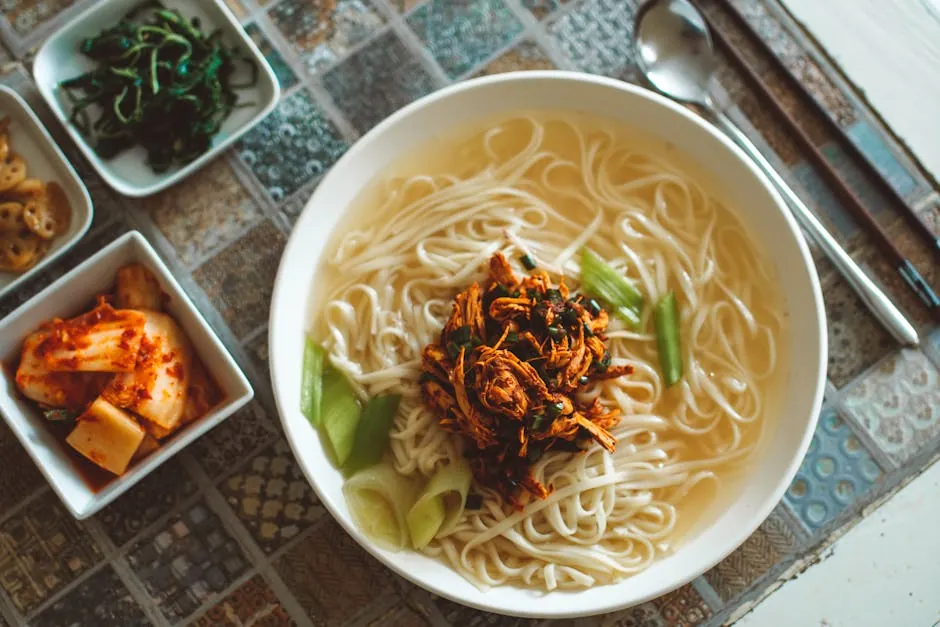
Soft noodle soups — kalguksu, kongguksu, mild udon
Noodle soups are tricky on a recovery day — slurp the wrong bowl and you are working your jaw and your face for twenty minutes — but a few categories are gentle enough to belong on this list. Kalguksu is hand-cut wheat noodles in a clear anchovy-and-vegetable broth, soft and slippery rather than chewy. Kongguksu is cold soy-milk noodles, a summer-only specialty, served chilled and mild and absolutely no chewing. The third is plain Korean-Japanese udon at small chain noodle shops, ordered without tempura because the fried element is the part that hurts post-treatment. A bowl of kalguksu runs 9,000 to 13,000 KRW, kongguksu 11,000 to 15,000 KRW (and only available June through August in most places), and mild udon 7,000 to 10,000 KRW at the chains. I eat kalguksu on cool weather recovery days, kongguksu on summer ones, udon when I want something simple and predictable. The trick across all three is to ask the kitchen to skip the chili oil garnish and to serve the broth slightly cooler than usual. Most Gangnam noodle shops will accommodate this without a fuss if you ask politely with a translation app open. A few sub-category notes worth knowing. The kalguksu I prefer is the kimchi-mandu-kalguksu combination — same noodles, with a few steamed mandu floating in the broth, which is a soft-on-soft meal that keeps me full for four hours. The mandu in this dish are usually pre-steamed and added at the end, so the skins stay tender. For kongguksu, the variant served with crushed pine nuts on top is the one I prefer — pine nuts add a faint creaminess to the soy-milk broth without changing the texture. The mild udon at the chain shops comes with three or four toppings; ask for kake-udon (just broth and noodles, no toppings) on day one, and add a soft-cooked egg on day two if you want more protein. None of these are spicy by default; you have to actively order the spicy variants in Gangnam, so you are safe ordering the standard menu items as long as you confirm at the counter.
- Texture: soft hand-cut wheat (kalguksu), cold soft (kongguksu), plain wheat (udon)
- Temperature: warm (kalguksu, udon) / chilled (kongguksu)
- Where: hand-cut noodle shops near Sinsa, summer kongguksu specialists in Apgujeong, chain udon across the strip
- Price: 7,000 to 15,000 KRW depending on style
- Best for: lunch on a recovery day, summer afternoons (kongguksu)
Steamed dumplings, mandu — the soft hand-food category
Mandu is the Korean dumpling, and the steamed version — not pan-fried, not boiled in spicy soup — is one of the most underrated recovery foods in Gangnam. The skins are thin, soft, and warm; the fillings are usually mild ground pork or vegetable; and the steaming keeps everything tender. I default to vegetable kimchi-mandu without the spicy dipping sauce, or plain pork mandu with a side of soy sauce thinned with rice vinegar. There are two or three good mandu specialists scattered around the Sinsa and Apgujeong areas, plus a reliable chain that does honest steamed mandu at every Seoul subway station with a food court. A basket of six runs 7,000 to 10,000 KRW, eight to ten 10,000 to 14,000 KRW, and the texture stays correct for about thirty minutes after they come out of the steamer. They travel well to a hotel room if you eat them within forty-five minutes — beyond that the skins go gummy. I order mandu as a between-meal snack on long recovery afternoons, often paired with a cup of barley tea, because chewing soft dumpling skin is the closest thing to a real meal I want to do at 4 p.m. when lunch was hours ago and dinner is still hours away. The filling matters more than I gave it credit for early on. Kimchi-mandu sounds risky on a face-hurts day but is actually fine — the kimchi inside is finely chopped and lightly fermented, not the aggressive standalone kimchi served as banchan. The pork-and-vegetable mandu is the safest universal choice, and the vegetable-only version (yachae mandu) is the gentlest of all. Skip the king-sized wangmandu variants on a recovery day because the thicker skins fight your jaw harder. The dipping sauce default at most shops is soy sauce, rice vinegar, and a tiny bit of chili oil; ask for the sauce without chili oil and the version that arrives is a clean soy-vinegar mix that lets the dumpling do its job. A hot ginger tea on the side, if the shop offers it, finishes the snack honestly.
- Texture: soft steamed wheat skin, mild ground filling
- Temperature: warm — eat within 30 minutes of steaming
- Where: dedicated mandu specialists in Sinsa and Apgujeong, chain at most subway stations
- Price: 7,000 to 14,000 KRW per basket
- Best for: afternoon snack on a long recovery day, between-meal eating
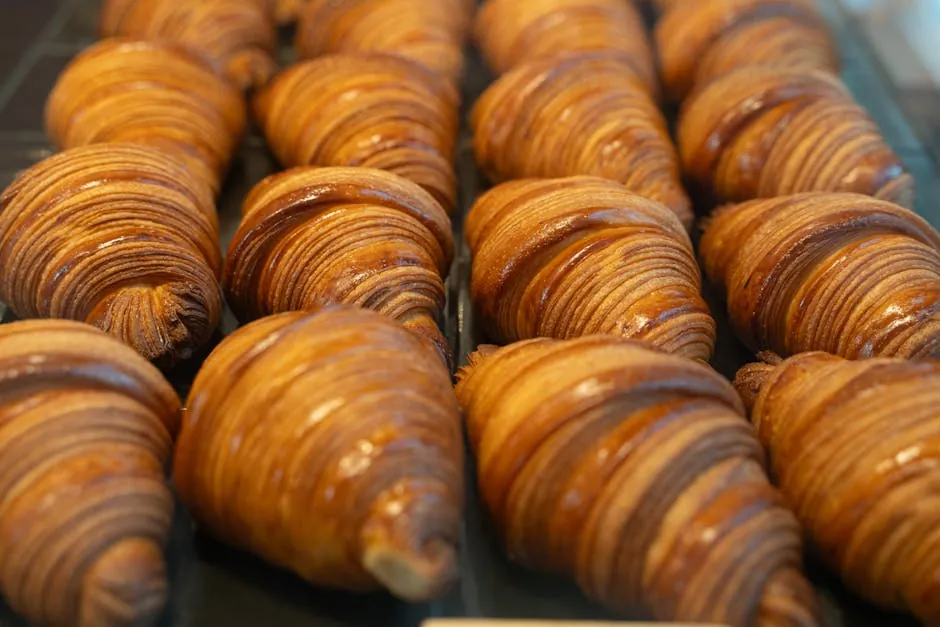
Soft Korean breads and bakery items — milk bread, salted-butter croissant, sweet potato cake
Korean bakery culture is its own genre, and a handful of categories are gentle enough to live on a recovery list. Milk bread is the soft, slightly sweet white loaf that is somehow both dense and cloud-light — the texture of a children's book illustration. Salted-butter croissants at the better French-Korean bakeries near the Sinsa and Apgujeong blocks are soft inside, crisp outside in a way that is forgivable on day two of recovery (skip on day one, when the crust is too much work). Sweet potato cake is a Korean specialty: roasted Korean sweet potato whipped with cream into a dome that you eat with a fork. It is the dessert I bring back to the hotel. Milk bread runs 4,000 to 6,000 KRW for half a loaf, croissants 4,000 to 6,000 KRW, sweet potato cake 6,000 to 9,000 KRW for a slice. I eat bakery on the morning of a recovery day, before the treatment if I have an early appointment, with weak coffee or barley tea. After treatment I shift to milk bread or sweet potato cake only — the croissant comes back into rotation about thirty-six hours later. None of this is medical advice; this is just what my face has told me, repeatedly, over four trips back to Korea. A few honorable mentions in this category that almost made the main list. Castella, the soft Japanese-style honey sponge cake adapted by Korean bakeries, is one of the gentlest pastries in Seoul — eat-with-a-spoon soft, not too sweet, and travels well in a paper sleeve. Soft red-bean buns at the older Korean bakery chains are another safe choice; the bun is pillow-soft and the bean paste is mild. Skip the harder sourdoughs, baguettes, and rye loaves on a recovery day — they are excellent in their own right but the wrong texture for what we are trying to do here. Avoid anything with shaved-ice toppings (bingsu) on day one regardless of how appealing it looks; cold-shock plus your warm post-treatment face is a category I have learned about the hard way. On day two or three, bingsu is fine and arguably part of the reward.
- Texture: cloud-soft (milk bread), tender-flaky (croissant day two+), whipped (sweet potato cake)
- Temperature: room temperature, no microwaving
- Where: French-Korean bakeries across Sinsa and Apgujeong Rodeo blocks
- Price: 4,000 to 9,000 KRW per item
- Best for: pre-treatment morning, day-two snack, hotel-room dessert
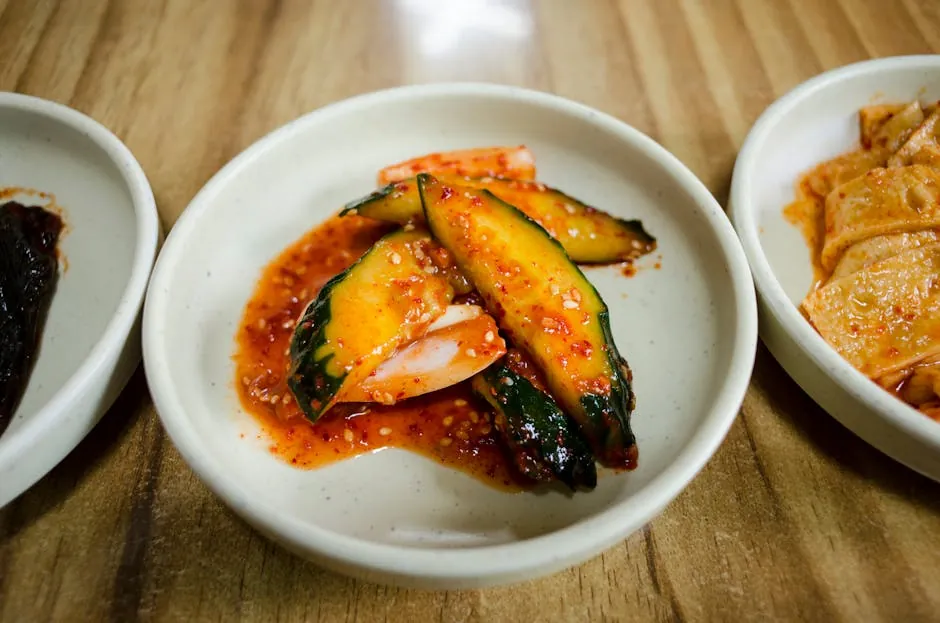
Tofu, banchan, and the small-plate hotel-room dinner
The last category is less a dish than a working method. Korean banchan shops — small to-go counters that sell daily-cooked side dishes by weight — are scattered through every residential pocket of Gangnam, and on the night of a recovery day I usually walk to the one I have been going to since 2019, point at four or five soft items, and walk back to my hotel with a small paper bag. Soft tofu pan-seared in light soy. Steamed eggplant. Mild seasoned spinach. A small portion of stewed pumpkin. Plain rice. The whole bag costs 14,000 to 22,000 KRW, depending on what I point at, and it is the gentlest hotel-room dinner you can put together in this part of Seoul. The quiet pleasure of this category is that it is quiet. There is no restaurant, no ambient lighting decision, no waiter to thank. There is just a polite older woman behind a counter who has watched me come in for four years and knows roughly what I will choose. I eat at the hotel desk with the news on low, drink a full liter of water, take an extra magnesium because my mom told me it is good after a long day, and I am in bed by 9. The recovery day works because the food on it does not ask for anything from me. That is the whole point. A few practical notes about banchan shopping that took me embarrassingly long to figure out. Most banchan counters open around 10 a.m. and the best selection is between 11 a.m. and 2 p.m.; by 7 p.m. the trays are picked over and the soft items are usually gone first. If you want banchan for dinner, buy it at lunchtime, refrigerate at the hotel, and let it come back to room temperature before eating. Skip the deeply seasoned items on a recovery night — anything dark red, anything that smells aggressively fermented, anything with chili flakes visible. Stick to the pale and the green: blanched spinach, seasoned bean sprouts, pumpkin, zucchini, boiled and seasoned tofu ( — ask for low spice), and the small egg rolls that almost every banchan counter sells. Plain rice is sold separately in small foil-sealed containers; one container is one serving.
- Texture: variable (tofu, steamed vegetable, soft rice) — all spoon or chopstick gentle
- Temperature: warm or room temperature
- Where: banchan to-go counters in residential alleys off Eonju, Sinsa, Yeoksam
- Price: 14,000 to 22,000 KRW for a full bag
- Best for: dinner at the hotel, end of a recovery day, last-resort jet-lag night
How I sequence these eight across a real recovery day
If you have read this far, you already know I rotate, not rank. A real recovery day for me usually pulls four of these eight categories — juk in the late morning, samgyetang or kalguksu for lunch, mandu or a bakery item in the afternoon, and either sundubu or a banchan-bag dinner at the hotel. The other four sit in reserve for the next trip, the next day, the version of this where my face is more tender, or the summer I get back to Seoul during kongguksu season and rebuild the whole list around cold soy-milk noodles. The frame is portable. You can run a version of this anywhere with good Korean food, but Seoul has the best ingredients, and Gangnam puts most of them inside fifteen walking minutes of the medical strip. I have written a longer breakdown of the full Gangnam recovery-day rhythm if you want the timing, the jjimjilbang piece, and the slow Garosu-gil walk in detail. There is also a separate post on what to eat specifically post-Ultherapy in the first 48 hours, which goes deeper on temperature and texture rules than this list does. None of it is medical advice. All of it is what has worked for me, four trips in, on the days my face is doing a small project and I want to be fed without being bothered.
Frequently asked questions
How soon after Ultherapy can I eat these foods?
Most of them you can eat within an hour or two of leaving the clinic, with a few caveats. Stick to warm rather than hot for the first two to three hours, since heat can prolong post-treatment redness. Skip anything spicy, very cold, or aggressively chewy on day one. Juk, samgyetang, gyeran-jjim, milk bread, and steamed mandu are all safe immediately. Sundubu jjigae and noodle soups are fine after the first hour if you let them cool slightly. Always follow your provider's specific aftercare instructions if they conflict with anything here.
Are these foods actually findable near the Gangnam clinic strip?
Yes. All eight categories are available within a fifteen-minute walk of the Sinsa, Apgujeong Rodeo, and Yeoksam clinic blocks. Dedicated juk shops and samgyetang restaurants are the slightly harder finds — usually one or two specialists per micro-neighborhood — but Naver Maps and KakaoMap both surface them with English labels if you search the romanized term. Banchan counters, mandu shops, bakeries, and noodle places are easier and on most main streets. None of this requires a taxi from the standard clinic strip hotels.
Do I need to speak Korean to order these?
No, but a few phrases written down help. Most Gangnam restaurants in this category have picture menus or English subtitles, and pointing works fine for banchan counters and bakeries. The phrases worth memorizing are 'not spicy', 'a little cooler please' ( — for very hot stews), and 'takeout'. Translation apps cover the rest. Confidence and a smile genuinely matter more than vocabulary in this part of Seoul.
What should I avoid eating during a recovery day?
Anything spicy, very hot, very cold, hard-crusted, deep-fried, alcoholic, or aggressively chewy. That eliminates Korean fried chicken, spicy stews like budae jjigae or kimchi jjigae, raw seafood, soju, ice-cold drinks, hot pot, and most BBQ for the first 24 to 48 hours. The general rule: if it would hurt your jaw or your sinuses on a normal sick day at home, skip it during a Seoul recovery day. Your face is doing similar work even if it does not feel like it.
Roughly what should I budget for food on a recovery day?
Around 35,000 to 60,000 KRW total for three meals plus an afternoon snack, which works out to roughly USD 26 to 45 at typical exchange rates. Juk for breakfast (12,000 to 18,000), samgyetang or noodle soup for lunch (9,000 to 22,000), mandu or bakery snack (4,000 to 14,000), and sundubu or a banchan bag for dinner (9,000 to 22,000). This is comparable to what I spend on a sick-day food run in San Francisco, with noticeably better soup-to-money ratios.
Can I eat any of these as takeout to my hotel room?
Most of them, with a few timing notes. Juk, sundubu jjigae, banchan bags, and most noodle soups travel well within thirty minutes if the lids are sealed properly. Steamed mandu travels well within forty-five minutes — beyond that the skins go gummy. Bakery items are obviously fine for hours. Samgyetang technically travels but loses heat quickly and is better eaten in the restaurant. Most shops will give you takeaway containers without a fuss; just say 'pojang-iyo' at the counter.