Editorial Picks
Recovery-Friendly Restaurants in Gangnam (Soft Food, Quiet Rooms)
Thirteen Gangnam restaurants I rotate through on post-procedure days — soft textures, quiet lighting, slow pacing, and rooms that do not ask anything of a tender face.
Restaurants are the part of a Gangnam recovery day I spent the longest getting wrong. The food list itself I figured out fast — soft textures, warm temperature, low spice, the obvious stuff. The harder variable was the room. After Ultherapy or any laser, my face is mildly flushed and slightly tender for a few hours, and a loud, brightly lit, hard-bench restaurant is genuinely uncomfortable to sit in for forty minutes, no matter how good the food is. Quiet lighting, slow pacing, soft chairs, gentle staff — those matter as much as the menu. This list is the working rotation I have settled on across five trips to Gangnam: thirteen restaurants in Apgujeong, Sinsa, Cheongdam, and the Gangnam Station strip that pass all of it. Soft food a tender jaw can handle. Rooms that read calm rather than busy. Staff who do not hover. None of these are sponsored. A few of them flopped for me on first visit and I have flagged exactly why.
How I built this list — and what flopped along the way
A recovery-friendly restaurant list is a narrower category than a Gangnam-best-of list, and writing it honestly means admitting which places have failed me. There is a Cheongdam Italian I love on a normal trip that flopped on a recovery afternoon — beautiful room, terrible acoustics, every sound bouncing off the marble floor and the high ceiling, my face reading hot in the bathroom mirror after twenty minutes. There is a Garosu-gil all-day brunch place with great avocado toast that has the wrong lighting entirely — overhead spots aimed straight at every table, the kind of room a portrait photographer would flag. There is a celebrated barbecue spot on the Apgujeong Rodeo side that is obviously wrong on a recovery day for the obvious reason — open grill, smoke, hot meat — but I include it as a flop here because I made the mistake of trying it on day-one once and learned the rule the hard way. What stayed on the list passes five rules: soft enough food across the menu that a tender jaw is not working hard, lighting in the warm-and-low-Kelvin range (broadly 2700K to 3000K — closer to a hotel reading lamp than to a hospital corridor), seating that is upholstered or at least padded rather than bare wood or wire, a room volume that lets a normal conversation happen at a normal voice, and within a roughly fifteen-minute walk or short taxi from the Sinsa, Apgujeong, Cheongdam, or Gangnam Station clinic clusters. I also weighted toward staff who treat lingering as a feature rather than a bug — the kind of place where nobody brings a check until you ask. Categories below are listed by neighborhood, in roughly the order a real recovery week pulls from them — not in any kind of ranking. Editorial picks, not a leaderboard.
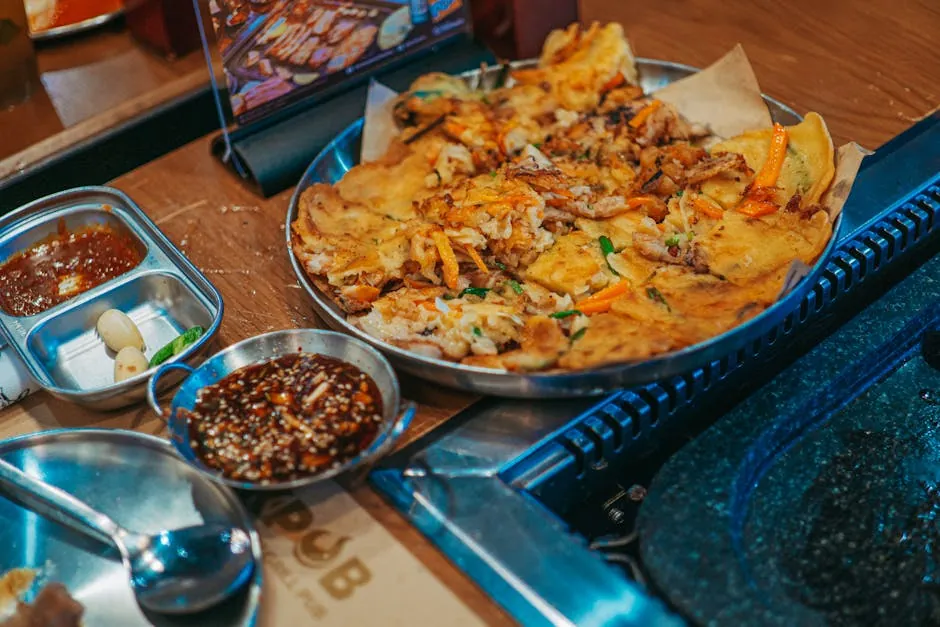
Apgujeong — the dedicated juk specialist with the back-corner two-tops
Juk is Korean rice porridge, and the dedicated juk shop I default to in Apgujeong is the gentlest morning-of-treatment restaurant on this whole list. It is a small specialty room about an eight-minute walk from the Apgujeong Rodeo medical strip, with maybe twenty seats, a counter facing two slow-moving cooks, and a row of small two-top tables tucked along the back wall. The lighting is warm pendant overheads at maybe forty percent of the brightness of a normal Seoul restaurant, the seats are padded wood chairs with cushions, and the soundtrack is essentially the sound of pots simmering on the back burner. I have been coming here since 2018. What I order on a soft-food day: abalone juk (about 18,000 KRW) when I want to feel slightly fancy about it, pumpkin juk (around 14,000 KRW) when the weather is cold, plain chicken juk (12,000 KRW) when I am still queasy from the flight. The porridge arrives in a stone bowl, slow-cooled at the table for five or six minutes, and you eat it with a spoon — no chewing required. The mild banchan that comes with it is a small dish of soft pickled radish I usually skip on day one. Why it works post-procedure: the porridge is soft, warm rather than hot, low-acid, and the room volume stays library-low because the seating is small and the foot traffic is steady rather than peaky. Peak vs quiet hours: 8 to 9:30 a.m. is busy with the post-gym Apgujeong residents. 10 to 11:30 is the quietest window of the entire day and the one I aim for after a morning treatment. Lunch peaks 12:30 to 1:30. Late afternoon (3 to 4:30) is empty and a perfectly fine secondary slot. Personal note: on my first trip I made the mistake of ordering the chain-juk version one block over because it was easier to find — fine but predictably shallow, the rice-cook time half what the specialist does, and the difference shows up in the texture. Walk the extra four minutes for the specialist.
Apgujeong — the slow-pour samgyetang restaurant with the upholstered booths
Samgyetang is whole young chicken simmered with sticky rice, ginseng, garlic, and jujubes — and the Apgujeong specialist I keep returning to is the one that has solved the room as carefully as the broth. It is about ten minutes from the medical strip, on the second floor of a small building, and the room is split between a back wall of upholstered banquette booths and a row of tatami-style platforms along the south wall. The lighting is warm overhead pendants plus low table lamps on each booth, softer than almost any Korean restaurant in this category. Most samgyetang places lean fluorescent and bright; this one feels like a quiet hotel restaurant. What I order: the standard whole-chicken samgyetang (around 19,000 KRW), no extra spice on the side, with the small jujube-stuffed variant on day one because the jujubes soften the herbal note. The chicken arrives so tender you separate the meat with the side of a spoon — no chewing — and the broth is mild, slightly sweet, faintly herbal in a structural rather than aggressive way. Why it works post-procedure: the protein is fully spoon-soft, the broth is warm rather than scalding if you wait the standard eight to ten minutes, and the calorie load gets me through a long afternoon without a crash. The booth seating is the variable that matters most — a samgyetang lunch on a hard wood bench is a different experience than the same meal in a padded booth, and on a recovery day the difference is real. Peak vs quiet hours: the lunch rush is sharp, 12:00 to 1:00. Show up at 11:30 or 1:30 and you walk straight to a back booth. Dinner is quieter than lunch — I have come at 6:30 p.m. on a recovery day and had a back-corner banquette to myself. Personal note: I cried a little here on my second trip, in a polite American way, because the broth tasted like something my grandmother would have made if she had ever cooked Korean food. The combination of the soft food and the gentle room hit at the same time. Bring a book; nobody will rush you.
Apgujeong — the soft tofu stew shop with the no-spice protocol
Sundubu jjigae is silken tofu stew, and the Apgujeong sundubu shop on this list is the one that will quietly accommodate a no-spice request without making it weird. It is a small banchan-and-stew place about eleven minutes from the medical strip, on a quiet side alley, with maybe sixteen seats split between two-top tables and a counter along the kitchen window. The lighting is warm overhead pendants at the kind of brightness that reads as 'family kitchen at dinner' rather than 'dining room at noon.' Padded chairs. Quiet music. The owner is a polite older woman who has watched me come back across multiple trips and now writes my order down before I open my mouth. What I order: plain sundubu, no chili, no kimchi version, with a small bowl of plain rice on the side rather than the heated stone-pot rice (around 11,000 to 13,000 KRW total). The tofu arrives in a stone bowl still bubbling — let it sit six to eight minutes before eating — and the broth is umami, anchovy, and the soft tofu's own milkiness. The egg cracks in last and stirs through into ribbons. Why it works post-procedure: the tofu is essentially custard, the broth is mild once you confirm the no-spice order, and the seating volume keeps the room calm. Crucial caveat: most Gangnam sundubu defaults to mid-spicy. You must actively order it gentle, and the phrase that works is 'an maep-ge hae-ju-se-yo'. Peak vs quiet hours: 12 to 1 is busy, 1:30 to 3 is quiet, 6 to 7:30 is the dinner rush. I aim for 1:45 lunch or 8 p.m. dinner on a recovery day and have always walked into a quiet room. Personal note: on my third trip I tried the same shop's seafood version on a day-two recovery night and it was excellent — slightly richer broth, small clams that are easy to spoon-eat — but on day-one I always stick to plain. The kimchi sundubu, no matter how good your spice tolerance, is wrong on a face-hurts day. The fermented kimchi makes the broth acidic and the heat punches harder when your skin is still warm from a treatment.
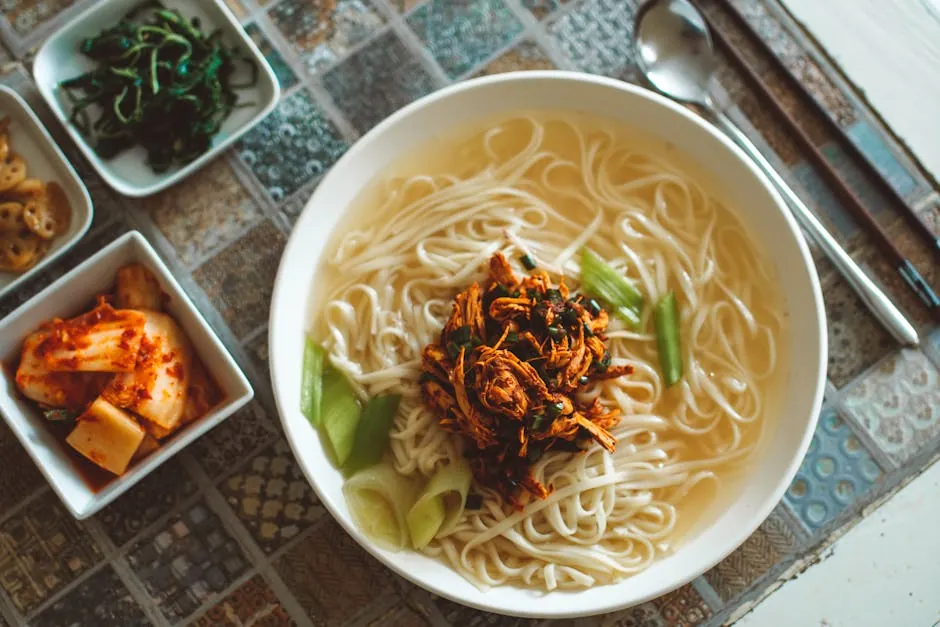
Cheongdam — the quiet kalguksu noodle house with the slow lunchtime
Kalguksu is hand-cut wheat noodles in a clear anchovy-and-vegetable broth, and the Cheongdam noodle house I send people to is the one that has the slowest, quietest lunchtime of any noodle place in Gangnam. It is about a twelve-minute walk from the Apgujeong medical strip — borderline taxi territory if your face is flushed — on a quiet residential block on the Cheongdam side. The room is wider than it is deep, with twelve to fifteen four-tops spaced enough apart that you cannot hear the next table's conversation, an open kitchen at the back where the noodles are hand-cut to order, and warm overhead pendant lighting at a hospitality-restaurant level rather than a fast-noodle level. What I order: the kimchi-mandu-kalguksu combination (around 11,500 KRW), which is the same hand-cut noodles in a slightly richer broth with a few steamed mandu floating in it — soft on soft, and it keeps me full for four hours. I ask the kitchen to skip the chili-oil garnish and to serve the broth warm rather than scalding. Why it works post-procedure: the noodles are soft and slippery rather than chewy, the broth is mild and clear, and the mandu skins stay tender because they are pre-steamed and added at the end rather than boiled in the soup. The combo plate is a single coherent soft-food experience for under twelve dollars. Peak vs quiet hours: 12:30 to 1:15 is the only really busy window. 11:45 to 12:15 is empty. 1:30 to 2:30 is empty and the kitchen is at its most relaxed. I have eaten lunch here in the 1:45 slot and watched the cook prep the next batch of dough in the back, a small public-spectacle that is somehow soothing on a recovery afternoon. Personal note: this is the place I sent a friend who was coming to Gangnam for her first cosmetic appointment and was nervous about lunch options. She texted me from the table that the room was the quietest restaurant she had ever sat in at lunch in Seoul, and ordered the same combination twice in three days. The hand-cut texture of the noodles is the variable nobody warns you about in advance — it is genuinely different from any boxed noodle.
Cheongdam — the dumpling specialist with the steamer-front seating
Steamed mandu is the most underrated soft-food category in Gangnam, and the Cheongdam mandu specialist I rotate through is the one with the gentlest seating arrangement and the most-careful steamer protocol. It is a small ten-seat shop about thirteen minutes from the medical strip, with a long counter facing an open kitchen where the mandu are hand-folded in front of you and steamed in flat bamboo baskets. The seating is upholstered counter stools — not hard wire stools, which matters across an hour-long meal — and the lighting is two warm-bulb pendants over the counter plus a single back-wall sconce. The room volume is essentially the sound of the steamer and the cook's quiet voice when she calls out an order to her partner. What I order: a basket of eight pork-and-vegetable mandu (around 11,000 KRW), or the vegetable-only yachae mandu (10,000 KRW) on a really tender day, with a side of soy-vinegar dipping sauce minus the chili oil. The skins are thin, the fillings are mild ground pork or finely chopped vegetable, and the steaming keeps everything tender. Why it works post-procedure: the dumpling skin is soft within thirty minutes of leaving the steamer, the filling is finely textured and easy to chew, and the dipping sauce is gentle if you remember the no-chili-oil request. I default to mandu as a between-meal afternoon snack on long recovery days because chewing soft dumpling skin is the closest thing to a real meal I want to do at 4 p.m. Peak vs quiet hours: lunch is the rush — 12 to 1:15 fills the counter. 2 to 4 is a soft afternoon window with usually two or three open seats. Avoid Saturday afternoon entirely — the Cheongdam weekend foot traffic spikes here in particular. Personal note: I ordered the king-sized wangmandu version on my first visit because it looked cinematic in the steamer, and the thicker skin fought my jaw harder than I expected on a treatment-plus-one day. Lesson learned. Stick to the regular size on a recovery day; the wangmandu is a normal-day food, not a face-tender-day food.
Cheongdam — the Korean-Japanese diner with the omurice and the bench seats
Omurice — the Korean adaptation of Japanese omurice, soft fried-rice center wrapped in a thin egg sheet — is a category I underrated until my third trip and now lean on heavily. The Cheongdam Korean-Japanese diner I default to is a small thirty-seat space about fourteen minutes from the medical strip, with banquette bench seating along one wall and a row of small two-top tables along the other, plus a counter facing the kitchen where they pour the demi-glace tableside. The lighting is warm pendants over the counter and softer overhead diffusers over the booths — closer to a Tokyo neighborhood diner than to a Korean franchise. Padded benches. Quiet pop instrumentals. Polite staff. What I order: classic omurice with the mild demi-glace (around 12,000 KRW), no spicy kimchi version, with a side gyeran-jjim if I want extra soft protein (around 5,000 KRW). The egg sheet arrives uncut, the server slices it open with the side of a spoon so it unfurls over the fried rice, and the demi-glace pours over the open egg in a single slow motion. Why it works post-procedure: the entire dish is custard-soft from the egg through the rice, the demi-glace is mild rather than spicy, and the gyeran-jjim is the gentlest savory custard in Korean cuisine. Ask for half the demi-glace on the side if you are sensitive to anything tomato-acidic — they will accommodate without hesitation. This is also the dish I default to on day-one of a Seoul trip when my body still does not know what time it is and I want childhood food in a foreign country. Peak vs quiet hours: lunch rush is 12 to 1:30, dinner rush 6 to 8. The 2:30 to 5 afternoon window is genuinely empty here — I have sat alone in a back booth with a laptop and a second iced barley tea and nobody once nudged me toward a check. Personal note: I brought a friend here who is generally suspicious of fusion food and she ordered the same omurice three days in a row. The demi-glace pour is good theater, the room is quiet, and the food is soft in a way that pairs unusually well with a tender face.
Sinsa — the abalone porridge alternative with the late-night hours
The Apgujeong juk specialist on entry is my morning default, but the Sinsa abalone-juk shop I rotate to is the one that stays open past dinner and saves me on a recovery night when nothing else sounds right. It is a slightly larger space — maybe thirty seats — about nine minutes from the southern Sinsa edge of the medical strip, with two-top and four-top tables under warm overhead pendants and a small counter facing the kitchen. The room is brighter than the Apgujeong specialist (I would call it 'restaurant-bright' rather than 'cafe-dim') but never aggressive, and the seating is padded chairs rather than benches. They are open until 11 p.m. on most nights, which makes them my late-arrival default after a 9 p.m. flight. What I order on a soft-food day: abalone juk (around 19,000 KRW) is the namesake dish, but I just as often order the seafood-mushroom juk (16,000 KRW) for slightly more umami without the price tag, or plain pumpkin juk (14,000 KRW) when I want something even gentler. The porridge arrives slow-cooked, hot enough that you let it sit five minutes, and the abalone slices are soft-poached rather than crisp-grilled — fully spoon-soft. Why it works post-procedure: same logic as the Apgujeong specialist (soft, warm, low-acid) but the late hours are the variable that earn this slot specifically. After a long-haul flight that lands at 8 p.m. Seoul time, with a treatment scheduled for the next morning, this is the meal that resets my body without asking me to do anything. Peak vs quiet hours: lunch (12 to 1:30) is the only crowded window. 8 to 11 p.m. is genuinely calm — usually two or three tables in a thirty-seat room, the staff tidying for close, the cook prepping next morning's stock. Personal note: on my second-to-last trip I landed at Incheon at 7 p.m., took the airport limousine bus to Sinsa, dropped my bag at the hotel, and walked over here at 9:45 p.m. for a single bowl of abalone juk and a cup of barley tea. I was in bed by 11:15. The next morning's Ultherapy session was the easiest one I have done across five trips. The category exists for nights like that.
Sinsa — the kongguksu summer specialist (June through August only)
Kongguksu is cold soy-milk noodles, and the Sinsa specialist that runs this dish for three months a year is on this list specifically because Korean summer recovery is its own category. The shop is open most of the year for other noodle dishes, but kongguksu only appears on the menu from roughly June 1 through the end of August, and during those months it is the only Korean restaurant I genuinely want to eat at on a hot recovery afternoon. The room is bright by the standards of this list — full daylight through a north-facing wall of windows — but the windows have sheer linen curtains that diffuse the light, and the seating is upholstered banquette along the perimeter rather than the bare-stool fast-noodle setup. Maybe twenty-five seats. Quiet pop. Polite staff. What I order: kongguksu with crushed pine nuts on top (around 13,000 KRW), no extra salt, with a small bowl of plain rice on the side that I crumble into the bowl after I finish the noodles. The noodles are wheat or buckwheat, soft-cooked and chilled, served in a cold soy-milk broth that is mild and faintly sweet — the soup is white rather than clear, almost the color of a thin cream. Why it works post-procedure: there is no chewing, the cold temperature is genuinely comforting on a humid August afternoon when your face is flushed both from a treatment and from the weather, and the soy-milk broth is one of the gentlest savory broths in Korean cuisine. The pine nuts add a faint creaminess without changing the texture. Peak vs quiet hours: lunch is busy (12 to 1:30), and the kongguksu line gets longer the hotter the day is. The 2:30 to 4 afternoon window is the slot I aim for; I have never waited at 3 p.m. even on a 36°C August Saturday. Personal note: cold-shock plus a warm post-treatment face is a category I have learned about the hard way — bingsu (Korean shaved ice) on day-one is a mistake — but kongguksu does not trigger the same response because the cold soy-milk is a smooth medium rather than a sharp ice-shock. Day-one safe in summer. Worth planning a summer Gangnam trip around in the same way you would plan a winter trip around a hanok tea space.
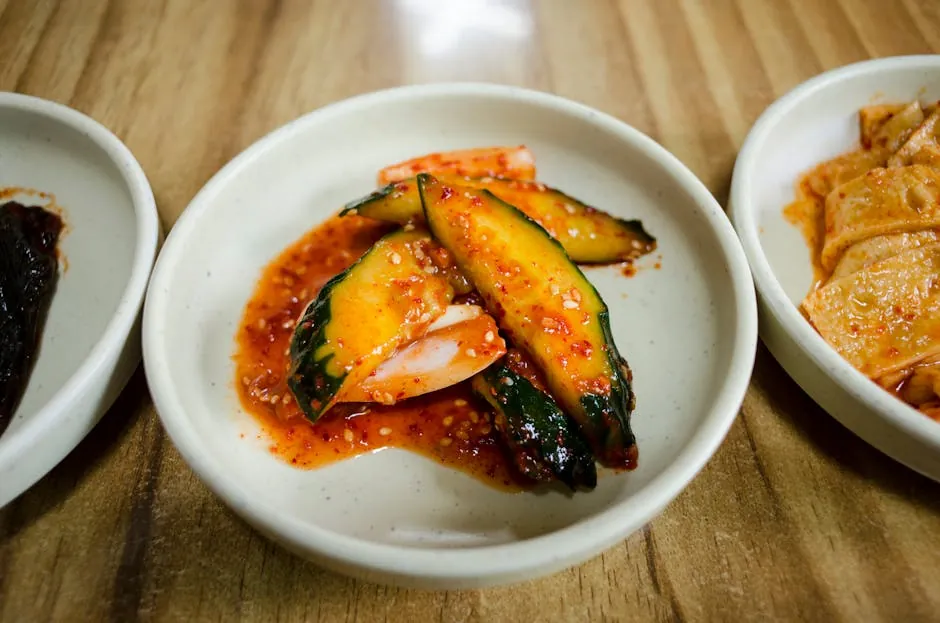
Sinsa — the all-day Korean home-style banchan-and-rice place
Korean home-style restaurants — gajeong-sik — are the category I underrated for years and now consider essential. The Sinsa specialist on this list is a small twenty-seat shop about ten minutes from the medical strip, run by a husband-and-wife team, where the menu is a single rotating set: rice, soup, three or four banchan, and a soft protein, all changing daily based on what the wife bought at the morning market. There is no fixed menu beyond 'today's set' (, around 13,000 KRW). The room is warm overhead pendant lighting, padded wood chairs, hand-thrown ceramics, and the kind of slow, steady, family-restaurant pacing that does not exist in restaurants targeting tourists. What I order on a soft-food day: I just take the set and ask the wife — who speaks careful but workable English — which of today's banchan are pale rather than dark-red, and which protein is softest. She has steered me toward soft-cooked egg rolls, blanched spinach, gently seasoned tofu, and steamed white-fish on different days. The rice is plain or sometimes barley-mixed. The soup is whatever she made that morning — usually a clear seaweed or a soft soybean-paste soup. Why it works post-procedure: every component on the tray is soft and gentle by default, the spice level is genuinely low because the set is built for older Korean diners rather than for the spicy-Korean-food clichè, and the room is the calmest dining experience I have had at lunch in Sinsa. Peak vs quiet hours: 12 to 1 is local-office-worker busy. 1:30 to 2:30 is empty. They close at 3 p.m. and reopen at 5:30 — the dinner window is 5:30 to 8 and rarely full. Personal note: I once asked the wife if I could take the leftover banchan back to my hotel because I could not finish the set, and she packed three small containers without charging me for them. That is the kind of place this is. I have brought my California mom here on her one Seoul trip and she still talks about the spinach. It is the restaurant equivalent of a banchan-bag dinner from entry of my recovery foods list — same gentleness, with the bonus of a quiet room.
Gangnam Station — the multi-floor naengmyeon house with the chilled buckwheat
Naengmyeon is cold buckwheat noodles in a clear chilled broth, and the Gangnam Station specialist on this list is the multi-floor old-school house that has been doing this dish since the 1970s. It is about a twelve-minute walk from the southern Sinsa side of the medical strip — borderline taxi territory if your face is flushed — but it is the only naengmyeon experience in Gangnam I would recommend on a recovery day, because the smaller chains tend to over-vinegar the broth in a way that stings. The room is split across three floors, and the second floor is the one I aim for: padded banquette booths along the windows, warm overhead pendants, and a quieter foot-traffic pattern than the ground-floor walk-in space. What I order on a soft-food day: mul-naengmyeon (around 13,500 KRW) — the cold-broth version, not the dry-mixed bibim-naengmyeon — without the standard mustard packet on day one, with a small side of soft mandu (around 9,000 KRW) if I want extra protein. The noodles are buckwheat, chewy by Korean standard but slippery enough that you can short-cut chew them, and the broth is clear, mild, very slightly tart from the radish-water base. Why it works post-procedure: the cold temperature is the only summer-friendly dish that holds up across day-one and day-two recovery, the broth is gentle enough that even a tender mouth tolerates it, and the buckwheat noodles are softer than wheat after the cold water has worked on them. Important caveat: I would not order the spicy bibim-naengmyeon on a recovery day; the chili paste version is a different category entirely. Peak vs quiet hours: lunch (12 to 1:30) is sharp on the ground floor, calmer on the second. 2 to 4 is empty across the building. Dinner is calmer than lunch. Personal note: I tried this on a treatment-day-zero in summer and learned that even mild naengmyeon is a slightly riskier soft-food choice than samgyetang or sundubu — the cold can be a bit jarring when your face is still warm. I now save naengmyeon for treatment-plus-one or treatment-plus-two days, when my skin has settled. On day-one I default to the warm soft-food list. On day-two-summer it is the perfect transition meal.
Gangnam Station — the soft-fish jeongol with the in-room single burner
Jeongol is a Korean stew-pot dish cooked at the table on a small portable burner, and the Gangnam Station soft-fish jeongol specialist on this list is the one that has solved this category for a tender face. Most jeongol is spicy and aggressive — kimchi jeongol, beef-and-mushroom jeongol — but this restaurant runs a single soft-flavor variant called daegu-jeongol (Daegu), made with white-fleshed Pacific cod, soft tofu, mild radish, and a clear anchovy broth. The room is a series of small private semi-rooms with floor-to-ceiling sliding doors and warm overhead pendants — closer to a Japanese izakaya layout than to a typical Korean stew restaurant — and the staff close the door behind you when they bring the burner to the table. Quiet, contained, soft. What I order on a soft-food day: the daegu-jeongol for two even when I am alone (around 28,000 KRW per portion, but the half-portion is plenty for one person — ask politely and they accommodate). The pot arrives unboiled, the staff set the burner to low and walk you through the cook order — radish first, then tofu, then fish — and the whole thing simmers gently at the table for about twelve minutes before it is ready. Why it works post-procedure: the cod is fully spoon-soft after twelve minutes of gentle simmer, the broth is mild, the tofu adds extra soft protein, and the slow tabletop cook gives you the calmest pacing of any restaurant on this list. You set the speed; nobody rushes the burner. Skip the chili-paste side dish that comes by default. Peak vs quiet hours: dinner (6 to 8) is the busy window for any jeongol category. Lunch (12 to 1:30) is busy on weekdays, light on weekends. The 2:30 to 5 afternoon window is genuinely empty, and several of the private semi-rooms will be available for solo diners. Personal note: I made the mistake on my first trip of ordering the standard kimchi-jeongol at a different specialist on a treatment-plus-one evening, and the spicy broth was a clear flop — face redder by the end of the meal than at the start. Daegu-jeongol is the variant that solves the entire category. Worth the longer pacing for the contained, quiet, slow tabletop experience.
Apgujeong — the oatmeal cafe with the savory porridge bowls
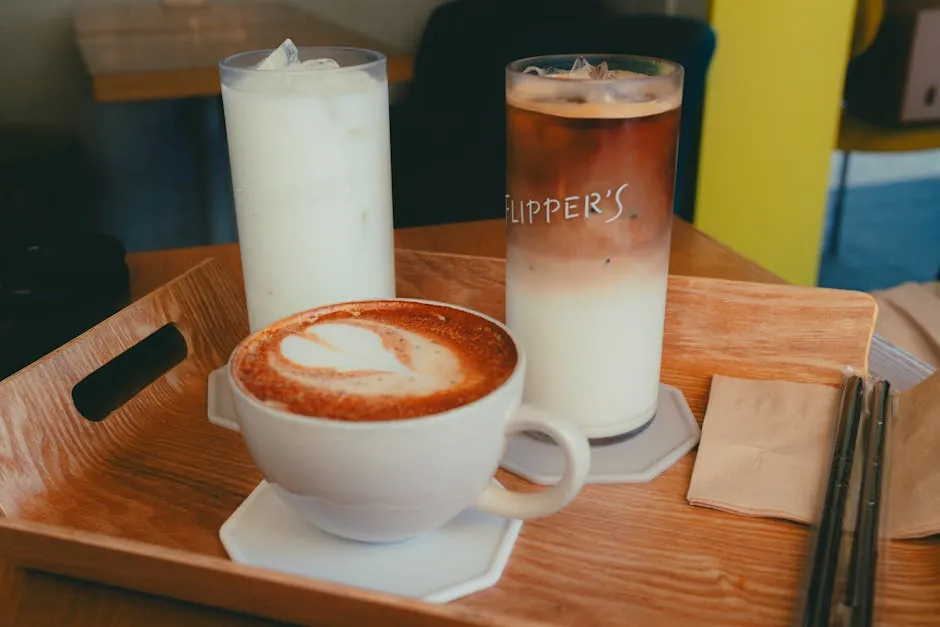
This is the genre swap on the list — not strictly a Korean restaurant but a Western-style oatmeal cafe that has earned its place because the soft savory bowls are the closest equivalent to juk for jet-lagged Western palates. It is a small twelve-seat space about nine minutes from the Apgujeong medical strip, with a single counter facing the kitchen and two two-top window tables under sheer linen curtains. The lighting is warm overhead pendants and a row of brass desk lamps along the counter, more cafe than restaurant. The seating is upholstered counter stools and padded chairs. The menu is short: four sweet oatmeal bowls, three savory ones, and a small list of teas and coffees. What I order on a soft-food day: the savory mushroom-and-egg oatmeal (around 14,000 KRW) — slow-cooked steel-cut oats simmered with mushroom stock, topped with a soft-poached egg and a little wilted spinach, finished with a single drop of sesame oil. Or the sweet sweet-potato-and-cinnamon oatmeal (12,500 KRW) when I want something between breakfast and dessert. Why it works post-procedure: the oats are essentially porridge, the savory broth is mild, the soft-poached egg adds spoon-soft protein, and the spice level is essentially zero. This is the only restaurant on this list where I feel comfortable taking a friend who is genuinely nervous about Korean food on a treatment day — the format reads familiar (a bowl of oatmeal) while the seasoning is gentle in the same way as the rest of the soft-food list. Peak vs quiet hours: 8:30 to 10 is the morning rush. 10:30 to 12 is calmest. Lunch is light because the format is unusual for Korean lunch. 3 to 5 afternoon is empty. They close at 6 p.m. — this is a daytime-only restaurant. Personal note: I send people here on day-one of their first Gangnam trip when they are jet-lagged and not yet ready to commit to a Korean menu. The format is gentle, the room is calm, the staff speak careful English, and the savory oatmeal is genuinely good rather than a compromise. It is also the place I default to when I have one hour between a morning treatment and an afternoon flight to Jeju and need a single soft meal that travels well as a takeaway box.
Cheongdam — the dessert-focused soft-cake atelier with the sit-down spoon menu
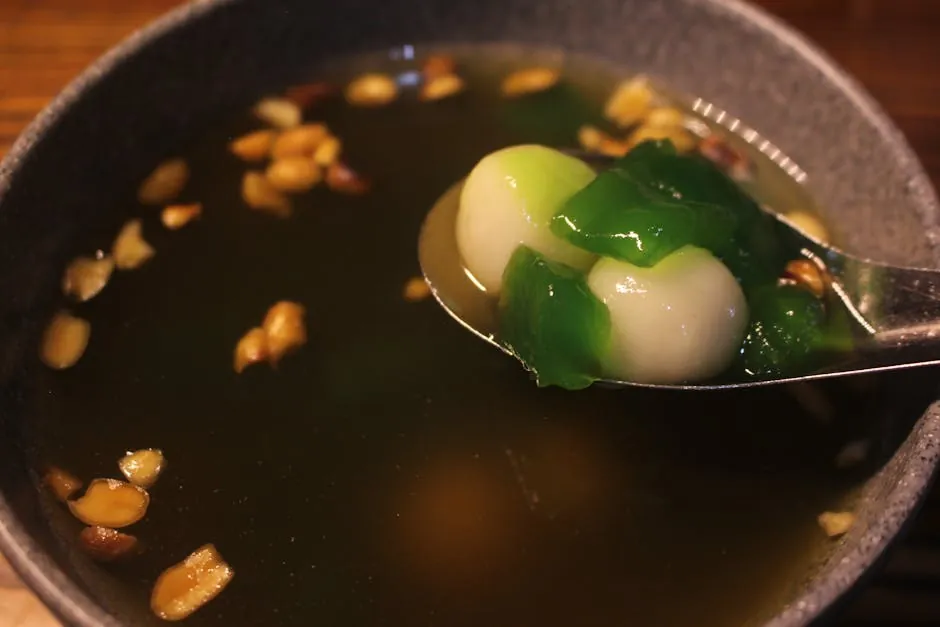
The last entry is a category swap — not a meal restaurant but a sit-down dessert atelier where the entire menu is soft enough to eat with a spoon. It is a six-seat space about thirteen minutes from the Apgujeong medical strip, on the Cheongdam side, with a single window covered in a sheer linen panel and three or four pillar candles on the wall shelves above the counter seating. After dark the room is lit by candles, a single warm pendant over the pastry case, and one small accent lamp in the back corner. The pastry chef bakes everything in the morning — basque cheesecake, soft chocolate mousse cake, seasonal fruit tart, vanilla pudding, pistachio financier — and the rotation is whatever she made that day. Coffee and tea are short and predictable. What I order on a soft-food day: the basque cheesecake (around 8,500 KRW) almost every visit because it is soft enough to eat with a spoon, paired with a hojicha-style roasted green tea (around 6,000 KRW). On a treatment-plus-one day I will sometimes add the soft chocolate mousse cake (8,500 KRW) as a second course. Why it works post-procedure: every item on the rotation is custard-soft, mousse-soft, or pudding-soft. There is no crust to fight, no chewing involved, and the portion sizes are sized for a sit-down dessert course rather than a takeaway slice. The room is small enough that the volume stays library-quiet across an hour. The staff treat lingering as a feature. Peak vs quiet hours: opens at noon, the cheesecake usually sells out by 4:30 p.m., the rotation shifts to the harder pastries after that. Show up between 2 and 3:30 if you want the soft-cheesecake-plus-tea combination. Personal note: this is the place I send people to on the evening of a treatment-plus-one day when they want one slow, quiet, slightly indulgent hour before going back to the hotel. It pairs cleanly with the dessert atelier on entry of my soft-lighting cafes list — same room, same chef, same protocol. Categorical, not ranked. I have ended four of my last five Gangnam trips with a slow basque-cheesecake-and-tea visit here, and it has become one of the small architectural rituals of how I close a recovery week.
Quick-glance comparison — neighborhood, dish, lighting, peak window
A short comparison in case you want the full rotation at a glance. Neighborhood and peak-vs-quiet windows are the two variables that matter most for planning a recovery day around appointments; the rest is preference and timing.
| Restaurant category | Neighborhood | Soft-food default | Lighting style | Quietest window |
|---|---|---|---|---|
| Juk specialist | Apgujeong | Abalone or pumpkin juk | Warm pendants, low | 10-11:30 a.m. |
| Slow-pour samgyetang | Apgujeong | Whole-chicken samgyetang, no spice | Pendants + table lamps | 11:30 a.m. or 1:30 p.m. |
| Soft tofu stew shop | Apgujeong | Plain sundubu, no chili | Warm overhead, family-bright | 1:45 lunch or 8 p.m. dinner |
| Quiet kalguksu house | Cheongdam | Kimchi-mandu-kalguksu combo | Hospitality-restaurant warm | 11:45-12:15 / 1:30-2:30 |
| Dumpling specialist | Cheongdam | Steamed pork or vegetable mandu | Warm pendants + sconce | 2-4 afternoon |
| Korean-Japanese diner | Cheongdam | Mild demi-glace omurice | Pendants + booth diffusers | 2:30-5 afternoon |
| Late-night abalone juk | Sinsa | Abalone or seafood-mushroom juk | Restaurant-bright, warm | 8-11 p.m. |
| Kongguksu specialist (summer) | Sinsa | Kongguksu with pine nuts | North windows, sheer curtain | 2:30-4 p.m. |
| Korean home-style set | Sinsa | Today's gajeong-sik tray | Warm pendants, slow pacing | 1:30-2:30 lunch |
| Old-school naengmyeon | Gangnam Station | Mul-naengmyeon, no mustard | Warm overhead, second floor | 2-4 second-floor |
| Soft-fish jeongol | Gangnam Station | Daegu-jeongol (cod) | Private-room pendants | 2:30-5 weekday afternoon |
| Oatmeal cafe | Apgujeong | Mushroom-and-egg savory oatmeal | Pendants + brass desk lamps | 10:30-12 / 3-5 afternoon |
| Soft-cake atelier | Cheongdam | Basque cheesecake + hojicha | Candles + warm pendant | 2-3:30 p.m. |
How I sequence these thirteen across a real recovery week
If you only take one piece of advice from this whole post, take this. You do not need all thirteen in a single trip. A real recovery week for me usually pulls five or six — juk specialist morning of treatment, slow-pour samgyetang for lunch, dumpling specialist as a 4 p.m. snack, sundubu shop for dinner, oatmeal cafe the next morning, soft-fish jeongol the next evening. The other half of the list is rotation for the next trip, the next season, the version of this where my face is more tender, or the summer I get back during kongguksu season and rebuild the whole schedule around cold soy-milk noodles and the second-floor naengmyeon house. The frame is portable. You can run a version of this in any city with serious Korean food, but Gangnam stacks soft-food specialists, hotel-grade lighting, and quiet rooms inside the same fifteen-minute walking radius in a way I have not found anywhere else. I have written a longer breakdown of the soft Gangnam recovery foods themselves if you want the texture-and-temperature rules in detail, and a separate post specifically on samgyetang as a jet-lag reset. There is also a piece on what I eat when I am jet-lagged that overlaps with this list but starts from a different angle, and a list of soft-lighting Gangnam cafes for the afternoon-and-evening side of the rotation. None of this is medical advice. All of it is what has worked for me, five trips in, on the days my face is doing a small project and I want to be fed without being bothered.
Frequently asked questions
How soon after Ultherapy can I sit down at one of these restaurants?
Most of them you can walk into within an hour or two of leaving the clinic, with a few common-sense rules. Skip the spicy-by-default dishes, ask for warm rather than scalding broth, and avoid the heavier chewing categories on day one — the dumpling specialist is fine but the king-sized wangmandu version is not. Juk, samgyetang, plain sundubu, soft omurice, the oatmeal cafe, the soft-cake atelier, and the home-style set are all safe immediately. Naengmyeon and kongguksu I personally save for day-two when the cold no longer feels jarring against a flushed face. Always follow your provider's specific aftercare instructions if anything here conflicts with them.
Are these restaurants actually walkable from the Gangnam clinic strip?
Mostly yes. All thirteen are within a fifteen-minute walk of the Sinsa, Apgujeong Rodeo, Cheongdam, or Gangnam Station clinic clusters, with most clustering between eight and twelve minutes. The Apgujeong-side restaurants (juk specialist, slow-pour samgyetang, sundubu shop, oatmeal cafe) are seven to ten minutes from the Apgujeong medical strip. Cheongdam-side restaurants are eleven to fourteen minutes — borderline taxi territory if your face is flushed in summer. Gangnam Station-side restaurants are twelve minutes from the southern Sinsa edge. None of them require a long taxi from standard clinic-strip hotels in normal weather, but in heavy rain or 35°C August humidity I will take a 5,000 KRW taxi rather than walk a flushed face through it.
What is the no-spice phrase to use when ordering?
The phrase that works across all thirteen restaurants is 'an maep-ge hae-ju-se-yo', which means roughly 'please make it not spicy.' For sundubu, kalguksu, and jeongol it is the difference between a comfortable recovery meal and a face-redder-than-when-you-arrived meal. Most Gangnam staff are familiar with the request and will accommodate without making it weird. Two other useful phrases: 'po-jang-i-yo' for takeaway, and 'jo-geum sik-hyeo ju-se-yo' for 'a little cooler please' on very hot stews. Translation apps cover the rest. Confidence and a smile genuinely matter more than vocabulary in this part of Seoul.
Which of these have flopped for you on a recovery day, and why?
Three real flops worth flagging. First, a celebrated Apgujeong barbecue spot I tried on a treatment-day-zero — open grill, smoke, hot meat, and a flushed face do not mix; that one is a normal-day food. Second, a high-end Cheongdam Italian I love on regular trips with a beautiful marble room and terrible acoustics — every sound bounced off the ceiling and my heart rate rose for forty minutes; not on the recovery list. Third, a standard kimchi-jeongol at a different Gangnam Station specialist on a treatment-plus-one evening — the spicy fermented broth made my face redder by the end of the meal than at the start. The daegu (cod) jeongol on entry is the variant that solves the category. The lesson across all three: the room and the spice level matter as much as the food itself on a tender day.
Roughly what should I budget for a recovery-day meal at these restaurants?
Around 12,000 to 28,000 KRW per meal depending on the category, which works out to roughly USD 9 to 21 at typical exchange rates. Juk and noodle dishes are the cheaper end (12,000 to 15,000). Samgyetang, omurice, sundubu, mandu baskets, and the home-style set sit in the middle (11,000 to 19,000). The soft-fish jeongol is the high end of this list at 24,000 to 28,000 per portion. The dessert atelier and oatmeal cafe are 12,000 to 15,000 for a coffee-and-soft-cake or savory-bowl combination. A full recovery day across three meals plus an afternoon snack lands at around 40,000 to 70,000 KRW total, comparable to what I spend on a sick-day food run in San Francisco with noticeably better soup-to-money ratios.
Are these restaurants quiet enough for a tender face after a procedure?
The list was filtered specifically for room volume — every entry passes the test of letting a normal conversation happen at a normal voice without raising. The jeongol specialist's private semi-rooms are the quietest, with sliding doors that close behind you. The slow-pour samgyetang house, the home-style set place, and the soft-cake atelier are library-adjacent. The juk specialist, the kalguksu house, the dumpling specialist, the oatmeal cafe, and the late-night abalone juk are calm at the off-peak windows I called out for each. The Gangnam Station naengmyeon house is the one I would aim for the second-floor only — the ground floor is louder. Avoid Saturday evenings across all categories; Cheongdam and Apgujeong weekend foot traffic spikes hard.
Can I bring a friend who is not on a recovery schedule and still eat here?
Yes — one of the things I appreciate about this list is that all thirteen serve normal-day food alongside the soft-food versions, so a friend ordering the spicy or chewy menu does not pull me off mine. The samgyetang house, the sundubu shop, the kalguksu house, the omurice diner, and the home-style place all run mixed menus where one person can order the gentle version and another can order the standard. The dessert atelier and the oatmeal cafe are gentle by default for everyone. The soft-fish jeongol restaurant runs spicy variants of the same format if your friend wants the kimchi-jeongol; the daegu version is the one I pick. I have brought my husband, my mom, and a few Gangnam friends to most of these and nobody has ever felt like they were eating compromise food.
What if I am visiting Gangnam in winter — does the list still work?
Most of it, with two seasonal notes. The kongguksu specialist is closed for cold soy-milk season from roughly September through May — they pivot to other warm noodle dishes during winter, which are fine but not the headline reason to come. The naengmyeon house stays open year-round and is genuinely better in summer, but a cold-broth meal in February does not feel right; in winter I shift entirely to the warm soft-food categories. The samgyetang house, sundubu shop, juk specialists, dumpling place, jeongol restaurant, home-style set, and Korean-Japanese diner are all winter-perfect — most of them are warmer in the room than central heating gets you, and several use ondol-style under-floor heating that gives the seating a low restorative warmth. The oatmeal cafe and the soft-cake atelier are reliably comfortable year-round.