Editorial Picks
How to Choose an Ultherapy Prime Clinic in Seoul — 2026 Guide
Seoul on a winter afternoon — the light slides low across the Han, the better clinics flick their warm sconces on one by one, and the practices worth reading on Ultherapy Prime begin their day with the kind of calibration check most patients never see. Ultherapy Prime is the third-generation Merz MFU platform, and the corridor that runs from Cheongdam through Hongdae and on to Myeongdong-gil is where one finds the operators who treat the device as an instrument rather than a counter product. 深層筋膜 — the SMAS plane — is what the cartridge is reaching for, and the better houses speak about transducer selection, line-count discipline, and the four-week imaging review before they speak about the price. The clinics worth reading in Seoul are those that disclose the operator's seniority in writing, that vary the cartridge by anatomic zone rather than following a printed map, and that schedule the patient back for review before they accept a second booking. Eight Seoul clinics, read on temperament rather than tier.
What to look for in a Seoul Ultherapy Prime clinic
A Seoul Ultherapy Prime protocol — the kind that justifies the airfare — rests on three quiet considerations. The first is operator seniority. Ultherapy Prime delivers focused ultrasound at 1.5, 3.0, and 4.5 millimetres, and the difference between a credentialled physician operating the handpiece and a junior technician is, in published case literature, the variable that correlates most strongly with both safety and outcome. One should ask, plainly, who will hold the cartridge — not who will sign the consent. The second is cartridge selection. The newer Prime transducers — the smaller-footprint and the angled versions — were introduced to allow line work along the jawline and submental triangle that the legacy cartridges could not address with comfort. A practice that uses one cartridge across the face is one to read sceptically. The third is the four-week imaging review: collagen remodelling is a graduated effect over eight to twelve weeks, and a clinic that schedules the patient back for written photographs and a candid conversation before booking the maintenance session is one that values the outcome over the cadence of repeat business. Korean medical law requires a licensed physician to oversee the protocol, which raises the floor. What separates the clinics one returns to from those one merely visits is what sits above that floor: the consultation that takes thirty-five minutes rather than eight; the coordinator who reads the case file in advance; and the willingness to defer a second session when the first has already done the work.
Liftique Dermatology Clinic (Gangnam)
LIFTIQUE is a Gangnam lifting house with a focused device menu — Ultherapy, Sofwave, Thermage FLX, Onda — operated alongside structured skin booster regimens. The practice schedules week-four review for international patients before any second-session decision, and the multilingual coordinator typically responds in writing within hours rather than days.
Eight Seoul clinics worth a closer reading
What follows is an editorial discovery — not a ranking. Each entry has been read for the texture of its practice rather than its marketing. The order reflects the rhythm of an unhurried walk across Seoul, from Cheongdam to Hongdae to Myeongdong; nothing more.
Re:Berry Skin Clinic (Gangnam) 💬
Re:Berry is a Cheongdam-Gangnam dermatology practice carrying an Advanced Regenerative Medicine Center designation under the Korean regulatory framework. The Ultherapy Prime menu is delivered alongside Sofwave, Thermage FLX, and regenerative boosters, with a senior physician handling the consultation. The clinic is, in our reading, frequently chosen by returning international patients from the United States, Singapore, Hong Kong, and Japan.
Kind Global Clinic (Myeongdong) 💬
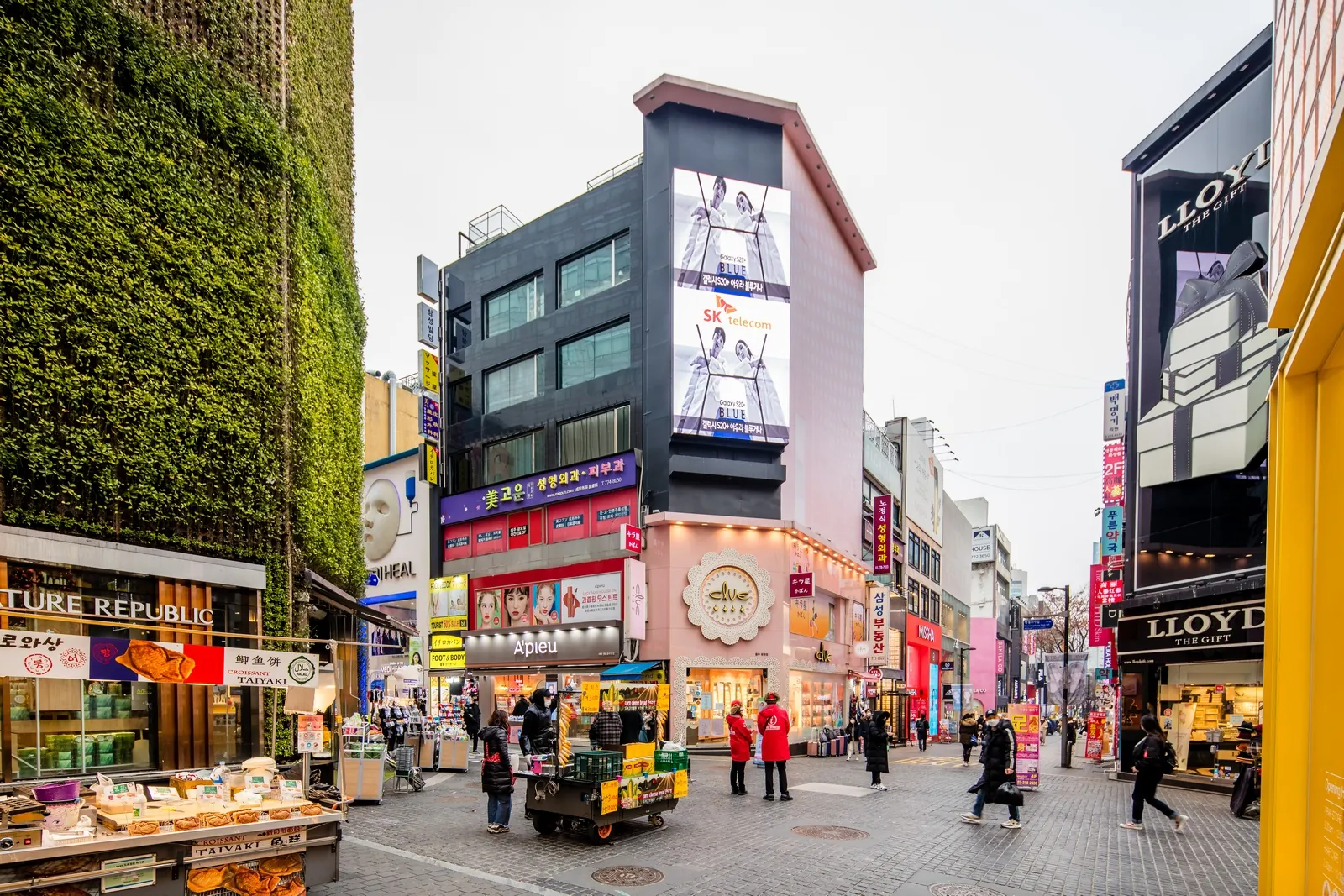
Kind Global is a Myeongdong-gil flagship on the central tourist corridor at Myeongdong-gil 26, Jung-gu. The practice operates on a 1:1 personalised physician consultation model with private single-patient treatment and management rooms. Co-directed by Dr. Lee Wonjin (Daegu Catholic University Medical School) and Dr. Lee Kangin, the house holds a sixteen-device lineup that includes Ultherapy Prime.
QD Skin Clinic (Gangnam) 💬
QD is a Gangnam aesthetic dermatology practice whose medical lead, Dr. Hong Sahyeok, holds an MD-PhD and a fellowship at Harvard Medical School and Johns Hopkins Hospital. Ultherapy Prime sits within a broader menu of Sofwave, Thermage FLX, and thread lifting. Membership across seven Korean medical societies underwrites the academic register of the consultation room.
Laurel Clinic (Cheongdam) 💬
Laurel Clinic (Cheongdam) is a Cheongdam premium lifting house that runs Ultherapy Prime alongside Oligio, Thermage FLX, Density, Titanium Lifting, Volnewmer, and Shurink Universe. The medical lead chairs the Korean Lifting Research Society and the practice reports over one hundred Ultanium procedures monthly — throughput that sets the operating tempo for visiting patients.
Reone Dermatology (Cheongdam) 💬
Reone is a Seoul aesthetic dermatology practice running eight Ultherapy Prime devices alongside eight Sofwave handpieces and five Thermage FLX units. The medical team — five named dermatologists with a resident anesthesiologist — trained at Seoul National University Hospital. Facility footprint is roughly 990 square metres, which sets the tempo of the consultation room rather than the lobby.
Lienjang Clinic (Gangnam)
Lienjang is a multi-country plastic-surgery and dermatology group operating since 2004, with branches in Tokyo and Osaka in addition to its Seoul flagship. The Ultherapy Prime menu sits within a wider lifting lineup that includes Thermage FLX, Oligio, Linear Z, ONDA, and Sofwave. A dedicated resident anesthesiologist supports surgical and procedural work across an international caseload.
BANOBAGI Dermatologic Clinic (Gangnam)
BANOBAGI is a twenty-two-year Gangnam dermatology practice naming two operating dermatologists — Ban Jae-Yong and Jeon Hee-Dae — and reporting patients from seventy-plus countries. The clinic operates over forty advanced devices including Ultherapy Prime and Thermage FLX, and three patented technologies are attributed to one of its physicians. English coordinator support is available on request for visiting patients.
What Ultherapy Prime treatment actually is
Ultherapy Prime is the third-generation Merz Micro-Focused Ultrasound with Visualisation platform — an MFU device that delivers focused acoustic energy to discrete points at 1.5, 3.0, and 4.5 millimetre depths, generating small thermal coagulation zones within the dermis and the superficial musculo-aponeurotic system. The body's response, over eight to twelve weeks, is a controlled wound-healing cascade and neocollagenesis around each treated point — which is what produces the gradual lift the device is known for. Prime introduced visualisation imaging that allows the operator to see the tissue plane before depositing energy, refined cartridge geometries that allow line work along the jawline and submental triangle, and a small-footprint transducer for the periorbital and perioral zones. The device is approved by the Korean Ministry of Food and Drug Safety (식품의약품안전처) and cleared by the United States FDA. A typical first programme is a single session, with maintenance at twelve to eighteen months for most patients. Outcomes correlate strongly with operator seniority, line-count discipline, and cartridge selection — variables that the editorial reading attempts to surface. The result is undramatic, which is, in this register, the highest compliment one can pay a non-surgical lifting protocol.
How the eight Seoul clinics compare
What follows is categorical positioning — not a ranked recommendation. Re:Berry's register is regenerative-led, with Ultherapy Prime folded into a broader programme that includes Sofwave, Thermage FLX, and exosome work; the international patient mix is the variable one weighs. with senior leadership trained at Seoul National University Medical School, and the multilingual coordinator pool. Kind Global is the Myeongdong-gil house operating on a 1:1 personalised consultation model with private treatment rooms; the temperament is unhurried single-patient rather than throughput-driven. QD reads as an academic-credentialled premium suite, with the medical lead's Harvard and Johns Hopkins fellowship setting the consultation tone. Laurel Cheongdam is a high-throughput lifting house with Korea's claimed highest monthly Ultanium volume — the trade-off is protocol-driven cadence versus tailored unhurried work. Reone is the device-density specialist with eight Prime units and a 990-square-metre footprint, anesthesiologist on site. Lienjang is the long-tenured multi-country group with Tokyo and Osaka branches and surgical depth. BANOBAGI is the twenty-two-year dermatology practice with forty-plus devices and a heavily international caseload. One chooses on temperament, not on tier.
How I'd choose between these eight clinics
In my reading, the choice rests less on the brochure than on three quiet variables: who actually performs the procedure, whether the cartridge selection is disclosed before the session begins, and whether the four-week review is scheduled before the patient leaves the lobby. The published case literature on Ultherapy Prime suggests outcomes correlate more closely with operator seniority and line-count discipline than with any specific device adjunct, which makes the named operator the variable to verify rather than assume. For international patients, multilingual aftercare — the kind handled by a coordinator who has read the case file — is, in my reading, what separates a competent practice from a memorable one. If one's travel window is four to seven days, the houses with structured pre-arrival imaging and same-day senior consultation suit best; if one is resident in Seoul, the longer-cadence and multi-branch practices reward the longer commitment. For a first-time international visitor weighing Cheongdam against Hongdae against Myeongdong, the question is rarely device-related — it is which neighbourhood reads as the consultation room one wants to spend an afternoon in. The eight clinics above each meet a different brief; one selects on temperament, on indication, and on whether the senior physician is willing to say, candidly, that a single session has already done the work.
How we read these clinics
This survey is editorial — not a ranked recommendation. We read each clinic's published materials, cross-referenced physician credentials against the Korean Medical Association registry where available, and assessed each practice on three dimensions: cartridge selection discipline, operator seniority disclosed in writing, and the quality of structured aftercare promised before the patient transfers a deposit. We did not visit every clinic in person for this revision. The eight entries here are clinics one might reasonably consider for Ultherapy Prime in Seoul — not the only ones. Where a commercial relationship exists with a featured house, the outbound or inline link carries rel="sponsored". We will revise this guide quarterly as practices change.
Frequently asked questions
What is Ultherapy Prime, in plain language?
Ultherapy Prime is the third-generation Merz MFU platform — a focused-ultrasound device that delivers acoustic energy at three depths (1.5, 3.0, and 4.5 millimetres) to trigger controlled neocollagenesis. The Prime upgrade added visualisation imaging and refined cartridge geometries for jawline and submental line work. The effect is gradual rather than immediate, and a senior operator reads the face on the day rather than the chart.
How many sessions should I plan?
A single session is the typical first programme for Ultherapy Prime, with maintenance at twelve to eighteen months for most patients. A senior physician should review at week four with written photographs before scheduling any second work — committing to repeat sessions up front is, in our reading, a soft signal one might reconsider.
What downtime should I plan for?
Most patients see mild redness for a few hours, occasional small bumps along the treated lines for a day, and possible transient tenderness on palpation for several days. There are no incisions, no anaesthesia beyond topical cream and oral analgesia, and no bandages. One can attend a dinner the same evening — discreetly, with concealer if needed.
How does Ultherapy Prime differ from Sofwave or Thermage FLX?
Sofwave uses Synchronous Ultrasound Parallel Beam at a single dermal depth — broader-area coverage, less depth selectivity. Thermage FLX is monopolar radiofrequency targeting the dermis and subdermal fat — different tissue response, different indication. Ultherapy Prime, alone among the three, reaches the SMAS plane at 4.5 millimetres with visualisation — a categorically different mechanism.
What should I expect to pay?
A single Ultherapy Prime session in Seoul typically falls between KRW 1,500,000 and KRW 4,500,000 depending on line count, cartridge mix, and operator seniority. Materially lower prices may indicate counterfeit cartridges or a junior operator; materially higher ones reflect senior-physician operation or VIP-suite settings. Transparent pricing in writing, before booking, is, in my reading, a non-negotiable.
What credentials should I check on the operator?
Korean medical licensure verifiable through the Korean Medical Association, aesthetic medicine experience measurable in years rather than weeks, and, for non-Korean patients, a coordinator fluent enough to translate clinical nuance — not just appointment times. A senior physician's name should appear on the consent and on the procedure record.
Can I combine Ultherapy Prime with skin boosters?
Yes, and several of the eight practices on this page do — typically sequenced rather than stacked in one session, with the MFU work administered before the booster to optimise the dermal scaffold. The senior physician should plan the order and the interval; the published case literature favours sequencing across two visits.
What are the realistic risks?
Transient erythema, occasional small papules along the treated lines, rare transient nerve paraesthesia in the marginal mandibular distribution that resolves within weeks, and, very rarely, focal fat atrophy when the cartridge is misplaced. Serious adverse events are uncommon when the protocol is physician-operated and the cartridges are sourced through regulated channels.
Who should not book Ultherapy Prime?
Patients with active skin infection in the treatment area, dermal fillers placed within the prior six weeks, severe sagging that exceeds the device's lifting capacity, pregnancy or lactation, or implanted electrical devices in the head and neck should not proceed. A senior physician declining a modality on indication grounds is, in our reading, a signal of practice quality rather than a hindrance to the trip.
What visa or travel logistics should I plan for a Korean trip?
Most visitors from the United States, Hong Kong, Singapore, Japan, and the European Union enter Korea on the standard ninety-day visa-waiver framework — no medical visa is required for the consultations described on this page. A flight that allows three to seven days in Seoul is the comfortable register; the Korea Health Industry Development Institute (khidi.or.kr) publishes the medical-tourism framework, which one reads before the trip.
What does refund and deposit policy generally look like?
Houses at this register hold a refundable deposit — typically twenty to thirty per cent — at the booking stage, returned in full if the consultation indicates Ultherapy Prime is not appropriate. Cancellation more than seventy-two hours before the session is generally accommodated without penalty; one asks for the written policy in the patient's language before transferring the deposit, and keeps the email.
How do I tell genuine Ultherapy Prime cartridges from counterfeit ones?
Genuine Merz cartridges carry a holographic verification seal and a serial number registered through the Korean distributor; a senior practice will, on request, photograph the sealed cartridge in front of the patient before opening. A clinic that hesitates is one to leave. The published case literature on Prime outcomes assumes genuine cartridges — counterfeit ones are categorically a different conversation.