
Travel & Culture
Planning a Girls' Trip Where Half of Us Are Doing Treatments
Five women, one Seoul itinerary, two clinic days — the real logistics nobody talks about until day four.
Three of us booked treatments. Two didn't. We were all in our mid-thirties, all flying in from California, and we'd been planning this trip in a group text for almost a year. I thought the hardest part was going to be picking restaurants. It wasn't. The hardest part was building an itinerary that worked for the friend who wanted to walk 18,000 steps a day and the friend who'd just had Ultherapy and needed to sit somewhere shaded with a smoothie. Here's what I learned, written for the next group of friends thinking about doing this.
Decide who's doing what before you book flights
We almost messed this up. Two of us had been planning treatments for months — I had Ultherapy on the calendar, my friend M was doing a laser package — and the other three were sort of casually saying "maybe I'll book something while we're there." That casualness is the trap. By the time you arrive, the clinics most people want are booked out two to three weeks ahead, and the consult-then-decide approach means you eat half a vacation day on a consult that doesn't end in a procedure.
We ended up doing it right by luck. About six weeks out, I made everyone state, in writing, what they were and weren't doing. The two friends who said "maybe" became one friend who booked a non-invasive treatment with no downtime, and one who decided this trip wasn't her trip for it and would just come along for the food. Knowing that ahead of time changed the entire itinerary. We could plan a low-energy second day on purpose instead of pretending it was a coincidence.
If you're the friend organizing this — and there's always one — make people decide before flights. The cancellation policy on flights is way harsher than on most clinic appointments. Plan around the procedures, not the other way around.

Build the trip in three energy zones
I plan all my trips in zones now and it's saved a lot of group-text fights. The framework is simple. High-energy days are walking, shopping, palace tours, late dinners — fine for everyone before treatments and for anyone not getting them. Low-energy days are spa, easy meals, slow cafes, sit-down activities — these are the post-treatment days. Recovery-buffer days sit in between and they're the ones most groups skip and then regret.
For our six-day trip, I built it like this:
1. *Day 1 (high)* — arrive late, light dinner near the hotel, jet lag whatever it does 2. *Day 2 (high)* — Bukchon, Gyeongbokgung, Insa-dong, big group dinner 3. *Day 3 (clinic day for two of us, sightseeing for three)* — split itinerary, regroup at 6 p.m. 4. *Day 4 (low)* — Han River walk, Dosan Park, easy lunch, spa visit for non-procedure friends 5. *Day 5 (recovery-buffer)* — soft itinerary, no commitments before noon, optional cafe crawl 6. *Day 6 (medium)* — last shopping, group photos, depart
The trick was that the friends not getting treatments still wanted activity on day four. Splitting the group at lunch — two stayed near the hotel, three went to do a quick Apgujeong loop — let everyone get what they needed without anyone feeling guilty. We met for dinner.

The clinic day logistics nobody plans for
Booking the appointment is 20% of the work. The rest is the day itself. The thing I didn't fully anticipate was how long the consult-plus-procedure window actually is — for me, Ultherapy was about three hours from check-in to walking out the door, and for my friend's laser package it was closer to four including the pre-numbing time. That's most of a day if you're factoring in transit, lunch beforehand, and recovery time after.
We staggered our appointments by two hours so we wouldn't both be in the same waiting room at the same time, and so the friends not doing treatments could still meet us at a cafe near the clinic between appointments. That detail mattered more than I expected. Walking out of a procedure to friends who already had iced drinks and a quiet table booked was the small luxury that made the whole day feel handled.
A few practical things. Bring cash for the clinic day even if they take cards (some boutique places charge extra for cards). Wear loose layers — clinics keep treatment rooms cool. Skip caffeine before any procedure that involves needles or numbing because it amplifies anxiety. Bring a hat with a brim for the walk back to the hotel; sun on freshly treated skin is not your friend. And eat a real meal an hour before, not five minutes before. Empty stomach plus numbing cream made my friend lightheaded the first time.
What the non-treatment friends actually do
This is the question my non-procedure friends had: "What am I supposed to do for four hours?" The answer that worked for us was that the area immediately around most Gangnam clinics is quietly perfect for solo wandering. There are bookstores, dessert cafes, small boutiques, and parks within a 10-minute walk of pretty much anywhere in Sinsa, Apgujeong, or Cheongdam. Nobody actually sat at a single cafe for four hours. They moved every 45 minutes.
My friend J, the one who didn't book anything, used clinic hours for what she called her "only-when-Rachel's-busy errands" — the perfume store she wanted to take her time in, the slow-paced bookstore browsing, the long cafe lunch where she could read. She actually said it was her favorite half-day of the trip. Which is wild, because I was face-down on a treatment table.
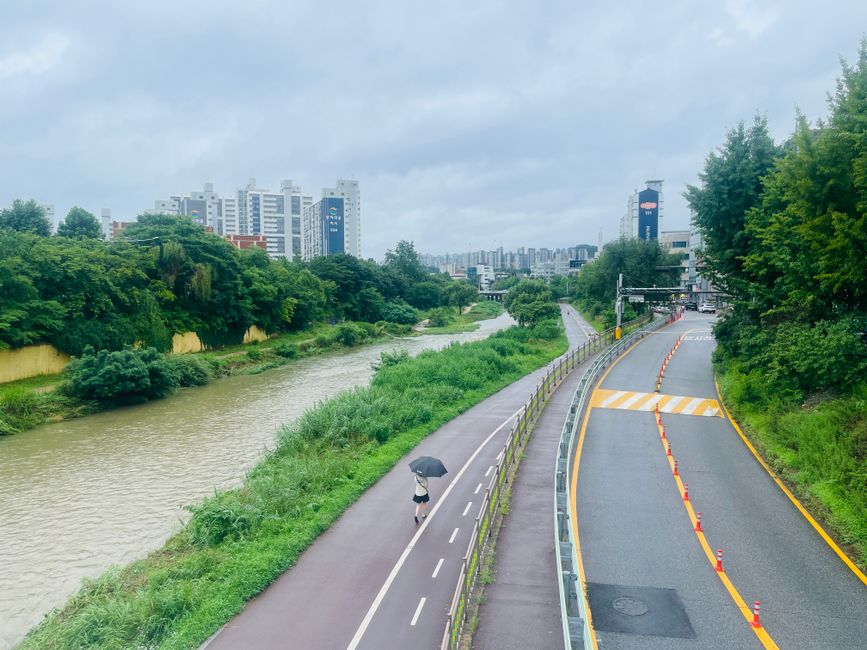
If you have someone who wants more structure, the Han River walk is gentle and gives you a clear two-hour out-and-back. Dosan Park is small but pretty and has the cafes around it for a sit. Bongeunsa Temple is a 15-minute escape from the noise of Gangnam that almost nobody plans for. We pre-mapped a few options for J the day before, and that was enough — she didn't end up needing them all, but having the list reduced the decision fatigue.
Group meals when half the table can't drink
This blindsided us. Most aesthetic procedures come with a no-alcohol-for-24-to-72-hours window, and Korean group dinners are heavily wine and soju by default. We didn't realize how much the group's drinking pace shaped the dinner conversation until two of us were sober and three of us weren't.
The fix was easy once we figured it out. We picked restaurants that had good non-alcoholic options — sparkling teas, makgeolli-free dessert pairings, the kind of places where ordering an espresso tonic feels like a real drink. Korean dessert cafes are unreal at this; bingsu is a meal in itself. We did one fancy dinner where the group split into two halves naturally — three at one end of the table doing wine pairings, two at the other end doing tea-and-dessert flights. Nobody felt left out. The restaurant didn't even raise an eyebrow.
If you're heading out the night before treatment day, just have the no-drinking conversation early. Doing it at the dinner itself, with cocktails already in front of people, is awkward. Doing it in the group text two days before is fine.

Hotel choices when the group has different needs
We almost split into two hotels. I'm glad we didn't. Staying together meant the post-treatment afternoons could be "come hang out in our room and order coffee while M sits with an ice pack" which kept everyone close. But it required a hotel with rooms big enough to actually hang out in, and a lobby with a real cafe so the energetic friends had a base.
The zone that worked for us was Sinsa, about a 10-minute walk from the clinic. We booked two adjoining rooms — not a suite, just two doubles next to each other — and used one as the "recovery room" with the curtains drawn and the other as the "getting ready room" with all the makeup. It sounds excessive. It worked.
Things I'd specifically prioritize for a group like this: a hotel within 15 minutes of the clinic by walking or short taxi, blackout curtains (post-procedure naps are real), a kettle in the room (hot water for tea is genuinely useful for post-treatment), and a non-judgmental front desk that won't blink at five women with shopping bags coming through at 11 p.m. There's more on hotel zones in my <a href="/first-time-in-gangnam-american-survival/">survival guide for first-timers</a> if you're picking neighborhoods from scratch.
What I'd change for the next group trip
A few things, in honesty. I'd build the trip a day longer next time. Six days felt tight; seven would have given us a true rest day with no agenda at all. I'd schedule the procedures earlier in the trip, not in the middle, so people had recovery time before flying instead of crashing into a long-haul return flight three days post-treatment. I'd also do one solo morning per person — even just two hours where you don't owe anyone your face — because group travel concentrated like this is more intense than people remember.
We also under-budgeted on transportation. We thought we'd subway everywhere, and mostly we did, but the days we needed taxis (post-procedure days, late-night returns, one rainy afternoon) added up faster than I expected. Budget about $60-80 USD per person for taxis across a six-day trip in Gangnam, and you'll have a buffer.
The last thing — talk about money before. We split group meals evenly which works for most things but doesn't work as well when half the table is doing $200 wine pairings and half is doing teas. We did one Splitwise tally on day four to even things out, and it would've been less awkward if we'd talked through how we wanted to handle it on day one. Lesson learned. The Korea Tourism Organization has a useful general primer on group travel logistics on their <a href="https://english.visitkorea.or.kr/svc/main/index.do" rel="dofollow">official visitor site</a> that I'd skim with the whole group before booking.
“The hardest part of a girls' trip with treatments isn't the procedures — it's writing an itinerary that respects everyone's energy without anyone feeling like the slow one or the boring one.”
Rachel Bennett
Frequently asked questions
How far in advance should we book clinic appointments for a girls' trip?
Six to eight weeks ahead is the sweet spot for popular Gangnam clinics, especially if multiple people want appointments on the same day. Some places will book three weeks out for non-invasive treatments, but anything that requires a senior practitioner — Ultherapy with a specific provider, certain laser packages — fills up faster. Booking before flights are paid is ideal so you can shift dates if needed.
Can we all do treatments on the same day?
You can, but I wouldn't. Recovery looks different for everyone, and one bad reaction can derail a group day fast. Stagger appointments across two days if possible. If you have to do same-day, leave a 90-minute gap between start times so the waiting room and post-procedure observation don't overlap, and pick a hotel within walking distance for whoever finishes first.
What treatments are realistic for a six-day trip?
Non-invasive procedures with minimal downtime fit best — Ultherapy, certain laser facials, mild peels, injectables. Anything with an extended recovery window or staged sessions doesn't make sense for a single visit. If you're new to all of this, plan for one consult and one procedure, not three of each. Ask the clinic specifically about post-flight timing for whatever you're booking.
How do we plan group activities when some friends can't walk much post-treatment?
Pick activities with sit-down anchors. Cafes between walking stretches, museum benches, riverside parks with seating. Keep the group's daily walking max under 12,000 steps on recovery days, and build in a hotel-room return option around 3 p.m. so anyone who needs to lie down can without it feeling like they're bailing.
Is it weird to bring friends who aren't doing any procedures?
Not at all — most groups I know do this exact mix. The non-treatment friends often end up enjoying the trip more because they have unstructured solo time during clinic hours, which is hard to get on a fully synced group itinerary. Just be honest in the group text early so nobody feels pressured to book something they don't want.
What should we tell hotel staff about post-treatment care needs?
Most Gangnam hotels are used to medical-tourism guests and will quietly accommodate things like late checkouts, ice for ice packs, extra pillows, or a quiet room request. You don't have to explain the procedure — just ask for what you need. Mention the medical context only if you want them to take it more seriously, which sometimes helps for room upgrades on recovery days.