Travel & Culture
First Time in Gangnam? Here's What I Wish Someone Had Told Me
An LA-to-Seoul honest list — the practical stuff guidebooks skip and friends only tell you over coffee.
My friend texted me three weeks before her first Seoul trip — "send me everything I need to know." I sent her a 2,300-word voice memo. She listened to half of it on the plane. This is the cleaned-up version. American specifically — because I'm Korean-American but California-raised, and the small cultural things I had to learn the hard way are the same ones my non-Korean friends ask me about every single time. Here's the list, in the order it would've helped me.
Get a T-money card at the airport, not later
T-money is the prepaid transit card. It works on every subway, every bus, most taxis, and a surprising number of convenience stores. You can buy one at any 7-Eleven or CU at Incheon Airport before you even hit the train. Load it with about 30,000 won (~$22 USD) to start — that's roughly a week of subway rides. Why do this at the airport? Because the alternative is buying single-ride tickets at machines you can't read, while jet-lagged, while holding a suitcase. I've watched friends do it. It's painful.
The AREX train from Incheon to Seoul Station is the cheapest option (~9,500 won for the all-stop). The express AREX is faster but pricier. If your hotel is in Gangnam, you'll transfer at Seoul Station to Line 1 or 4 — or honestly, after a 12-hour flight, just take a taxi. A regular taxi from ICN to Gangnam runs roughly $60-80 USD depending on traffic. Worth it on arrival night.

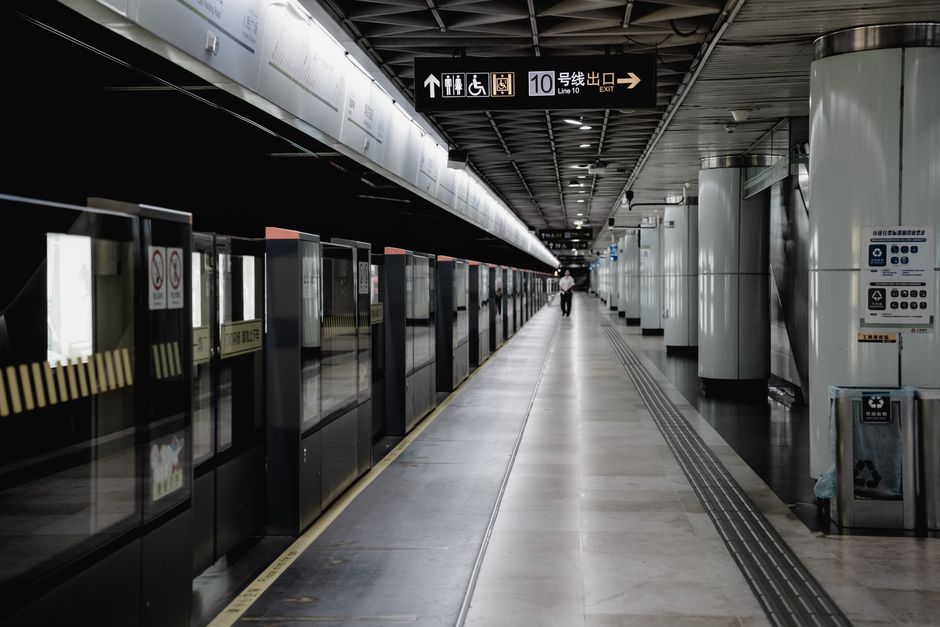
Subway, not taxi, for almost everything else
Once you're in Gangnam, the subway is genuinely the best way to get around. It's clean, it's fast, it's cheap (about $1.20 per ride), and the signs are in English. Lines 2, 3, 7, and 9 all run through Gangnam district. The stations to know: Gangnam (Line 2), Sinnonhyeon (Line 9), Sinsa (Line 3), Apgujeong (Line 3), Apgujeong Rodeo (Line 7). Bookmark Naver Map on your phone — Google Maps does not give you walking directions in Korea (it's a regulatory thing) so most foreigners switch to Naver or KakaoMap. Naver Map has an English version. Use it.
Taxis are fine — drivers are honest, meters work, cards accepted — but Seoul traffic between roughly 5 p.m. and 8 p.m. is genuinely worse than LA's 405. I've sat in a taxi for 45 minutes going what would've been a 6-minute subway ride. Save taxis for late-night returns to your hotel and rainy days.
What "Gangnam" actually means (and where to actually stay)
Tourists say "Gangnam" and mean the area around Gangnam Station. Locals use it for the entire district — which is enormous. Gangnam-gu covers maybe 15 square miles. So when someone says "stay in Gangnam," you have to ask: which part?
For a first trip, I'd narrow it to four zones, all walkable from the named subway stations:
1. *Gangnam Station area* — busiest, most commercial, every chain you can imagine, biggest hotels. Good for first trip. Loud at night. 2. *Sinsa / Garosu-gil* — cafes, boutiques, mid-priced hotels, very walkable, my personal favorite. Quieter at night. 3. *Apgujeong / Cheongdam* — upscale, fashion-heavy, the K-pop and entertainment industry zone. Pricey hotels. Beautiful at night. 4. *Samseong / COEX* — convention center area, big malls, business hotels, slightly removed from the action.
If I were sending my friend on her very first trip, I'd put her in Sinsa. It's central enough to walk most places, calm enough to sleep, and has the best cafes. Hotel-wise — I'm not naming specific properties because they shift in quality, but search by station distance, not stars. Anything within an 8-minute walk of those four station names is solid.
The cultural stuff Americans trip on
Small things, but they add up. Tipping is not a thing. At all. Restaurants, taxis, hotels — don't tip. The first time I tried to leave a few thousand won on a table the server chased me down the street to give it back. It's not insulting if you do it; it's just confusing. Skip it.
Shoes off — at Korean BBQ places with floor seating, at traditional restaurants, at any home you visit, at some bathhouses, at fitting rooms in certain boutiques. There's usually a step or a tray that signals "shoes off here." Watch for it. Don't be the American who walks across someone's tatami in their sneakers.
Two-handed transactions — when you give or receive money, a card, a business card, a gift, use both hands. Or one hand with the other lightly touching your forearm. It's a small respect signal. Servers do it; you should too. Nobody will be mad if you don't, but locals notice when you do.
Volume — Americans, especially Californians, are loud. I am loud. Restaurants, subways, cafes — Korean default volume is genuinely lower than ours. I noticed it most on trip one when my cousin gently told me my "normal voice" was carrying. She wasn't wrong. Adjust by about 30%.

Food rules that took me three trips to learn
Most restaurants in Gangnam are walk-in. Reservations exist for upscale places but you don't need them for the day-to-day eating. If a place is full, look at the wait list on the iPad by the door — usually you put in your phone number and they text you. The texts are in Korean. Use Papago (the Naver translation app — it's better than Google Translate for Korean) to read them.
Set menus rule. Most restaurants have a lunch set or a course menu that's 30-40% cheaper than ordering a la carte. The set isn't on the English menu sometimes. Ask. Or look at what the table next to you is eating.
Spicy means spicy. "Mild" by Korean standards is medium-hot by American standards. "Spicy" by Korean standards is — I don't know how to describe it. I've watched a friend cry into her tteokbokki. If you don't do well with heat, ask for things "an maewoyo" (not spicy) and even that will probably have some kick.
Don't tip the BBQ staff but do thank them when they cut your meat. They will cut your meat for you. They will also flip it. They are professionals. Let them.
One last thing — water at restaurants is free, self-serve, and usually cold. Look for the metal cups stacked by a wall dispenser. Don't wait for someone to bring it. They won't.
What to skip on your first trip
I'm going to get some pushback for this section but here it is. Things that I think first-timers waste time on in Gangnam:
*The Gangnam Style statue.* It exists. It's underwhelming. Take the photo, leave.
*The huge tourist-targeted Korean BBQ places near Gangnam Station.* They're fine. They're also charging tourist prices for what your average back-alley place does better for less. If you want BBQ, go to Apgujeong or off the main strip near Sinsa. Look for places with mostly Korean text on the door.
*Massive shopping malls if you only have a few days.* COEX is enormous and impressive but it eats half a day. If you want shopping, do Garosu-gil for boutiques and Hyundai Department Store basement for everything else. Quicker. Better.
*Any restaurant with a guy out front waving a menu at you in English.* I am not making a rule. I am making an observation. The places I love don't need to advertise to tourists.
*Driving anywhere.* Just don't. Even renting a car for a day trip is more hassle than it's worth in Seoul. Take the train to Busan or Jeonju if you want out of the city. The KTX is fast and easy and you can buy tickets through the official <a href="https://www.letskorail.com/ebizprd/EbizPrdTicketpr21100W_pr21110.do" rel="dofollow">Korail booking site</a>.

The small comforts that surprised me
Some things I didn't expect to love about Gangnam, but did:
The convenience stores. CU, GS25, 7-Eleven — they're real meals. I've eaten triangle kimbap, instant ramen with cheese, and a banana milk for under $5 on more than one bleary morning. The microwaves work. The seating is real. The coffee is — fine. It's fine.
The public bathrooms. Clean. Free. Usually have toilet paper. This is so normal in Korea that locals don't think about it; coming from the U.S. it's a small miracle.
The deliveries. Almost everything in Korea delivers — coffee, late-night chicken, groceries. If you have a Korean phone number you can use the apps yourself; if not, a kind hotel concierge will help. There's something deeply civilized about ordering bingsu at 11 p.m. and having it arrive at your hotel room in 25 minutes.
The lockers at subway stations. Big enough for a carry-on. Pay-by-the-hour. Genius for a layover day where your hotel checkout was at 11 a.m. and your flight is at 9 p.m. I've used them more times than I can count.
The sheer density of dermatology and beauty offerings is a whole separate post — I write more about that in my <a href="/why-i-keep-flying-back-to-seoul/">essay on why I keep coming back</a> if you're curious about that side of things. For first-timers I'd just say: don't book anything beauty-related on day one. You're jet-lagged. Your face is puffy. Wait until day three at minimum.
“Most of what makes Gangnam easy isn't in any guidebook — it's the small operational stuff nobody bothers to write down because locals never had to learn it.”
Rachel Bennett
Frequently asked questions
Do I need a visa to visit Korea as a U.S. citizen?
U.S. passport holders can enter Korea visa-free for up to 90 days, but you do need to apply for K-ETA online before flying — it's roughly $10 USD and takes 24-72 hours. Don't wait until the airport. Check the official Korea visa portal for the most current rules before booking flights, since requirements have shifted a few times since 2023.
Will my U.S. phone work in Seoul?
Most modern unlocked phones work fine on Korean LTE/5G with an eSIM or local SIM. T-Mobile has free 256kbps roaming worldwide which is genuinely useful for maps and texting. For anything more, grab a prepaid eSIM from Airalo or KT before you fly — about $20 for a week of 5GB. Skip the airport SIM kiosks; they're more expensive.
How much English is actually spoken in Gangnam?
More than people warn you about. Subway signage, menus at most mid-range and up restaurants, hotel staff, larger department stores — all have working English. Smaller mom-and-pop spots and older taxi drivers may not. Papago app handles the rest. Learning to read hangul takes about two hours and makes everything easier.
Is it safe to drink the tap water?
Technically yes — Seoul tap water is treated and meets World Health Organization standards. Practically, most locals drink boiled or filtered water out of habit. Hotels provide bottled water. Restaurants serve filtered water free. I drink the tap and have never had an issue, but if your stomach is sensitive on travel, just stick with the bottled stuff.
What's the dress code? Will I look out of place?
Korean fashion in Gangnam is more polished than U.S. casual. Locals dress up to go to a coffee shop. You don't have to match that level — tourists are obvious anyway — but skip the athleisure-out-to-dinner look that flies in California. A nicer pair of jeans, clean sneakers, and a layer that isn't a hoodie will get you through 90% of restaurants and bars.
How long do I actually need in Gangnam?
Three full days minimum to see the main areas without rushing. Five days if you want to also do day trips to Bukchon, Insa-dong, or the palaces. Seven days if it's your first time in Seoul total — you'll want one or two days where you don't plan anything and just walk around. The Korea Tourism Organization has more sample itineraries on their <a href="https://english.visitkorea.or.kr/svc/main/index.do" rel="dofollow">official site</a>.
Are the toilets really that high-tech?
Yes. Heated seats. Bidet functions. Sometimes ambient music. Hotel and department store bathrooms are the best ones to experiment with. The control panel is usually labeled in Korean, English, and pictograms. The big red button stops everything. You will not break it. Try the bidet.