Travel & Culture
A Spa Day in Gangnam, Seoul: My Slow, Honest Recovery Routine
Not the medical kind. The soak-eat-nap kind. Here's the loop I've ended up on after four trips back to Seoul.
There's a kind of tired you only get when you've been in Seoul for ten days, you've walked 22,000 steps a day, and your skin has done a small project. I started building a recovery-day routine on my second trip back to Korea — purely non-medical, purely Gangnam, all designed around the principle that I do not want to make decisions. This is the loop I've landed on. It's slow on purpose. It works.
Why a recovery day, and why Gangnam specifically
A recovery day in this routine is a deliberately under-scheduled 24 hours where the only goals are heat, hydration, food, and a horizontal nap somewhere I can hear other people existing quietly. I do this in Gangnam — not because Gangnam invented the spa day, but because it's where I'm staying, the jjimjilbangs are walkable from the hotels along Tehran-ro, and the food is dense enough that I can do the entire loop without crossing the river.
My Bay Area friends always assume Gangnam is the loud version of Seoul. It is and it isn't. The blocks south of Sinnonhyeon are calmer than anyone tells you, and you can build a whole slow day inside a 1.5 kilometer radius. That's the whole pitch — and it's the difference between a vacation that drains me and one I actually come home rested from.
Morning: the jjimjilbang, done my way
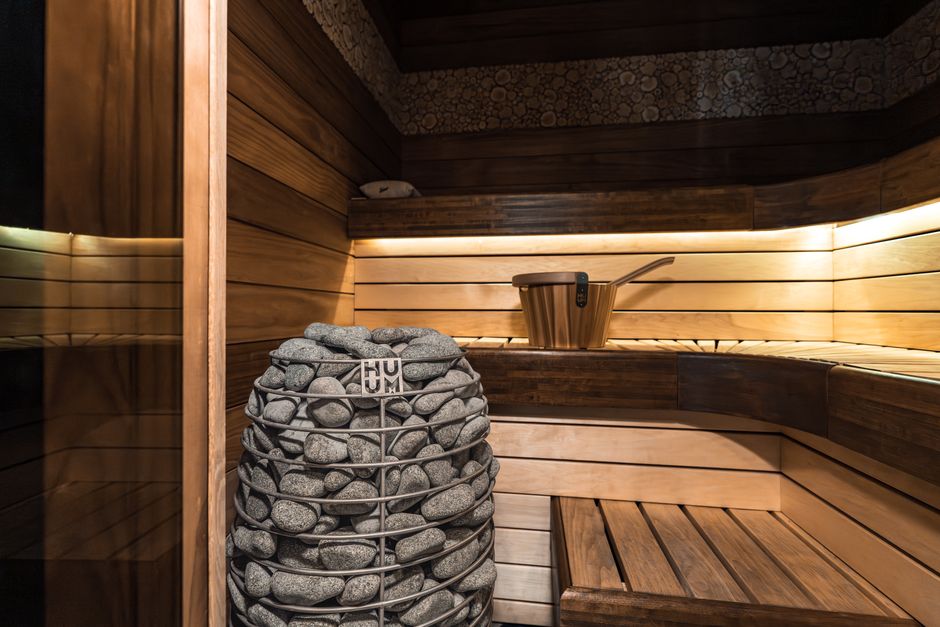
I start at the jjimjilbang around 9:30, which is the sweet spot — the morning crowd is thinning, the afternoon families haven't shown up yet, and the kiln rooms have heated up properly. I usually go to one of the larger 24-hour places near Yeoksam — I won't name it because the staff knows me a little and I'd like to keep that — and I do the same loop every time.
Shower. Cold plunge for 90 seconds because my mom told me it's good for the lymphatic system and I'm at the age where I just believe her. Then the warm bath for 12 minutes. Then up to the kiln rooms: jade first, salt second, charcoal last. I don't do the ice room. I'm from California; my body has not consented. After the kilns I find a heated floor mat, and read for 40 minutes. That part is the whole point.

Lunch: the soup that resets the day
I leave the jjimjilbang around 12:30, which puts me at lunch right when the office workers are clearing out. There's a samgyetang place near Gangnam Station — and a few honestly comparable ones near Eonju — where the broth has been on since 6am and it shows. Samgyetang is a whole young chicken stuffed with rice, ginseng, and jujubes, in a clear ginger-garlic broth.
The first time I had it I cried a little because it tasted like something my grandmother would have made if she'd had time. On a recovery day this is the meal. I order one bowl, the side of cabbage kimchi, and a small bottle of insam-ju that I do not drink because I'm pacing myself. I walk out feeling like a different person at the cellular level. Lunch is 14,000 to 18,000 KRW, takes about 35 minutes, and is the second pillar of the day.
Afternoon: the slow Garosu-gil walk
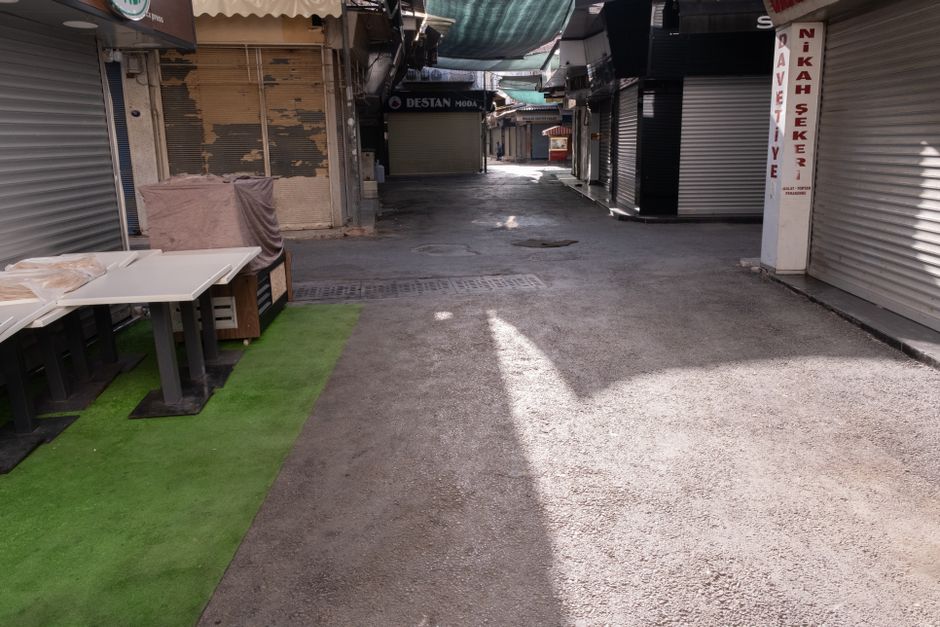
After lunch I walk. Not the marathon kind — the deliberately slow kind, where the goal is to digest, see things, not buy anything, and let the spa heat finish working through my system. I take the 3 line one stop up to Sinsa and walk Garosu-gil from the north end down. Garosu-gil has changed about four times since 2018; the boutique-and-coffee version is partly back, but the cafes worth sitting in are usually one block off the main strip on either side.
I stop at a small place that does pour-over and a yuja-ginger soda I'm now mildly obsessed with. I do not sit on the patio. The patio is for people who are working. I sit inside, alone, for an hour, and write in my notebook the way I haven't been able to write at home in two years. I'm not trying to romanticize it. It's just what happens when you've taken the morning off your nervous system.
Late afternoon: a facial that doesn't promise too much
Around 4pm I book a non-medical maintenance facial — the kind that's hydration, gentle massage, sheet mask, no needles, no devices, no claims. There's a small spa near Apgujeong Rodeo I've been to three times and they've never tried to upsell me, which is the highest compliment I can give a Korean spa. The treatment is about 80 minutes and runs around 90,000 to 130,000 KRW depending on the package.
The only thing I want from it is to lie still on a heated bed while someone gently pushes serum into my face and doesn't talk. That's it. I want to be clear that this isn't a medical-grade treatment, and on a real recovery day after my Ultherapy session I skip this completely and just nap — but on a regular recovery day where my skin barrier is intact and I'm not post-procedure, this facial is the third pillar of the day.
Evening: hotel, soup, sleep
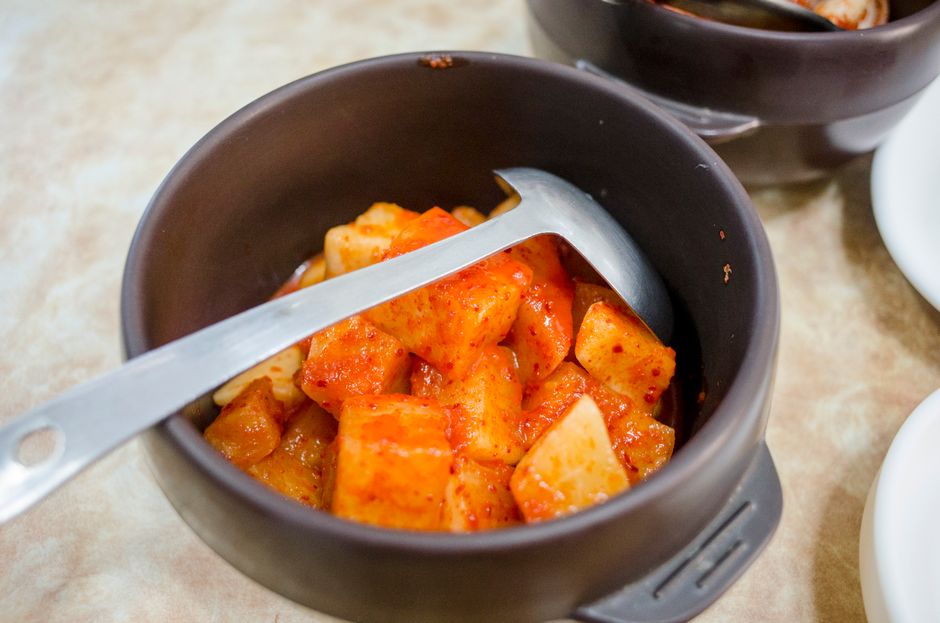
By 6pm I'm done with the outside world. I walk back toward Eonju, pick up a small container of tofu jjigae from a banchan shop I've been going to since 2019, and eat it in my hotel room with the news on low. I do a 20-minute foam roll on the floor, drink a full liter of water, and I'm in bed by 9.
The recovery day works because nothing on it is impressive. There's no reservation requiring a screenshot. There's no must-see. The whole thing is calibrated to lower the volume on a trip that's been turned up too loud — and the version of myself that shows up to the rest of the week is calmer, hungrier, and more honestly present. My friends in California ask me what I do for self-care, and at this point my answer is: I fly to Gangnam, but only sometimes.
What I learned after the fourth time
By the fourth recovery day I'd stopped trying to optimize it. The first version had a Notes-app schedule. The second version had a list of three jjimjilbangs ranked. The third had a Google Sheet with cafe ratings. None of those made the day better. The thing that made the day better was leaving the schedule alone and letting the order shift if I felt like it.
Now I keep one rule: heat first, food second, walk third, lie down fourth. Past that, everything's negotiable. I've moved the facial earlier, skipped lunch entirely once, swapped the cafe stop for a bookstore. The Gangnam recovery day is a frame, not a checklist — and that's the part that took me four trips to figure out. The frame is portable; you can run a version of this anywhere. Seoul just has the best ingredients.
Frequently asked questions
Do I need to speak Korean to do a Gangnam spa day?
No, but it helps to have a few phrases written down. Most large jjimjilbangs in Gangnam have English signs at the entrance and an English price list, and the staff will gesture you through if you don't speak Korean. Restaurants for samgyetang and tofu jjigae usually have picture menus or English subtitles. Translation apps cover the rest. Confidence matters more than vocabulary on a slow day.
What should I bring to a jjimjilbang?
Almost nothing. Most places provide the uniform, towels, soap, shampoo, and a locker. I bring a clean cotton tee to change into for the walk home, my own face moisturizer because the in-house lotions are aggressive, a hair tie, and a small water bottle. Leave jewelry at the hotel. Phone goes in the locker — the kiln rooms are too hot for screens anyway.
Is the cold plunge actually necessary?
No, and skip it if you have any heart condition or are pregnant — every jjimjilbang posts a sign about this in Korean and English. For everyone else it's optional. I do 60 to 90 seconds because it sharpens the rest of the day for me, but plenty of regulars skip it and go straight to the warm bath. The kiln rooms are the actual heart of the experience.
How much does a full recovery-day loop cost?
Roughly 230,000 to 320,000 KRW total if you do the whole thing — about 12,000 to 20,000 for the jjimjilbang, 15,000 for samgyetang lunch, 10,000 to 18,000 for the cafe stop, 90,000 to 130,000 for the facial, 12,000 for hotel-room dinner. Skip the facial and you're at roughly 60,000 KRW for a full day, which is honestly the version I do most often.
Is it okay to do a jjimjilbang right after a medical procedure?
No — and this matters. After Ultherapy, lasers, fillers, or any aesthetic procedure, your clinic will give specific aftercare windows that usually exclude saunas, hot baths, and kiln rooms for at least 1 to 2 weeks. Always follow your provider's exact timeline. The recovery-day routine I'm describing here is for non-procedure days, when your skin barrier is intact and there are no contraindications.
Can I do this routine as a same-day Seoul visitor?
Yes, but compress it. If you're in for 8 hours from a connecting flight, do the jjimjilbang for 2 hours, samgyetang for lunch, one cafe stop, and skip the facial — you'll still get most of the reset. The full loop assumes a hotel room to retreat to in the evening, which is the part that locks the day in. Day-trippers should plan a 6pm exit instead.