Travel & Culture
The Korean Pharmacy vs. CVS: My Honest Comparison (After Six Trips)
I went into a Gangnam yakguk fully convinced CVS was equivalent. I came out understanding the gap and now I bring back a small suitcase of things every trip.
I grew up in California going to CVS for everything — the after-school Advil, the back-to-school SPF, the post-camping aloe vera. The first time I walked into a Korean pharmacy in Gangnam, I assumed it would be the same experience translated. It wasn't. The model is different, the conversation with the pharmacist is different, the shelves are different, and the prices on a few specific things are different in a way that has changed what I pack home. This is the honest comparison after six trips and a slowly growing collection of receipts.
Why I'm comparing these at all
A Korean pharmacy, called a yakguk, is a small specialized shop where a licensed pharmacist sells prescription and over-the-counter medication and a curated selection of skincare and health products — and that single sentence already shows you the structural difference from CVS. CVS in Berkeley is a 9,000-square-foot store with a pharmacy counter at the back and a front section selling everything from greeting cards to laundry detergent. The yakguk near my hotel in Gangnam is roughly 250 square feet, all of it medical or adjacent.
The question I had on trip one was whether I could just use CVS for everything I'd normally buy in Korea. The answer turned out to be: yes for most things, but specifically no for a small handful of items where the gap is real. Those items are why I keep going back to the yakguk on every Seoul trip, and why my checked bag has gotten heavier.
The pharmacist conversation is the actual product
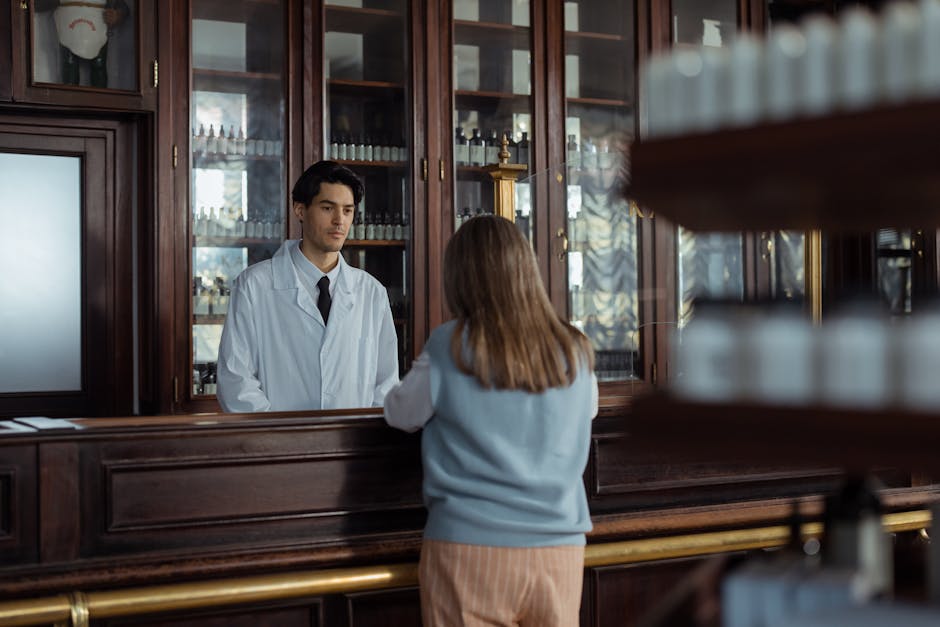
The biggest gap between the two systems is not on the shelves — it's at the counter. In a Gangnam yakguk, the pharmacist asks you what's wrong, listens, sometimes touches your hand to check temperature, and then walks two steps to a drawer and gives you exactly the right thing. The whole interaction takes four minutes. At CVS, I've had pharmacists who are excellent and pharmacists who are visibly underwater serving 80 prescriptions on a Tuesday afternoon, and the OTC questions go to whoever's at the front register, who is not a pharmacist.
The yakguk model is high-touch on purpose. The pharmacist's expertise is the product, and the product I'm buying is the matching of my symptom to a 700-won pack of something I would have spent 35 minutes Googling. That conversation is faster, more accurate, and weirdly more comforting than my CVS experience. I've started bringing a small list of questions on every trip just to get the most out of it.

The SPF wall is its own category
The single biggest practical reason I go to a Korean pharmacy is sunscreen, and this is not a personal eccentricity — Korean SPF formulations are widely considered ahead on aesthetic finish, sensory feel, and ingredient innovation, and the price-to-quality ratio at a yakguk is hard to match in the US. A 50ml tube of mineral SPF 50+ from a well-known Korean derm-line runs roughly 18,000 to 28,000 KRW (about 13 to 20 USD) at a Gangnam yakguk. The closest equivalent at CVS is 22 to 36 USD for a formula that, in my experience, sits heavier on the skin.
I now buy four tubes per trip — two for me, two for my mom in San Jose. The yakguk has a pharmacist who can tell you which formula is best for sensitive post-procedure skin, which is also helpful after Ultherapy when my coordinator wants me on a fragrance-free, mineral-only formula for two weeks. The SPF wall is the single most efficient stop on a Gangnam aesthetic trip.
What CVS still does better
I'm not here to pretend the yakguk is better at everything, because it isn't. CVS wins on hours — most CVS locations in California are open until 10pm or 24 hours, while Gangnam yakguks usually close by 9 or 10pm and many smaller ones are closed Sundays. CVS wins on specific brand-name pickup like Advil, Benadryl, and Sudafed, which exist in Korea but under different names and slightly different formulations.
CVS also wins on convenience-store overlap — if I need shampoo, contact lens solution, and laundry detergent in one stop, that's CVS, not a yakguk. The yakguk is hyper-focused; the CVS is generalist. For a normal week in Berkeley, the generalist wins. For a Gangnam aesthetic trip where the whole point is high-quality SPF and pharmacist-matched recovery products, the specialist wins. I now use both, in different countries, for different jobs.
Patches, plasters, and the small Korean things I now miss in CA
There's a category of small medical-adjacent products that yakguks carry routinely and CVS either doesn't carry or carries badly. Hydrocolloid pimple patches in fifteen sizes including jaw and temple shapes. Cooling pain relief patches for shoulder and lower back that work better than the heat patches I used to buy at CVS. Tiny mouth ulcer films that dissolve overnight. Hand cream-and-cuticle sets in 5,000-won tins that put my Berkeley drugstore options to shame.
None of these are revolutionary. All of them are cheaper than the closest US equivalent. I've started a small home stash: a 30-pack of pimple patches lasts me about four months, and replacing them in California costs three times as much for half the variety. My friends in California laugh at me for the patch obsession, and then they ask for one when they have a breakout, and I make a small mental note. The patch wall is the gateway drug to the rest of the yakguk.
Prices, payment, and what surprised me
Most Gangnam yakguks take credit cards including international Visa and Mastercard, accept Apple Pay through Korean payment terminals at major chains, and will absolutely take cash. Receipts come in Korean, occasionally with English line items at the larger Sinsa and Apgujeong locations. Tax is included in the shelf price, which is a small relief after years of doing CVS math at the register.
The surprise on my second trip was how cheap basic OTC medication is compared to CVS — a 24-pack of Korean acetaminophen is roughly 4,000 KRW (about 3 USD), which is what I pay for a 12-pack of Tylenol at home. Prescription medication is its own complicated topic that depends on insurance coverage and what your home country recognizes; I don't pretend to be an expert on that. For OTC and skincare, the math is consistently in favor of the yakguk. Anything regulated or insurance-coordinated, ask your provider before you assume.
What I now bring home every single trip
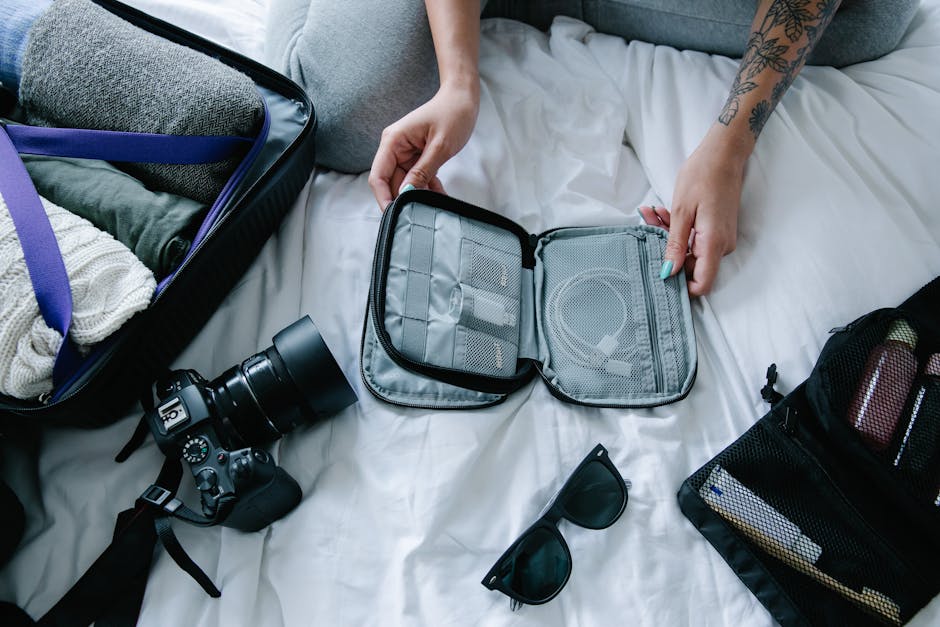
Six trips in, my packing list has stabilized. Four tubes of mineral SPF 50+, three packs of hydrocolloid patches in mixed sizes, two cooling pain relief patch boxes, one tin of Korean hand cream that lives by my kitchen sink, one small bottle of cica-based moisturizer for my mom, and whatever the pharmacist recommends that trip when I ask what's new. The whole haul fits in a packing cube and weighs under two kilos.
The rule I've landed on is: buy what's gentler, cheaper, or unavailable at home, and skip everything else. I do not buy Advil at the yakguk. I do not buy generic vitamins. I save the suitcase real estate for the things that genuinely don't translate. CVS isn't being beaten on its own terms — it's being beaten on a slim category where Korea's specialty pharmacy model has a structural advantage. Both systems can coexist in my life. Mine just happens to require a flight to refresh.
Frequently asked questions
Do I need a prescription to buy things at a Korean pharmacy?
Only for prescription medication, which works the same way as in the US — you need a doctor's prescription from a Korean clinic or hospital. Over-the-counter items including SPF, skincare, pimple patches, basic pain relievers, allergy medication, and digestive aids are available without a prescription. The pharmacist can advise but cannot dispense prescription drugs without paperwork.
Can I use my American insurance at a Korean pharmacy?
Generally no for OTC purchases and rarely for prescriptions. Most international travelers pay out of pocket and submit receipts to their insurance back home for possible reimbursement, which depends on your specific plan. The good news is OTC prices in Korea are low enough that out-of-pocket usually feels reasonable. Save your itemized receipts and ask the pharmacist for an English receipt if available.
Are Korean SPFs really better than what I can get at CVS?
Different is more accurate than better. Korean SPFs often have lighter sensory feel, more aesthetic finishes (tinted, dewy, matte), and broader filter combinations that aren't yet FDA-approved in the US. CVS carries excellent SPFs from American and European brands. The gap is mostly in mid-range pricing and finish options, which is where Korean formulas tend to win. Choose what your skin actually likes.
What's the etiquette at a Korean pharmacy if I don't speak Korean?
Walk in, smile, and either show the pharmacist a translated note (translation app works fine) or point at what's bothering you. Most Gangnam pharmacists handle a steady stream of international visitors and have basic English for common symptoms — sore throat, headache, sunburn, motion sickness. Speak slowly, accept that the conversation may be short, and trust the pharmacist's recommendation.
Are there things I should NOT buy at a Korean pharmacy?
Skip anything you'd normally buy in bulk at CVS — your suitcase is finite. Skip prescription medications without consulting your home doctor first because formulations and dosages can differ. Skip diet supplements and weight-loss products with claims that sound dramatic; regulation varies. Stick to skincare, SPF, basic OTC, and pharmacist-recommended items, and you'll have a much cleaner experience.
Are Korean pharmacies open late or on weekends?
Most Gangnam yakguks open around 9am and close between 8 and 10pm on weekdays, with shorter hours on Saturday and many smaller shops closed Sunday. Larger pharmacies near Gangnam Station and inside major hospital complexes have longer hours, and there are 24-hour pharmacies in some districts marked with signs. Plan your visit during business hours and avoid relying on a yakguk for true late-night needs.