Travel & Culture
My Korean Pharmacy Skincare Haul (And What I'd Skip Next Time)
An honest receipt-by-receipt breakdown — what made the suitcase, what got left behind, and what I'd do differently.
Every trip back to Seoul I tell myself I'll be sensible at the pharmacy. Every trip I land in California with a suitcase that smells faintly of centella and a credit card statement that suggests otherwise. So this is the post I wish I'd had on my first trip — what I actually use months later, what's collecting dust on my bathroom shelf, and which of those viral TikTok pharmacy products are worth the hype. Spoiler: about 60 percent of the haul is genuinely great. The other 40 percent is a lesson.
Where I actually shop: Olive Young vs the local pharmacy
Olive Young is the K-beauty drugstore chain you've seen in every TikTok haul, and yes, it's the right starting point if you've never shopped Korean skincare in person. But the real local pharmacies — the ones with the green cross sign that say pharmacy (yakguk) — carry a slightly different inventory: more derm-prescribed barrier creams, more medicated stuff like Donabalm and Madecassol, and the rotating Aestura and Atobarrier products that disappear from Olive Young when influencers get hold of them. My ideal Gangnam afternoon is one Olive Young run — the big one in Gangnam Station's underground arcade — followed by a stop at any pharmacy within two blocks, ideally one with a pharmacist who'll actually answer questions in slow Korean or English.
How to talk to a Korean pharmacist about skin
Korean pharmacists are genuinely helpful and most of the ones in Gangnam have enough English to handle a barrier-repair or sunscreen request. The phrase that has unlocked the most for me is ' ' (mingam-seong pibu, sensitive skin) and '' (jinjeong, calming). They will pull things from behind the counter that aren't on the open shelves. Ask. Worst case they laugh, best case you go home with the actual good stuff.
The eight things I buy on every single trip
These are the products that have earned permanent suitcase real estate after multiple trips. None of them are particularly viral, which is part of why they keep working — the formulas are stable, the brands are legacy, and the pharmacist actually recommends them when you ask for sensitive-skin staples. I buy them in volume because they cost roughly 40 percent less in Korea than what they ship for on US K-beauty resellers, and because shipping centella to California feels absurd when I'm already there.
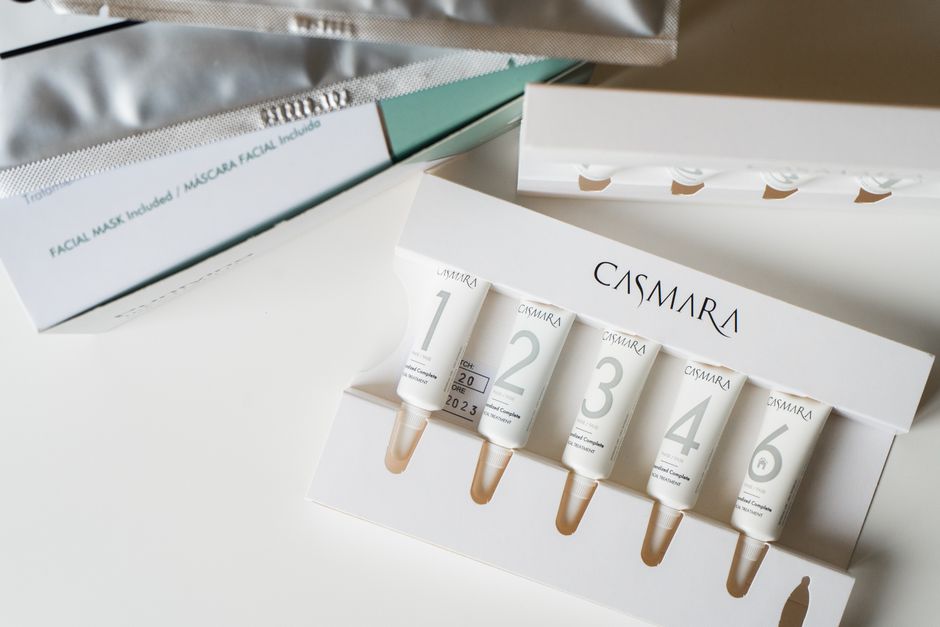
- Aestura Atobarrier 365 Cream — barrier repair holy grail, around 26,000 KRW
- Sungboon Editor centella ampoule — the original, not the dupe
- Beauty of Joseon Relief Sun rice + probiotics SPF 50+ — daily cap, 18,000 KRW
- Numbuzin No.5 vitamin ampoule — brightening without the sting
- Anua Heartleaf 77% essence toner — gentle, refillable size
- Round Lab 1025 Dokdo toner — for the days my skin is acting up
- MediCube Zero Pore Pad — 2x weekly, not daily despite what the box says
- Aestura Hydroactive Sleeping Mask — overnight rescue, never travels
What I'd skip next time (and why)
Some things looked great in the basket and underwhelmed at home. The biggest category is anything sold as a multi-step routine — the seven-piece sets that come boxed with a ribbon are almost always overpriced relative to the individual products and load you up with things you don't need. I also fell hard for the snail-mucin trend on my second trip and ended up giving away three full bottles to friends in LA because the texture, on me, just felt like wearing glue. Your skin is your skin; don't trust me, trust your face.
The specific dupes that disappointed
The Olive Young house-brand sunscreen — fine, but not fine enough to choose over Beauty of Joseon. The trending pore pads in the bright-yellow tub — burned, peeled, lesson learned. Anything labeled 'whitening' that contains niacinamide alone — works, but no better than the much-cheaper version I can buy in California. And every single sheet mask priced over 5,000 KRW per piece — premium pricing on tissue paper is the trap of all traps.
Sunscreen — the actual reason to fly
If I had to pick one category that justifies the entire pharmacy haul, it's sunscreen. Korean SPF formulations are years ahead of US drugstore equivalents in finish, scent, and how they sit under makeup, and the regulatory environment lets brands use filters that haven't cleared the FDA yet. Beauty of Joseon Relief Sun is the gateway drug, but if I'm being honest the ones I really stockpile are the Round Lab Birch Juice Moisturizing Sunscreen for daily wear and the Skin1004 Madagascar Centella sunscreen for sensitive days. I bring back six to eight tubes per trip and budget them like skincare currency through the next fall. The price difference versus shipping them to California is genuinely about 50 percent.
How to read a Korean sunscreen label fast
Look for SPF 50+ PA++++ — that's the Korean rating ceiling and most of the good ones hit it. Check the back for whether it's a chemical, mineral, or hybrid filter ( hybrid these days). 'No-sebum' or 'matte' finish if your skin runs oily; 'glow' or 'tone-up' if you want a satin finish. Skip anything with strong fragrance unless you've patch-tested it on a previous trip.
How I pack it without TSA destroying my life
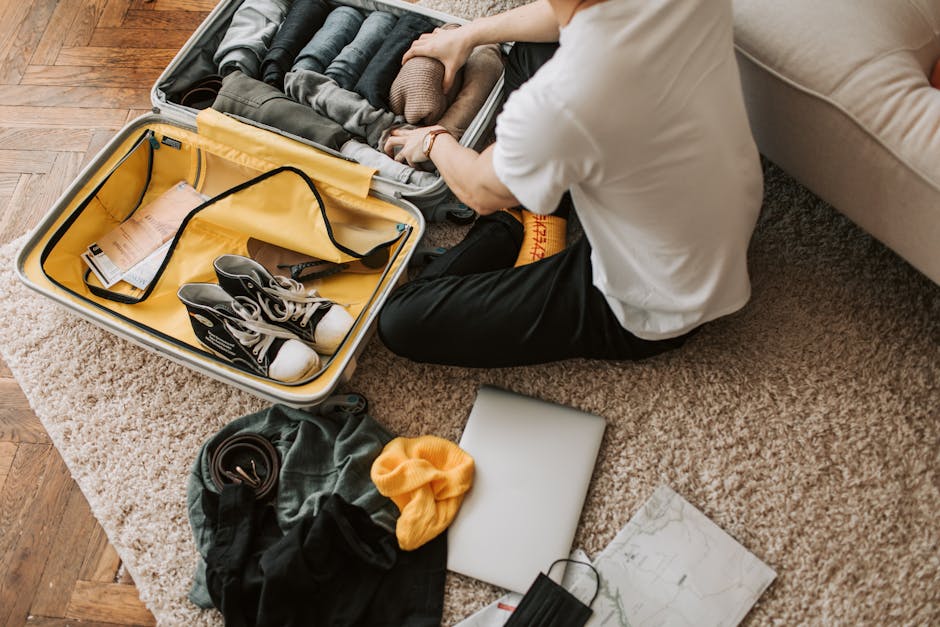
After three trips of having creams confiscated and one heartbreaking 75ml essence loss at LAX, I have a system. Anything over 100ml goes in checked luggage, period. Sunscreens get double-bagged because they expand at altitude and one of them will, eventually, leak. Glass ampoule bottles get wrapped in socks — yes, your socks — and packed in the middle of the suitcase, not the edges. I bring a half-empty toiletry pouch on the way over specifically to fill it on the way back, and I budget about three pounds of weight allowance for skincare alone. It sounds excessive until you've cried over a broken Aestura jar in a Newark hotel room.
- Anything 100ml+ goes checked luggage — no exceptions
- Glass ampoules wrapped in socks, packed center-suitcase
- Sunscreens double-bagged in zip-locks for altitude expansion
- Sheet masks flat against the bottom layer (saves space)
- Carry-on essentials limited to one ampoule and one moisturizer for the flight
What's worth buying versus what'll make it to your local Sephora anyway
The K-beauty pipeline to US retail moves fast — what's hot in Olive Young this spring will probably be on Sephora's shelves within twelve months at a 60 percent markup. So my buying logic now skews toward two categories: products that probably won't make it to US shelves (legacy pharmacy brands, the more medicated barrier creams, anything sold mostly to a Korean clinical audience), and products that will make it to US shelves but cost half as much in Korea. The viral stuff that's already at Ulta? Don't waste suitcase weight on it. Buy the boring pharmacy basics that no American retailer will ever import. That's the real haul.
A note on prescription-strength stuff
Some of the medicated creams my pharmacist has recommended — for melasma, for stubborn rosacea-type redness — require a quick consultation at a local clinic to access in their full-strength versions. That's a separate trip, not a pharmacy walk-in, but if you're already in Korea for a few days it's a worthwhile detour. The over-the-counter versions on Olive Young shelves are watered down by comparison.
“Buy the boring pharmacy basics that no American retailer will ever import. That's the real haul.”
Editor's note
Frequently asked questions
Is Olive Young actually worth it or is it overhyped?
It's worth it as a starting point — the inventory is broad, the testers are open, and the staff will let you stand there for an hour without bothering you. But once you've done one Olive Young run, the local pharmacy (pharmacies with the green cross sign) carry a different and often better inventory of barrier creams and sensitive-skin products. Hit Olive Young first, pharmacy second.
Do I need to bring cash or do they take cards?
Cards work everywhere — Olive Young, pharmacies, department stores, all take Visa and Mastercard without issue. I usually carry about 50,000 KRW in cash for small street-level stops and the rest goes on a no-foreign-transaction-fee card. The exchange rate at airport ATMs in Korea is generally better than what your home bank will offer for cash exchange.
How much should I budget for a serious skincare haul?
For a real stockpile haul — sunscreens, ampoules, barrier creams, sheet masks for a year — I budget around 300,000 to 500,000 KRW (roughly $220 to $370 USD). That's two big shopping bags, four to six months of daily-use product, and gifts for at least three friends. You can absolutely spend more, but you'll hit diminishing returns past about 600,000 KRW.
Can I get the same products at Korean grocery stores in the US?
Some of them — Beauty of Joseon, Anua, Round Lab, Numbuzin are all available at H Mart and most Korean grocery chains in California, New York, and Texas. The price markup is roughly 40 to 60 percent versus Olive Young, but it's an option. The legacy pharmacy stuff (Aestura, Atobarrier, Donabalm, Madecassol) is much harder to find outside Korea — that's the real reason to buy in person.
What if my skin reacts badly to something I bought?
Stop using it immediately, take a photo of the reaction, and bring both the product and the photo back to the pharmacy if you're still in Korea — they'll usually exchange or refund without much friction. If you're already home, the brand's customer service line (most have English-language email) is a reasonable next step. For severe reactions, see a dermatologist; centella and snail mucin both have non-trivial allergy rates that don't get talked about much in haul videos.
Are there any products I should avoid bringing back to the US?
Anything with corticosteroids in the formulation can be flagged at customs even if it's over-the-counter in Korea, so check the ingredients list before you pack. Some whitening products contain hydroquinone above US-permitted concentrations and can technically be confiscated. Sunscreens, moisturizers, ampoules, sheet masks, toners, and basic cleansers — all fine, all standard, all welcome in your suitcase.