
Travel & Culture
The Korean Skincare Routine I Actually Stuck With
Ten steps became four. Four became habit. Here is what survived two years of real life.
Here is the embarrassing part — I owned a 10-step routine for almost two years and never finished it once. Not on a Sunday. Not even after a Gangnam clinic visit when I had every excuse to feel motivated. The bottles lined up on my Bay Area bathroom counter like a tiny pharmacy, and most mornings I would grab maybe three of them before running out the door. So I did the thing I should have done a year earlier — I cut it down. Hard. I asked friends in Seoul, I asked my Korean cousin, I asked the pharmacist at Olive Young in Sinsa, and then I built a routine that survived the test of an actual American workweek. This is what stuck.
Why the 10-step thing didn't work for me
I would love to say I tried hard. I did, for about a month. The reality is that on a Tuesday morning in San Francisco, with a 9 a.m. standup looming, I am not layering essence-toner-ampoule-serum-emulsion. I am putting on sunscreen and getting in the car. The 10-step pitch was never really meant as a daily checklist — it is more like a menu you choose from depending on the day. That framing took me way too long to land on. Once I started thinking of K-skincare as a flexible kit instead of a script, I stopped feeling guilty about skipping things.
The other thing I figured out was that a lot of the steps were doing the same job. Two hydrating layers. Three brightening actives. My skin did not need a committee. It needed a clear, short routine that I would actually do at 11 p.m. when I was tired.

My morning, in four steps
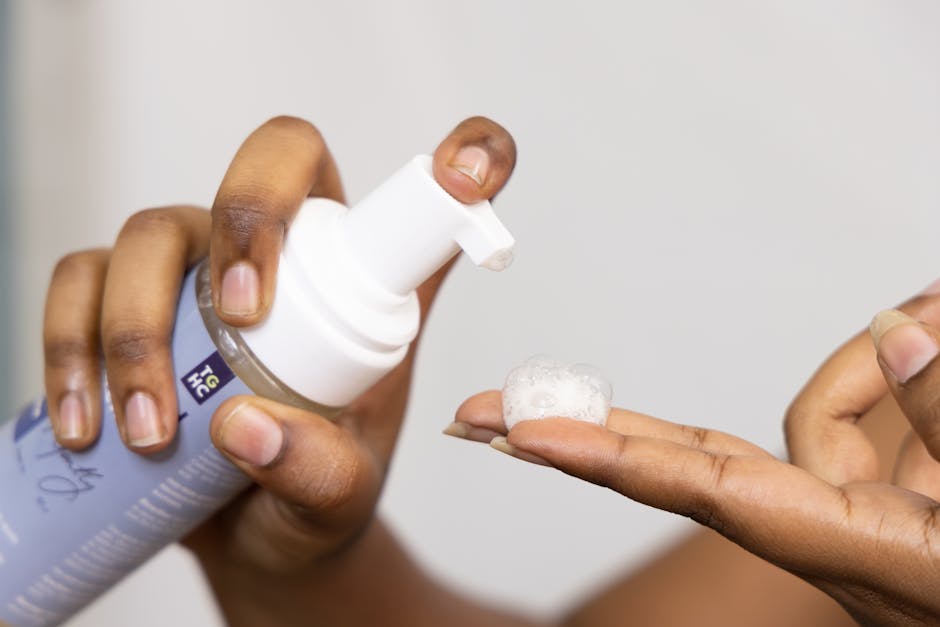
Gentle cleanse with a low-pH foam. I splash water, work the foam in for maybe twenty seconds, rinse. Then a hydrating toner — I pat it in with my hands, never cotton pads. After that, a vitamin C serum on weekdays (a 10% L-ascorbic that doesn't sting) and a snail mucin on weekends when I feel like babying my skin. Last step, the one I would never skip — sunscreen. Korean sunscreens spoiled me. They are light, they don't leave a cast, and SPF 50 PA++++ is the baseline, not the ceiling.
That is the whole morning. Four products, maybe three minutes. If I have a clinic appointment that week or I am coming off a flight, I will add a sheet mask before makeup, but that is a bonus, not a rule. For more on what I do post-flight, see what I eat when jet-lagged — the food side matters more than people think.
- Step 1: Low-pH foam cleanser, 20 seconds
- Step 2: Hydrating toner, patted in by hand
- Step 3: 10% Vitamin C serum (weekdays) or snail mucin (weekends)
- Step 4: SPF 50 PA++++ Korean sunscreen, generous layer
Evening — a little longer, but not much
Double cleanse, always. Oil cleanser first to break down sunscreen and any makeup, then the same low-pH foam from morning. This is the step I would defend to anyone — I noticed a real difference in clogged pores within two weeks of doing it consistently. After cleansing, I do a hydrating toner again, then either a retinol (two nights a week) or a centella ampoule (the other nights). Then a moisturizer, usually something with ceramides. Twice a week I add a sleeping mask on top, and that is the closest I get to luxury.
The trick I learned from a derm in Apgujeong — don't pile on actives. If I am using retinol, that is the active. The serum gets simpler. Centella, niacinamide, hydration. Save the strong stuff for one slot. The other thing she said that stuck with me — your skin looks different at 11 p.m. than it does at 7 a.m., and so should the routine. Mornings are about protection (sunscreen, antioxidant). Nights are about repair (gentle exfoliation, ceramides, peptides if you are into them). Stop trying to do both at the same time. Once I started thinking about it that way, the order finally made sense and I stopped second-guessing every step.
What I cut and what I never replaced
Toner pads, the giant tubs of them. I loved the idea, but I was using them like skincare confetti and burning through a tub in two weeks. Out. Essence — I know, K-beauty heresy. Mine just felt like a watery duplicate of toner. Out. Eye creams, mostly. I use my regular moisturizer around my eyes and my undereyes look the same as when I was using a $60 jar. Sheet masks every day — I now do them maybe three times a week, often the morning of a clinic visit or after a long flight.
The cut list freed up about $80 a month and I haven't missed any of it. The kicker is, my skin actually got better. Less is the assignment when you are already in your thirties and your barrier is the priority.
- Cut: daily toner pads (tubs of 60+)
- Cut: essences that overlap with toner
- Cut: dedicated eye creams
- Cut: daily sheet masks (now 3x/week)
- Kept: gentle cleanser, hydrating toner, one active, sunscreen

The Gangnam pharmacy aisle changed my buying habits
When I am in Korea I do a focused haul. I do not browse Olive Young like a kid in a candy store anymore — I know what I am replacing, and I leave with a list of about eight items. Sunscreen, gentle cleanser, toner, two ampoules, a sheet mask pack, and a hand cream because they are cheap and I keep losing them. The prices in Seoul make a real difference if you are using these daily. I wrote a longer breakdown of the actual products and where I bought each one in my korean skincare pharmacy haul post — that one has SKUs and rough receipts.
The one tip I would give anyone visiting — go on a weekday morning, ask for English help (most stores have at least one trained staffer), and don't fall for the front-of-store displays. The actual derm-friendly stuff is usually two aisles deep.
How treatments and routine fit together
If you are combining K-skincare with a clinic visit — Ultherapy, lasers, peels, anything that touches the skin barrier — you have to pause your strong actives. My rule is simple. Five days off retinol and any acids before treatment, and at least three days off after, sometimes a full week if I had a peel. During the recovery window, I lean on snail mucin, panthenol, and centella. Sunscreen becomes non-negotiable, like wearing-it-indoors-by-the-window non-negotiable.
I always tell friends visiting Seoul that the post-treatment days matter as much as the procedure itself, and that the room you stay in plays a role too — see where I stay in gangnam treatment trip for the practical side. A hotel with blackout shades and a good shower is doing more for your skin than half your serums. And on the rest day after a session, a proper wind-down hour at a quiet jjimjilbang or hotel spa — covered in gangnam spa day recovery — is the easiest way to reset.
The last piece I will add is the one nobody told me on trip one — the routine you bring on the plane is not the routine you do at home. I pack a travel kit with smaller, gentler versions of my four core products and a hydrating sheet mask for the flight. No actives in the travel bag. Whatever I was using two weeks before the trip stays in California. The skin you arrive with is the skin the clinic will work on, and that has shaped how I think about every product on my counter — not a wishlist, a working set.
Frequently asked questions
Do I really need a Korean routine to get Korean skin?
No. The products help, especially Korean sunscreens and gentle cleansers, but the bigger lever is consistency. A simple routine you actually do beats a 10-step routine you guilt-skip. Most of the people I know in Seoul with great skin are running four or five products, not fifteen, and they have been running them for years.
Is double cleansing worth it for dry skin?
Yes, if you wear sunscreen or makeup. Use a balm or oil cleanser that is well-formulated and follow with a low-pH foam. The dry feeling usually means the second cleanser is too harsh, not that double cleansing itself is the issue. Switching to a low-pH foam fixed that for me within a week.
Where do I start if I have never used K-beauty?
Three products — a gentle cleanser, a hydrating toner, and a Korean sunscreen. Run that for a month before adding anything else. You will learn what your skin actually wants, and you will avoid the panic-buy phase where you end up with five serums that contradict each other.
Are essences and serums the same thing?
Functionally similar in many lines. Essences tend to be lighter and hydration-focused, serums tend to deliver actives like vitamin C, niacinamide, or retinol. If you are picking one to drop for simplicity, drop the essence — your hydrating toner is already doing most of that work.
How long before I see results from a Korean routine?
Texture and hydration shift in about two to three weeks. Tone, pigmentation, and fine lines take two to three months minimum. If a product promises overnight change, that is a marketing line, not skincare. Take a phone selfie at week zero so you have something to compare against — memory plays tricks.
Can I keep using my routine after a clinic treatment?
Pause anything active — retinol, AHA, BHA, vitamin C — for at least three to five days before and after the procedure. Your provider will give you a specific window. During recovery, simplify to gentle cleanser, hydrating layer, ceramide moisturizer, and high-SPF sunscreen. Add the actives back gradually, one at a time, so you can spot any reaction.