Travel & Culture
The Restaurant List My Mom's Friend in Seoul Texted Me
An ajumma's KakaoTalk dump of the Gangnam spots she actually eats at — the list that has not steered me wrong yet.
Two trips ago my mom's college friend in Seoul — I will call her Mrs. Han, because she would not want her real name on the internet — sent me a KakaoTalk message that ran eight screenshots long. It was a list of restaurants she and her husband go to, organized by what they go for, with addresses pasted from Naver Maps and the occasional voice memo telling me what to order. I have eaten my way through most of it on the last two trips, and I now believe this is the best Seoul restaurant intel I am ever going to get. With Mrs. Han's permission, here is the curated version — twelve places, why she likes them, and what I learned the first time I went.
The breakfast and porridge spots
Mrs. Han's first three were all breakfast places, and they tell you something about how she eats — gentle, warm, no surprises before 10 AM. The first is a small bonjuk shop in Sinsa that has been open for over twenty years and does an abalone porridge that tastes like the bowl my grandmother used to make for me when I was sick at six years old. The second is a hotel-lobby breakfast at a mid-range business hotel near Gangnam Station that runs a buffet she calls 'pretending to be on a business trip,' which she has done with her own friends for fun. The third is a hand-cut noodle place that opens at 11 AM but counts as breakfast in her book because it serves the kind of clear anchovy broth that resets a body. None of these are flashy. All three are the kind of place you walk into without a reservation and walk out forty minutes later quietly fixed.
How to find these without Mrs. Han
Naver Maps is your friend, not Google Maps — the Korean platform has the actual reviews, the real photos, and the hours that are correct. Search the dish name in Korean (,, ) plus the neighborhood. The places with low review counts and high star averages from local accounts are the ones to try.
- Sinsa bonjuk shop — abalone porridge, around 18,000 KRW, no English menu
- Gangnam Station business-hotel buffet — solid Korean side, around 35,000 KRW
- Old-school kalguksu near Apgujeong — clear anchovy broth, 12,000 KRW

The lunch list — soup and stew territory
Lunch in Mrs. Han's world is a soup-or-stew situation, and her list reflects this with three places I had never heard of and immediately added to my own rotation. There is a seolleongtang spot in Yeoksam that has been there since the eighties and serves the bowl with exactly two banchan — kimchi and pickled radish — and nothing else, because they want you to focus. There is a soft-tofu stew place in a basement near Cheongdam that does the broth so cleanly you can taste the actual tofu, which sounds obvious until you eat sundubu jjigae somewhere else and realize you've been eating chili-paste soup with tofu in it your whole life. And there is a doenjang jjigae shop in a quiet part of Seocho that her husband considers personally important. The bill at all three runs under 15,000 KRW.
The Mrs. Han ordering tip
She told me, by voice memo, to always ask for the soup 'less salty please' the first time at any new place — gan jom yeotge haejuseyo. The kitchens season for a regular crowd that has been eating this their whole life, and a less-salty bowl lets you taste what the broth is actually doing. After the first visit you can ask for normal seasoning.

The mid-tier dinner spots she actually goes to
This was the section I was most curious about, because dinner is where Seoul restaurant lists usually go off the rails into either tourist BBQ or thousand-dollar omakase. Mrs. Han's dinners are neither. There is a galbi place in Seocho where she and her husband go for anniversaries — clean grills, well-trimmed short rib, and a banchan spread she described in the voice memo as 'enough to be a meal by itself.' There is a hand-pulled noodle and dumpling shop in Cheongdam that she likes because the dumplings are made in front of you and the noodles arrive at the table still steaming. And there is a place she only described as 'the fish set next to the bank in Apgujeong,' which I had to find by walking the block twice and finally asking an ajumma at a flower stand. It does a grilled fish home-style set for two for around 60,000 KRW total, and it is one of the best meals I have eaten in Korea, full stop.
- Seocho galbi spot — clean grill, family-run, around 45,000 KRW per person
- Cheongdam noodle and dumpling — open kitchen, 15,000-20,000 KRW per person
- Apgujeong grilled fish set — home-style, 60,000 KRW for two, no English
The hidden cafe she sends people to
Mrs. Han is not a cafe person — her line on most cafes is they are too loud and serve too much sugar — but she sent me to exactly one, a small specialty roaster in a side street off Garosu-gil that has eight seats and a single barista who speaks no English. She likes it because the iced Americano is genuinely a serious cup of coffee, the seating is quiet, and the owner does not play music after a certain hour. I have written there for entire afternoons. The drip coffee runs around 6,500 KRW, which is on the higher end for Seoul, and is worth it. If you go, do not order food — they only have one cookie and it is mediocre on purpose, which I respect.
Why this beats the Instagram cafes
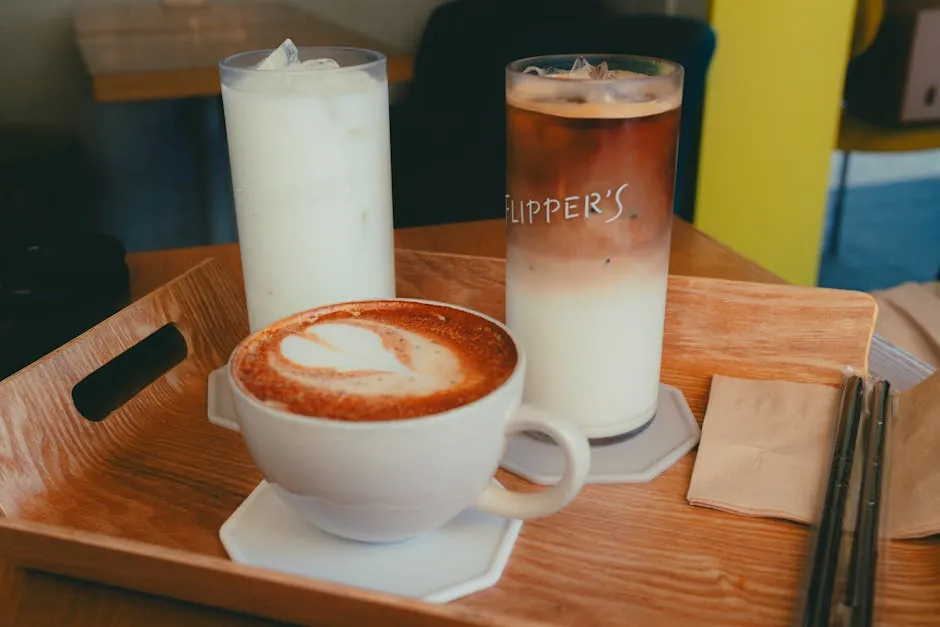
Garosu-gil and Seongsu have a hundred photogenic cafes that are designed for fifteen-minute photo stops. The ajumma list is the opposite — places designed for two-hour sits, where the lighting is warm but not styled, and where nobody is going to ask you to vacate the seat. Once you have eaten at the second kind, the first kind starts to feel like furniture you cannot use.

The market and street-food rule
Mrs. Han had one section that was not a list of places but a rule: at any traditional market — Gwangjang, Mangwon, the smaller Bangbae market she actually shops at — eat the things that are visibly turning over, in front of you, made by an ajumma over fifty. The bindaetteok (mung bean pancake) where the batter is being ladled fresh, the kalguksu where the noodles are being cut on the spot, the kimchi mandu where the steamer is opened every three minutes for a new round. Skip anything sitting in a tray that has been there longer than the time it took you to walk up. This is the same rule I use in any food market anywhere in the world, and it is correct. She added one specific recommendation: the bindaetteok at Gwangjang in the southeast corner of the food alley, run by a family that has been there since her own mother's time. It is, she said, the only thing she goes to Gwangjang for.
What to drink at a market
Makgeolli (rice wine) with bindaetteok is the canonical pairing and worth it once if you have the afternoon free. If you are in a coordinated state and need to stay coordinated, ask for boricha or a cold barley drink — most market stalls have one. Soju at lunch in a market is not a casual order; it will end your afternoon.
The dessert and late-night additions
The last section of the message was Mrs. Han telling me where she goes for late-night cravings, which surprised me because she goes to bed at 10 PM. She has, however, raised two daughters who are now in their thirties and live in Seoul, and the list is partly inherited from them. There is a patbingsu (red bean shaved ice) place in Cheongdam that is open until midnight in summer and is, she insists, the only one worth eating at. There is a fish-cake skewer cart near Sinsa that operates from 9 PM and is run by a man she has been buying odeng from for thirty years. And there is a 24-hour sundubu place in Yeoksam for the times you wake up at 2 AM and need real food — which, she noted, mostly happens to Americans who just landed. Reader, she was correct. I have used this address.
- Cheongdam patbingsu spot — summer only, around 15,000 KRW per bowl
- Sinsa odeng cart — 1,000 KRW per skewer, hot broth on the side, free
- Yeoksam 24-hour sundubu — landing-day 2 AM emergency option, 12,000 KRW
What I learned from this list overall
After two trips of working through the Mrs. Han list, the meta-lesson is what I think about most. None of these places are on English-language top-ten lists. None of them have wait lines longer than twenty minutes. None of them try very hard to look like anything. They are run by people who have been cooking the same five things for twenty or thirty years, in neighborhoods their regulars also live in, at prices that locals can afford on a Tuesday. The reason I keep going back is not that the food is the best in Seoul — some of these dishes are surely beaten by a more famous spot ten minutes away. The reason I keep going back is that eating in these places is the closest I get to actually being in Seoul instead of visiting it. That is the gift of an ajumma list. If you have a Mrs. Han in your life, ask her. If you do not, this article is yours.
How to ask your own Mrs. Han
If you know any older Korean person — your friend's mom, your church aunt, the dry-cleaner ajumma your family has used for twenty years — ask them where they eat in Seoul. Not where they would take a tourist; where they go themselves. The first answer will be vague. Wait it out. The second answer is the real one, and it will arrive over coffee and last forty minutes.
“Eating in these places is the closest I get to actually being in Seoul instead of visiting it. That is the gift of an ajumma list.”
Editor's note
Frequently asked questions
Can you share the actual restaurant names from Mrs. Han's list?
Out of respect for Mrs. Han's privacy and because some of these are tiny family-run places that genuinely cannot handle a tourism bump, I'm keeping the specific names off this article. The neighborhood and dish-type pointers above are enough to find them on Naver Maps, and finding them yourself is part of the trip. If you want my own publicly-shareable list, see my linked Gangnam food guides below.
Do I need to speak Korean to eat at these places?
Not really. The dish names are short and the menus are usually photo-based or single-page. Pointing at someone else's bowl works at every soup spot in Seoul. The two phrases that help most are 'i-geo juseyo' (this one please) and 'gye-san hae juseyo' (check please). A translation app open on your phone covers everything else.
Are these restaurants expensive?
No, and that's part of the point. Lunch at most of them runs 12,000 to 18,000 KRW per person ($9-14 USD as of 2026). Dinner sits at 30,000 to 60,000 KRW per person at the higher end, which is the galbi place. The cafe and the markets are even cheaper. None of these are special-occasion-budget places — they're how locals actually eat on a normal week.
How do I find the equivalent of Mrs. Han's list for other Seoul neighborhoods?
Older Korean residents of any neighborhood eat at the same five-to-eight places for decades, and asking your hotel concierge by name (not 'a good restaurant' but 'where do you eat lunch?') will surface a real list. Naver Maps reviews from accounts with profile photos and a long history are also more reliable than tourist-platform reviews. Skip TripAdvisor.
Is it safe to eat at small mom-and-pop places like these?
Yes. Seoul has strict food-safety inspection across all licensed restaurants, and the small family-run places are inspected on the same schedule as the chains. The high turnover and the regulars who have been eating there for years are also a built-in quality check. I have eaten at hundreds of these spots over twenty years of trips and have never had a stomach problem from one.
What's the single best place from the list if I only have one meal?
The Apgujeong grilled-fish set for two. It's the meal I think about most between trips. It's home-style cooking executed at a level you cannot get in the United States at any price, served by people who have been doing it for thirty years. If you only have one dinner in Gangnam and no reservation, walk the block I described above and ask the flower-stand ajumma.