Glossary
Non-Surgical Lift Glossary: Threads, MFU, RF, Fillers
A working glossary of the lifting vocabulary I kept tripping over across Gangnam consultations — vectors, anchor points, SMAS, threads, MFU, RF, and filler-based lift, defined the way a friend would explain them.
After my third year of cross-category Gangnam consultations I noticed the term I needed most was not a brand name. It was "vector." The next was "anchor." Then "retaining ligament," "zonal lift," "longevity by category," and a whole framework of filler-based lift versus thread-based lift versus energy-based lift that nobody explained the same way twice. The lifting conversation, it turned out, is its own vocabulary — overlapping with my anti-aging and energy-based glossaries, but with a structural language all its own. So I started a third notebook. This is the cleaned-up version: fifty-five terms organized by theme and alphabetized inside each theme, covering the structural vocabulary of how a lift actually works (vectors, anchor points, retaining ligaments, SMAS engagement, mid-face versus lower-face zones), the four categories of non-surgical lifting tool (threads, MFU, RF, fillers), the combination protocols that layer them, the longevity numbers that decide whether a result is worth what it costs, and the failure modes I have personally watched friends regret. None of it is medical advice. It is the working vocabulary that lets me sit through a lift consultation and actually understand which axis the practitioner is working on, which axis they are leaving alone, and what year-over-year plan they are quietly proposing. (Tip: if you only have time for fifteen, the L, S, and T sections carry most of the load.) If you are about to walk into a Gangnam lift consultation, this is the page I wish I had bookmarked first.
A — Anchor point, Aging vector, Asymmetry
Section A covers the structural vocabulary of where a lift attaches, the direction tissue is falling, and the most common failure mode every lift consultation tries to address.
Anchor point
The fixed point in the deep tissue or bone where a lifting force terminates — the structural opposite of the mobile point being lifted. Thread lifts use the temporal fascia or deep galea as anchor points; MFU and RF use the SMAS itself; surgical facelift uses the deep temporal fascia and mastoid periosteum. Without a stable anchor, a lift either migrates or pulls flat tissue toward the unstable side. (Tip: ask where the anchor is — practitioners who can answer "deep temporal fascia" or "zygomatic ligament" are working from anatomy; practitioners who say "the cheek" are working from marketing.) See also: lifting vector, retaining ligament, SMAS engagement.
Aging vector
The direction along which mid-face and lower-face tissue descends with age — typically inferior and slightly medial in the mid-face, inferior and slightly lateral along the jawline. Lifting protocols are designed to reverse the aging vector, which is why the lift direction is rarely straight up. Mid-face threads are placed at roughly a 30 to 45 degree superolateral angle; jawline threads at a more horizontal posterior vector. See also: lifting vector, mid-face support, jawline definition.
Asymmetry
Differential descent or volume loss between the left and right side of the face — almost universal in adult faces by the mid-thirties, often unnoticed until the patient sees a comparison photograph. Lift protocols often unmask asymmetry that was previously concealed by uniform fullness. (Tip: most experienced injectors photograph and measure asymmetry before any lift work — the goal is rarely perfect symmetry but rather not amplifying the existing difference. "Same protocol on both sides" is sometimes the wrong answer.) See also: revision lift, before/after photography, candidacy criteria.
B — Bioabsorption timeline, Brow lift
Section B covers the timeline by which absorbable threads dissolve and the upper-face zone most often treated alongside MFU and botulinum.
Bioabsorption timeline
The schedule by which a thread polymer dissolves in tissue. PDO threads are absorbed over six to nine months, with collagen stimulation continuing for several months after the thread itself is gone. PCL threads dissolve over twelve to eighteen months. PLLA threads have the longest absorption arc at eighteen to twenty-four months. The bioabsorption timeline does not equal the result timeline — collagen stimulation outlasts the polymer, which is why a PDO thread "result" can persist twelve to fifteen months even though the thread itself is gone by month nine. (Tip: when a clinic quotes thread duration, ask whether they mean absorption or visible result — they are different numbers.) See also: PDO threads, PCL threads, PLLA threads, longevity.
Brow lift (non-surgical)
A combined protocol typically using botulinum toxin to selectively weaken the depressor muscles (orbicularis oculi, procerus, corrugator) so the frontalis can elevate the brow, often layered with MFU or RF on the temple and forehead for structural support. A non-surgical brow lift produces one to three millimeters of elevation in most adult faces — meaningful for periorbital opening, smaller than a surgical brow lift. (Tip: the botulinum component does most of the visible work; the energy component does the durability work. Most Gangnam protocols layer the two.) See also: periorbital lift, MFU, botulinum toxin Type A.
C — Candidacy criteria, Combination protocol
Section C covers the patient-selection vocabulary and the layering framework most experienced Gangnam injectors actually use.
Candidacy criteria
The patient-selection framework that decides whether non-surgical lifting will produce a meaningful result. Standard criteria include age (most non-surgical protocols work best between 30 and 55), laxity grade (mild-to-moderate skin laxity rather than severe), fat distribution (sufficient mid-face volume to lift, not so much that gravity overwhelms threads), and skin quality (intact dermal collagen capable of responding to neocollagenesis). Patients outside the criteria are often better served by surgical facelift or by combination protocols layering volume restoration with energy work. (Tip: a clinic that books anyone who walks in for a thread lift is not running candidacy screening — the same clinic will produce more revision cases.) See also: laxity grade, MFU vs surgery indication, revision lift.
Combination protocol
A treatment plan layering two or more non-surgical lifting modalities — most commonly MFU plus filler, MFU plus threads, or filler plus threads. The rationale is that each modality works on a different depth or mechanism: MFU at the SMAS for structural lift, filler at the deep dermal-subcutaneous junction for volume support, threads in the subcutaneous tissue for vector lift. Combination protocols typically produce more durable and natural-looking results than any single modality but cost more and require careful sequencing. (Tip: experienced Gangnam injectors almost never propose a single-modality lift after age 40 — the question is which two or three to combine.) See also: treatment sequencing, MFU + filler, MFU + threads.
D — Deep medial cheek, Dermis tightening, Downtime tier
Section D covers the most-targeted volume compartment in mid-face protocols, the structural goal of energy-based lifting, and the recovery framework.
Deep medial cheek replacement
Filler placement in the deep medial cheek fat compartment — the volume pad that sits on the maxilla just lateral to the nasolabial fold. Deep medial cheek replacement is one of the most-cited filler-based lift techniques because restoring volume in this compartment lifts the overlying skin by structural support rather than direct vector pull. Typical agents include CaHA (Radiesse), HA filler at high G-prime, or PLLA. (Tip: "cheek filler" without compartment specificity is uninformative — ask whether the placement is deep medial cheek, lateral cheek, or anterior malar.) See also: lateral support pillar, mid-face support, volume restoration.
Dermis tightening
Surface-level skin tightening produced by heating the reticular dermis to the threshold where collagen fibers contract and remodel — typically 60 to 65 degrees Celsius for a few seconds at the target depth. RF microneedling, Sofwave SUPERB, and shallow MFU passes all produce dermis tightening as their primary mechanism. Distinct from SMAS engagement, which works in a deeper layer and produces structural rather than surface effects. (Tip: dermis tightening is what makes a face look "tighter" in photos at 30 days; SMAS engagement is what makes a face look "lifted" in photos at 6 months.) See also: SMAS engagement, RF microneedling, neocollagenesis.
Downtime tier
An informal categorization of expected recovery: zero downtime (no visible signs, immediate makeup OK), social downtime (mild redness or swelling, makeup-coverable for one to three days), full downtime (visible bruising, swelling, or thread-puckering for five to fourteen days). Most lifting modalities map to social downtime — MFU and RF typically zero-to-social, threads typically social-to-full, fillers usually social. (Tip: ask which downtime tier your practitioner is planning before booking the flight home.) See also: social downtime, hidden downtime, treatment sequencing.
E — Effect depth
Section E covers the cross-modality vocabulary for where a lifting effect actually occurs.
Effect depth (depth of effect)
The anatomical layer at which a given lifting modality produces its mechanical or biological action. MFU at 4.5mm reaches the SMAS; MFU at 3mm reaches the reticular dermis; RF microneedling reaches 0.5 to 4mm into the dermis depending on platform; PDO COG threads sit in the subcutaneous fat at roughly 4 to 6mm; deep CaHA filler sits at the dermal-subcutaneous junction. (Tip: depth of effect is the single most useful framework for comparing lifting tools — once you can place a modality on the depth ladder, the comparison conversations get much easier.) See also: depth zone, SMAS, dermis tightening.
F — Failure mode, Fillers as lifting tools, Full-face lift
Section F covers the most common ways non-surgical lifts go wrong, the rationale behind filler-based lifting, and the umbrella zonal vocabulary.
Failure mode (lift)
The categorical ways a non-surgical lift produces an undesired result. The four most common are over-treated jawline (linear straightening that erases natural angle and reads masculine on female faces), excessive fat loss (over-tight MFU or RF protocols thinning subcutaneous fat and aging the face), asymmetry (one-side migration or different response between sides), and unnatural vector (threads pulling tissue along a non-anatomic line, producing visible cheek puckering or dimpling at rest). (Tip: experienced injectors talk about failure modes openly; practitioners who claim no failures are either inexperienced or not paying attention.) See also: revision lift, asymmetry, candidacy criteria.
Filler-based lift (HA, CaHA, PLLA, autologous fat)
A category of non-surgical lifting that produces lift through volume restoration and structural support rather than vector pull or direct tissue tightening. HA filler at high G-prime in the deep medial cheek lifts the overlying nasolabial fold; CaHA along the jawline restores definition by filling the pre-jowl sulcus; PLLA over a six-month series rebuilds pan-facial collagen for diffuse support; autologous fat replaces lost subcutaneous volume long-term. Filler-based lift is the gentlest of the four major non-surgical lift categories — no thread anchor, no thermal energy, no vector pull — but the most volume-dependent. (Tip: "liquid lift" and "non-surgical lift" in marketing copy usually mean filler-based lift specifically.) See also: HA filler, CaHA, PLLA, autologous fat.
Full-face lift (non-surgical)
A combination protocol covering the entire face zone-by-zone — typically brow and periorbital (botulinum + MFU on temples), mid-face (filler in deep medial cheek, MFU at 3 and 4.5mm, optional COG threads superolaterally), lower-face and jawline (CaHA along the jawline, MFU at 4.5mm, optional jawline threads), and neck (MFU at 3mm and 4.5mm, RF microneedling). A full-face non-surgical lift is typically planned across two to three sessions over four to eight weeks. (Tip: full-face does not mean uniform — most experienced injectors use different intensity in different zones based on what each zone needs.) See also: zonal lift, combination protocol, MFU vs surgery indication.
G — G-prime
Section G covers the rheology vocabulary that decides which filler is suitable for which lifting purpose.
G-prime (G')
A rheologic measurement of a filler's elastic modulus — its ability to hold shape under deformation. High G-prime fillers (Voluma, Restylane Lyft, Belotero Volume) hold structural support in the deep cheek and chin; low G-prime fillers (Volbella, Restylane Refyne) flow into superficial lines and lip volume. The choice of G-prime is what separates "filler used for lifting" from "filler used for line softening." (Tip: when a practitioner specifies a brand by family name — Voluma rather than "Juvederm" — they are working from G-prime logic; when they say "juvederm" without specifying, ask which one.) See also: HA filler, deep medial cheek, lateral support pillar.
H — Hidden downtime
Section H covers the recovery vocabulary that does not show in mirror selfies but does show in face-to-face encounters.
Hidden downtime
Recovery effects that do not show in a phone selfie but do show in person — subtle puffiness, mild thread-puckering when smiling broadly, slight asymmetry during early swelling, transient mid-face fullness from filler integration. Hidden downtime typically lasts seven to fourteen days for thread protocols, three to seven days for filler protocols, and one to three days for MFU and RF. (Tip: "social downtime" usually means hidden downtime — the term most clinics use to communicate "you can go to dinner but maybe not to your high-school reunion this week.") See also: social downtime, downtime tier, treatment sequencing.
J — Jawline definition, Jowl reduction
Section J covers the two most-requested lower-face lifting outcomes.
Jawline definition
Restoration or enhancement of the visible angle and contour along the mandibular border — the lower-face equivalent of mid-face lifting. Achieved through CaHA or high-G-prime HA filler placed along the mandibular line and pre-jowl sulcus, jawline-vector COG threads, MFU at 4.5mm targeting the SMAS along the jawline, or combinations. (Tip: "sharp jawline" requests are the most common over-treatment failure mode in lower-face protocols — straight lines erase the natural angle and read masculine on female faces. Most experienced injectors aim for definition rather than sharpness.) See also: jowl reduction, lower-face lift, failure mode.
Jowl reduction
Reduction in the appearance of jowls — the small fat pads that descend along the lower-cheek-to-jawline junction with age. Non-surgical jowl reduction layers MFU at 4.5mm to engage the SMAS and lift the jowl pad superiorly, CaHA or HA filler in the pre-jowl sulcus to fill the depression posterior to the jowl (which makes the jowl itself less visible), and optional jawline COG threads to provide a vector pull along the mandibular border. (Tip: jowl reduction is structural rearrangement, not fat removal — the goal is repositioning, not subtraction. Patients expecting fat removal usually need a different category of treatment.) See also: jawline definition, lower-face lift, MFU + filler.
L — Lateral support pillar, Laxity grade, Lifting vector, Ligament reinforcement, Longevity, Lower-face lift
Section L is the densest in this glossary — six terms covering the anatomy, the patient assessment, the geometry of lift, and the time horizon by category.
Lateral support pillar
A vertical column of filler placed over the lateral malar bone and zygomatic arch to provide structural support to the lateral cheek and the soft tissue draping over it. The lateral pillar is one of the most-cited filler-based lift techniques because it works through anatomic anchoring on bone rather than soft-tissue volume alone. Typical agents are CaHA, high-G-prime HA filler, or autologous fat. (Tip: lateral support pillar work is best evaluated three to six weeks after placement — early swelling can mimic the result, and the actual lift becomes visible as the swelling resolves.) See also: deep medial cheek, mid-face support, G-prime.
Laxity grade
A clinical estimate of the degree of skin and soft-tissue looseness, used to decide whether a non-surgical lift will produce a meaningful result. Common scales run from grade 1 (mild laxity, excellent non-surgical candidate) through grade 4 (severe laxity, surgical candidate). Most non-surgical lifting modalities work best in grades 1 and 2, produce mixed results in grade 3, and are not the right tool for grade 4. (Tip: ask the practitioner which laxity grade they are estimating before they recommend a modality — grade 3 patients sold a single-modality non-surgical lift are the most common revision-clinic patients.) See also: candidacy criteria, MFU vs surgery indication, revision lift.
Lifting vector
The geometric line along which a lifting force is applied. Mid-face vectors run roughly 30 to 45 degrees superolateral; jawline vectors run more horizontal, posterior toward the ear; brow vectors run vertical; neck vectors run inferior-to-superior along the platysma. Different modalities express vector differently — threads have a literal vector (the thread itself); MFU has a focal-point vector (the small treated zone retracts toward the ear); filler has a structural vector (volume placement that resists gravitational descent). (Tip: "vector" is the single most useful word in a lift consultation — practitioners who can draw the vector with their finger are working from anatomy.) See also: aging vector, anchor point, zonal lift.
Retaining ligament suspension
The structural concept that face anatomy is held in position by retaining ligaments — fibrous attachments between deep tissue and overlying skin (zygomatic, masseteric cutaneous, mandibular ligaments). Aging stretches and weakens these ligaments, allowing tissue descent. Surgical facelift releases and re-tensions the ligaments; thread lifts mimic the suspension by creating new fibrous tracks; MFU and RF reinforce the ligaments through neocollagenesis. (Tip: "ligament reinforcement" in clinic copy usually means MFU or RF strengthening the existing ligaments rather than physically replacing them.) See also: anchor point, SMAS engagement, neocollagenesis.
Longevity (months by category)
The expected duration of a lift result by modality. HA filler lift: six to twenty-four months depending on chemistry and area; CaHA: twelve to eighteen months; PLLA: eighteen to twenty-four months from final session; autologous fat: years (variable retention rate); PDO threads: twelve to fifteen months of visible effect; PCL threads: eighteen to twenty-four months; PLLA threads: twenty-four months plus; MFU: twelve to eighteen months for the structural component, dermis effects shorter; RF microneedling: nine to fifteen months. (Tip: longevity is per-modality, not per-protocol — a combination protocol does not necessarily last as long as the longest single component, because the shorter-lived components fall away first.) See also: top-up interval, maintenance schedule, treatment cycle.
Lower-face lift (non-surgical)
A combination protocol covering the lower face — jawline, jowl, and pre-jowl sulcus — typically layering CaHA or HA filler along the mandibular border, MFU at 4.5mm targeting the lower-face SMAS, and optional COG threads with a posterior-and-superior vector. The lower-face lift is the most-requested zonal protocol in Korean clinics because the jowl-and-jawline complaint surfaces earlier than other zones. (Tip: lower-face lift protocols often need to be layered carefully against the existing chin and submental anatomy — over-tightening the jawline without addressing chin projection produces an unbalanced result.) See also: jawline definition, jowl reduction, neck lift.
M — Maintenance schedule, MFU, MFU + filler, MFU + threads, Mid-face lift, Mid-face support
Section M covers the year-over-year framework, the dominant ultrasound modality, two of the most common combination protocols, and the most-treated zone.
Maintenance schedule
The year-over-year plan that follows an initial lift protocol. A typical maintenance schedule for a Gangnam regular runs MFU annually at the lift anniversary, HA filler top-up at the six-to-twelve-month interval depending on chemistry, CaHA top-up at twelve to fifteen months, thread top-up at twelve to fifteen months for PDO and twenty-four months for PCL or PLLA. Maintenance is what separates a one-time lift from a year-over-year program. (Tip: most clinics quote initial protocol cost as a single line item; ask separately for the maintenance schedule and its annual cost — the second number is what matters across years.) See also: top-up interval, longevity, treatment cycle.
MFU (Micro-focused ultrasound)
Ultrasound energy delivered to small focal points at precise depths — typically 1.5mm, 3mm, and 4.5mm in face protocols. The signature MFU platform is Ulthera/Ultherapy, which combines focal-point ultrasound with real-time imaging guidance. MFU produces small thermal coagulation points at the focal depth, which the body responds to over months with new collagen synthesis. The 4.5mm depth reaches the SMAS — the same layer surgical facelift mobilizes — which is why MFU sits at the top of non-surgical structural lift rankings. See also: HIFU, Ulthera, SMAS engagement.
MFU + filler
The most common Gangnam combination protocol — MFU at 4.5mm for SMAS engagement and structural lift, layered with HA or CaHA filler in the deep medial cheek and lateral support pillar for volume support. The rationale is that MFU lifts what is already there but cannot replace lost volume; filler replaces volume but does not engage the SMAS. The two together produce more durable and natural-looking results than either alone. (Tip: most experienced injectors do MFU first and filler at the same session or within two weeks — filler placement before MFU risks the focal-point energy disrupting the filler.) See also: combination protocol, treatment sequencing, SMAS engagement.
MFU + threads
A combination protocol layering MFU at 4.5mm with absorbable COG threads in the subcutaneous tissue. MFU provides structural lift at the SMAS depth; COG threads provide an immediate vector lift in the subcutaneous layer above it. The combination is most common for patients with grade 2 to early grade 3 laxity where a single modality would produce an under-lift. (Tip: threads after MFU is the standard sequence — placing threads first risks the subsequent MFU energy disrupting thread anchor points.) See also: COG threads, treatment sequencing, combination protocol.
Mid-face lift (non-surgical)
A zonal protocol targeting the mid-face — the area between the lower eyelid and the corner of the mouth — typically combining filler in the deep medial cheek and lateral support pillar, MFU at 3mm and 4.5mm, and optional COG threads with a superolateral vector. Mid-face lifting addresses the most-cited "tired look" complaints (flat cheek, deepened nasolabial fold, lower lid hollow) and is often the first zonal protocol a Gangnam regular runs. (Tip: mid-face is the zone where the difference between filler-based lift and energy-based lift is most visible — protocol selection here determines a lot of the final aesthetic.) See also: deep medial cheek, mid-face support, lifting vector.
Mid-face support
A structural concept describing the volumetric and ligamentous architecture that holds the mid-face in position. Mid-face support is provided by the deep medial cheek fat pad, the lateral malar bone, the zygomatic ligament, and the SMAS overlying them. Lifting protocols that target mid-face support layer volume restoration (deep medial cheek filler), structural reinforcement (MFU at 4.5mm), and ligament strengthening (RF or thread anchoring at the zygomatic ligament). (Tip: mid-face support is the single most consequential zone in non-surgical lifting — what happens here cascades down the rest of the face.) See also: deep medial cheek, lateral support pillar, retaining ligament suspension.
N — Neck lift
Section N covers the zone most often added to an upper-face protocol once the patient sees the camera reveal.
Neck lift (non-surgical)
A zonal protocol targeting the neck and submental area — typically MFU at 3mm and 4.5mm along the platysma and submental fat, RF microneedling for surface tightening, and optional COG threads along the platysmal bands. Non-surgical neck protocols produce meaningful improvement in mild-to-moderate platysmal laxity and submental fullness but do not match surgical neck-lift outcomes for severe laxity or significant fat excess. (Tip: ask the practitioner whether they are addressing the platysmal bands directly or only the surface skin — these are different anatomic targets and require different settings.) See also: lower-face lift, MFU, RF microneedling.
P — PCL threads, PDO COG threads, PDO mono threads, Periorbital lift, PLLA threads
Section P covers four absorbable thread polymer-and-configuration combinations and the upper-face zone where botulinum and MFU usually meet.
PCL threads
Polycaprolactone threads — a slower-degrading polymer than PDO with a longer collagen-stimulation arc of twelve to eighteen months and a result timeline of eighteen to twenty-four months. Used in COG configurations for lifting protocols where extended biostimulation matches the patient's tolerance for higher per-thread cost. (Tip: PCL threads are the middle-tier durability option — longer than PDO, shorter than PLLA, with a price profile in between.) See also: PDO threads, PLLA threads, bioabsorption timeline.
PDO COG threads
Polydioxanone barbed threads with directional micro-cogs along the shaft, designed for lifting. The cogs grip subcutaneous tissue and produce immediate physical lift along the thread vector on insertion. PDO COG is the most common Korean lifting thread material — affordable, well-tolerated, with a six-to-nine-month bioabsorption arc and twelve-to-fifteen-month visible result. (Tip: when a Korean clinic says "thread lift" without further qualification, they almost always mean PDO COG.) See also: thread anchor mechanism, lifting vector, COG threads.
PDO mono threads
Smooth, non-barbed PDO threads used to stimulate collagen along the thread track without producing a directional lift. Often placed in fan or mesh patterns across the cheek, jawline, or neck for diffuse collagen induction rather than mechanical lift. (Tip: mono threads are the entry-level thread category — collagen-only, no lift vector. The lifting threads are COG. "Thread tightening" usually means mono; "thread lift" usually means COG.) See also: PDO COG threads, PLLA threads, complementary skin care.
Periorbital lift
A combination protocol targeting the area around the eyes — typically botulinum toxin to weaken the lateral orbicularis oculi (which lifts the lateral brow), MFU at 1.5mm and 3mm on the temple and upper cheek for structural support, and optional Rejuran I or polynucleotide injection in the under-eye area for skin quality. Filler in the lateral brow fat compartment is sometimes added for direct volume support. (Tip: periorbital lift is among the most technically demanding zones in non-surgical lifting — under-treatment produces no visible change, over-treatment produces an unnatural surprised look.) See also: brow lift, MFU, botulinum toxin Type A.
PLLA threads
Poly-L-lactic acid threads with the longest-arc bioabsorption of the major thread polymers — eighteen to twenty-four months for absorption, twenty-four months plus for visible result. PLLA threads in COG configuration are positioned at the durability premium of the lifting category; in mono configuration they provide extended collagen stimulation without lift vector. (Tip: PLLA threads are the longest-lasting absorbable thread option but also the most expensive per thread — clinics often reserve them for patients planning longer maintenance intervals.) See also: PDO threads, PCL threads, longevity.
R — Revision lift, RF as lifting tool, RF microneedling lift, RF monopolar lift
Section R covers the corrective category that no clinic likes to talk about and three RF configurations applied to lifting outcomes.
Revision lift
A second-attempt protocol designed to correct an unsatisfactory or asymmetric result from a prior non-surgical lift. Common revision indications include excessive jawline straightening (corrected with hyaluronidase if the original was HA filler, or with strategic counter-volume if it was CaHA), thread migration or visible thread puckering (corrected by waiting for absorption or by physical removal of the offending segment), and asymmetric MFU response (corrected with selective additional treatment to the under-treated side). (Tip: revision lift is more common than clinic marketing suggests — ask any experienced injector how often they revise other clinics' work.) See also: failure mode, asymmetry, candidacy criteria.
RF as lifting tool
The lifting category that uses radiofrequency energy to produce dermal and subcutaneous tightening. RF reaches different depths depending on configuration — monopolar deepest (Thermage FLX, Volnewmer, Endymed Pro), bipolar shallower (most microneedling RF and Inmode Forma), multipolar at intermediate depth. RF lifting outcomes are typically gentler than MFU at the SMAS depth but cumulative across multiple sessions. (Tip: RF lifting works best as part of a layered protocol — single-modality RF rarely produces dramatic structural lift but adds meaningful skin quality and dermis tightening to a combination plan.) See also: monopolar RF, RF microneedling, dermis tightening.
RF microneedling lift
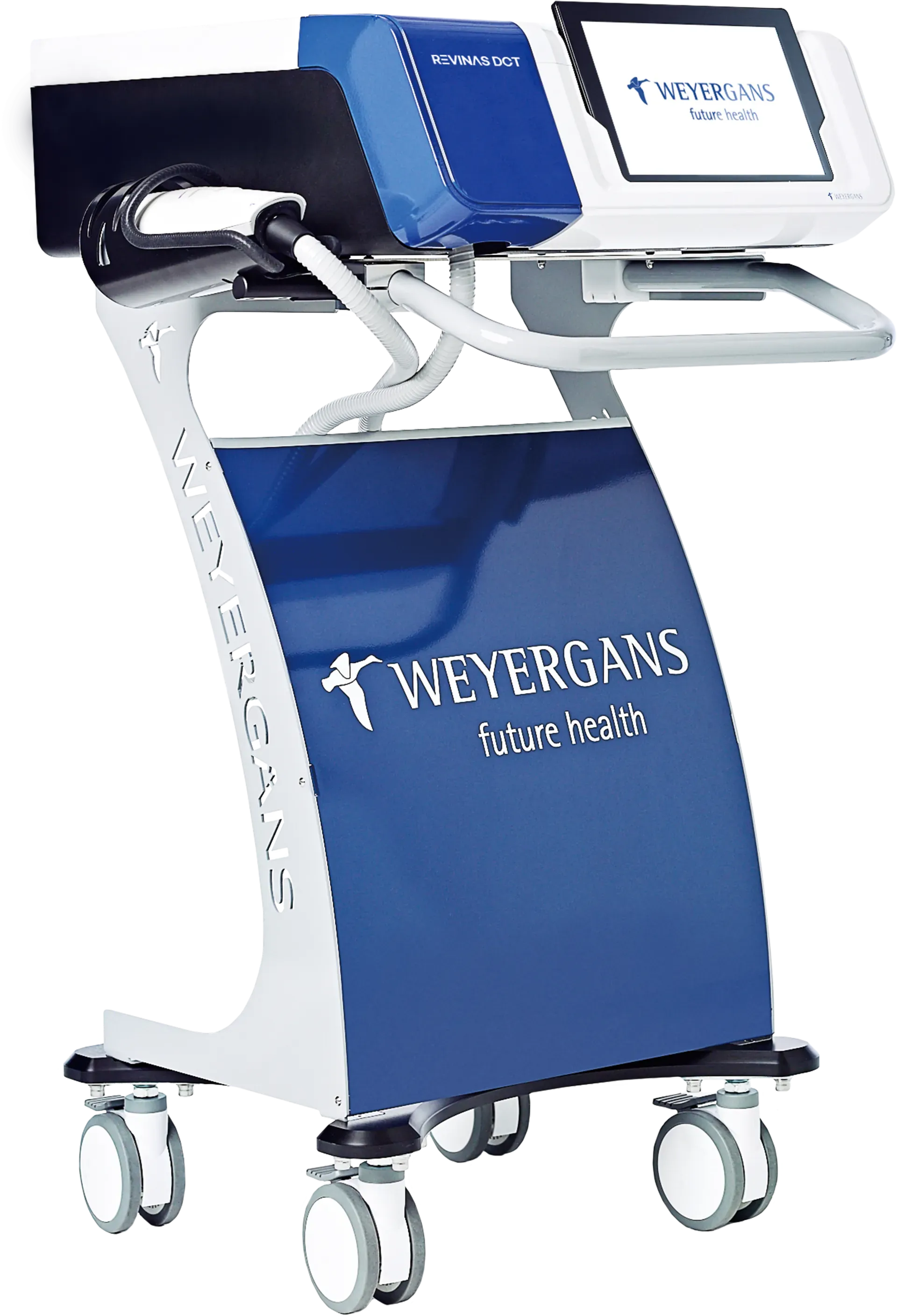
A lifting application of RF microneedling platforms — Morpheus8, Vivace, Genius, Sylfirm X — using insulated needles at depths from 0.5mm to 4mm to deliver bipolar RF to the dermis and upper subcutis. The lift component comes from dermis tightening and contraction at the deeper passes (3 to 4mm); the surface component comes from collagen induction at shallower passes. (Tip: RF microneedling lift produces meaningful results in mild laxity but is rarely sufficient for grade 3 laxity on its own — it is most often paired with MFU or threads.) See also: insulated needle, bipolar RF, combination protocol.
RF monopolar lift (Thermage / Volnewmer / Endymed)
The deepest RF lifting configuration — current travels from a single electrode through the body to a return pad, producing volumetric heating typically 2 to 4mm into the dermis and upper hypodermis. Thermage FLX is the most-recognized monopolar RF platform globally; Volnewmer and Endymed Pro are alternative platforms with similar mechanism. Monopolar RF is FDA-cleared for non-surgical lift indications. (Tip: monopolar RF is the most-comparable RF modality to MFU at depth — different mechanism, similar zone of effect; the choice is often comfort and cost rather than outcome.) See also: Thermage FLX, MFU, treatment combination protocols.
S — Shurink, SMAS engagement, Social downtime, Sofwave SUPERB lift
Section S covers a Korean HIFU device, the structural concept that anchors most lifting protocols, the recovery vocabulary that decides scheduling, and the parallel-beam ultrasound lift platform.
Shurink (Korean HIFU)
A Korean-manufactured HIFU device, marketed as Shurink Universe and Shurink Prime, widely used in Korean clinics as a budget alternative to Ultherapy. Uses focused ultrasound at multiple depths similar to MFU but at higher per-shot energy and without the real-time imaging guidance that distinguishes MFU. (Tip: Shurink and Doublo are HIFU, not MFU — they share the focal-point ultrasound mechanism but lack the imaging-guidance precision that allows MFU to confirm the energy is actually reaching the SMAS.) See also: Doublo, MFU, HIFU.
SMAS engagement
Activation of the Superficial Musculoaponeurotic System layer through focused thermal energy at the 4 to 5mm depth. SMAS engagement is the structural mechanism behind the most durable non-surgical lifting outcomes — the SMAS is the same layer surgical facelift mobilizes, which is why energy modalities that reach it (MFU at 4.5mm, deep monopolar RF) sit at the top of non-surgical lift rankings. (Tip: "SMAS lift" in clinic copy can mean either MFU/RF energy-based engagement or surgical SMAS plication — ask which one. They are categorically different procedures.) See also: SMAS, MFU, retaining ligament suspension.
Social downtime
The recovery window during which the patient looks fine in a phone selfie but not in person — mild redness, transient swelling, slight asymmetry during early integration. Social downtime is the most relevant recovery metric for working adults and travelers. Typical social downtime by modality: MFU zero to two days, RF zero to three days, RF microneedling three to seven days, filler one to three days, threads three to seven days, combination protocols often the longest of the components plus one to two days. (Tip: ask for social downtime, not "downtime" — the specific number is what matters for scheduling.) See also: hidden downtime, downtime tier, treatment sequencing.
Sofwave SUPERB lift
A lift application of the Sofwave SUPERB (Synchronous Ultrasound Parallel Beam) platform — seven parallel ultrasound transducer beams delivering energy to the mid-dermis at approximately 1.5mm depth. Sofwave is FDA-cleared for brow, neck, and submental lifting. The treatment reaches a shallower depth than MFU at 4.5mm and uses a different mechanism — broad parallel-beam heating rather than focal-point coagulation. (Tip: Sofwave reaches the mid-dermis, not the SMAS — the categorical claim is different from MFU. Best results in patients with mild laxity or as an adjunct to MFU.) See also: MFU, Ulthera, dermis tightening.
T — Thread anchor mechanism, Top-up interval, Treatment combination protocols, Treatment sequencing
Section T covers the mechanics of how threads actually hold, the year-over-year follow-up vocabulary, the protocol layering framework, and the order-of-operations rules that experienced injectors follow.
Thread anchor mechanism
The biomechanical principle by which absorbable threads produce lift. The thread is inserted along a planned vector from a fixed deep anchor point (temporal fascia, deep galea) toward the mobile soft tissue. Directional cogs along the thread shaft grip the surrounding subcutaneous tissue. As the thread is tensioned, the cogs hold and the tissue is pulled along the vector toward the anchor. After insertion, the cogs continue holding while collagen forms along the thread track, providing a longer-term scaffold. (Tip: thread anchor mechanism is what experienced injectors evaluate first when planning a thread protocol — the wrong anchor produces a short-lived or asymmetric result regardless of how many threads are used.) See also: anchor point, COG threads, lifting vector.
Top-up interval
The expected interval between an initial protocol and the first maintenance session for a given modality. Standard intervals: HA filler six to twelve months; CaHA twelve to fifteen months; PDO threads twelve to fifteen months; PCL or PLLA threads eighteen to twenty-four months; MFU twelve to eighteen months; RF microneedling nine to twelve months. The top-up is typically a smaller protocol than the initial — preserving rather than rebuilding. (Tip: top-up cost is usually 50 to 70 percent of initial protocol cost, but ask each clinic separately — the calculation varies.) See also: maintenance schedule, longevity, treatment cycle.
Treatment combination protocols (MFU + filler / MFU + threads / filler + threads)
The three most common layering frameworks in non-surgical lifting. MFU + filler combines structural energy with volume restoration — most common for grade 1 to 2 mid-face protocols. MFU + threads combines structural energy with vector lift — most common for grade 2 to early grade 3 lower-face and mid-face protocols. Filler + threads combines volume with vector — used when energy-based modalities are contraindicated or when the patient prefers no thermal procedure. (Tip: triple-modality protocols layering all three exist for grade 2 to 3 patients seeking maximum non-surgical lift; cost is typically 2.5 to 3 times a single-modality protocol but durability and natural-looking outcome are correspondingly better.) See also: combination protocol, treatment sequencing, candidacy criteria.
Treatment sequencing
The order-of-operations framework for combining lifting modalities. Standard sequencing rules: MFU before filler at the same session (filler before MFU risks energy disrupting the filler); MFU before threads (threads first risks subsequent MFU energy displacing thread anchors); filler and threads can be done in either order or the same session, depending on the volumes involved. Across multiple sessions, MFU is typically the foundation (session 1), filler the volume layer (session 1 or 2), threads the vector layer (session 2 or 3). (Tip: sequencing is more important than which modalities you use — the same three modalities in the wrong order can produce a worse outcome than two in the right order.) See also: combination protocol, MFU + filler, MFU + threads.
U — Ultherapy lift, Ultherapy Prime
Section U covers the platform that anchors this domain and its current generation.
Ultherapy lift

The non-surgical lifting application of the Ulthera/Ultherapy MFU platform. Ultherapy is FDA-cleared for non-invasive lifting of the eyebrow, neck, and submental area. The treatment delivers focal-point ultrasound at 1.5mm, 3mm, and 4.5mm with real-time DeepSEE imaging confirming the energy is reaching the intended depth. The 4.5mm pass is the lifting pass — the SMAS engagement that produces structural change over the three-to-six-month neocollagenesis timeline. (Tip: "Ultherapy lift" specifically means the SMAS-engaging full-depth protocol, not the shallow dermis-only "Ulthera lite" budget version some clinics offer.) See also: MFU, SMAS engagement, Ultherapy Prime.
Ultherapy Prime
The current generation of the Ultherapy device. Adds refined imaging, updated transducer cartridges, and improved user-experience features over earlier generations. Most Korean clinics that offer Ultherapy operate on Prime hardware as of 2026. (Tip: ask which generation your clinic operates — the difference between Prime and pre-Prime is felt mostly in patient comfort and treatment efficiency, not in lifting outcome.) See also: Ulthera, Ultherapy lift, MFU.
V — Volume restoration vs lift
Section V covers the structural distinction that decides which category of tool a protocol actually needs.
Volume restoration vs lift
The categorical distinction between adding volume to compensate for lost fat and connective tissue versus lifting existing tissue along a vector. Volume restoration uses fillers and (long-term) autologous fat; lift uses threads, MFU, and RF. The question of which a face actually needs is rarely either-or — most adult faces by the late thirties need both volume restoration in the mid-face and lift in the lower face. (Tip: when a clinic recommends a single modality for a complaint that involves both volume loss and laxity, ask whether they are also evaluating the other axis — single-axis solutions to dual-axis problems are a common over-promise.) See also: filler-based lift, mid-face support, combination protocol.
Z — Zonal lift
Section Z covers the framework that organizes the entire lifting vocabulary into face zones.
Zonal lift
The framework that organizes non-surgical lifting protocols by face zone — brow and periorbital, mid-face, lower-face and jawline, and neck. Each zone has its own anatomy, its own dominant aging pattern, its own appropriate modality mix, and its own social-downtime profile. The zonal framework is what lets an experienced injector plan a year-over-year program rather than a single session. (Tip: ask the practitioner to draw the zones they are planning to address — practitioners who can sketch the zones are working from a plan, practitioners who say "the whole face" without zone distinctions are working from marketing.) See also: full-face lift, mid-face lift, lower-face lift, periorbital lift, neck lift.
Frequently asked questions
Which fifteen terms in this glossary should I prioritize before my first non-surgical lift consultation?
If you only have time for fifteen, focus on these: lifting vector, anchor point, retaining ligament suspension, SMAS engagement, depth of effect, mid-face support, jawline definition, jowl reduction, MFU, RF microneedling, PDO COG threads, deep medial cheek replacement, combination protocol, treatment sequencing, and longevity. These cover the structural vocabulary of how lifts work, the dominant tool in each non-surgical category, the most-treated zones, and the year-over-year framework that lets you plan beyond a single session. (Tip: the L, M, and T sections carry most of the load — skim those first.)
What is the single most useful framework for comparing non-surgical lifting tools?
Depth of effect. Every lifting modality maps to a specific anatomical layer — RF microneedling at 0.5 to 4mm in the dermis, PDO COG threads at 4 to 6mm in the subcutaneous fat, MFU at 4.5mm at the SMAS, deep CaHA filler at the dermal-subcutaneous junction. Once you can place a tool on the depth ladder, the comparison conversations get much easier. Patients report this single framework collapses the apparent complexity of cross-category lift menus into something legible — and lets you spot when a clinic is using one tool to claim outcomes that actually require another.
When does a Gangnam injector pick MFU + filler versus MFU + threads versus filler + threads?
The choice usually maps to laxity grade and volume status. MFU + filler is most common in grade 1 to 2 patients with meaningful mid-face volume loss — the filler restores volume, the MFU engages the SMAS for structural lift. MFU + threads is most common in grade 2 to early grade 3 patients with adequate volume but visible laxity — the threads provide a vector lift, the MFU adds structural durability. Filler + threads is the choice when energy is contraindicated or the patient prefers no thermal procedure, and it works best when laxity is mild and volume loss is the dominant complaint. Triple-modality protocols layering all three exist for grade 2 to 3 patients seeking maximum non-surgical lift.
What is the difference between filler-based lift and energy-based lift?
Filler-based lift produces lift through volume restoration and structural support — placing material in the deep medial cheek or lateral support pillar to raise the overlying skin from below. Energy-based lift produces lift through tissue tightening and SMAS engagement — heating the dermis or SMAS to the threshold where collagen contracts and remodels. The two are categorically different: filler adds material, energy modifies what is there. Most experienced Gangnam protocols layer the two because they address different axes of the aging face — volume loss in the mid-face is best addressed with filler, structural laxity is best addressed with energy. Single-axis protocols on dual-axis problems are a common over-promise.
When is non-surgical lifting the right tool, and when does a candidate actually need surgery?
Non-surgical lifting works best in laxity grades 1 and 2, produces mixed results in grade 3, and is not the right tool for grade 4. The clinical thresholds: severe skin redundancy, significant platysmal banding, deep marionette and labiomental folds, and substantial fat excess are surgical indications, not non-surgical ones. Patients in those categories who try to solve the problem with threads or MFU are the most common revision-clinic patients. Conversely, patients in grade 1 or 2 who default to surgical facelift often over-treat what a layered non-surgical protocol could address with less recovery and more reversibility. The right tool depends on the laxity grade, not on price or marketing.
What are the most common failure modes in non-surgical lifting, and how do experienced injectors avoid them?
Four come up repeatedly. Over-treated jawline produces linear straightening that erases the natural angle and reads masculine on female faces — avoided by aiming for definition rather than sharpness. Excessive fat loss happens when MFU or RF protocols thin subcutaneous fat in patients who needed volume restoration instead — avoided by evaluating volume status before energy planning. Asymmetry surfaces when uniform protocols are applied to non-uniform faces — avoided by photographing and measuring before any lift work. Unnatural vectors produce visible cheek puckering or dimpling at rest when threads are placed along non-anatomic lines — avoided by anchoring at known fascia points and respecting the aging vector. Patients report that practitioners who openly discuss failure modes are more often the ones who avoid them.
How do I evaluate a maintenance schedule before committing to an initial lift protocol?
Ask the clinic for two numbers separately — the initial protocol cost and the annual maintenance cost across the next three years. Most clinics quote initial protocol cost as a single line item and maintenance is left implicit. The annual maintenance number is what matters across years, because lifting is rarely one-and-done after the late thirties. Use the longevity-by-category framework as a check: HA filler top-up every six to twelve months, CaHA every twelve to fifteen, PDO threads every twelve to fifteen, MFU every twelve to eighteen. (Tip: ask whether the maintenance schedule is layered — most experienced injectors stagger top-ups so the patient is not paying for everything in the same month every year.)