Glossary
Post-Procedure Care Glossary: 50+ Aftercare Recovery Terms
The plain-English aftercare dictionary I built after my first Ultherapy day, when my California friends kept asking what every label and side effect actually meant.
I came home from my first Ultherapy session in Gangnam and immediately got a flurry of texts from my California friends — the kind of group chat that opens with "WAIT how does your face look" and somehow ends with three of us comparing ingredient labels at 11 p.m. PT. Most of the questions weren't really about Ultherapy. They were about the aftercare words that show up on every product the clinic hands you, every recovery sheet, every Reddit thread you scroll while your skin is mildly pink and you can't decide if that pinkness counts as erythema or just "a flush." I realized I'd been collecting these terms for months without naming the project. Words like occlusive, ceramide-3, PPD, eschar, dysesthesia, the four healing phases, the difference between PIH and PIE — terms that sound technical until you're the one trying to figure out whether your skin is doing what it's supposed to. So I sat down in my West LA apartment with a cold compress and a notes app and built this. Fifty-plus aftercare terms, alphabetized, defined the way I'd actually explain them to a friend on FaceTime. None of this is medical advice — your provider's protocol always wins. But this is the working vocabulary I wish someone had handed me on day zero, before the small confusions about a label or a sensation could turn into bigger ones. If you're reading this in a hotel room post-treatment, or before your first appointment, or just because the words on your aftercare sheet feel opaque: this list is for you.
How to use this glossary
Terms are grouped alphabetically by first letter. Each entry has a plain definition, a short context note about where you'll actually encounter the word during recovery, and a "see also" pointer when one term connects to another. Recovery vocabulary overlaps a lot — a single product label can name a barrier ingredient, an occlusive technology, and a sun-protection acronym in the same sentence — so cross-references matter. Read it linearly the first time, then keep it for lookup. If something on your aftercare sheet isn't here, the list is meant to give you enough scaffolding that you can ask your provider a sharper question when you reach back out.
A — AHA/BHA pause to allantoin
Section A covers the first cluster of words you'll see on your aftercare sheet: which active ingredients to pause, and what to fold in instead.
AHA/BHA pause
The temporary stop on alpha-hydroxy and beta-hydroxy acid exfoliants after a procedure. AHAs (glycolic, lactic, mandelic) and BHAs (salicylic) work by accelerating cell turnover and dissolving surface bonds — exactly what you don't want layered onto skin that's already in a healing phase. Most providers ask for a 5-14 day pause depending on the procedure, with the deeper energy treatments (MFU, ablative laser) requiring the longer end. Restart only when redness, dryness, and any flaking have fully resolved. See also: exfoliant cessation, retinol cessation window.
Alcohol-free
A product label indicating the formula contains no denatured alcohol, ethanol, or short-chain alcohols (SD alcohol, isopropyl alcohol) that can dry or sting compromised skin. Fatty alcohols (cetyl, stearyl, cetearyl) are different — they're emollient and fine on healing skin. The label matters during the first week post-procedure, when the barrier is more permeable and even mild stinging signals you're using the wrong formula. See also: fragrance-free, gentle cleanser.
Allantoin
A soothing, barrier-supportive ingredient often listed near the top of recovery moisturizer ingredient lists. Mildly keratolytic at higher concentrations but at typical post-procedure levels (0.1-2%) it's used for its calming, mildly hydrating effect. Pairs well with panthenol and centella for layered support during early recovery. See also: panthenol, centella asiatica, ceramide.
B — broad spectrum to blue-light defense
Section B is short but anchors two of the most-misunderstood sun-protection concepts in recovery skincare.
Broad spectrum
A regulated label term indicating a sunscreen protects against both UVA and UVB. SPF alone only quantifies UVB protection; without the broad-spectrum designation, a high SPF can leave UVA — the wavelengths most associated with photoaging and post-inflammatory pigmentation — under-covered. Post-procedure, broad spectrum isn't optional; it's the floor. See also: SPF, PPD, UVA/UVB, photoprotection.
Blue-light defense
A category of sun-protection claim referring to high-energy visible light (around 400-450nm), the wavelengths emitted by sunlight, screens, and indoor LED. Blue light has been linked to pigment formation in deeper skin tones, which is why iron oxide-tinted mineral sunscreens are often recommended for patients prone to post-inflammatory hyperpigmentation. Not every sunscreen meaningfully blocks visible light — tinted formulas with iron oxides do; clear chemical formulas typically do not. See also: photoprotection iron oxide, PIH, broad spectrum.
C — ceramide to crust
Section C is dense — barrier-repair ingredients and the surface-level signs of healing live here.
Ceramide
A class of lipid molecules naturally present in the skin barrier, where they're a major component of the lipid matrix between skin cells. Topical ceramides help reinforce the barrier when it's been disrupted — by procedures, over-exfoliation, or environmental stress — and are the backbone of most well-formulated post-procedure moisturizers. Look for ceramide-1, ceramide-3 (NP), ceramide-6-II, and ceramide-EOP on ingredient lists. See also: ceramide-3, ceramide NP, hyaluronic acid.
Ceramide-3 (Ceramide NP)
The most common ceramide in commercial post-procedure formulas, also written as ceramide NP on INCI lists. Structurally identical to one of the major ceramides in human skin. Pairs with cholesterol and free fatty acids in the classic 3:1:1 ratio for barrier repair, which is why high-quality recovery moisturizers list all three. The named ceramide on most clinic-recommended creams. See also: ceramide, ceramide NP, fragrance-free.
Ceramide NP
INCI name for ceramide-3. "NP" stands for the molecule's structural backbone (non-hydroxy fatty acid, phytosphingosine). Reading the ingredient list, this is what you're scanning for. See also: ceramide-3, ceramide.
Centella asiatica
An herbal extract — also called cica or gotu kola — used for its soothing and barrier-supportive properties in many Korean and Western recovery formulas. The active compounds, including madecassoside and asiaticoside, are studied for wound-healing support. Centella creams are a staple in the post-Ultherapy and post-laser drawers of most patients I know. See also: madecassoside, panthenol, allantoin.
Cold compress protocol
The standard early-recovery practice of applying a clean, cool (not frozen) compress to treated areas in 10-15 minute intervals for the first few hours post-procedure. The goal is to manage erythema and any mild edema, not to numb or freeze. Avoid direct ice contact; wrap in a clean cloth and use refrigerator-cool temperatures. Most clinics specify the exact window in the aftercare sheet. See also: erythema, edema, gentle cleanser.
Copper peptide (GHK-Cu)
A small peptide complex (glycyl-L-histidyl-L-lysine bound to copper) studied for skin remodeling and post-injury support. Often appears in advanced recovery serums for use later in the healing window — typically once the skin is past the inflammation phase and into proliferation. Provider protocols vary; ask before adding. See also: GHK-Cu, peptide, proliferation phase.
Crust
A surface layer of dried exudate, blood, or serous fluid that forms over a small wound or treated area as it heals. Distinct from a scab (which is thicker and more fibrin-dense) and from an eschar (which is darker, thicker, and signals deeper tissue change). Crusts on superficial energy-treated skin should be left alone — picking delays remodeling and increases the risk of post-inflammatory pigment. See also: scab, eschar, exudate.
D — downtime tier to dysesthesia
Section D covers the recovery-language vocabulary your provider uses to set expectations.
Downtime tier (none/social/full)
An informal but widely-used three-tier system for describing recovery: "no downtime" (look normal immediately, occasional light pinkness), "social downtime" (you can leave the house but might prefer makeup and a hat for 1-3 days), and "full downtime" (visible swelling, bruising, crusting, or peeling that warrants staying in for 3-14+ days). Different procedures land in different tiers — and the same procedure can vary by patient. Your aftercare sheet should give you a realistic tier estimate. See also: erythema, edema, healing phase 0/1/2/3.
Dysesthesia
An abnormal, often unpleasant sensation in treated skin — described as burning, prickling, or a strange tightness. Distinct from pain in that it's a sensory disturbance rather than a nociceptive response. Mild dysesthesia after deeper energy treatments (MFU, RF microneedling) is common in the first 1-3 days and usually self-resolves. Persistent or worsening dysesthesia is a reason to call your provider. See also: paresthesia, hyperalgesia.
E — ecchymosis to exudate
Section E is one of the longest in the glossary — it covers the visible recovery signs you'll see in the mirror and the words your provider uses to describe them.
Ecchymosis (bruising)
The medical term for a bruise — the discoloration that appears when small blood vessels leak into surrounding tissue. Ecchymosis evolves through predictable color phases (red-purple in 1-2 days, blue-green by day 3-5, yellow-brown by day 6-10) as the body breaks down and reabsorbs the pooled blood. Most common after injectables, microneedling, and procedures with cannula or needle entry points. Cold compresses in the first 24 hours and arnica per provider guidance are common supportive measures. See also: hematoma, petechiae, cold compress protocol.
Edema
Swelling caused by fluid accumulating in tissue. Post-procedure edema is most pronounced in the first 24-72 hours and is most visible around the eyes, cheeks, and jawline depending on which areas were treated. Sleep with your head elevated for the first two nights, limit salt and alcohol, and use cool (not iced) compresses. Mild asymmetric edema in the first 72 hours is normal; pronounced or rapidly increasing swelling is a reason to contact your provider. See also: erythema, cold compress protocol.
Erythema
Redness of the skin caused by dilated capillaries near the surface. The most common — and most universal — recovery sign across nearly every aesthetic procedure, from gentle facials to ablative laser. Post-procedure erythema typically resolves within hours for non-invasive treatments, 1-3 days for energy-based devices, and longer for ablative lasers. Persistent erythema beyond expected timelines is the lead-in to post-inflammatory erythema (PIE). See also: PIE, edema, healing phase 0/1/2/3.
Eschar
A dark, thickened layer of devitalized tissue that forms after deeper injury — most commonly seen with ablative laser, electrosurgery, or chemical peels at higher depths. Different from a scab or crust because it represents true tissue change, not just dried fluid. Eschar is meant to lift on its own as remodeling occurs underneath; premature removal disrupts the healing surface and significantly raises the risk of pigment change or scarring. See also: crust, scab, healing phase 1/2/3.
Exfoliant cessation
The aftercare instruction to pause all exfoliating ingredients — chemical (AHA, BHA, PHA, enzymes) and physical (scrubs, washcloths, brushes) — for a defined window after a procedure. The window varies by procedure depth: 5-7 days for non-invasive treatments, 10-14 days for energy-based devices, and 2-4 weeks for ablative or deeper resurfacing. The skin needs an undisturbed surface to complete its remodeling phase. See also: AHA/BHA pause, retinol cessation window.
Exudate
Fluid that leaks from blood vessels and tissue into a wound or treated area. Serous exudate is clear or pale yellow and watery; serosanguineous is pink-tinged; sanguineous is bloody. Mild serous exudate in the first hours after deeper energy treatments or microneedling is normal — it's the body protecting the surface. Heavy, persistent, or pus-like (purulent) exudate is a reason to call your provider. See also: crust, eschar, healing phase 0.
F — fragrance-free
Section F is brief — one term, but one of the most consequential in your post-procedure routine.
Fragrance-free
A label indicating the formula contains no added fragrance, parfum, or essential oils used for scenting purposes. (Note that "unscented" is different — it can contain masking fragrances.) On compromised post-procedure skin, fragrance is one of the most common irritants, and even mild fragrances can trigger contact dermatitis when the barrier is permeable. Most clinic-recommended recovery products are fragrance-free for exactly this reason. See also: alcohol-free, gentle cleanser, ceramide.
G — gentle cleanser to GHK-Cu
Section G covers the cleansing fundamentals and the named peptide complex you'll see in advanced recovery formulas.
Gentle cleanser
A non-stripping, low-foaming, pH-balanced (around 5.5) cleanser used as the only cleansing step during the first week post-procedure. Avoid foaming surfactants like sulfates, bar soaps, and any cleanser with exfoliating actives. Cream, milk, lotion, and balm-style cleansers tend to be the safest formats. Apply with clean fingertips — no washcloths, no brushes — and rinse with lukewarm water. See also: micellar water, fragrance-free, alcohol-free.
GHK-Cu
The chemical shorthand for the copper tripeptide glycyl-L-histidyl-L-lysine bound to a copper ion. Used in advanced recovery serums for its role in skin remodeling research. Typically introduced in the proliferation or remodeling phase, not the inflammation phase. See also: copper peptide, peptide, proliferation phase, remodeling phase.
H — hematoma to hyperalgesia
Section H covers the deeper bruising terms and the abnormal pain responses that occasionally show up after deeper treatments.
Hematoma
A localized collection of blood outside blood vessels — essentially a deeper, more substantial bruise than ecchymosis. Hematomas can be soft, firm, or palpable depending on size and depth. Most resolve over 1-3 weeks with the same color-phase progression as smaller bruises. A rapidly enlarging hematoma, or one accompanied by pain disproportionate to the procedure, is a reason to contact your provider. See also: ecchymosis, petechiae, cold compress protocol.
Hemostasis
The first phase of wound healing — the body's process of stopping bleeding through vessel constriction and clot formation. Begins within seconds of any tissue injury and is largely complete within minutes to hours. In aesthetic recovery, hemostasis is over before you leave the clinic; what you experience at home is the inflammation phase that follows. See also: healing phase 0/1/2/3, inflammation phase.
Hyaluronic acid (low/high MW)
A naturally occurring water-binding molecule used topically and via injection. In post-procedure skincare, HA appears in different molecular weights: low molecular weight HA penetrates more deeply and supports hydration in deeper layers, while high molecular weight HA holds water at the surface for immediate plumping. Many recovery formulas include a multi-weight blend for layered hydration. Topical HA does not replace injected HA — different molecules, different delivery, different goals. See also: GAGs, ceramide, snail mucin.
Hydrocolloid
An occlusive dressing material — most familiar as the small flesh-colored patches used over single-spot acne or small healing surfaces. Hydrocolloid creates a moist, sealed environment that supports faster surface healing and absorbs minor exudate. Useful over isolated treatment points (a single laser passage, a spot of crusting) but not appropriate over broad treated areas without provider guidance. See also: occlusive dressing, semi-permeable film.
Hyperalgesia
An increased sensitivity to a stimulus that normally produces pain — for example, a light touch feeling sharper than expected on freshly treated skin. Mild hyperalgesia in treated areas is common in the first 24-48 hours after deeper energy treatments and usually resolves with the inflammation phase. Persistent hyperalgesia warrants a check-in. See also: dysesthesia, paresthesia, inflammation phase.
I — inflammation phase
Section I has one entry — the second phase of healing, and the one most patients are actively experiencing in the first 72 hours.
Inflammation phase
The second phase of wound healing (after hemostasis). Characterized by increased blood flow, immune cell recruitment, and the visible signs of recovery: erythema, edema, warmth, and mild tenderness. Typically lasts 24-72 hours after non-ablative energy procedures and longer after ablative or deeper interventions. The cardinal signs of inflammation (redness, swelling, heat, tenderness) are part of normal healing — they become concerning only if they intensify or persist beyond expected windows. See also: healing phase 0/1/2/3, erythema, edema.
M — madecassoside to micellar water
Section M covers a marquee centella compound and the gentle cleansing format that lives on every recovery shelf.
Madecassoside
A specific active compound in centella asiatica, studied for its anti-inflammatory and barrier-supportive effects. The named active in many Korean cica creams. Often listed alongside asiaticoside, madecassic acid, and asiatic acid as the four main triterpenoids of centella. Helpful in the inflammation and early proliferation phases. See also: centella asiatica, allantoin, panthenol.
Micellar water
A water-based cleansing format that uses suspended micelles (tiny surfactant clusters) to lift away surface impurities without rinsing. Useful in the very early recovery window when even gentle face washes feel like too much, or in travel scenarios where lukewarm rinse water isn't easy to access. Apply with a clean, soft cotton round and pat — never rub. See also: gentle cleanser, fragrance-free.
N — niacinamide to nodule
Section N covers the most-recommended barrier-and-pigment ingredient and one of the lesion descriptors that occasionally surfaces in injectable contexts.
Niacinamide
Vitamin B3 in topical form. Studied for barrier support, mild oil regulation, and a small but consistent effect on post-inflammatory pigmentation. Generally well-tolerated post-procedure at concentrations of 2-5%, often introduced once the acute inflammation phase has resolved. Higher concentrations (10%+) can occasionally irritate compromised skin and are usually held until the barrier is fully restored. See also: tranexamic acid, azelaic acid, PIH.
Nodule
A palpable, often firm lump under the skin. In injectable contexts, nodules can form occasionally after filler placement and are described by your provider during follow-up assessments. Most are benign and resolve with massage or — depending on filler type — hyaluronidase dissolution. The word also appears in dermatologic descriptions of certain inflammatory lesions. Worth knowing the term so you can describe what you're feeling accurately. See also: papule, vesicle, weal.
O — occlusive to occlusive moisturizer
Section O is the chapter on sealing and protecting — the materials and product types that lock the barrier closed during recovery.
Occlusive dressing
A barrier dressing applied over a wound or treated area that limits evaporation and creates a moist healing environment. Common formats include hydrocolloid patches, silicone sheets, and semi-permeable polyurethane films. Not used over broad facial areas without provider guidance, but useful over isolated points. The principle behind occlusive dressing — that wounds heal faster and with less pigment change in a moist, sealed environment — is settled science. See also: hydrocolloid, semi-permeable film, occlusive moisturizer.
Occlusive moisturizer
A moisturizer that includes occlusive ingredients (petrolatum, dimethicone, mineral oil, lanolin, shea butter, beeswax) designed to seal hydration into the skin and reduce transepidermal water loss. Different from a humectant moisturizer, which draws water into the skin. The classic example is plain petroleum jelly applied as a thin final layer on freshly treated areas — sometimes called "slugging" in skincare communities. Provider-specific protocols vary on whether to use occlusive moisturizers in early recovery; follow yours. See also: ceramide, hyaluronic acid, squalane.
P — panthenol to PPD
Section P is dense — barrier ingredients, healing terminology, lesion descriptors, and the most-misunderstood sun protection metric all live here.
Panthenol
Provitamin B5, used topically for its barrier-soothing, mildly humectant effect. Converts to pantothenic acid in the skin. Almost universally well-tolerated and a workhorse in recovery moisturizers and serums. Often paired with allantoin and centella in post-procedure formulations. See also: allantoin, centella asiatica, ceramide.
Papule
A small, raised lesion under 1cm, typically without fluid. Distinct from a vesicle (fluid-filled) and a pustule (pus-filled). The word may surface in your provider's notes if any small inflammatory bumps appear during recovery; most are transient and resolve without intervention. See also: vesicle, pustule, weal, nodule.
Paresthesia
An abnormal sensation — tingling, pins and needles, numbness — without an obvious external cause. Mild paresthesia after deeper energy treatments is common as small nerve fibers respond to the procedure and is typically transient. Persistent or expanding paresthesia, especially with associated weakness or asymmetry, warrants a provider check. See also: dysesthesia, hyperalgesia.
Peptide
A short chain of amino acids — shorter than a full protein. Topical peptides include signal peptides, carrier peptides (like copper peptide), and inhibitor peptides, each with different proposed mechanisms. Generally introduced in the proliferation and remodeling phases of recovery, not the acute inflammation phase. See also: copper peptide, GHK-Cu, niacinamide.
Petechiae
Tiny pinpoint spots of bleeding under the skin — smaller than typical bruising and usually resolving within a few days. Petechiae can appear after microneedling, certain laser passes, or very vigorous mechanical stimulation. Generally benign in the aesthetic context, but a sudden new pattern of petechiae unrelated to a treatment area is something to mention to a physician. See also: ecchymosis, hematoma, exudate.
Photoprotection
The umbrella term for protecting skin from solar and high-energy visible light damage. Includes sunscreen application, physical shielding (hats, parasols, UV-protective clothing), and behavioral measures (timing outdoor exposure outside peak UV hours, staying in shade). Photoprotection isn't synonymous with sunscreen — sunscreen is one tool inside the larger photoprotection toolkit. Critical in every recovery window. See also: SPF, PPD, broad spectrum, photoprotection iron oxide.
Photoprotection iron oxide
Iron oxide pigments — common in tinted mineral sunscreens — provide visible-light protection that white mineral or clear chemical formulas typically don't. For patients prone to post-inflammatory hyperpigmentation, melasma, or darker Fitzpatrick skin types, iron oxide-tinted sunscreen is often specifically recommended in the early recovery window and beyond. See also: blue-light defense, broad spectrum, sunscreen mineral vs chemical.
PIE (post-inflammatory erythema)
The pink-to-red flat marks that linger after inflammation resolves but before the dilated capillaries fully calm down. Distinct from PIH (which is brown/pigment-based). PIE is a vascular response — the discoloration is from persistent superficial blood vessels, not melanin — and typically fades over weeks to months. Sun protection accelerates the fade by preventing additional inflammation. See also: PIH, erythema, photoprotection.
PIH (post-inflammatory hyperpigmentation)
Brown or grey-brown pigment marks that develop after inflammation in deeper or more melanin-active skin. The melanocytes deposit excess pigment in response to the inflammatory signal, and the resulting marks can persist for months. Prevention is the priority: aggressive photoprotection, gentle handling of treated areas, and provider-recommended brightening agents (like azelaic acid or tranexamic acid) once the acute inflammation phase has resolved. See also: PIE, melanocyte, photoprotection, tranexamic acid, azelaic acid.
PPD
Persistent Pigment Darkening — a measurement of UVA protection used in many international sunscreen labeling systems (notably PA+/PA++/PA+++/PA++++). Higher PPD indicates more UVA protection. SPF measures UVB protection only; PPD measures UVA. A truly broad-spectrum sunscreen has both a meaningful SPF and a meaningful PPD. See also: SPF, UVA/UVB, broad spectrum.
Proliferation phase
The third phase of wound healing (after inflammation). Characterized by new tissue formation — fibroblast activity, new collagen synthesis, capillary regrowth, and re-epithelialization. Typically begins around day 3-5 and overlaps with the remodeling phase that follows. Visually, this is when redness fades, the surface starts to look smoother, and any temporary roughness softens. See also: healing phase 0/1/2/3, fibroblast, remodeling phase.
Propolis
A bee-derived resinous compound used in many Korean recovery formulas for its barrier-supportive and antimicrobial properties. Generally well-tolerated, but it's a known sensitizer for a small subset of patients — patch test if you have any history of bee or resin allergy. See also: ceramide, panthenol, snail mucin.
Pustule
A small, raised lesion containing visible pus. Distinct from a papule (no fluid) and a vesicle (clear fluid). Pustules during recovery are uncommon but can appear in the context of irritant or contact reactions. Persistent pustules or any spreading pattern warrants a provider check to rule out folliculitis or impetigo. See also: papule, vesicle, weal.
R — remodeling phase to retinol restart timing
Section R is anchored by the final phase of healing and the most-asked aftercare question: when to bring retinol back.
Remodeling phase
The fourth and longest phase of wound healing. New collagen produced during the proliferation phase reorganizes and matures, scar tissue (when present) softens and flattens, and the final cosmetic result emerges. Begins around day 7-21 post-procedure and continues for weeks to months — for energy-based collagen-stimulating treatments like Ultherapy, the remodeling phase is where the lift result is actually built, which is why peak results are at 90-180 days, not at the one-week mark. See also: healing phase 0/1/2/3, proliferation phase, collagen.
Retinol cessation window
The recommended pause on retinol, retinaldehyde, retinoic acid, and other vitamin A derivatives before and after a procedure. Typical windows: stop 5-7 days before, restart 10-14 days after non-invasive energy treatments; longer for ablative or deeper resurfacing per provider direction. Retinoids accelerate cell turnover and can intensify post-procedure irritation if not paused. See also: AHA/BHA pause, exfoliant cessation, retinol restart timing.
Retinol restart timing
The specific moment to reintroduce retinol after a procedure. The general rule: when erythema, dryness, and any flaking have fully resolved and the skin feels and looks at its normal baseline. Reintroduce at the lowest concentration you previously tolerated, every-third-night for the first week, then build back up. If you start too early and the skin protests, pause again — the cost of waiting an extra week is small; the cost of a flare is larger. See also: retinol cessation window, vitamin C cessation window.
S — scab to sunscreen mineral vs chemical
Section S covers the surface healing terms, multiple ingredient categories, and the most-debated sunscreen format question.
Scab
A thicker, fibrin-rich crust that forms over a small wound. In aesthetic recovery, scabs are most associated with deeper resurfacing (fractional or ablative laser) and isolated procedural points. Like crusts and eschar, they should fall off on their own — picking is the fastest path to a longer recovery and post-inflammatory pigment. See also: crust, eschar, exudate.
Semi-permeable film
A type of occlusive dressing — a thin, transparent polyurethane sheet that's permeable to moisture vapor but impermeable to liquid water and bacteria. Used in some specialized recovery protocols, especially after fractional treatments. Provider-applied; not a typical at-home tool. See also: occlusive dressing, hydrocolloid.
Snail mucin
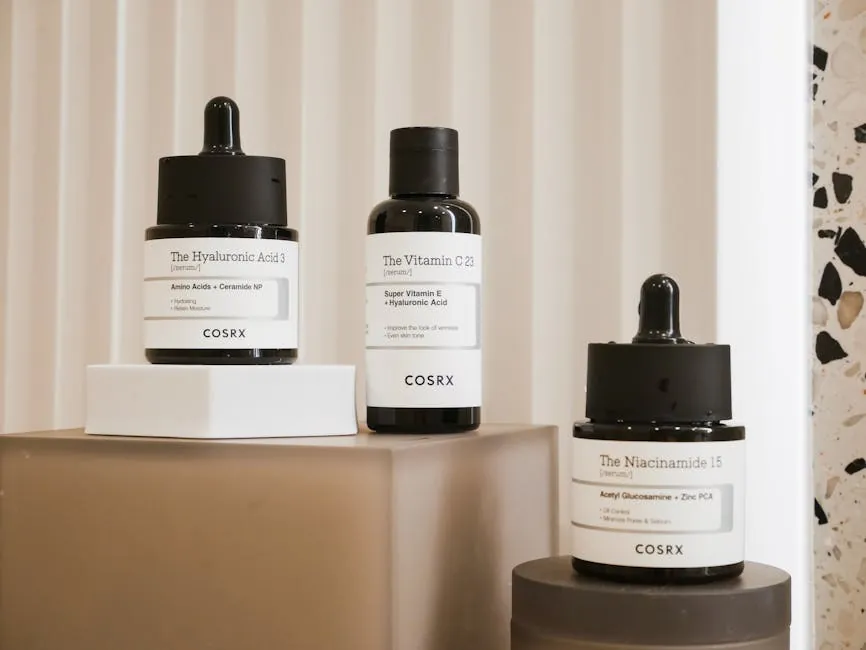
Snail secretion filtrate, a staple ingredient in Korean barrier-repair formulas for its content of glycoproteins, hyaluronic acid, glycolic acid, and antimicrobial peptides. Generally well-tolerated and often introduced once the acute inflammation phase has resolved. Patch-test if you have any history of mollusk-related sensitivity (rare). See also: hyaluronic acid, propolis, ceramide.
SPF
Sun Protection Factor — a measurement of how much longer it takes for skin to redden under UVB exposure with a sunscreen applied versus without. SPF measures UVB only; it does not measure UVA protection (that's PPD). The number is logarithmic, not linear: SPF 30 blocks about 97% of UVB, SPF 50 blocks about 98%. The bigger gap is between SPF 0 and SPF 30, not between SPF 30 and SPF 50. Both UVB and UVA matter post-procedure. See also: PPD, broad spectrum, water-resistant SPF.
Squalane
A stable, non-comedogenic emollient lipid — derived either from olives or sustainably sourced — that mimics one of the lipids naturally present in skin sebum. Lightweight, broadly compatible with other ingredients, and often included in recovery formulas as a barrier-supportive emollient. See also: ceramide, hyaluronic acid, occlusive moisturizer.
Sunscreen mineral vs chemical
Two broad categories of UV filters. Mineral sunscreens (zinc oxide, titanium dioxide) sit on the skin surface and reflect/scatter UV. Chemical sunscreens (avobenzone, octinoxate, octisalate, and newer-generation filters like bemotrizinol and bis-ethylhexyloxyphenol methoxyphenyl triazine) absorb UV and convert it to heat. In the immediate post-procedure window, mineral formulations are often preferred because they're less likely to sting compromised skin and don't require a sinking-in time. Modern chemical filters can be excellent once the barrier has fully recovered. See also: SPF, PPD, photoprotection iron oxide.
T — tranexamic acid
Section T has one entry — but it's one of the most-discussed pigment-management ingredients in modern aesthetic medicine.
Tranexamic acid
A synthetic amino acid derivative studied for its effect on melanin production and pigment management. Available as an oral medication (prescription, used by some providers for melasma and recalcitrant pigmentation) and as a topical ingredient in serums and creams (typically at 2-5%). In recovery contexts, topical tranexamic acid is sometimes introduced once the acute inflammation phase has resolved, especially for patients prone to PIH. Always discuss with your provider before starting oral forms. See also: PIH, niacinamide, azelaic acid.
U — UVA/UVB
Section U has one entry, but it underwrites every other photoprotection term in the glossary.
UVA/UVB
The two ultraviolet wavelength bands relevant to skin. UVB (290-320nm) is the shorter wavelength most associated with sunburn and direct DNA damage; SPF measures UVB protection. UVA (320-400nm) is the longer wavelength most associated with photoaging, dermal collagen breakdown, and post-inflammatory pigment formation; PPD measures UVA protection. UVA penetrates clouds and window glass; UVB largely doesn't. Post-procedure photoprotection has to address both, which is why "broad spectrum" matters more than the SPF number alone. See also: SPF, PPD, broad spectrum, photoprotection.
V — vesicle to vitamin C cessation window
Section V covers a small fluid-filled lesion descriptor and the second most-asked cessation question after retinol.
Vesicle
A small, raised lesion containing clear fluid — under 5mm. Vesicles can appear after certain laser passes, contact reactions, or in the rare case of a herpes simplex flare in someone with a known history (some providers prescribe prophylactic antivirals around procedures for exactly this reason). Distinct from a pustule (pus-filled) and a papule (no fluid). Persistent or grouped vesicles, especially in someone with prior cold-sore history, warrants prompt provider contact. See also: pustule, papule, weal.
Vitamin C cessation window
The recommended pause on topical L-ascorbic acid and other vitamin C forms before and after a procedure. L-ascorbic acid in particular can sting compromised skin and is generally paused for the inflammation phase, restarting at the lowest tolerated concentration once the barrier feels normal. Gentler vitamin C derivatives (sodium ascorbyl phosphate, magnesium ascorbyl phosphate, ascorbyl glucoside) can sometimes be reintroduced earlier — provider-dependent. See also: retinol cessation window, AHA/BHA pause.
W — water-resistant SPF to weal
Section W closes the alphabet with a sunscreen label term and a transient lesion descriptor.
Water-resistant SPF
A regulated label term indicating a sunscreen maintains its labeled SPF after either 40 or 80 minutes of water exposure (the duration varies by jurisdiction). "Water-resistant" is not the same as "waterproof" — every sunscreen must be reapplied. In post-procedure recovery, water-resistant formulations are useful for sweat-prone activities and humid travel days, especially when standard reapplication is inconvenient. See also: SPF, broad spectrum, PPD.
Weal (or wheal)
A transient, raised, often itchy area of localized swelling — typically the body's response to a histamine release. Weals can appear briefly after some procedures (occasional reaction to topical anesthetics, or histamine response to mild trauma) and usually resolve within hours. Persistent or widespread weals can indicate a contact urticaria or allergic reaction and warrant provider contact. See also: papule, vesicle, edema.
Healing phases — a small reference frame
Wound healing is conventionally divided into four phases that overlap rather than running in strict sequence. Knowing where you are in the sequence makes the rest of this glossary easier to use.
Healing phase 0 — hemostasis
Seconds to hours after a procedure. The body stops any bleeding through vessel constriction and clot formation. Mostly complete before you leave the clinic. See also: hemostasis, exudate.
Healing phase 1 — inflammation
Hours to about 72 hours. Increased blood flow, immune cell recruitment, and the visible signs of recovery: erythema, edema, warmth, mild tenderness. The hardest-looking phase, but the one that's most reliably temporary. See also: inflammation phase, erythema, edema.
Healing phase 2 — proliferation
About day 3-21. New tissue formation: fibroblast activity, new collagen, capillary regrowth, re-epithelialization. Visually, redness fades and the surface smooths. See also: proliferation phase, fibroblast, collagen.
Healing phase 3 — remodeling
Day 21 onward, sometimes for months. New collagen reorganizes and matures. For energy-based collagen-stimulating treatments, this is the phase that builds the visible result — peak Ultherapy lift sits at 90-180 days because of remodeling, not because of anything visible at the one-week mark. See also: remodeling phase, collagen.
A few words I left off (and why)
There's an entire vocabulary I considered including but kept for a future expansion: the named injectable filler categories, the specific laser-device acronyms, the procedural terminology your provider uses with their team rather than with you. Those words are useful, but they live one layer above this list — they're the vocabulary of choosing a treatment, not the vocabulary of recovering from one. I also left off most of the brand names. The point of this glossary is the underlying vocabulary, not any specific product. If a term you saw on your aftercare sheet isn't here, ask your provider directly to define it; most clinics in the Gangnam medical corridor are practiced at translating technical aftercare language for international patients, and most California-based dermatologists I've asked have been happy to do the same. Once you have the foundation words in place, the rest tend to slot in around them. The list is a starting frame, not a complete map of the territory.
“I tell every friend who texts me before a procedure the same thing: the words on the aftercare sheet aren't just labels. They're a small map of what your skin is about to do. Once you can read the map, recovery stops feeling like guessing.”
Notes I sent to a friend the night before her first MFU treatment
Frequently asked questions
What's the single most important aftercare word to know?
If I had to pick one, it would be photoprotection — the umbrella term for shielding skin from UV and visible light during recovery. Almost every other aftercare instruction (the retinol pause, the AHA pause, the cooler showers, the gentle cleanser) supports the same goal: don't add insult to skin that's already remodeling. Photoprotection includes sunscreen with both SPF and PPD coverage, but it also includes hats, shade, timing, and tinted mineral formulas with iron oxide for visible-light protection. Get this one right and the rest of the protocol gets easier.
How do I tell normal recovery erythema from something I should call about?
Normal post-procedure erythema is uniform within the treated area, fades steadily over the expected window for your procedure (hours for non-invasive, 1-3 days for energy-based, longer for ablative), and isn't accompanied by intense pain, spreading warmth, blistering, or pus. Worth a call: redness that spreads outside the treated zone, redness that intensifies after day 2-3 instead of fading, redness with significant pain disproportionate to the procedure, or any pattern that looks asymmetric or feverish. Your aftercare sheet should give you a phone number — use it; clinics expect these calls and prefer them early.
Why are there so many sun-protection acronyms — SPF, PPD, broad spectrum, UVA, UVB?
Because each one measures a different thing and the labeling systems differ across jurisdictions. SPF measures UVB protection only, on a logarithmic scale. PPD measures UVA protection (and shows up as PA+/PA++/PA+++/PA++++ in many Asian sunscreens). "Broad spectrum" is a regulated label that means a sunscreen meets a minimum threshold for both. Visible light — including blue light — needs iron oxide pigments to actually block, which is why tinted mineral sunscreens are recommended for patients prone to PIH or melasma. The shorthand to remember: a high SPF alone isn't enough; look for SPF plus a PPD or PA rating plus the broad-spectrum designation.
When can I bring back retinol, vitamin C, and exfoliating acids?
Provider protocols vary, but the general framework: pause everything 5-7 days before and 10-14 days after non-invasive energy treatments; longer for deeper or ablative work. Restart only when erythema, dryness, and any flaking have fully resolved and the skin feels at its normal baseline. Reintroduce at the lowest concentration you previously tolerated, infrequently at first, then build back up. If the skin protests, pause again — the cost of an extra week off is small. Your aftercare sheet always wins over generic guidance; if it conflicts with this answer, follow the sheet.
What are the four phases of healing and why do they matter for recovery vocabulary?
Hemostasis (seconds-hours, body stops bleeding), inflammation (hours-72 hours, the redness and swelling phase), proliferation (day 3-21, new tissue formation), and remodeling (week 3 onward, sometimes for months, where new collagen reorganizes). They matter because they tell you where you are in the sequence — the same word can mean different things at different phases. Erythema in inflammation phase is expected; erythema in remodeling phase that hasn't faded yet is post-inflammatory erythema (PIE) and is treated differently. The peak result of collagen-stimulating treatments lives in the remodeling phase, which is why patience is part of the protocol.
Should I be using occlusive moisturizers or letting my skin breathe after a procedure?
The "let it breathe" framing is a holdover from older skincare advice that the wound-healing literature has largely complicated. Skin heals faster, with less pigment change, and with less surface roughness in a moist, sealed environment than in a dry one. That doesn't mean slathering occlusives on every procedure — your provider's protocol is the source of truth — but it does mean that the instinct to leave skin uncovered isn't supported by the science. Most clinic-recommended recovery routines include barrier-repair moisturizers with ceramides, panthenol, and centella, sometimes layered with a thin occlusive on top. Follow the sheet.
What does PIH actually look like, and how is it different from PIE?
PIH (post-inflammatory hyperpigmentation) shows up as brown, grey-brown, or sometimes blue-grey marks where inflammation occurred, more common in deeper Fitzpatrick skin types (III-VI) or in skin with active melanocyte response. PIE (post-inflammatory erythema) shows up as flat pink-to-red marks from persistent superficial blood vessels, more common in lighter skin. Both can linger for weeks to months. Prevention overlaps: aggressive photoprotection, gentle handling, no picking, restraint with active ingredients during the inflammation phase. Treatment differs: PIH responds to brightening agents like azelaic acid, tranexamic acid, and niacinamide; PIE responds slowly to time, with vascular laser as the in-clinic option for stubborn cases.
Do I really need a separate post-procedure routine, or can I use my regular skincare?
You need a temporarily simplified version of your regular routine for at least the first week, longer for deeper procedures. The simplified version: gentle cleanser, fragrance-free barrier moisturizer with ceramides and panthenol, mineral sunscreen with broad-spectrum coverage and (if appropriate for your skin) iron oxide tint. That's the floor. Skip everything else — actives, exfoliants, retinoids, vitamin C, anything with a fragrance — until your provider's window is up. Once the barrier is fully restored, the regular routine comes back in stages. This isn't an extra-careful approach; it's the actual standard, and the version your aftercare sheet should be describing.