Travel & Culture
The Samgyetang That Fixed My Jet Lag in Gangnam, Seoul
Ginseng chicken soup as a 12-hour reset button — what it does, where I go, and why I now plan around it.
I want to be honest about how I came to this dish, because for the first ten years of flying LAX to ICN I treated samgyetang like a tourist menu item — a thing my mom ordered and I tolerated. Then on a March trip two years ago, twenty-six hours after landing and dead behind the eyes, my dad put a bowl of it in front of me at a small place in Gangnam and said eat. An hour later I was upright, talking in full sentences, and genuinely warm for the first time in two days. I have planned every Korea trip around samgyetang since. This is what I've learned about why it works, where to get it in Gangnam, and how to order it like you've done this before.
What samgyetang actually is
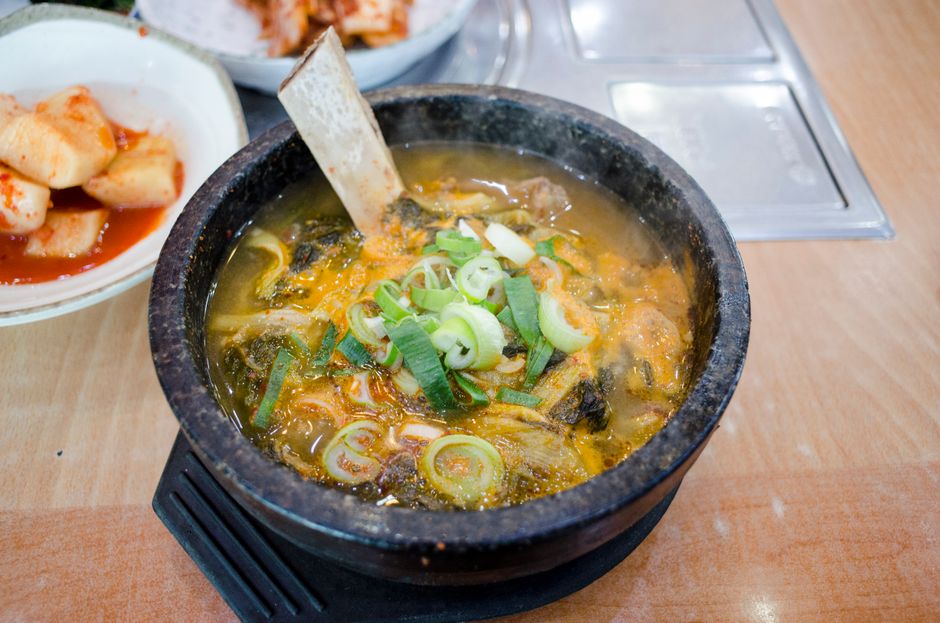
Samgyetang is a whole young chicken simmered with ginseng, garlic, jujube (red dates), and glutinous rice stuffed inside the cavity, served in a bubbling stone bowl with a side of salt and pepper. The broth is clear, faintly sweet from the dates, slightly herbal from the ginseng root, and warm in a way that goes past temperature into something almost medicinal. The chicken falls off the bone with a chopstick. The rice inside has soaked up everything the broth has to give and arrives as a kind of savory porridge bonus you eat last with the salt. It is, structurally, the gentlest possible delivery system for protein and warmth — which is exactly what a jet-lagged American body wants and cannot ask for in words.
Why Koreans eat it in summer, not winter
The traditional logic is yi-yeol-chi-yeol — fight heat with heat — and samgyetang is the canonical sambok dish, eaten on the three hottest days of summer to restore stamina. As a jet-lagged Californian I do not care about the season; I order it whenever I land. The dish is on every menu year-round in Gangnam. Restaurants do not blink at a January order.
Why it works on jet lag specifically
Jet lag from LAX to Seoul is a 16-hour shift, which is functionally a complete circadian reversal — your body thinks it is the middle of the night when Seoul is having lunch, and the chemistry that should be making you sleepy is making you confused instead. What samgyetang does, in my non-doctor experience over a dozen trips, is hit four things at once that nothing else on a Korean menu hits together. Hot bone broth hydrates and settles the stomach. The ginseng gives a slow, non-jittery alertness that is nothing like coffee. The glutinous rice is warm carbs that don't crash you. And the chicken protein is bland enough that a flight-shocked digestive system will not revolt. I have tried seolleongtang on landing day, kalguksu, juk, even galbitang — and samgyetang is the only one that has reliably bought me a clear-headed afternoon at the twenty-six-hour mark.
The ginseng question
Korean ginseng (insam) is the real ingredient, not American ginseng, and the root sits whole in the broth. The compound usually credited for the alertness effect is ginsenoside, and while I will not pretend the science is settled, the felt experience is consistent — a steady warmth in the chest that lasts about three hours and does not give you the iced-Americano shake. If you are sensitive to caffeine, this is your jet-lag move.

Where I actually go in Gangnam
Gangnam has dozens of samgyetang restaurants and most of them are fine, but there are three I rotate through depending on where I'm staying. The first is Tosokchon-style places near Gangnam Station, which serve the dense, milky version of the broth with a heavier ginseng note — closer to what you'd get at the famous Tosokchon by Gyeongbokgung but without the ninety-minute line. The second is the Cheongdam-area smaller spots that do a clearer, lighter broth, which I prefer when I'm actively trying to recover and don't want anything heavy. The third is the lunch sets at any of the older restaurants near Sinsa Station, which run around 17,000 to 20,000 KRW and come with cold buckwheat noodles on the side — a combination that sounds wrong and is actually genius on a hot landing day.
- Gangnam Station area — denser, milkier broth (Tosokchon-style, 18,000-22,000 KRW)
- Cheongdam side streets — lighter, cleaner broth (around 20,000 KRW)
- Sinsa lunch sets — samgyetang plus cold noodles (17,000-20,000 KRW)
- Apgujeong older spots — black-chicken samgyetang available, slightly richer
How to order, eat, and not embarrass yourself
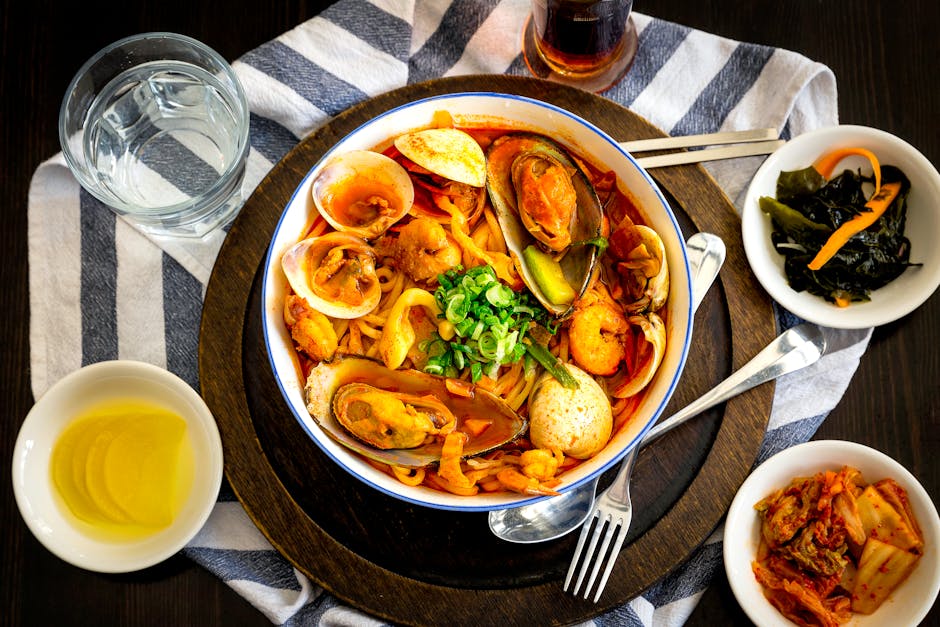
The order is simple — you say samgyetang, you sit down, the bowl arrives in roughly ten minutes already plated. The eating is the part Americans miss. First, do not season the broth before you taste it; the salt comes on a separate small plate and you season per spoonful, not in bulk. Second, the chicken comes whole and you tear it apart with chopsticks — do not ask for a knife, and do not be afraid to use your hands on the leg. Third, scoop the rice out from inside the cavity at the end, mix it with a little of the broth, and eat it with the salt. Fourth, the kimchi and pickled radish on the side are there to cut the richness; alternate bites. The whole meal takes about forty minutes if you pace it, and you should pace it. This is not a fast lunch.
What to drink with it
The traditional pairing is insamju (ginseng wine), which the restaurant will offer in a small bottle. On landing day I skip the alcohol entirely — a samgyetang plus soju combo at hour twenty-six will guarantee you nap until 9 PM and wake up at 2 AM. Hot barley tea or plain water is the move. Save the insamju for trip day three when your body is back online.
What to do in the two hours after
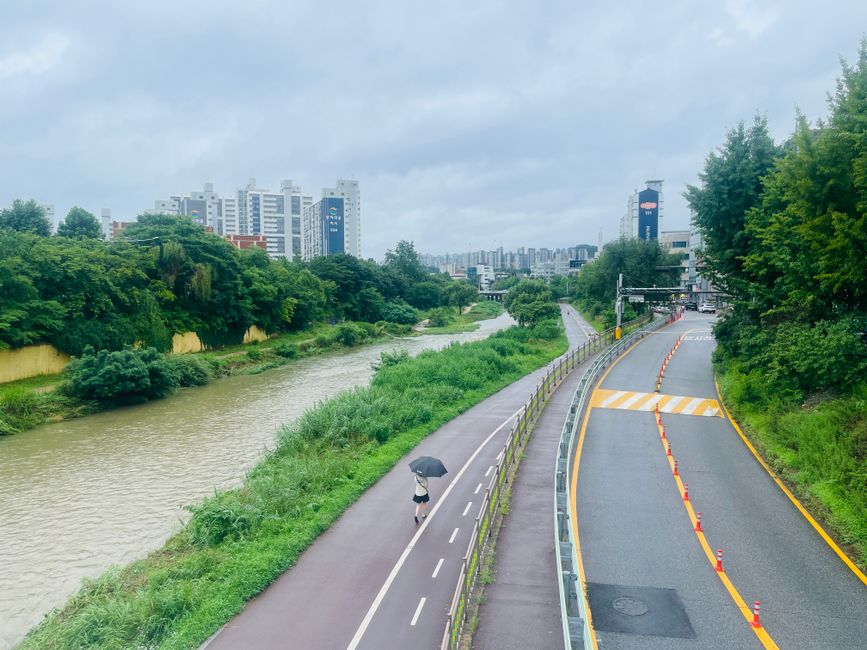
The two hours after a samgyetang lunch are when the dish does its actual work, and what you do with those hours matters. My rule, learned the hard way: do not nap. The dish makes you warm and slightly sleepy in a deceptive way, and a 3 PM nap on landing day is the single fastest way to undo any progress you've made on the time shift. Instead, walk. I usually do a slow loop through the side streets behind Garosu-gil or down to the Han River pedestrian path — sunlight on the face, gentle movement, no agenda. By 5 PM the warmth has settled into clear-headedness, and that's the window where you can actually get through dinner without hitting the wall.
If you absolutely must rest
Sit upright in a cafe with an iced Americano (if it's before 2 PM Korea time) and do something low-stakes — read, scroll, watch the street. The cafe sit is doing eighty percent of what a nap would do without scrambling your sleep architecture. My favorite jet-lag cafe sits are the larger Cheongdam spots with floor-to-ceiling windows. See my list at the link below.
The trip-planning version of this advice
If you are the kind of traveler who plans meals into the itinerary, here is how I now structure a Korea arrival around samgyetang. I land at ICN, take the express train or a Kakao Taxi to my Gangnam hotel, shower, and aim for samgyetang lunch at hour twenty-four to twenty-six — usually around 1 PM the day after I land. The morning before I do something light: bonjuk porridge, hot shower, slow walk. Samgyetang is the centerpiece, the walk after is the pivot, and dinner that night is a Korean home-style set, not BBQ. By day three I'm back to ordering whatever I want — but day one and day two are samgyetang-anchored, and the difference between this and my younger 'just power through' approach is roughly two clear days of trip on the front end.
A note for first-timers
If this is your first time in Korea and the idea of a whole bird in a stone bowl sounds like a lot — it isn't, in practice. The chicken is small (a young hen, often under a kilogram), the portion feels generous but not aggressive, and the meal is gentler than a Korean BBQ session by every possible measure. Trust the dish. It has been doing this longer than any of us.
“Samgyetang is the centerpiece, the walk after is the pivot, and dinner that night is a Korean home-style set, not BBQ.”
Editor's note
Frequently asked questions
Is samgyetang actually good for jet lag, or is that just a story?
In my own experience over a dozen LAX-ICN trips, it works more reliably than anything else I've tried — hot bone broth, slow-release carbs, mild protein, and ginseng warmth in one bowl. The science isn't airtight, but the felt effect is consistent. I'd take it over coffee, melatonin, or a nap on landing day.
When is the best time to eat samgyetang on a jet-lagged day?
Lunch on day two — roughly the twenty-four-to-twenty-six-hour mark after you land. By then your stomach is awake enough to handle real food, and the warmth-and-walk combination after will carry you to a normal-feeling 9 PM bedtime. Dinner samgyetang on landing day is too heavy and too late.
How much does samgyetang cost in Gangnam?
Most Gangnam restaurants charge between 17,000 and 22,000 KRW (roughly $13-17 USD as of 2026) for a standard samgyetang. Black-chicken or premium-ginseng versions can run 25,000 to 30,000 KRW. Lunch sets that include cold noodles sit at the lower end of the range.
Is samgyetang spicy? I can't handle Korean spice.
Samgyetang is not spicy at all. The broth is salt-forward and herbal, and any heat comes only from the side kimchi, which you can leave on the plate. This makes it one of the most accessible Korean dishes for first-time visitors and for people whose stomachs are not in a fighting mood.
Can I eat samgyetang if I don't like ginseng?
The ginseng note in samgyetang is much milder than ginseng tea or insamju — it reads as a gentle herbal warmth in the broth, not a strong flavor. If you really can't stand it, you can ask for the rice porridge inside without too much broth, or order baeksuk (a similar dish without ginseng) at most samgyetang restaurants.
Are there vegetarian alternatives to samgyetang for jet lag?
There isn't a true vegetarian version, since the dish is fundamentally chicken-and-broth. The closest jet-lag-friendly vegetarian Korean meal I've found is hobakjuk (pumpkin porridge) plus doenjang jjigae (soybean stew) without seafood, eaten at the same lunch hour. Same warmth-and-carbs principle, plant-based.