Travel & Culture
Seoul Subway for an American Who Grew Up on the LA Metro
I learned transit in Los Angeles, broke my brain on it in New York, and the Seoul Metro still feels like a separate species.
I grew up in Los Angeles, where the subway is a thing you take only when your car's in the shop or you're going to a Dodgers game and don't want to fight for parking. Then I moved to New York for five years and learned what a real subway is — by which I mean a subway you love and resent in roughly equal measure. Now I come to Seoul two or three times a year, and the Seoul Metro keeps making both of those previous experiences look like rough drafts. This is what I've actually figured out, after four trips of stubbornly refusing to take taxis.
First, a confession about LA
I don't actually hate the LA Metro. People love to dunk on it, and I get why — the network is patchy, the coverage skips half the neighborhoods you'd want it to hit, and the trains can feel uneven depending on the line and the hour. But I rode the Expo Line to USC for a year before I had a car, and it was fine. The B Line under Hollywood is fine. The frequency outside of rush hour is the part that breaks you — you can wait 12 to 20 minutes on a Saturday afternoon for a Red Line train and feel your whole day fall apart. That experience is what set my baseline. Whenever I describe Seoul's subway to my LA friends, that's the baseline I'm pushing against.
Then there's New York. I lived in Brooklyn from 2018 to 2023, took the A and the F basically every day, and developed the New Yorker's love-hate relationship with the MTA. The coverage is incredible. The frequency at rush hour is great. The off-hour and weekend service is a special kind of psychological torture, and the stations smell exactly the way you think they smell. I learned to time my arrivals down to the minute and to always carry a podcast, because the platform announcements would lie to me at least 30% of the time. New York taught me to trust nothing and plan everything. Then I landed in Seoul, and the Seoul Metro just — handed me a different deal.
The thing that hit me first: it shows up
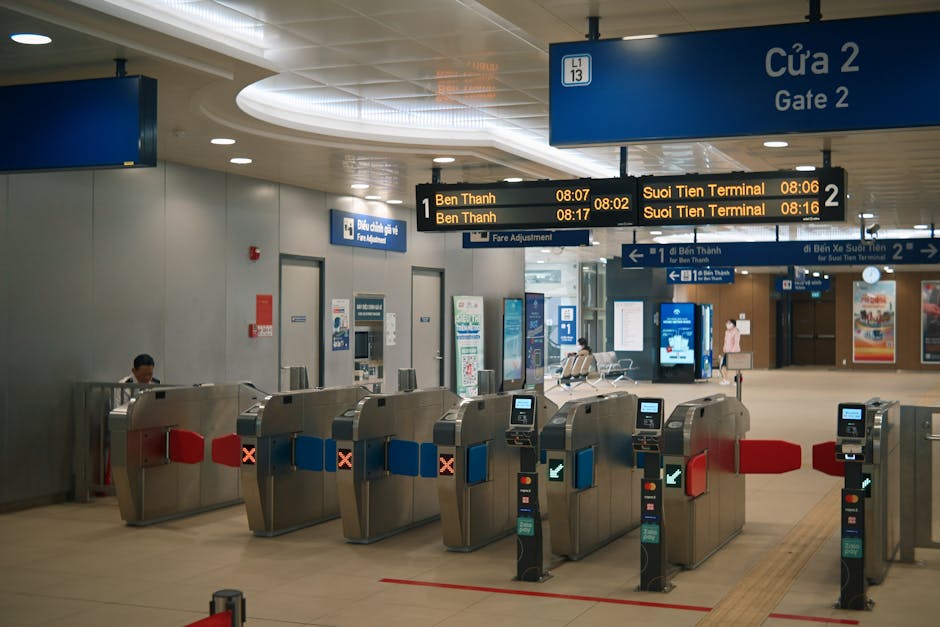
The single biggest difference between Seoul and either LA or New York is frequency. Trains on the main lines come every two to three minutes during the day. Off-peak it's maybe four to six. After midnight the system shuts down — that's the trade — but for the 19 hours it's running, you don't really plan around the train. You just walk to the station and a train shows up. The first time this happened to me I genuinely stood on the platform waiting for the experience to get worse. It didn't. The next train came, and the one after that, and after about a week I stopped checking the arrival board.
The second thing is the platform screen doors. Every station I've used has them — full-height glass barriers between the platform and the track that open in sync with the train doors. After ten years of standing on bare New York platforms watching rats run along the rails, I cannot overstate how much my brain relaxed. You also stop seeing the small daily horrors I'd just accepted as baseline transit — no trash on the tracks, no random delays, no announcements about a sick passenger. The trains are so quiet I sometimes forget I'm on one. The first time I rode Line 9 I fell asleep, which is something I would never, ever do in New York.
Signage in actual English (not theoretical English)
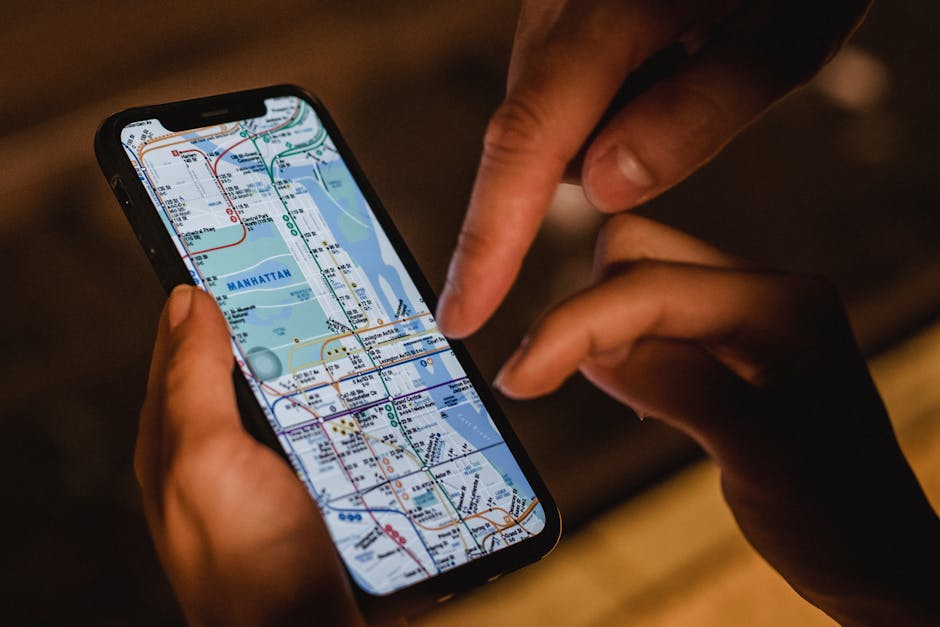
I want to be specific about this because tourist guides oversell it and undersell it at the same time. The signage in the Seoul Metro is in Korean, English, Chinese, and Japanese — that's true on basically every station map and every train car display. The English is generally fine. Station names are romanized consistently, transfer arrows are color-coded by line, exit numbers are big and obvious. Where it gets a little harder is once you exit the station and try to figure out which of the eight or twelve numbered exits you actually want. Some major stations — Gangnam, Express Bus Terminal, City Hall — have so many exits that even locals carry a mental map. I've taken the wrong exit at Gangnam Station maybe a dozen times. You walk a block aboveground, realize nothing looks like what you expected, swear under your breath, and walk back. It's a rite of passage.
The app I actually use is Naver Map. KakaoMap is the other one Korean friends use. Google Maps for transit in Korea is… okay. The transit directions work, but Google can't give walking directions reliably because of a long-running mapping data issue. I learned this the hard way trying to find a cafe in Sinsa my first trip. Now I use Naver for everything and Google for nothing inside Korea.
Paying for it, which is somehow easier than New York
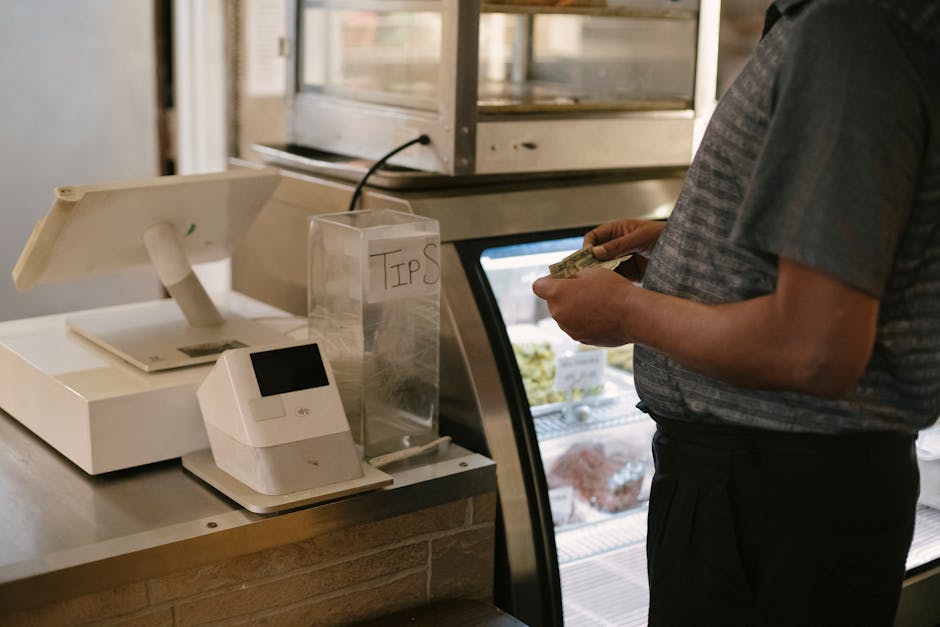
Buy a T-money card from any convenience store the first day. It costs about 4,000 won — under $3 USD — and you reload it with cash or card at any subway machine or 7-Eleven. Tap on, tap off. Fares are distance-based and they're a joke compared to American cities. A typical ride in central Seoul is around 1,500 to 1,800 won, which is roughly $1.10 to $1.30 USD. A long ride out to ICN Airport is around 4,500 won (the regular subway, not the express AREX). The longest I've ever paid is about 3,000 won. That's it. Compared to New York's $2.90 flat fare or LA's $1.75 plus the inevitable Uber to finish the trip, Seoul is doing something the rest of us should figure out.
T-money also works on city buses, taxis (most of them), and some convenience store purchases. I usually load 30,000 won at a time — about $22 USD — and that lasts me four or five days of heavy use. You can return the card at the airport on the way out and get the remaining balance back, though I usually just keep mine for the next trip. It's a tiny piece of plastic that solves the entire transit problem.

What still confuses me on trip four
Line 9 is express and local on the same physical line, and the express trains skip a lot of stations. I have ridden the express past my stop more times than I want to admit. The platform digital boards do tell you which kind of train is coming, in English, but I get distracted and tap on, and then I'm somewhere south of where I meant to be. The fix is to actually read the board, which I now do, mostly.
The other thing is that transfers between lines sometimes involve walks that feel longer than they should. At certain stations — looking at you, Dongdaemun History & Culture Park — you can spend seven minutes walking between platforms, all underground, through corridors that all look the same. The signage is fine. The walk is just long. Plan for it. If your transit app says "X minutes" for a trip with a transfer, add three to five minutes to be safe. Honestly that's still better than waiting for a single MTA G train, so I'm not complaining.
Late-night strategy, since the trains stop
The metro stops around midnight to 1 a.m. depending on the line, and starts back up around 5:30 a.m. This was the hardest adjustment for me — I'm used to NYC's 24-hour service, where you can stagger home from a bar at 3 a.m. and there's always a train, even if it's an inexplicable shuttle bus situation. In Seoul you have to plan. Taxis are everywhere and they're cheap by US standards — a cab from Hongdae back to Gangnam at 2 a.m. has run me about 18,000 won, around $13 USD. Use Kakao Taxi or just hail one on the street. The drivers take cards, almost all of them, and there's no awkward tip situation. You pay the meter, you say thanks, you get out.
My actual strategy these days: I plan my evening around being near a subway by 11:30 p.m. if I can, and if I can't, I take a taxi without thinking about it. The math works out. A few cab rides over a 10-day trip costs less than I'd lose in time anxiety trying to chase the last train across town.
Things I've stopped doing
I've stopped checking arrival times for major lines. It doesn't matter. A train comes. I've stopped trying to read every Korean station name to test myself — I read them in English, get where I'm going, and use the Korean as a bonus when I see it. I've stopped feeling like I need to walk to the next station to save a transfer; the transfers are easy and the trains are fast. I've stopped offering to Venmo friends for the subway ride to dinner, because the fare is so small that even splitting it feels weird. I've stopped using Google Maps in Korea entirely.
The one thing I've started doing is sitting down. New York trained me to stand near the doors, ready to leap off. The seats in Seoul trains are clean, the rides are smooth, and the announcements tell you the upcoming station in three languages before you arrive. You can sit, look out the window, and reasonably expect to get off at the right place. It is, I cannot stress this enough, a different relationship with transit. The first time I leaned back in a Line 2 seat and watched Han River roll past the windows on the elevated section between Hapjeong and Dangsan, I thought: oh, this is what people mean when they say subways can be pleasant. I don't even know what to do with that.
What I tell first-time American visitors
Day one: buy a T-money card at the airport convenience store. Load 30,000 won. Download Naver Map. Take the AREX or regular subway from ICN into central Seoul — I usually take the regular line because the express adds nothing for the price difference, but if you have bags it's worth the upgrade. Walk through your first subway transfer slowly. Read the signs. Get used to the fact that this is going to be easy. Then stop overthinking it for the rest of the trip. The metro will be the smoothest part of your week in Korea. The hardest part will be figuring out which exit number you want, and even that is fixable with one app and a little patience. For my honest day-to-day routine using the metro between cafes and appointments, see <a href="/best-cafes-near-my-clinic/">my regular cafe loop</a>. For full first-trip survival tips, my <a href="/first-time-in-gangnam-american-survival/">first-timer's guide</a> covers everything I wish someone had told me before my first flight.
“The first time I leaned back in a Line 2 seat and watched the Han River roll past the windows, I thought — oh, this is what people mean when they say subways can be pleasant.”
Rachel Bennett
Frequently asked questions
How much should I budget for the Seoul Metro per day?
I usually spend 6,000 to 9,000 won per day on transit if I'm running between appointments and meals — that's about $4 to $6 USD. Load 30,000 won onto your T-money card and it lasts most travelers four or five days. The system is distance-based, so longer rides cost more, but the longest single trip I've taken (Gangnam to ICN regular line) was around 4,500 won.
Do I really need a T-money card or can I use single-trip tickets?
Get the T-money card. Single tickets cost more, require buying paper tickets at the machine for every trip, and don't work on buses. The T-money card is about 4,000 won upfront and works on every subway line, most buses, taxis, and even some convenience store payments. You can return the card and get your balance back at any airport convenience store before flying home.
Is Google Maps good enough or do I need Naver Map?
Google Maps gives you transit directions inside Korea, but walking directions and a lot of location data are missing because of a Korean government mapping policy that limits foreign apps. Use Naver Map for everything — transit, walking, restaurant locations, exit numbers. It's free, the English interface is solid, and Korean locals use it too. Download it before you land.
How safe is the Seoul Metro late at night?
I've taken the subway alone past 11 p.m. on every trip, including from Hongdae and Itaewon back to Gangnam, and never felt unsafe. The stations and trains are well-lit, screen doors block platform access, and there's near-constant foot traffic until last service. Last trains run around midnight to 1 a.m. depending on the line. Korea Tourism's <a href="https://english.visitkorea.or.kr/svc/main/index.do" rel="dofollow">visitor information</a> has more on transit safety.
What's the deal with Line 9 express vs local trains?
Line 9 runs both express and local trains on the same tracks. Express trains skip about half the stations. Both stop at the same platform, so you have to read the digital board to see which kind of train is arriving. It's marked in English. The express is great if your destination is one of the express stops (like Express Bus Terminal or Yeouido) and a problem if it isn't. Always read the board before tapping on.
Can I get from Incheon Airport to central Seoul without a taxi?
Yes, easily. The AREX line runs both an express (about 43 minutes to Seoul Station, around 11,000 won) and a regular all-stop train (about 55 minutes, around 4,500 won). The regular train is what most locals take. Both are clean, run frequently, and have luggage-friendly cars. From Seoul Station you can transfer to any line that gets you to your hotel.