Glossary
Skin Quality Glossary: Boosters, Polynucleotides, Exosomes
A working A-to-Z glossary of the boosters, polynucleotides, exosomes, mesotherapy cocktails, peptide injections, and IV drip vocabulary I kept tripping over across three years of Gangnam consultations — defined the way a friend would explain them.
Somewhere around my fifth Gangnam trip I stopped pretending I knew what "skin booster" meant. The brochure on the consultation desk would list six options under that heading — Profhilo, Volite, Restylane Skinboosters, Rejuran Healer, ASCE+, and a custom cocktail with three growth factors I had never heard of — and I had been nodding through the explanation like a polite American for three trips already. So I started writing the words down. This is the cleaned-up version of that notebook, fifty-eight terms ordered A to Z, covering the entire skin-quality menu — the four families of injectable skin boosters, the polynucleotide and PDRN landscape, the Rejuran lineup, the exosome category in both its Korean ASCE+ form and its newer Rion variants, mesotherapy in all the configurations Korean clinics actually use it, the peptide injection vocabulary that has crept onto menus in the last two years, the IV drip lineup (glutathione, vitamin C, NAD+, beauty cocktails) every Gangnam clinic now offers, and the structural vocabulary (treatment cycle, top-up frequency, downtime category, results timing, contraindications) that ties it all together. None of it is medical advice. It is the working vocabulary that lets me read a skin-quality menu without nodding along. (Tip: if you only have time for fifteen, skim the P, R, and S sections — they carry most of the load.) If you are about to walk into a Gangnam consultation and the booster page looks like alphabet soup, this is the page I wish I had bookmarked first.
A — Anti-aging cocktail, ASCE+, Aqualyx, Autologous
Section A spans four entry-point terms — a generic IV cocktail label, the Korean exosome that anchors most exosome menus, a fat-dissolving injection, and the categorical adjective that distinguishes patient-derived from synthetic biologics.
Anti-aging cocktail (IV)
A loose marketing umbrella for an intravenous drip blending several anti-aging ingredients — typically glutathione, high-dose vitamin C, B-complex, alpha-lipoic acid, and sometimes NAD+. Korean aesthetic clinics list these under names like "luxury anti-aging drip," "premium beauty cocktail," or branded house formulas. Sessions run 30 to 60 minutes. (Tip: "anti-aging cocktail" is a category, not a product — ask which ingredients are in the specific drip and at what doses, not just the marketing name.) See also: beauty drip, glutathione, vitamin C IV, NAD+.
ASCE+
ExoCoBio's branded mesenchymal stem cell exosome product, the most-recognized exosome line in Korean aesthetic practice. Available as topical post-procedure ampules and as injectable formulations with names like ASCE+ HRLV (hair) and ASCE+ Skin Glow. Common as a topical adjunct after microneedling, lasers, or RF — applied immediately while the channels are open. (Tip: ASCE+ is exosome category, not stem cell — it is the cell-derived vesicle, not the cell itself.) See also: exosome, MSC, Rion exosome, mesenchymal stem cell exosome.
Aqualyx
A deoxycholic-acid-based fat-dissolving injection used for localized subcutaneous fat reduction — typically chin, jowls, knees, or upper back. Marketed in Korea alongside Belkyra and Korean equivalents. Treatment runs as a series of two to four sessions spaced four to six weeks apart, with meaningful swelling for three to seven days after each session. (Tip: Aqualyx is fat reduction, not skin quality — it sits on this glossary because Korean menus often place fat-dissolving and skin-boosting injections in the same brochure category.) See also: deoxycholic acid, MesoLyft, mesotherapy.
Autologous
Derived from the patient's own body. The categorical opposite of synthetic or donor-derived. PRP, PRF, and PRGF are the three autologous skin biologics most commonly listed on Korean menus — all derived from the patient's blood drawn at the start of the session. Allergy and rejection risk for autologous products is essentially zero, which is why they are often the first choice for patients with sensitive skin or prior reactions. See also: PRP, PRF, PRGF.
B — Beauty drip, Biorevitalisation
Section B covers two umbrella categories that show up before the more specific products do.
Beauty drip
Korean aesthetic clinic shorthand for an IV infusion focused on skin clarity, brightening, or general wellness — typically glutathione 600 to 1200mg paired with high-dose vitamin C, sometimes with B-complex or biotin added. Sessions run 30 to 45 minutes. Most Gangnam clinics offer a range from a single-session walk-in to a ten-session package. (Tip: "beauty drip" is essentially a glutathione-and-vitamin-C drip in marketing terms — ask for the gram dose of each ingredient before booking the package.) See also: glutathione, vitamin C IV, anti-aging cocktail.
Biorevitalisation
A European-origin term for the family of skin-quality injectables that improve hydration, elasticity, and dermal density without volumizing — Profhilo is the prototype example. Korean clinics adopted the word in the late 2010s, mostly attached to non-cross-linked HA injectables and polynucleotide products. Distinct from filler, which volumizes; biorevitalisation modifies tissue quality. (Tip: "biorevitalisation" is essentially European synonym for skin booster — same category, different marketing register.) See also: skin booster, Profhilo, polynucleotide.
C — Contraindications, Copper peptide injection
Section C covers a structural vocabulary term every booster consultation hinges on, and a peptide-injection sub-category.
Contraindications
Conditions or factors that make a treatment inappropriate or higher-risk. The standard contraindications list across most skin-quality injectables includes pregnancy and breastfeeding, active skin infection at the injection site, autoimmune flare-up, recent isotretinoin use within six months, and known allergy to a specific ingredient. (Tip: ask the clinic to walk through contraindications specifically by treatment — most Korean clinics keep a printed checklist, but it usually only surfaces if you ask.) See also: downtime category, treatment cycle.
Copper peptide injection (GHK-Cu)
An injectable preparation of glycyl-L-histidyl-L-lysine bound to copper, a small peptide that signals collagen and elastin synthesis at the dermal level. Used as an adjunct in skin-quality protocols, often alongside polynucleotide or exosome products. Less common as a stand-alone treatment than as a layer in a combination session. (Tip: GHK-Cu and copper peptide are the same molecule — different naming registers in marketing.) See also: GHK-Cu, peptide injection, plant-derived growth factor.
D — DermaForge, Dermal hydration, Deoxycholic acid, Downtime category
Section D covers a Korean booster brand, an outcome category that overlaps several products, the active in fat-dissolving injections, and the recovery vocabulary.
DermaForge
A Korean injectable brand combining cross-linked HA with polynucleotide fragments in the same product, marketed for dermal hydration and skin-quality improvement in a single injection. Less established than Rejuran or Restylane Skinboosters but appears on some Gangnam menus as a hybrid skin-quality option. (Tip: DermaForge is one example of the newer hybrid HA-plus-polynucleotide formulations — ask whether the clinic stocks the original branded product or a generic equivalent.) See also: hyaluronic acid skin booster, polynucleotide, Rejuran HB.
Dermal hydration
An outcome category referring to bound water content and barrier function in the dermis. The skin-quality treatments that target dermal hydration most directly are HA skin boosters (Profhilo, Restylane Vital), polynucleotides (which improve cellular water-handling indirectly), and certain mesotherapy cocktails. Distinct from surface hydration, which moisturizers address. (Tip: when a clinic talks about "deep hydration" or "inside-out hydration," the technical claim is dermal-level water binding — that is what most non-cross-linked HA boosters are doing.) See also: hyaluronic acid moisturizer, hyaluronic acid skin booster, biorevitalisation.
Deoxycholic acid
A bile acid used as the active ingredient in fat-dissolving injections, including Aqualyx and Belkyra (Kybella in the U.S.). Disrupts adipocyte cell membranes, releasing the lipid contents to be cleared by the body. Used for localized subcutaneous fat reduction, most commonly the submental area. (Tip: deoxycholic acid is the molecule; Aqualyx and Belkyra are brands using it. The treatment is fat-dissolving, distinct from skin-quality work.) See also: Aqualyx, MesoLyft, mesotherapy.
Downtime category
An informal recovery framework covering most skin-quality injectables: zero-downtime (small papules at injection sites resolving in hours), social-downtime (mild bruising or redness for one to three days, makeup-coverable), and full-downtime (visible bruising or swelling for five to seven days). Most polynucleotide and skin-booster sessions land in social-downtime range. (Tip: ask the clinic which downtime category your specific product-and-needle combination falls under — the multi-injector mesogun produces less surface marking than the manual fine-needle approach.) See also: contraindications, treatment cycle, results timing.
E — ELASTI Rejuran, ELRAVIE, Exosome therapy, Exosome injection vs topical
Section E spans a recent Rejuran variant, a Korean exosome brand, the umbrella exosome term, and the categorical distinction every exosome consultation hinges on.
ELASTI Rejuran
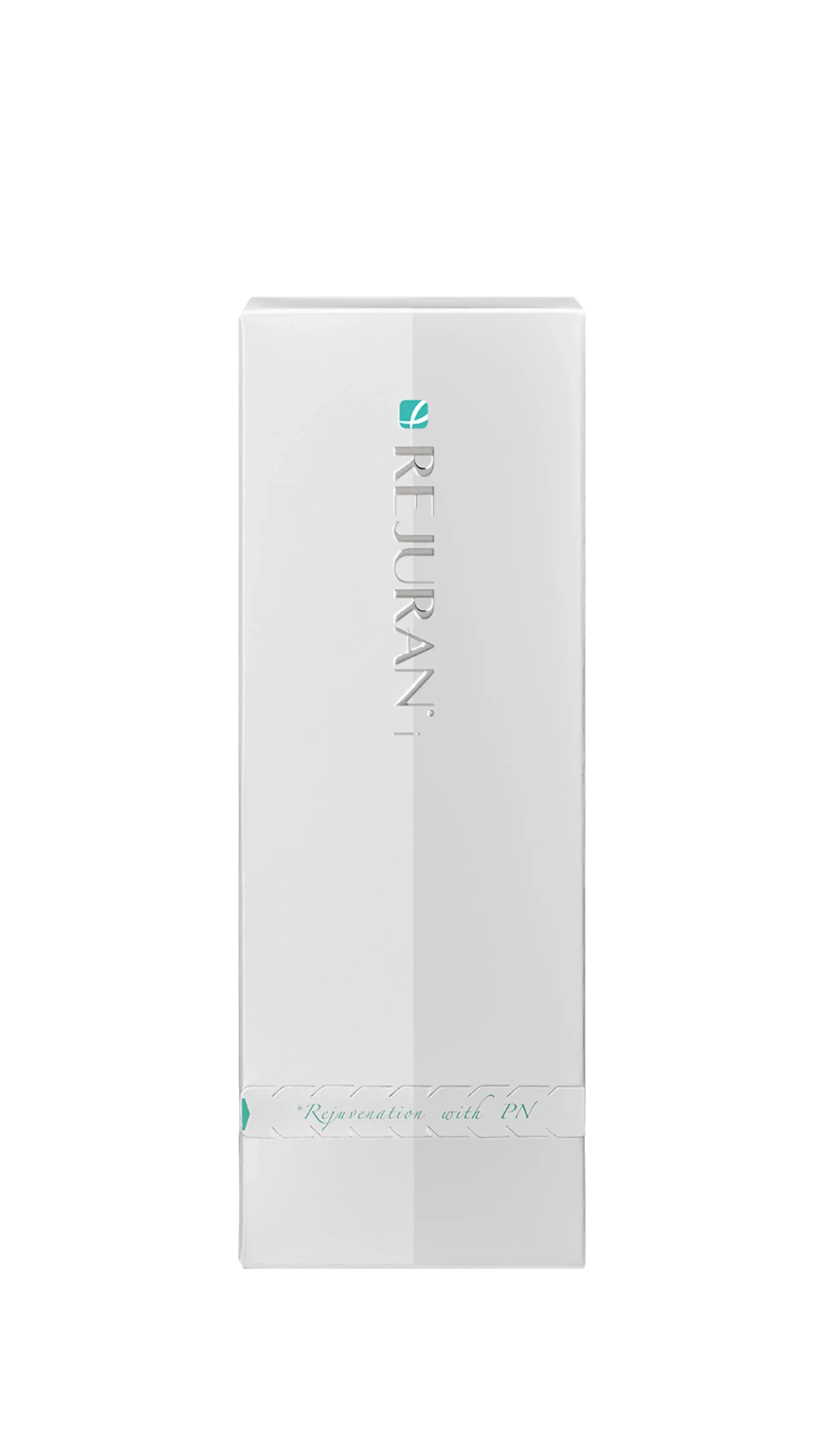
A newer Rejuran formulation marketed for skin elasticity rather than the original Healer's hydration-and-repair positioning. Combines polynucleotide with additional ingredients targeting elastin support. Less established on global menus than Rejuran Healer or Rejuran I, but appearing on Gangnam menus from late 2024 onward. (Tip: the Rejuran lineup keeps adding variants — when a clinic offers "Rejuran," ask which specific variant: Healer, I, S, HB, or ELASTI.) See also: Rejuran, Rejuran Healer, polynucleotide.
ELRAVIE
Humedix's Korean-market HA filler line, sometimes adapted as a skin-booster injection in lower-cross-linking variants. Less prominent in skin-quality menus than Restylane or Juvederm but present at clinics that stock primarily domestic Korean injectables. (Tip: ELRAVIE is mostly a filler line — when used as a skin booster, ask which specific formulation and at what cross-linking density.) See also: hyaluronic acid skin booster, Korean specific brands and names.
Exosome therapy
Treatment using extracellular vesicles isolated from cells (most commonly mesenchymal stem cells, but also from plant cells or platelets) to deliver growth factors and signaling molecules into tissue. In Korean aesthetic practice the standard application is topical post-procedure — applied immediately after microneedling, lasers, or RF while channels are open. (Tip: aesthetic exosome therapy in Korea is mostly post-procedure topical adjunct, not stand-alone injection — the categorical claim is barrier-and-recovery support rather than primary lifting or volumizing.) See also: exosome, ASCE+, MSC, exosome injection vs topical.
Exosome injection vs topical
The two delivery modes for aesthetic exosome therapy. Topical exosomes are applied to skin immediately after a microneedling, laser, or RF session while micro-channels are still open — the standard Korean protocol. Injectable exosomes are delivered into the dermis through a needle or microneedle gun. The injectable category is more recent and the regulatory pathway in Korea opened around 2022. (Tip: ask the clinic whether they are using injectable or topical exosomes for your protocol — the cost, recovery, and likely outcome differ.) See also: exosome therapy, ASCE+, mesenchymal stem cell exosome.
F — Fillers as boosters
Section F covers a single category point worth flagging because it confuses every first-time consultation.
Fillers as boosters
A category overlap — certain HA filler products with low cross-linking density can be used as skin boosters rather than as volumizers. Restylane Vital and Profhilo are the most-recognized examples; both are HA, both are technically classified as filler, but the formulation is engineered for dermal hydration and quality rather than volume. The categorical lines blur in Korean clinic marketing. (Tip: when a clinic mentions a "filler used as a booster," ask whether the cross-linking density and injection plane are appropriate for skin-quality outcomes — same molecule can do different things at different doses and depths.) See also: hyaluronic acid skin booster, Profhilo, Restylane Skinboosters, Juvederm Volite.
G — GHK-Cu, GLP-1 facial, Glutathione (oral vs IV)
Section G covers a peptide molecule, the systemic-meets-aesthetic crossover, and the dosing-format distinction that defines glutathione protocols.
GHK-Cu
Glycyl-L-histidyl-L-lysine bound to copper — the technical name for the copper peptide most commonly used in injectable peptide protocols and topical post-procedure serums. Signals collagen and elastin synthesis, supports wound healing, and modulates inflammation at very low concentrations. Appears as both a stand-alone injection and as a layer in mesotherapy cocktails. (Tip: GHK-Cu is the same molecule as "copper peptide" — different naming registers across marketing and clinical contexts.) See also: copper peptide injection, peptide injection.
GLP-1 facial
A Korean clinic neologism combining low-dose GLP-1 administration with a customized skin-quality protocol — usually a polynucleotide or skin-booster session paired with weight-management consultation. Marketing rather than a discrete clinical category, but appears on Gangnam menus from 2024 onward as the GLP-1 weight-loss conversation moved into aesthetic offices. (Tip: "GLP-1 facial" is mostly marketing — the underlying treatments are still the standard skin-booster and polynucleotide protocols, just bundled with the systemic medication conversation.) See also: peptide injection, anti-aging cocktail.
Glutathione (oral vs IV)
The body's primary intracellular antioxidant, used in aesthetic protocols for melanin pigment-suppression and general anti-aging claims. Available orally (capsules, sublingual lozenges) and intravenously (typical aesthetic dose 600 to 1200mg per session). The IV format is the standard at Korean aesthetic clinics; oral bioavailability is more limited. (Tip: the FDA has not approved IV glutathione for skin-lightening as a labeled indication anywhere — the use is off-label, and protocols and dosing vary widely between clinics.) See also: beauty drip, vitamin C IV, anti-aging cocktail.
H — Hyaluronic acid moisturizer, Hyaluronic acid skin booster
Section H covers two HA categories that get confused with each other in every consultation.
Hyaluronic acid moisturizer
A topical skincare product containing hyaluronic acid — applied to the skin surface, not injected. Works at the stratum corneum and upper epidermis, providing surface hydration. Categorically distinct from HA skin boosters, which are injected into the dermis. (Tip: "hyaluronic acid" without qualification could mean either the topical or the injectable — ask whether the protocol involves a serum or a syringe. The two work at completely different depths.) See also: hyaluronic acid skin booster, dermal hydration.
Hyaluronic acid skin booster
A non-cross-linked or low-cross-linked HA injection placed in the mid-dermis to improve hydration, elasticity, and dermal density without producing volume. The major products are Restylane Skinboosters (Vital and Vital Light), Juvederm Volite, and Profhilo (which sits in its own subcategory). Typical protocol is two to three sessions spaced four to six weeks apart, with maintenance every four to six months. See also: Profhilo, Restylane Skinboosters, Juvederm Volite, biorevitalisation.
I — Immune drip
Section I covers a single IV category Korean clinics increasingly bundle alongside aesthetic drips.
Immune drip
An IV infusion focused on immune support rather than aesthetic outcomes — typically high-dose vitamin C (5 to 25 grams), zinc, and sometimes glutathione or B-complex. Korean aesthetic clinics often offer immune drips alongside beauty drips, particularly during winter and travel seasons. Sessions run 45 to 90 minutes depending on the vitamin C dose. (Tip: "immune drip" and "beauty drip" overlap heavily in ingredient profile — the labeling is mostly marketing-positioning. Ask for the actual gram doses of each ingredient.) See also: beauty drip, vitamin C IV, anti-aging cocktail.
J — Juvederm Volite
Section J covers Allergan's HA skin booster, frequently compared with Restylane Vital and Profhilo.
Juvederm Volite
Allergan's HA skin booster, designed for dermal hydration and skin-quality improvement rather than volume. Lower cross-linking density than the volumizing Juvederm products. Typical protocol is a single session with results building over four to six weeks, maintenance every six to nine months — a longer interval than Restylane Skinboosters. (Tip: Volite is positioned as a "longer-lasting single session" alternative to multi-session Restylane Vital protocols — the trade-off is upfront density-of-effect versus gradual build.) See also: hyaluronic acid skin booster, Restylane Skinboosters, Profhilo.
K — Korean specific brands and names
Section K covers the domestic-brand landscape that fills out most Gangnam clinic menus.
Korean specific brands and names
The set of domestically-manufactured skin-quality injectables and biologics frequently listed alongside imported brands on Korean menus — Rejuran (PharmaResearch), ASCE+ (ExoCoBio), DermaForge, ELRAVIE (Humedix), and several smaller polynucleotide and exosome lines. Pricing tiers in Korean clinics often span imported (Profhilo, Restylane, Juvederm) versus domestic (Rejuran, ASCE+) categories, with the domestic options typically 20 to 40 percent less per session at comparable depth. (Tip: when a Korean clinic quotes a "skin booster session at X price," the X is often based on the domestic-brand pricing — ask which specific product is being quoted.) See also: Rejuran, ASCE+, DermaForge, ELRAVIE.
M — MesoBotox, MesoFiller, MesoLyft, Mesenchymal stem cell exosome, Mesotherapy, Micro-cannula, Micro-injection, MSC
Section M is the densest section in the glossary — eight terms spanning the four meso- subcategories, the cell-source vocabulary, the umbrella mesotherapy term, and the two delivery hardware categories.
MesoBotox
A delivery technique injecting very-low-dose botulinum toxin Type A into the superficial dermis as a skin-quality treatment rather than a muscle-relaxing one — the goal is sebum reduction, pore visibility, and surface texture rather than wrinkle softening. Standard dosing is much lower than wrinkle-targeted botulinum, with diffusion patterns adjusted for dermal versus muscular spread. (Tip: MesoBotox is sometimes called "Korean Botox" or "Botox facial" in non-clinical translation — the clinical term is intradermal microinjection of low-dose botulinum.) See also: mesotherapy, MesoFiller, MesoLyft.
MesoFiller
A technique injecting very small amounts of HA filler at multiple shallow points across the skin rather than at single deep deposits. Used to improve fine-line texture and dermal hydration with HA chemistry, in a delivery pattern more similar to mesotherapy than to traditional volumizing filler. Often run with a multi-injector mesogun rather than a single syringe. (Tip: MesoFiller is HA chemistry, mesotherapy delivery — neither pure filler nor pure skin booster, sitting in a category overlap.) See also: mesotherapy, hyaluronic acid skin booster, MesoBotox.
MesoLyft
A category label for fat-dissolving mesotherapy cocktails — usually deoxycholic acid or phosphatidylcholine, sometimes with carnitine, injected into subcutaneous fat at multiple points. Distinct from skin-quality boosters; the goal is localized fat reduction (chin, knees, upper arms). (Tip: MesoLyft is fat-dissolving mesotherapy — same category as Aqualyx and Belkyra, just delivered through the mesotherapy multi-injector approach rather than single deep injection.) See also: Aqualyx, deoxycholic acid, mesotherapy.
Mesenchymal stem cell exosome
Extracellular vesicles isolated from mesenchymal stem cells (MSCs) — the most common cell source for aesthetic exosome products. The vesicles carry growth factors and signaling molecules from the parent cell without the regulatory and immunological complications of injecting the cells themselves. ASCE+ is the most-recognized MSC exosome line in Korean practice. See also: ASCE+, MSC, exosome therapy.
Mesotherapy
A delivery technique injecting small amounts of a customized cocktail (vitamins, hyaluronic acid, peptides, growth factors, lipolytic agents) into the mid-dermis with fine needles or a multi-injector gun. Used for skin quality, hydration, hair restoration, and localized fat reduction. The composition of the cocktail varies enormously by clinic and indication. (Tip: "mesotherapy" is a delivery method, not a single product — ask what is in the cocktail and at what concentrations.) See also: skin booster, MesoBotox, MesoFiller, MesoLyft, NCTF.
Micro-cannula
A blunt-tipped flexible cannula used as an alternative to sharp needles for placing skin boosters and fillers at low risk of vascular puncture or bruising. Particularly common for placement under the eyes, around the lips, and in areas with dense superficial vasculature. (Tip: micro-cannula technique is associated with less bruising than sharp-needle placement at the cost of slightly less precision — ask whether your clinic uses cannula or needle for the specific area being treated.) See also: micro-injection, mesotherapy, downtime category.
Micro-injection
A delivery approach using fine needles (typically 30 to 33 gauge) at multiple shallow points across a treatment area rather than at a single deep deposit. The standard delivery for skin boosters, polynucleotides, and most mesotherapy cocktails. Can be performed manually point-by-point or with a multi-injector gun (mesogun). (Tip: "micro-injection" is the umbrella; the manual versus mesogun choice affects bruising profile and session length.) See also: mesotherapy, micro-cannula, multi-injector gun.
MSC (Mesenchymal stem cell)
A class of multipotent stromal cells found in bone marrow, adipose tissue, and umbilical cord, used as the source material for most aesthetic exosome products. The cells themselves are not directly injected in standard aesthetic protocols (regulatory restrictions vary); the cell-derived exosomes are the actual product. (Tip: when a clinic says "stem cell therapy," the technical claim is usually MSC-derived exosome — not stem cell injection. Ask specifically what is being placed in the syringe.) See also: ASCE+, mesenchymal stem cell exosome, exosome.
N — NAD+ IV, NCTF, Neauvia
Section N covers a recent IV cocktail addition, a French mesotherapy formulation, and an Italian filler line that crosses into skin-quality territory.
NAD+ IV
Intravenous nicotinamide adenine dinucleotide, a coenzyme involved in cellular energy metabolism, marketed for anti-aging, energy, and recovery claims. Korean aesthetic clinics offer NAD+ drips at doses from 250mg to 1000mg per session, run over 60 to 240 minutes depending on dose and tolerance. Sessions can produce flushing or chest tightness, particularly at the higher doses. (Tip: NAD+ IV is more recent on Korean aesthetic menus than glutathione or vitamin C — the clinical evidence base is also younger, and protocols vary widely.) See also: anti-aging cocktail, beauty drip, glutathione.
NCTF (New Cellular Treatment Factor)
FILLMED Laboratoires' branded mesotherapy cocktail, marketed as NCTF 135 (135 ingredients) and NCTF 135 HA (with hyaluronic acid added). The formulation includes vitamins, amino acids, minerals, coenzymes, and nucleic acids in a single multi-ingredient cocktail. Common in European mesotherapy protocols and increasingly on Korean menus from 2023 onward. (Tip: NCTF is one specific branded mesotherapy product — when a clinic mentions a "vitamin cocktail," ask whether they are using NCTF, a custom formulation, or another branded product.) See also: mesotherapy, Korean specific brands and names.
Neauvia
An Italian-Swiss HA injectable line that includes both volumizing fillers and skin-quality formulations — Neauvia Hydro Deluxe is the skin-quality variant. Less prominent in Korean clinics than Restylane or Juvederm but present at clinics that stock European injectables. (Tip: Neauvia uses a different cross-linking technology than Restylane or Juvederm, with claims of slightly different rheology — for skin-quality use the practical differences are often subtle.) See also: hyaluronic acid skin booster, Korean specific brands and names.
P — PDRN, Peptide injection, Plant-derived growth factor, Polynucleotide, PRGF, PRF, PRP, Profhilo
Section P is the second-densest section — eight terms covering the polynucleotide-and-PDRN heart of the skin-quality menu, the autologous biologic family, and the volumize-without-volumizing flagship.
PDRN (polydeoxyribonucleotide)
A purified DNA-fragment ingredient, typically derived from salmon sperm, used in injectable skin biologics for tissue regeneration, anti-inflammation, and wound healing. The active mechanism is binding to adenosine A2A receptors and providing nucleotide salvage substrate. PDRN sits inside the broader polynucleotide category. (Tip: PDRN is a specific molecular form within the polynucleotide family; "polynucleotide" as a marketing term sometimes refers to PDRN specifically, sometimes to the broader category.) See also: polynucleotide, Rejuran, salmon DNA.
Peptide injection
An injectable preparation containing one or more bioactive peptides — short amino acid chains that signal collagen synthesis, modulate inflammation, or promote wound healing. The peptide injection category includes copper peptide (GHK-Cu), various growth factor peptides, and increasingly plant-derived peptide cocktails. (Tip: "peptide injection" is umbrella; the specific peptide and concentration determines the categorical claim. Ask for the specific molecule and dose, not just "peptides.") See also: copper peptide injection, GHK-Cu, plant-derived growth factor.
Plant-derived growth factor
A class of bioactive ingredients derived from plant cell cultures (most often Edelweiss, Centella, or Rosa damascena), used in topical post-procedure serums and increasingly in injectable formulations. Marketed as a non-animal-source alternative to mesenchymal stem cell exosomes. (Tip: plant-derived growth factor products vary widely in active concentration — the marketing language is fairly uniform across the category, but the formulation specifics matter.) See also: peptide injection, exosome therapy, copper peptide injection.
Polynucleotide
A class of injectable skin biologics using DNA fragments (including PDRN) for tissue regeneration, anti-inflammation, and skin-quality improvement. Rejuran is the most-recognized Korean polynucleotide brand. Common as a series of three to five sessions injected into the mid-dermis with a fine needle or microneedle gun. (Tip: polynucleotide is the umbrella; PDRN and Rejuran are specific instances within it. The category has expanded considerably since 2020.) See also: PDRN, Rejuran, mesotherapy, salmon DNA.
PRGF (Plasma rich in growth factors)
An autologous biologic similar to PRP but with a refined preparation that activates platelets in a controlled way to release growth factors at higher concentrations. Sometimes classified as a third-generation autologous platelet product after PRP and PRF. Used for skin rejuvenation, hair restoration, and post-procedure recovery. See also: PRP, PRF, autologous.
PRF (platelet-rich fibrin)
A second-generation autologous platelet preparation, made by centrifuging the patient's blood without anticoagulant. Produces a fibrin-rich gel-like consistency that releases growth factors more slowly than PRP — over days rather than the immediate-release of PRP. Used in skin rejuvenation, hair restoration, and post-procedure recovery, sometimes as a topical adjunct. See also: PRP, PRGF, autologous.
PRP (platelet-rich plasma)
An autologous preparation made by drawing the patient's blood, centrifuging it to concentrate platelets, and reinjecting the platelet-rich plasma layer into the dermis or scalp. Used for skin rejuvenation, scar treatment, and hair restoration. The growth-factor concentration triggers a regenerative cascade in the treated tissue. (Tip: PRP is autologous — derived from your own blood — which is why allergy and rejection risk is essentially zero.) See also: PRF, PRGF, autologous, mesotherapy.
Profhilo
IBSA's high-density hybrid hyaluronic acid injectable, made by combining low-molecular-weight and high-molecular-weight HA without traditional cross-linking. The result is an injectable that flows like a liquid into tissue but produces sustained dermal hydration and a measurable bioremodeling effect. Standard protocol is two sessions spaced four weeks apart, maintenance every six to nine months. (Tip: Profhilo is its own subcategory — not quite filler, not quite skin booster, with a slow-build hydration profile that takes about four weeks to fully read.) See also: biorevitalisation, hyaluronic acid skin booster, Juvederm Volite, Restylane Skinboosters.
R — Rejuran, Rejuran Healer, Rejuran HB, Rejuran I, Rejuran S, Restylane Skinboosters, Results timing, Rion exosome
Section R is the third-densest — eight terms covering the entire Rejuran lineup, the Restylane skin-booster line, the structural vocabulary of when results read, and a newer exosome competitor.
Rejuran
PharmaResearch Korea's polynucleotide-based injectable skin biologic — the most-recognized polynucleotide brand globally. The Rejuran umbrella now includes five marketed variants: Healer (mid-dermis, skin quality), I (under-eye), S (acne and scar), HB (HA-blended), and ELASTI (elasticity-focused). Common protocol is three sessions spaced four weeks apart for the primary indication. (Tip: "Rejuran" without further qualification on a clinic menu usually means Rejuran Healer — ask which specific variant if you have a particular concern.) See also: polynucleotide, PDRN, salmon DNA.
Rejuran Healer
The original and most-recognized Rejuran variant, used for general skin quality, hydration, and texture improvement. Injected into the mid-dermis at multiple points across the treatment area. Standard protocol is three sessions spaced four weeks apart, with results building over the following two to three months. Maintenance is typically every six to twelve months depending on the patient's skin response. See also: Rejuran, polynucleotide.
Rejuran HB
A Rejuran variant blended with hyaluronic acid, marketed for combined polynucleotide-and-hydration outcomes in a single injection. Sits between pure Rejuran Healer (polynucleotide alone) and a separate Rejuran-plus-Skinbooster combination protocol. Used when the patient wants one session covering both quality and hydration. (Tip: Rejuran HB is essentially the hybrid product — when comparing prices, weigh it against the cost of doing Rejuran Healer plus a separate skin booster session.) See also: Rejuran Healer, hyaluronic acid skin booster, polynucleotide.
Rejuran I
The under-eye-specific Rejuran variant, formulated for the thinner skin of the lower lid and the dark-circle-and-fine-line complaints common in that area. Lower viscosity than Rejuran Healer for finer placement at shallower depth. Standard protocol is three sessions spaced four weeks apart, with maintenance every six to twelve months. See also: Rejuran, Rejuran Healer, polynucleotide.
Rejuran S
A Rejuran variant marketed for acne and scar protocols, with a formulation adapted for tissue-repair work in active and post-acne skin. Less prominent on general skin-quality menus than Rejuran Healer but present at clinics that handle scar revision protocols. See also: Rejuran, Rejuran Healer, polynucleotide.
Restylane Skinboosters
Galderma's HA skin-booster line, including Restylane Vital and Restylane Vital Light — the prototype HA skin booster category. Lower cross-linking density than the volumizing Restylane fillers, designed for dermal hydration and skin-quality improvement. Standard protocol is three sessions spaced four weeks apart, maintenance every six to nine months. (Tip: Restylane Skinboosters and Juvederm Volite are categorical competitors with different protocol structures — multi-session-then-maintenance versus single-session-then-maintenance.) See also: hyaluronic acid skin booster, Juvederm Volite, Profhilo.
Results timing
The expected timeline from session to visible result. Most skin-quality injectables read on a three-to-eight-week build curve — IV drips and PRP can show some result within a week, while polynucleotides and skin boosters typically take three to four weeks to read fully and continue improving over the following month. Exosome topicals are immediate-recovery, longer-arc remodeling. (Tip: ask the clinic when the result will read, not just when the session is over — booking a flight home for the day after a polynucleotide injection misses the window where the result is actually visible.) See also: treatment cycle, top-up frequency, downtime category.
Rion exosome
Rion (a Mayo Clinic spinout) produces a platelet-derived exosome product that has appeared on some Korean clinic menus from 2024 onward as an alternative to MSC-derived exosomes. Different cell source, slightly different growth-factor profile. (Tip: Rion is platelet-derived exosome, ASCE+ is mesenchymal stem cell exosome — the cell sources are different even though both are in the exosome category.) See also: ASCE+, exosome therapy, mesenchymal stem cell exosome.
S — Salmon DNA, Skin booster
Section S covers two terms anchoring the skin-quality vocabulary — the source material behind PDRN and the umbrella category for the entire booster menu.
Salmon DNA
The biological source for most PDRN and polynucleotide products on the Korean and global market. The DNA fragments used in Rejuran and similar products are extracted and purified from salmon sperm or testes. The category claim is that the fragments are highly conserved across vertebrate species, making them low-risk for immunogenic reaction in humans. (Tip: "salmon DNA" and "polynucleotide" describe the same product family from different angles — one is the biological source, the other is the molecular category.) See also: PDRN, polynucleotide, Rejuran.
Skin booster
An umbrella category for injectable mid-dermis hydrators and bio-revitalizers — including non-cross-linked HA boosters (Restylane Vital, Profhilo, Juvederm Volite), polynucleotide products (Rejuran), exosome injectables, and customized mesotherapy cocktails. Distinct from filler, which is volumizing; skin boosters are quality-improving rather than shape-changing. (Tip: skin booster is a category, not a product — ask what is in the specific booster being offered, at what depth, and on what cycle.) See also: mesotherapy, Profhilo, Rejuran, Restylane Skinboosters, hyaluronic acid skin booster.
T — Top-up frequency, Treatment cycle length
Section T covers two structural-vocabulary terms that turn skin-quality consultations from single-session bookings into yearly plans.
Top-up frequency
The interval between maintenance sessions after the initial loading protocol is complete. Polynucleotides and HA skin boosters typically run on a six-to-nine-month top-up schedule; Profhilo on six-to-nine months; PRP on six to twelve months; exosome topicals layered with each microneedling or laser session that warrants the post-procedure adjunct. (Tip: top-up frequency is what differentiates a one-time consultation from a yearly skin-quality plan — ask specifically what the top-up calendar looks like for the chosen modality.) See also: treatment cycle length, results timing.
Treatment cycle length
The length and structure of the initial loading protocol before maintenance begins. Most polynucleotide protocols (Rejuran, PDRN) run three sessions spaced four weeks apart over twelve weeks; HA skin boosters typically two to three sessions on the same cadence; Profhilo two sessions four weeks apart; PRP three sessions every four to six weeks. (Tip: when comparing two clinics' "skin booster packages," ask whether the package includes the loading cycle, the maintenance, or only one of the two — the framing of pricing varies considerably.) See also: top-up frequency, results timing, Rejuran.
V — Vitamin C IV
Section V covers a single IV ingredient that anchors most beauty and immune drips.
Vitamin C IV
Intravenous ascorbic acid, used in aesthetic protocols at doses from 1 to 25 grams per session. Doses up to 5g are typical in beauty drips for antioxidant and skin-clarity claims; higher doses (10 to 25g) appear in immune-support and anti-aging cocktail protocols. The high-dose end requires G6PD screening because of hemolysis risk in deficient patients. (Tip: vitamin C IV is one of the most-protocol-variable ingredients in Korean aesthetic drips — the dose ranges across a 25-fold spread between marketing-tier beauty drips and high-dose immune drips. Ask for the gram dose specifically.) See also: glutathione, beauty drip, immune drip, anti-aging cocktail.
Frequently asked questions
Which fifteen terms in this glossary should I prioritize before my first skin-quality consultation in Gangnam?
If you only have time for fifteen, focus on these: skin booster, hyaluronic acid skin booster, Profhilo, Restylane Skinboosters, polynucleotide, PDRN, Rejuran, Rejuran Healer, exosome therapy, ASCE+, mesotherapy, NCTF, PRP, treatment cycle length, and top-up frequency. These cover the four families of injectable skin boosters, the polynucleotide-and-Rejuran heart of the menu, the exosome category in both topical and injectable forms, the mesotherapy delivery vocabulary, the autologous biologic framework, and the timing vocabulary that turns a single session into a yearly plan. (Tip: skim the P, R, and S sections first — they carry most of the load.)
What is the actual difference between a skin booster and a filler?
A filler volumizes — it adds shape or restores lost contour, placed deep in the skin or under it. A skin booster modifies tissue quality — it improves hydration, elasticity, and dermal density without changing shape. The chemistry can overlap (both can be HA), but the cross-linking density, the injection plane, and the volume placed are different. Profhilo and Restylane Vital are HA, technically classified as filler in some regulatory frameworks, but used as skin boosters because the formulation is engineered for hydration rather than volume. (Tip: when in doubt, ask what depth the injection is placed at and whether the result is shape-changing or quality-changing — the two questions disambiguate most consultation conversations.)
How do polynucleotides and exosomes actually differ as treatment categories?
Polynucleotides (Rejuran, PDRN) are DNA fragment products injected into the mid-dermis to signal tissue regeneration, anti-inflammation, and skin-quality improvement. Exosomes are extracellular vesicles isolated from cells (most commonly mesenchymal stem cells) carrying growth factors and signaling molecules, used most often as topical post-procedure adjuncts after microneedling or laser, less commonly as injectables. The categorical claim differs: polynucleotides are stand-alone injectable skin-quality treatments; exosomes are mostly post-procedure recovery and barrier support. (Tip: a Korean combination protocol often layers both — polynucleotide injected for quality, exosome topically applied after a microneedling session in the same week.)
Why do Korean menus list so many Rejuran variants — Healer, I, S, HB, ELASTI — and how do they differ?
Rejuran has expanded into an indication-specific lineup. Healer is the original general skin-quality variant, injected into the mid-dermis. Rejuran I is reformulated at lower viscosity for the thinner under-eye skin. Rejuran S is adapted for acne and scar protocols. Rejuran HB blends the polynucleotide with hyaluronic acid for combined quality-and-hydration outcomes in a single injection. ELASTI Rejuran is a more recent variant targeting elasticity specifically. (Tip: when a clinic offers "Rejuran," ask which variant — the price tier and the indication-fit differ across the lineup, and Healer is not always the right choice for under-eye or scar-focused sessions.)
What is the most overhyped term in skin-quality clinic marketing copy?
"Stem cell" without further qualification. Aesthetic-clinic use of the term is loose, and in nearly every Korean aesthetic context the actual product is exosome — extracellular vesicles derived from cultured mesenchymal stem cells, not stem-cell injection itself. "Custom cocktail" mesotherapy is similarly vague — ask what is in the cocktail and at what concentrations. "Plant-derived growth factor" varies widely in active dose. Patients report the most reliable signal of competence is a clinic that gives specific molecule, dose, and depth answers when asked, rather than category language. (Tip: the categorical question "what is in the syringe" disambiguates most of these conversations.)
How should I think about the IV drip menu — beauty drip, immune drip, anti-aging cocktail, NAD+ — when comparing clinics?
Most aesthetic clinic IV drips fall into three or four functional categories. Beauty drips are typically glutathione 600-1200mg paired with vitamin C 1-5g for skin-clarity claims. Immune drips are higher-dose vitamin C (10-25g) with zinc and sometimes glutathione. Anti-aging cocktails layer multiple ingredients including glutathione, high-dose vitamin C, B-complex, and increasingly NAD+. NAD+ IV (250-1000mg) is the newest addition with the youngest evidence base. (Tip: the marketing names overlap heavily — ask for actual gram doses of each ingredient and compare clinics on dose, not on package label.)
Are there terms in this glossary that change meaning across markets?
Yes, several. "Skin booster" in Korean clinic marketing usually means HA or polynucleotide injection; in some European markets it can include broader biorevitalisation products with different chemistries. "Stem cell therapy" varies enormously across regulatory zones — what is offered under that name in Korea is rarely actual stem-cell injection (it is exosome) and would be regulated differently in the U.S. or EU. "Glutathione IV for skin lightening" is off-label everywhere — the FDA and equivalent agencies have not approved that specific indication anywhere. (Tip: when in doubt, ask what molecule is being injected, at what depth, in what dose — the chemical and anatomical answers are more stable than the marketing terminology.)