Treatment Guide
Ultherapy vs. Facelift: At What Point Is Surgery the Better Choice?
I've sat in the Ultherapy chair more times than I can count and I've watched friends decide to go surgical instead — here's the line I now look for, in plain language.
I have done Ultherapy more times than my dermatologist would call "interesting" and I have spent a lot of consult time in Gangnam staring at the line between a non-invasive treatment that can keep extending the runway and a surgical answer that resets the runway altogether. The question I get asked most often by friends in Berkeley and the friend group chat I started keeping after my first Seoul trip is some version of: when is Ultherapy not enough anymore, and when is a facelift actually the right call? This is the long answer, written by someone who has not had a facelift, has had a lot of Ultherapy, and has watched two friends in their early 50s make the switch — one with no regret, one wishing she'd waited. The honest version, with the comparison table I now keep on my phone for those late-night text exchanges.
What Ultherapy actually does, structurally
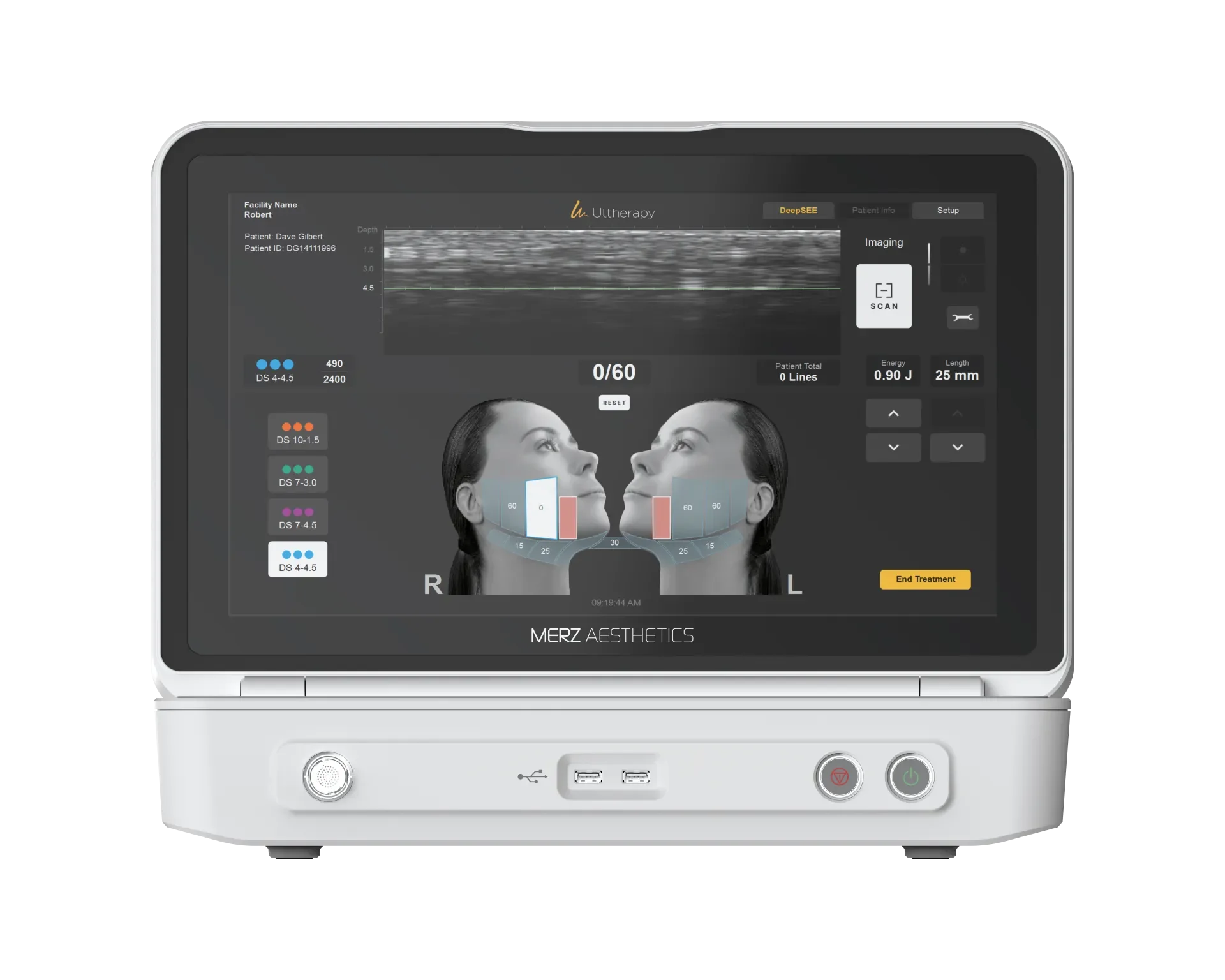
Ultherapy is a non-invasive lifting and tightening procedure that uses Micro-Focused Ultrasound (MFU) to deliver heat to discrete focal points at depths of 1.5mm, 3.0mm, and 4.5mm — the deepest of which reaches the SMAS, the same fibromuscular layer a surgeon tightens during a facelift. The device generates tiny coagulation zones, the body remodels them into new collagen over two to six months, and the visual outcome reads as a gradual firming and modest lift. The FDA has cleared Ultherapy for non-invasive lifting of the brow, submental area, and neck, and for the appearance of décolletage lines.
What that means in plain terms: Ultherapy can reach the structural layer that matters for facial lift, but it works by stimulating the body to rebuild collagen along a small set of treatment points, not by physically repositioning tissue. The lift it produces is biological — your own collagen, your own remodeling, on your own timeline — and it tends to be measured in millimeters of improvement rather than the centimeters a surgical lift can produce. I find this distinction is where most of the confusion lives. A device can reach the SMAS without being able to reposition the SMAS, and those are two different verbs.
My clearest mental model after multiple sessions: Ultherapy is a way to keep the scaffolding tight while the scaffolding is still mostly where you want it. It's a maintenance and early-correction tool, not a reset. Patients in their late 30s through their 40s tend to get the most visible benefit because their underlying support is still intact and the device is asking the tissue to firm up rather than to do something it no longer has the architecture to do. Past a certain threshold of structural descent, the same device produces results that read more as "slightly better skin" than "lifted face," and that's the moment the conversation should shift.
What a facelift actually does
A facelift is a surgical procedure that lifts and repositions the underlying SMAS and the overlying skin to address structural laxity, jowl formation, and neck banding that non-invasive devices cannot fully correct. Modern variations — extended SMAS, deep-plane, MACS lift, mini-lift — differ in how much tissue is mobilized, how the SMAS is handled (plicated, imbricated, or fully released and repositioned), and how recovery scales. The cleanest description I've heard from a Gangnam plastic surgeon in consult: a facelift moves anatomy that has shifted; a non-invasive device asks anatomy to behave better in place.
In practical terms, a facelift involves general or twilight anesthesia, incisions typically along the hairline and around the ear, a few hours in surgery, and a recovery window measured in weeks rather than days. Bruising and swelling resolve over two to four weeks for most patients, the final result settles between three and six months, and the duration of benefit is generally cited at seven to ten years depending on technique, surgeon skill, lifestyle factors, and how the patient ages thereafter. Studies suggest that deep-plane variations produce more durable lift in the mid-face and jawline than older SMAS plication techniques, but every variation comes with a recovery and risk profile that Ultherapy does not.
It's worth saying out loud what a facelift does not do. It does not improve skin quality, texture, pigmentation, or pore size — those are dermal-level concerns that surgery is not designed to address. It also doesn't reverse volume loss; a facelift is about repositioning, not refilling. Most patients I've spoken with who got durable results combined surgery with adjunct skin work — laser, peels, dermal-level tightening — to address the surface concerns separately. The friend who's happiest with her facelift result also did Sofwave six months later for skin tone, and described the combination as "two different jobs done by two different tools." That phrase has stayed with me.
The threshold question: when is Ultherapy not enough?
If you take one thing from this article, take this: the moment Ultherapy stops being enough is generally the moment the structural complaint outpaces what biological remodeling can plausibly address. The signs I look for in the mirror and that providers in Gangnam tend to flag during consult: jowls that hang clearly below the jawline rather than blurring it, neck banding visible at rest rather than only with movement, mid-face descent that has flattened the cheek volume, and a jawline whose angle has become softer in a way that no firming session has reversed. None of these is a hard cutoff, but together they paint a picture.
A 2019 paper in the journal Plastic and Reconstructive Surgery framed the question in terms of "laxity grade" — a clinical assessment of how much skin and SMAS slack is present — and the authors concluded that energy-based devices including focused ultrasound produce meaningful improvement in mild-to-moderate laxity but produce results disproportionate to the patient's expectation in advanced laxity. Translated: there is a point past which non-invasive devices keep working in the lab sense — collagen does remodel — but the change isn't visible enough to match what the patient was hoping for. That mismatch is where dissatisfaction lives.
My informal threshold list, after watching friends and consults: if you can pinch the jowl skin and lift it visibly with a finger to a position you're trying to recreate, surgical lift is probably the closer match to that goal. If the firming you want would happen with a few millimeters of contraction, Ultherapy or another non-invasive option is still in range. If you're looking at neck bands that don't disappear when you tilt your head back, you're in surgical territory for that specific concern even if the rest of your face is still in non-invasive territory. The decision rarely comes down to one factor; it comes down to whether the realistic ceiling of a non-invasive device matches the realistic floor of what you're hoping to see.
Ultherapy vs. facelift comparison table
Here is the side-by-side I built after my third Gangnam consult that included a plastic surgeon as a second opinion. Ranges are general; specifics vary by surgeon, technique, transducer choice, and individual anatomy. Confirm everything with your own providers — this is a frame, not a quote.
| Factor | Ultherapy | Facelift (SMAS / Deep-Plane) |
|---|---|---|
| Approach | Non-invasive, energy-based | Surgical, repositioning of SMAS and skin |
| Target layer | Dermis through SMAS at 4.5mm focal | SMAS released and repositioned, skin redraped |
| Anesthesia | Topical or none | General or twilight sedation |
| Session length | 45-75 minutes | 3-5 hours, hospital or surgical suite |
| Recovery window | 0-2 days mild redness, light swelling | 2-4 weeks bruising and swelling, 3-6 months for final settle |
| Best-fit concern | Mild-to-moderate laxity, early jawline softening | Moderate-to-advanced laxity, jowls, neck banding |
| Result onset | Gradual, 2-6 months | Immediate structural change, refines over months |
| Duration of benefit | 12-24 months typical | 7-10 years typical, technique-dependent |
| Skin quality improvement | Some via dermal-level remodeling | None directly; adjunct treatments needed |
When Ultherapy keeps making sense, even later than you'd think
A counterpoint I want to make carefully, because the easy narrative is "under 50 = Ultherapy, over 50 = surgery," and that narrative is wrong often enough that I've stopped trusting it. Patients report meaningful Ultherapy results well into their 50s and even 60s when the underlying structure remains good — bone support, fat pad position, skin elasticity above a certain baseline — and when the goal is firming and modest lift rather than a dramatic reset. The provider who first made this clear to me at a Gangnam consult described it as "the bones decide more than the birthday." Two patients of the same chronological age can be in completely different categories based on what the structural foundation looks like.
The other case where Ultherapy keeps making sense: the patient who is not psychologically ready for surgery, who has the runway to wait, and who wants to keep optimizing the non-invasive path until the math really doesn't work anymore. There's nothing wrong with this approach as long as expectations stay calibrated. The friend who's now 53 and has been doing one Ultherapy session every 18 months since 42 looks objectively better than her untreated peers, even though her structural complaint is past the threshold where one Ultherapy session would meaningfully address it. The compounding effect of consistent collagen support is real, even when each individual session is producing diminishing visible returns.
The failure mode here is the patient who keeps doing Ultherapy past the point where it's producing visible benefit because the surgical conversation feels like an admission of defeat. That's a sunk-cost problem dressed up as a treatment plan. If the last two sessions have produced no visible change and the structural complaint has continued to advance, repeating the same device every 12 months is unlikely to start producing different results. I find this is the most common pattern in the friend-group chat: someone who's done "another Ultherapy" for the third year running, looking the same in pictures, and asking why the device stopped working. It didn't stop working. The structural problem outgrew it.
When the answer is genuinely surgery
Patients tend to be in surgical territory when the structural change they want is measured in centimeters rather than millimeters, when the laxity has progressed to a point where non-invasive devices produce results that read as "slightly better" rather than "meaningfully changed," and when the patient has the recovery bandwidth, the budget, and the psychological readiness to commit to a longer-term solution. None of these factors alone makes surgery the right call; together they form a pattern.
The one factor I've come to weight most heavily is what I call the goal photograph. If the patient has a specific reference image in mind — themselves at 35, or a celebrity result, or a version of their own face from a different angle — and if that image requires structural repositioning that no biological remodeling could plausibly produce, the honest answer is that non-invasive paths are not going to get there. A 2021 review in the Aesthetic Surgery Journal compared patient satisfaction across non-invasive and surgical lifting and found that satisfaction tracked closely with whether the chosen modality matched the underlying laxity grade. The patients who chose appropriately for their stage were satisfied across both groups. The dissatisfied patients were almost always the ones whose chosen modality couldn't reach their stated goal.
My honest framework for friends: imagine the result that would make you happy and ask whether that result is achievable through firming, or whether it requires repositioning. If repositioning, the surgical conversation is the right one. If firming, non-invasive paths are still in range. The framework doesn't tell you to do surgery — it tells you whether the surgical conversation is even relevant. Plenty of people end up choosing to live with the change rather than crossing the surgical threshold, and that's a valid answer too. The mistake is choosing a non-invasive device hoping it will produce a surgical result.
- Surgical-territory signals: jowls past jawline at rest, neck bands visible neutral, advanced mid-face descent
- Stay-with-Ultherapy signals: firming desired, structure still intact, gradual maintenance philosophy
- Ambiguous: ask provider for laxity-grade assessment and a specific match between device and concern
What surgical recovery actually looks like, since I keep being asked
I have not had a facelift, but I've sat through a lot of post-op coffees with friends who did, and the recovery picture is consistent enough to summarize honestly. The first week is dominated by visible bruising, swelling, and tightness, with most patients staying home or working remotely. By week two the bruising has shifted from purple to yellow and most patients return to non-public work and gentle social activity, sometimes with strategic hair styling or scarves around the jaw. Weeks three and four bring residual asymmetry as swelling resolves unevenly, and most patients describe "looking like themselves" again somewhere around the six-week mark, though the final settle continues for three to six months as scar lines fade and the SMAS adapts.
The Gangnam picture has some specifics worth knowing if you're considering combining medical travel with surgery. Most plastic surgery clinics in the area work with international patients on a model that includes pre-op blood work, the surgical day, a hospital or recovery facility stay of one to three nights depending on procedure, and follow-up visits at one week, two weeks, and one to three months. Removing sutures and key follow-up checks happen in the first two weeks, which means the trip needs to accommodate at least that window before you fly home. Studies suggest air travel within ten days of facial surgery carries some elevated swelling risk, and most surgeons I've spoken with prefer two weeks minimum on the ground.
The risks worth understanding, in plain terms: nerve injury (rare but reported, usually transient when it occurs), hematoma (manageable when caught early), unfavorable scarring (technique-dependent, generally minimal with skilled closure along natural creases and the hairline), asymmetry during healing (common, usually resolves as swelling settles), and the broader category of unsatisfactory result, which can sometimes be revised but is harder to fully reverse than non-invasive choices. Surgical decisions are not undoable in the way device decisions are. That asymmetry — between a non-invasive choice you can simply not repeat and a surgical choice you committed to — is part of why the threshold conversation matters so much.
Frequently asked questions
How do I know if I'm at the threshold where Ultherapy isn't enough?
The clearest signal is whether the result you want is achievable through firming versus whether it requires repositioning. If your jowls hang clearly below the jawline at rest, your neck bands stay visible when your head is neutral, or your mid-face has descended in a way that has flattened your cheek volume, biological remodeling is unlikely to produce the visible change you're hoping for. Ask your provider for a laxity-grade assessment and ask them to be specific about what your face would look like 6 months after Ultherapy. If their honest answer falls short of your goal photograph, the surgical conversation is the relevant one even if you ultimately choose to delay it.
Can I keep doing Ultherapy instead of surgery indefinitely?
Patients can technically continue Ultherapy as long as a provider is willing to perform it, and many do. The question is whether the device is producing visible benefit relative to your goals. Studies suggest collagen remodeling continues to occur with repeated sessions, but visible improvement plateaus once the underlying laxity exceeds what dermal and SMAS-level firming can address. The pattern I see most often: the patient who's done three years of annual Ultherapy with no visible change and is wondering why the device stopped working. It didn't stop working — the structural problem progressed past its therapeutic ceiling. If your last two sessions haven't produced visible change, that's a signal worth bringing to your provider rather than rebooking automatically.
Is a non-surgical thread lift a middle option between Ultherapy and a facelift?
Thread lifts are often positioned as the bridge between non-invasive and surgical, and they can produce immediate structural lift in some patients. The honest framing I've gotten from Gangnam providers: thread lifts work best for early-to-moderate jawline softening with otherwise good underlying structure, and the duration of benefit is generally shorter than a facelift (12-18 months typical) but with materially less recovery and risk. They're not a small facelift — they're a different category of procedure with different limitations. For some patients they're a useful step; for others they delay a surgical decision that would have been more durable. Worth a separate consult with a provider who does both threads and surgery and can be honest about which suits your specific anatomy.
If I get a facelift, do I still need Ultherapy afterward?
A facelift addresses structural repositioning but does not improve skin quality, texture, or dermal-level laxity, so most patients combine surgical lift with adjunct treatments to address the surface separately. Ultherapy specifically is sometimes used after a facelift to maintain SMAS-level firmness over time, though most providers I've spoken with prefer to wait at least 6-12 months post-op before introducing energy-based devices to a healing surgical area. The more common adjuncts in the early post-op window are dermal-level treatments — laser, peels, or shallower-acting devices like Sofwave — that address texture without putting energy near the deeper surgical plane. This is a clinic-specific conversation, and the answer depends on what was done surgically and how you healed.
What's the recovery difference, realistically?
Ultherapy recovery is measured in days. Mild redness and light swelling for 24-48 hours, possibly some tenderness along the jaw and brow, and full return to normal activity essentially same-day. A facelift recovery is measured in weeks. The first week is bruising, swelling, and significant rest, the second week is reduced visible recovery with strategic concealment for non-public activity, weeks three and four are residual asymmetry resolving, and the final settle continues for 3-6 months as scar lines fade. Studies suggest most patients return to public-facing work between weeks 2 and 4 depending on technique and individual healing. The recovery alone is not a reason to choose one over the other, but it is a factor to plan around honestly, especially if you're combining the procedure with international travel.
Should I get a second opinion from a plastic surgeon if my non-invasive provider says Ultherapy is enough?
Yes, and I'd say the same in reverse. If you're seeing a non-invasive provider who only offers Ultherapy and they tell you Ultherapy is the right answer, you've gotten one opinion from someone whose tools include only Ultherapy. If you're seeing a plastic surgeon who only does surgery and they recommend surgery, the same logic applies. The most useful consult I had in Gangnam was with a provider whose practice offered both energy-based devices and surgical lifting, who could honestly point at my face and say, "At this stage, this device matches your concern; in 8-10 years, that conversation will be different." That kind of input is hard to get from someone whose toolbox is one-sided. Two opinions, one from each side, is a reasonable diligence step on a decision this large.