Treatment Guide
Ultherapy vs. RF Microneedling: Different Tools, Different Targets
Two devices my Berkeley friends keep treating as interchangeable, written by someone who has spent enough time in both Gangnam chairs to explain why they are not.
I keep getting some version of the same text from friends in California: "Is RF microneedling basically Ultherapy without the price tag?" The short answer is no, and the long answer is the reason I finally sat down to write this. Ultherapy and RF microneedling are both energy-based, both popular in Gangnam, both pitched as collagen-stimulating treatments, and both genuinely useful for the right concern — but they target different layers, deliver heat in fundamentally different ways, and produce different kinds of clinical change. I have done both, multiple times, and I can tell the difference in the mirror six months later. This is the breakdown I wish someone had handed me before I treated them as interchangeable on my first Seoul trip.
What Ultherapy is, in plain terms
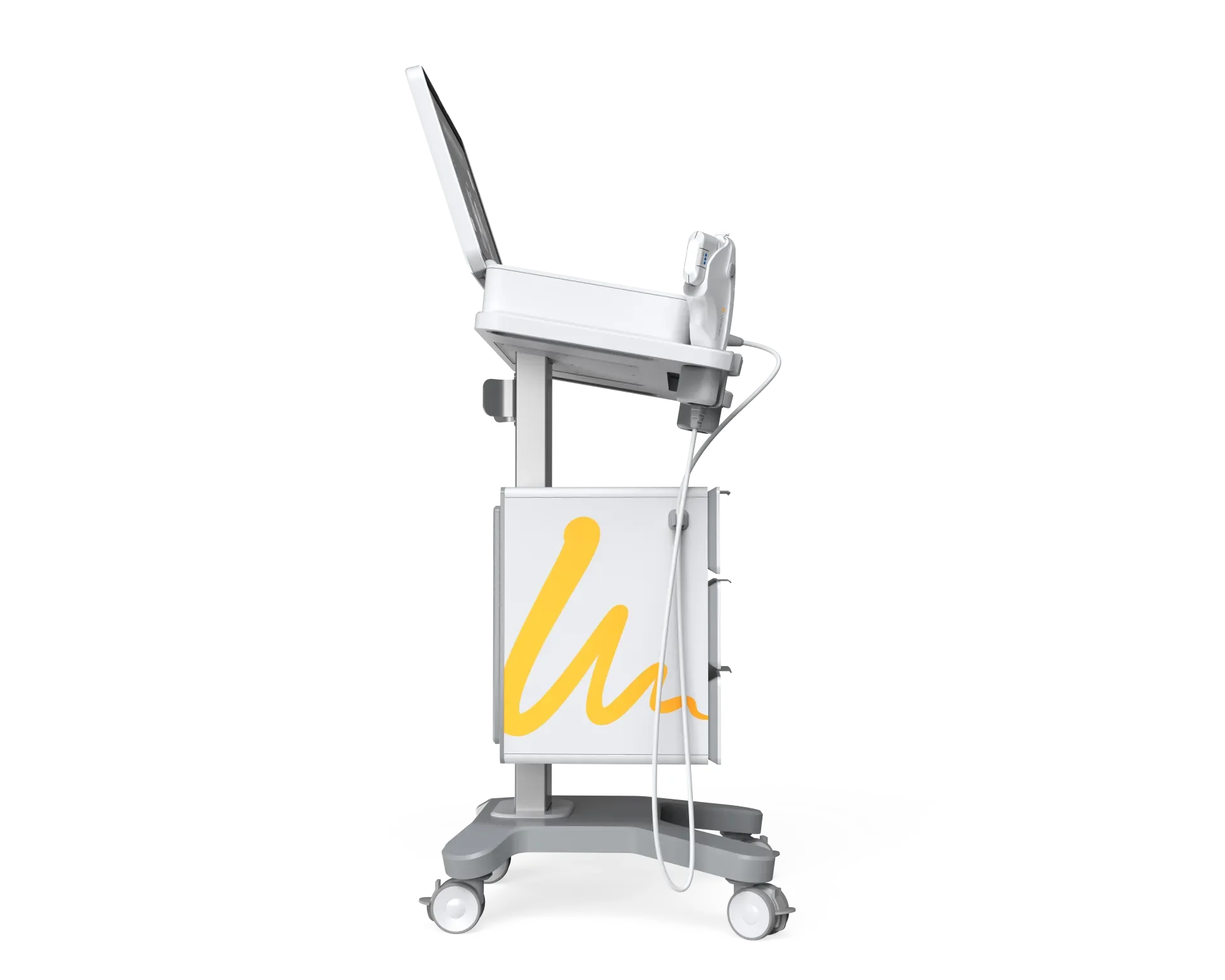
Ultherapy is a non-invasive lifting and tightening procedure that uses Micro-Focused Ultrasound (MFU) to deliver heat to discrete focal points at three depths — 1.5mm, 3.0mm, and 4.5mm — including the SMAS, the deeper fibromuscular layer associated with structural facial support. The device generates tiny coagulation zones at each focal point, and the body remodels those zones into new collagen over the next two to six months. Real-time ultrasound imaging built into the machine lets the provider confirm they're treating the layer they intend to treat, which is one of the things that distinguishes Ultherapy from devices that work blind to depth.
The FDA cleared Ultherapy for non-invasive lifting of the brow, submental area, and neck, and for the appearance of décolletage lines. In the chair, this translates to a series of discrete deep "pings" along marked treatment lines on the jaw, lower cheek, brow, and neck. The depth is the headline feature: Ultherapy reaches the SMAS, which most other non-invasive devices cannot. That depth is also the reason it tends to be the device my Gangnam coordinators reach for when the concern is structural — jowls, brow descent, neck-band laxity. It's not subtle in marketing, and it's not always subtle in sensation, but the targeting is precise.
The distinction worth holding onto: Ultherapy is energy delivered without breaking the skin surface. Sound waves are focused like a magnifying glass and the energy converges at a focal point inside the tissue, leaving the surface essentially unchanged. There are no needles, no entry points, no surface wound. This matters for the comparison ahead because RF microneedling works by exactly the opposite mechanism — it pierces the skin in a controlled grid to deliver energy through needle tips. Same broad goal of collagen stimulation, completely different delivery.
What RF microneedling is, in plain terms
RF microneedling is a minimally invasive collagen stimulation procedure that uses an array of insulated or non-insulated needles to penetrate the skin to controlled depths (typically 0.5mm to 3.5mm depending on device and protocol) and deliver radiofrequency energy from the needle tips into the dermis. The combined mechanism is dual: the needle creates a microchannel that triggers the wound-healing cascade, and the RF energy heats the surrounding tissue to a temperature that produces controlled coagulation and collagen contraction. Common device names in Gangnam include Genius RF, Morpheus8, INTRAcel, and Secret RF, among others.
In practical terms, RF microneedling works at dermal depths — the layer responsible for skin texture, fine lines, scar quality, pore size, and surface laxity — and it does not reach the SMAS. The depth dial on most RF microneedling devices tops out around 3.5mm, which sounds close to Ultherapy's 4.5mm focal depth on paper but is structurally different in practice; needle insertion depth and ultrasound focal depth do not correspond one-to-one in terms of which anatomical layer is being treated.
The sensation in the chair is also fundamentally different. Topical numbing is essentially mandatory because the needle pass alone produces real discomfort, and the heat from the RF is felt as a brief warm pressure rather than a deep ping. Most patients describe the sensation as "sharp tap, then warm," repeated across the treatment area, with the heat lingering for a few seconds at each pass. There is real surface trauma — pinpoint bleeding is normal during the session, and the skin looks visibly red and tracked for 24 to 72 hours afterward. The downtime profile is closer to a fractional laser than to Ultherapy. This is not a lunch-break treatment in most protocols.
The mechanism difference that actually matters
If you take one thing from this article, take this: Ultherapy and RF microneedling both produce collagen, but they produce it in different layers via different injury patterns, and that difference is why they suit different concerns. Ultherapy creates small focal coagulation zones in a vertical column of tissue, including at the SMAS, which the body remodels into new collagen along that scaffold. RF microneedling creates a dense grid of fractional thermal injuries in the dermis, which the body remodels into a more uniformly tightened and texturally improved surface. A 2020 review in Dermatologic Surgery framed the two as "vertical depth versus horizontal grid" — a useful shorthand for what's actually happening at the tissue level.
The corollary that nobody likes hearing: the depth ceiling matters more than people want to believe. RF microneedling at its deepest setting is still a dermal-and-just-below treatment; it does not produce the structural lift Ultherapy can produce because it doesn't reach the layer responsible for that lift. The reverse is also true: Ultherapy's discrete focal columns aren't designed to address fine surface texture, scar networks, or pore-level concerns, because those are dermal and surface phenomena that benefit from a denser injury grid. Studies suggest both devices produce histologically measurable collagen change, but the type of clinical improvement is different — Ultherapy patients report a lifted look, RF microneedling patients report a smoother and more refined surface.
This is the line where the friend group chat usually goes quiet. "So if I want my jawline tighter and my pores smaller, can I do both?" Yes, often, and that's exactly the case where the two devices are complementary rather than substitutes. They're not the same tool used at different price points; they're different tools for different jobs that happen to share the broad category of "collagen stimulation." The mistake is assuming one can do the other's job because both involve heat. The depth and the injury pattern decide the outcome, not the marketing category.
Ultherapy vs. RF microneedling comparison table
Here is the side-by-side I built for myself after my second round of each, with the sales language stripped out and ranges that match what providers in Gangnam have actually told me. Specifics vary by clinic, device generation, and protocol; treat ranges as ranges and confirm with your provider.
| Factor | Ultherapy | RF Microneedling |
|---|---|---|
| Energy type | Micro-Focused Ultrasound (MFU) | Radiofrequency delivered via insulated or non-insulated needles |
| Skin penetration | None — non-invasive | Yes — needle insertion to 0.5-3.5mm typical |
| Target depth | 1.5mm / 3.0mm / 4.5mm focal (down to SMAS) | Dermis at chosen needle depth (typ. 0.5-3.5mm) |
| Best-fit concern | Structural lift, jowl, brow, neck bands | Texture, fine lines, scarring, pore refinement, surface laxity |
| Numbing | Optional or topical, often skipped | Topical numbing essentially mandatory |
| Surface trauma | None visible — surface intact | Visible pinpoint bleeding, redness, track marks |
| Typical session length | 45-75 minutes (full face + neck) | 30-60 minutes per area |
| Downtime | 0-2 days mild redness, light puffiness | 1-3 days redness, possible pinpoint scabbing |
| Sessions for full effect | Typically 1, sometimes 1-2 | Typically 3, spaced 4-6 weeks apart |
| Result onset | 2-6 months (collagen remodel) | 1-3 months for surface; texture continues to refine |
Who RF microneedling actually suits
Patients tend to report the strongest match with RF microneedling when the primary concern lives in the dermis or close to the surface — fine lines around the mouth and eyes, acne scarring, enlarged pores, mild crepe-like laxity, uneven tone, or stretch marks on body areas. The treatment essentially renovates the upper few millimeters of skin, layer by layer, across a series of sessions. It tends to be the device of choice in Gangnam for patients in their late 20s through 40s whose structural foundation is still good but whose skin quality has started showing the early signs of cumulative sun exposure, hormonal shifts, or scarring history.
It's also genuinely useful for patients who've had Ultherapy in the past and want to address the surface concerns that Ultherapy didn't optimize for. In that combination, RF microneedling isn't replacing Ultherapy — it's working a different layer that the deeper-acting device doesn't focus on. I did this sequence myself: Ultherapy in the spring for jawline maintenance, RF microneedling in the fall on a separate trip to address fine lines around my mouth and a pair of acne scars on my chin that had bothered me for years. The two results stacked rather than overlapped, which is what made the combination feel worthwhile rather than redundant.
Where RF microneedling is not the right choice: visible jowling, neck banding, brow descent, or any structural complaint that requires reaching beyond the dermis. The device cannot address these concerns regardless of pulse count, regardless of how many sessions are stacked, and regardless of how a clinic might position it. Patients in this category who choose RF microneedling because the price is friendlier or the recovery is shorter often end up disappointed in three months when the surface looks better but the structural concern is unchanged. The depth match is not optional. It's the whole question.
- RF microneedling fit signal: surface texture, fine lines, scarring, pore size, mild dermal laxity
- RF microneedling protocol: 3 sessions typical, 4-6 weeks apart, topical numbing required
- Less suited for: structural sag, jowls, brow descent, advanced neck bands
What the recovery actually looks like, in both chairs
Ultherapy recovery for me is essentially same-day. Mild redness for an hour or two, modest tenderness along the jaw and brow that resolves overnight, and full return to normal activity by the next morning. I've gone to dinner the same evening as a session more than once, and the only person who could tell something had happened was the friend who knew I'd been at the clinic. Day-of swelling is minor for me, possibly more noticeable for patients with thinner skin or stronger inflammatory response, but it's not the kind of recovery that requires planning around social events.
RF microneedling recovery is materially more visible. Pinpoint bleeding during the session, surface redness for 24 to 48 hours that fades from bright to pink, possible track marks visible for 24 to 72 hours depending on needle depth and density, and occasional pinpoint scabbing on day three that exfoliates over the following few days. Most providers I've worked with in Gangnam recommend skipping makeup for at least 24 hours, avoiding active skincare ingredients (retinol, exfoliating acids, vitamin C) for 5 to 7 days, and staying out of direct sun and saunas for at least a week. I've planned international flights for the day after RF microneedling and looked visibly ruddy on the flight; I would not do that again. A 48 to 72 hour buffer between session and any photographed event is reasonable.
The other practical difference is session count. Ultherapy is generally a one-and-done annual treatment for most maintenance protocols. RF microneedling almost always involves a series of three sessions spaced 4 to 6 weeks apart, which means the time and travel commitment is meaningfully larger. If you're combining a Gangnam trip with the start of an RF microneedling protocol, you're looking at a treatment plan that will continue at home or on subsequent trips, and that's worth knowing before booking. Studies suggest the cumulative effect across a three-session series is materially greater than the effect of a single session, which is why the protocol is structured that way.
Risks, side effects, and how I choose between them
Both devices have established safety profiles in trained hands and short tails of less common side effects worth knowing. Ultherapy's reported events include transient numbness, mild bruising, and rare nerve irritation in the temple or jaw area, most of which resolve over weeks. RF microneedling's reported events include post-inflammatory hyperpigmentation (especially in deeper skin tones if protocol isn't properly adjusted), prolonged redness, occasional small infections at needle insertion points if aftercare is poor, and rare cases of tracking lines if needle depth wasn't appropriate for the area being treated. A 2021 paper in the Journal of Clinical and Aesthetic Dermatology emphasized that operator skill and protocol selection — needle depth, energy level, pass count — are the dominant safety variables for RF microneedling, more than the specific device brand.
My decision flow now, after both: if the concern is structural — jaw, neck, mid-face descent — Ultherapy is the better match because it reaches the layer responsible for the concern. If the concern is dermal — texture, fine lines, scarring, pores, mild surface laxity — RF microneedling is the better match because it works the layer where those concerns live. If the concern is genuinely both, the answer is sequencing rather than picking one. I've done that sequence and the result was better than either device alone would have produced. If a provider tries to tell me one device does both jobs equally well, I get a second opinion.
A last note on contraindications and skin type: RF microneedling protocols need to be carefully adjusted for darker skin tones to minimize hyperpigmentation risk, and not every device handles the full Fitzpatrick range equally well. Ask specifically which device the clinic uses, what their experience is with your skin type, and what their post-inflammatory hyperpigmentation prevention protocol looks like. Ultherapy is generally considered safe across skin types because there's no surface heat or epidermal disruption, but consultation about active skin conditions, recent sun exposure, and pregnancy still applies. Bring your full medication list, any procedure history including filler appointments going back at least six months, and any chronic conditions that affect healing — same diligence I'd recommend for any energy-based treatment.
- Confirm device generation and the specific needle depth or transducer plan in writing
- Confirm the operator is the provider, not a junior tech, and ask about their session count for your skin type
- Ask the provider to identify the layer your concern lives in and explain why their device matches that layer
- Get printed aftercare timeline before leaving the consult, especially if RF microneedling is part of the plan
Frequently asked questions
Can RF microneedling replace Ultherapy for jawline lifting?
Generally no. RF microneedling works at dermal depths up to roughly 3.5mm and does not reach the SMAS, which is the structural layer associated with jawline and lower-face lifting. Patients report some firming of surface laxity from RF microneedling that can produce a subtle improvement in skin tightness around the jaw, but for visible jowling or genuine structural sag, most providers I've spoken with in Gangnam still reach for Ultherapy or a deeper-acting modality. Ask your provider directly whether your specific anatomy is a depth match for the device they're recommending — that question alone has saved me from booking the wrong treatment more than once.
Which one hurts less?
Ultherapy at the 4.5mm depth along the jawbone is the sharpest sensation I've experienced from either device, but the discomfort is brief and localized to specific pulses. RF microneedling under topical numbing is more of a sustained low-grade discomfort — the needle pass is felt even with numbing, and the heat lingers for a few seconds at each spot. Patients describe the experiences differently rather than one being categorically worse: Ultherapy as bursts of intensity, RF microneedling as a longer wave of low-level discomfort. If pain tolerance is a real concern, ask your coordinator about pre-medication and the most generous numbing protocol, and budget time at the start of the session for numbing cream to fully take effect.
Are RF microneedling results shorter-lived than Ultherapy results?
Studies suggest both produce collagen remodeling that lasts in the range of 12 to 24 months on average, with maintenance sessions extending the benefit. The kind of result is different rather than the duration being meaningfully different. RF microneedling produces dermal-level change that reads as smoother texture and refined surface; Ultherapy produces deeper-layer change that reads as a structural lift. If your concern is texture, the RF microneedling window is likely sufficient with appropriate maintenance. If your concern is sag, you may want Ultherapy's depth even if the duration is similar — duration matters less than whether the device is producing the kind of result you're hoping to see in the first place.
Can I do Ultherapy and RF microneedling in the same trip?
Sometimes, depending on the spacing and the areas being treated. Most providers I've spoken with in Gangnam prefer to space the two by at least 4 to 6 weeks if the same area is being addressed, primarily to let the inflammatory response from the first treatment settle before introducing the second. Combining them in one trip on different anatomical zones is sometimes done — for example, Ultherapy on the lower face and neck, RF microneedling on the décolletage — but stacking them aggressively on the same area within a few days is not usually recommended. This is a clinic-specific conversation; don't combine them for travel convenience without medical sign-off.
Does RF microneedling work for darker skin tones safely?
It can, but protocol matters enormously. RF microneedling carries a higher risk of post-inflammatory hyperpigmentation in deeper skin tones (Fitzpatrick IV-VI), and the risk is meaningfully reduced when the device uses insulated needles, the energy is appropriately calibrated, and the post-treatment protocol includes pigment-management products and strict sun avoidance. Ask the clinic specifically about their experience treating your skin type, which device generation they use, and what their post-inflammatory hyperpigmentation prevention protocol looks like. A clinic that handles the question casually is one I'd consider less seriously than one that has a clear, specific answer. Ultherapy is generally considered lower risk across skin types because there's no epidermal disruption, but the depth match still has to be right for the concern.
How do I decide which one I need?
Ask a provider to point at the specific concern on your face and explain — out loud, in plain terms — why one device addresses it better than the other. If the answer is generic or focuses on which device the clinic happens to own, get a second opinion. The cleanest signal is whether your concern is structural or dermal: structural concerns generally favor Ultherapy because of the SMAS depth, dermal concerns generally favor RF microneedling because of the surface-level remodeling pattern. If you genuinely have both, the answer might be sequencing rather than picking one. I now bring a printed photo of my face from a year ago to the consult, because the change happens slowly enough that month-to-month it's invisible, and a year-over-year photo gives the provider better information about what's actually shifted and where.