Treatment Guide
The Questions I Now Always Ask Before Booking Ultherapy
Three sessions in Gangnam, two consult rooms I walked out of, and the pre-booking question list I wish someone had handed me before my very first appointment.
I did not have a question list before my first Ultherapy session. I had vibes, a pricing screenshot from a friend, and a vague hope that the consult would tell me what I needed to know. It did not. The consult told me what the clinic wanted to sell me, which is a different thing, and I left that first appointment with a plan that I now know was a ballpark fit at best. Three sessions and two walked-out consults later, I have a list. The list is not glamorous and it is not exhaustive — it is the eight or nine questions that actually changed something in the room when I asked them. This guide is that list, in the order I ask it, with the hedging it deserves. My experience is one California patient on three Korean platforms with two providers in Gangnam, and the literature I am pulling from is real but not infinite. Take the structure of the question list, not the exact phrasing. The structure travels; the phrasing is mine.
Why a question list matters more than a price comparison
A pre-booking question list is the patient-side intake that surfaces device, depth, line count, provider experience, pricing transparency, and contraindication review before the deposit clears — and it is the single highest-leverage thing you control about your Ultherapy experience. That is the framing I now use when friends ask why I bother. The honest answer is that price is the easiest variable to compare and the least important. Two clinics quoting the same number can deliver materially different sessions; two clinics quoting different numbers can deliver the same one. The question list is what tells you which is which. A 2020 review in the Journal of Cosmetic Dermatology on patient selection and counseling for MFU described pre-procedure consultation quality as a meaningful predictor of patient satisfaction, independent of treatment parameters themselves. Studies suggest that patients who receive a structured candidacy review and an explicit line-count plan report higher satisfaction at three and six months than patients who receive only a price quote and a booking date. May help is the right framing for any single question, but the cumulative effect of a structured list is real. The second reason the list matters is that it is your only signal of what kind of room you are in. A consult that welcomes the questions and walks through them carefully is a consult run by people who answer these questions every day. A consult that rushes the questions or routes you to pricing fast is a consult that has decided what your session will be before you walked in. The question list surfaces the difference within about ten minutes.
Question one — what device, exactly, and how is it serviced?
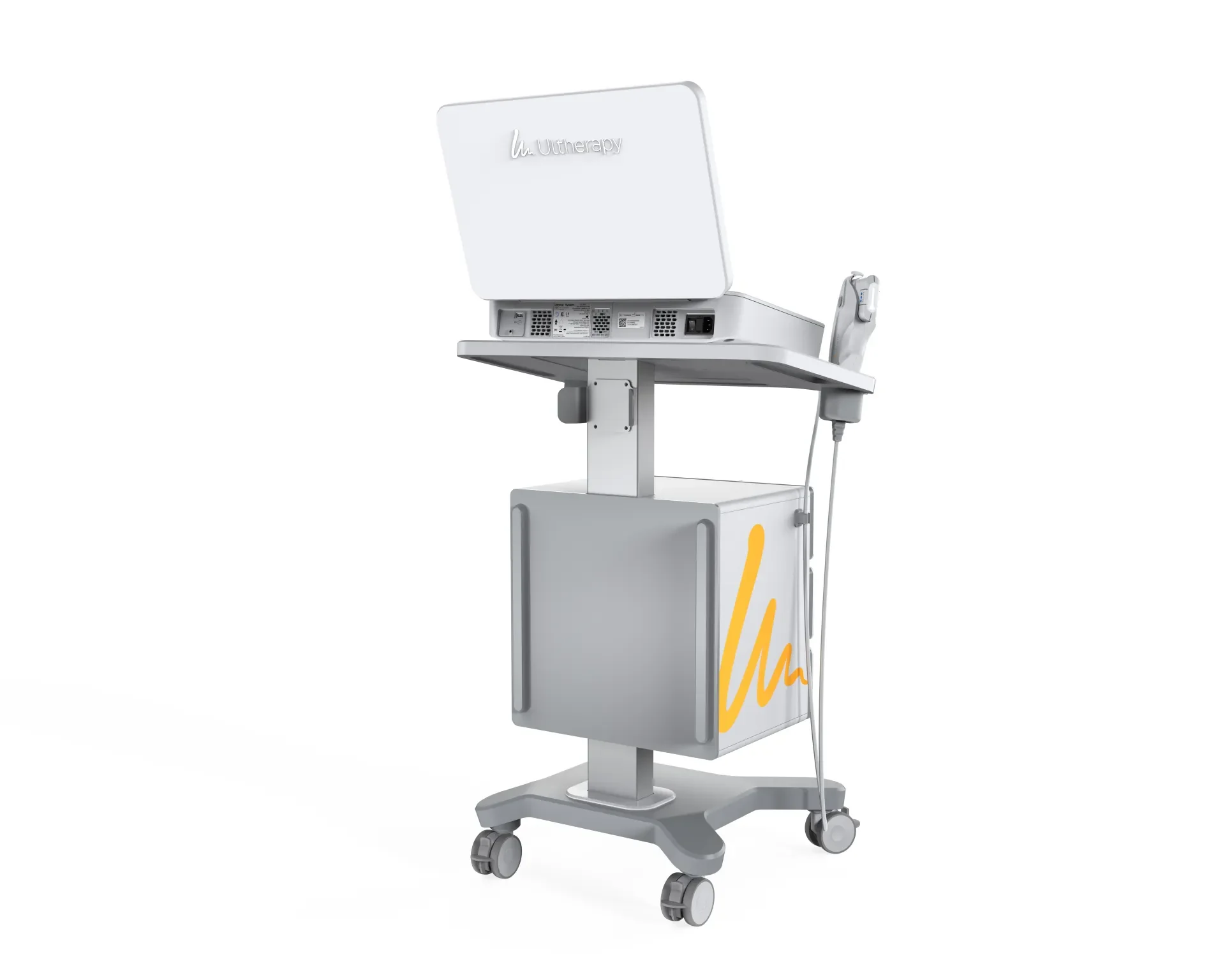
The first question I ask is the most boring one, and it is the one I almost always learn the most from. Which device is the clinic using — Ulthera (the original), Ultherapy Prime (the updated platform), Shurink, Doublo, or one of the newer Korean MFU platforms — and when was the transducer last serviced. The reason this matters is that MFU efficacy depends on the transducer producing the energy profile it was specified to produce, and transducers degrade with use. A transducer that has run thousands of lines past its service interval can underdeliver energy at depth without anyone in the room being able to tell from the screen. A 2019 paper in Lasers in Surgery and Medicine on MFU device performance reported measurable variation in delivered energy across transducers of different ages, with the largest deviations on units that had passed the manufacturer's recommended service window. Patients report feeling the difference in some cases — sessions that ran milder than expected, with results that fell short of historical norms for the same line count and depth. May help is the right framing for any single device-side variable, but I now ask, and I now write the answer down. A clinic that knows its service date answers in seconds; one that does not, does not. The follow-up I add is whether the clinic owns the device or rents it — owned devices tend to get more consistent service, though some excellent clinics rent. The Ulthera service documentation describes the recommended transducer inspection cadence; you do not have to memorize it, you just have to know that the clinic does.
Question two — what is the exact line-count plan, by zone and depth?
This is the question that changed everything for me. In my first consult I was given a number — "about 600 lines, full face" — and I wrote it down and felt informed. I was not informed. Six hundred lines distributed one way is a different session from six hundred lines distributed another way, and the distribution is where the result lives. I now ask for the line-count plan broken down by zone (forehead, cheek, jawline, submentum, neck) and by depth (1.5mm, 3.0mm, 4.5mm SMAS), and I ask the provider to walk me through why the distribution looks the way it does for my face. A careful provider has an answer to this in detail and is happy to give it. A less careful one will reach for the same template they use for most patients and try to make it fit. The difference is visible in the fluency of the explanation. My current provider in Gangnam talks me through the distribution in about three minutes; the rationale is specific to my jawline laxity, my cheek volume, and what we did last session. Studies suggest that line-count discipline — total lines matched to candidacy and goals, not maximized for impression — correlates with patient satisfaction and reduced fat-loss complications. The 2018 IMCAS consensus on MFU treatment parameters described undertreatment and overtreatment as both real risks, with overtreatment particularly associated with mid-face fat-pad reduction in slim patients. The number I now compare across consults is not the price. It is the SMAS line count on the bony zones, because that is where the lifting result and the discomfort and the fat-loss risk all live. A clinic that can tell me precisely how many SMAS lines they plan to put on my jawline and why is a clinic with a process. A clinic that tells me "we'll see on the day" is not. May help is the right framing for any single zone, but the discipline of a written line-count plan, before the appointment, is the closest thing to a quality signal I have found. I keep mine in my phone notes alongside the consult date.
| Zone | Typical depths | Question to ask about line count | What a thoughtful answer sounds like |
|---|---|---|---|
| Forehead / brow | 1.5mm, 3.0mm | How many lines total, and why this many for my brow position? | Explains brow descent, line count keyed to lateral lift goal |
| Mid-cheek | 3.0mm, 4.5mm | What is the SMAS line count, and how does it relate to my cheek volume? | References fat-pad position, hedges on slim faces |
| Jawline / mandible | 4.5mm SMAS | What is the SMAS count here, and how is it spaced over the bone? | Discusses bony density, pacing, line-stacking discipline |
| Submentum | 3.0mm, 4.5mm | How many lines under the chin, and is the platysma being addressed? | Addresses neck banding, line-count rationale |
| Neck (anterior) | 1.5mm, 3.0mm | What does the neck plan look like — and why is the depth what it is? | Hedges on neck skin thickness, conservative line count |
| Decolletage (optional) | 1.5mm, 3.0mm | Is decolletage part of the plan, and what does it add? | Discusses crepiness, conservative parameters, separate consent |
Question three — who, exactly, is running the device on me?
I learned this question by asking the wrong version of it on session two and feeling embarrassed afterwards. The wrong version is "who is my doctor." The right version is "who, exactly, is running the transducer on my face — name, title, years of MFU experience, and approximate session count." Some Korean clinics have the lead physician handle the consult and the procedure; others have the physician handle the consult and a senior nurse or technician run the device. Both models exist; both can produce excellent results. What you do not want is to find out which model your clinic uses while you are already on the table. My first session was run by a senior nurse with a high session count and a clear protocol; my second was run by the lead physician; my third was run by the senior nurse again. The results were comparable across all three. What was not comparable was the comfort I felt walking in, because by session two I had asked the question and knew what to expect. Patients report that the surprise of "a different person than I expected" is a common source of post-consult anxiety, and it is entirely preventable. May help is the right framing for any single staffing model, but the question itself is the point. The follow-up I add is whether I will meet the operator before the procedure or only on the table; a clinic that allows a brief in-person introduction the morning of is one that respects the patient-operator rapport piece.
Question four — how is pricing structured, and what is included?
Pricing is where the surprises live, and the question list has to push past the headline number. The four follow-ups I now always ask are: is the price per line, per zone, per session, or flat-rate; what is included in the price (consult, numbing, post-procedure care, follow-up); are there add-ons that would be charged separately on the day; and what is the cancellation or rebooking policy if I have to change the appointment. None of these questions are confrontational. They are the questions a hotel would expect at booking. A clinic that treats them as awkward is treating a normal patient question as awkward. Korean clinic pricing for Ultherapy varies meaningfully — some clinics quote per line, some per zone, some flat-rate full-face, some package multiple sessions. The Korea Health Industry Development Institute medical-tourism resource describes pricing transparency as a recurring friction point for international patients, and recommends that visitors confirm scope and inclusions in writing before paying a deposit. I learned this the slow way; my first session ended with an additional charge for "extra lines added on the day" that I had not seen coming. My current clinic lists the per-zone price and the line-count band that price covers, in writing, before the deposit. Studies suggest that pricing transparency correlates with patient satisfaction independent of the actual price level. The question I add at the end is what happens if I want to stop the session early — a clinic with a coherent answer is a clinic with a process. May help is the right framing, but the conversation as a whole is the signal.
Question five — what does the contraindication review look like?
I was not asked about my medications in detail at my first consult. I should have been. Ultherapy contraindications are not many, but they are real, and a clinic that does not run a structured contraindication review is a clinic that is leaving the matter to luck. The list I now expect to be asked about includes active facial infections, open wounds in the treatment zone, severe acne in the zone, history of keloid scarring, autoimmune conditions affecting skin, recent cosmetic surgery in the zone, dermal fillers in the zone, threads in the zone, pregnancy, cardiac pacemakers and implanted electronic devices, and current use of isotretinoin (Accutane) or strong photosensitizing medications. The Ulthera prescribing information (as published in the U.S. FDA device clearance documentation) lists specific contraindications and warnings, including active implants and pregnancy, and recommends a structured intake. A 2021 review in Aesthetic Surgery Journal on adverse events in MFU described most reported complications as concentrated in patients with insufficiently reviewed candidacy or contraindications. May help is the right framing for any single risk factor, but the cumulative effect of a careful intake is meaningful. I now bring a written list of every prescription, every over-the-counter supplement (including fish oil and vitamin E, which can affect bruising), and every recent cosmetic procedure. I hand it over at the start. A clinic that reads it carefully is the clinic I trust. The specific contraindication I now ask about by name is the timing window with dermal fillers. Patients report that MFU energy applied directly over recent hyaluronic acid filler can degrade the filler, and most experienced providers either time the MFU before filler or wait a defined interval afterward. The interval is not standardized — different providers cite different windows — but every careful provider has an answer. Mine is two weeks before, eight weeks after. I write it down. Studies suggest that the variability in the published recommendation is real, and that the safer move is to ask your specific provider what they use and why.
Question six — what does the result conversation look like?
This is the question that separates a consult from a sales pitch. The phrasing I now use is "what would you tell me to expect, and what would you tell me not to expect." A careful provider answers both halves. A less careful one answers only the first. The asymmetry is the tell. Ultherapy at realistic line counts produces a mild-to-moderate lift on appropriate candidates, with results visible by the eight-to-twelve-week mark and continuing to refine through six months. Studies suggest the published mean improvement on standardized scales is real but modest, and that patient satisfaction tracks more closely to expectation calibration than to the magnitude of the change. A 2019 paper in the Journal of the American Academy of Dermatology on patient-reported outcomes after MFU described expectation mismatch as the largest single driver of dissatisfaction in the patient population studied — larger than line count, larger than depth selection, larger than provider experience. The patients who expected a facelift were disappointed; the patients who expected a tightening were satisfied; the procedure delivered the same thing to both. May help is the right framing for any single result variable, but the calibration conversation is the part you can have at consult, before any energy hits your face. I now ask the provider what the realistic upper bound looks like, what the lower bound looks like, and what they would do if the result fell short of my expectation. The follow-up I add is what the touch-up policy looks like. If at the three-month follow-up the result is on the lower end of the expected range, what does the provider recommend — a touch-up at additional cost, a complimentary additional pass, a referral to a complementary modality, or a frank conversation about whether MFU was the right tool for the goal. The clinics I trust have an answer to this. The clinics I have walked out of did not. Pricing the touch-up at consult, before the result is in, is not awkward. It is the calibration.
Question seven — what is the post-procedure plan, and what would change it?
The aftercare conversation at consult is the conversation that catches the things that go wrong before they go wrong. The questions I now ask are: what is the standard aftercare protocol; what should I avoid in the first 24 hours, the first week, the first month; what would prompt the clinic to contact me proactively; and what would prompt me to contact the clinic. A clinic that has a written aftercare sheet is a clinic with a process. A clinic that improvises the answer is a clinic that improvises the rest of the session. The aftercare basics are not exotic — gentle cleansing, no aggressive scrubs or peels for the first week, sun protection, hydration — but the timing windows vary, and the windows that vary the most are saunas, intense exercise, and dermal fillers. My current provider gives me a written sheet in English that lists the windows by activity. Patients report that the existence of a written sheet is itself a quality signal; clinics that have invested in a translated, written aftercare protocol have invested in the rest of the patient-care chain too. May help is the right framing for any single aftercare variable, but the structured plan is the point. The follow-up I add is what the proactive check-in looks like — the clinics I trust send a brief message at 48 hours and at one week. I ask at consult whether the check-in is part of their process; the answer is binary, and the clinics that say yes are the ones that mean it.
Question eight — what does success look like, in writing?
This is the question I added between session two and session three. The phrasing is short — "can we write down what we are aiming for, in two or three sentences, that I can read back at the three-month and six-month follow-ups." It sounds formal. It is not. It is the closest thing to an alignment artifact I have found between patient and provider, and it is the thing that turns a vague "a tightening" into a specific "jawline definition along the mandibular border, mild brow lateralization, neck-band softening, with no expectation of submental fat reduction." That sentence is the one I read back at follow-up. It is the sentence that turns satisfaction from a feeling into a check. Writing it down also surfaces the disagreements before the procedure, when they are cheap to resolve. My third session goal-statement went through three drafts before my provider and I both signed off; the first over-promised on the brow, the second under-promised on the jawline, the third was honest. Studies suggest that explicit goal-setting in cosmetic procedures correlates with reduced regret at six and twelve months, independent of procedure type. Hedging applies, but the pattern is consistent enough that I now ask for it as a standard. The last thing I do, before I commit to the booking, is sit with the goal statement for at least 24 hours — not at the clinic, not in the consult chair. A clinic that respects this asks for the deposit the day after consult, not the day of. Mine asks the next day. I appreciate it every time.
Frequently asked questions
How long should an Ultherapy consultation actually take?
A thorough Ultherapy consultation in Korea typically runs 30 to 45 minutes for a first-time patient and 15 to 25 minutes for a repeat patient, covering candidacy review, line-count plan, contraindication intake, pricing structure, and aftercare. Patients report that consults running under 15 minutes for a first session are usually rushed; consults running over 60 minutes can indicate a less efficient process. May help: ask in advance how long the consult is scheduled for, and budget more time than you think you need.
Should I get a written treatment plan before paying a deposit?
Yes — most reputable Gangnam clinics will provide a written line-count plan, pricing breakdown, and aftercare summary before the deposit clears, and a clinic that resists this is a clinic to be cautious with. The Korea Health Industry Development Institute recommends written confirmation of scope and inclusions for international patients. Studies suggest written treatment plans correlate with higher patient satisfaction. If a written plan is not standard, ask whether the consult notes can be provided as a follow-up email; the response itself is informative.
How do I ask about the operator without seeming rude?
The phrasing I now use is "can you tell me a little about the team that will be in the room with me — who runs the transducer, and what their experience with the device is." Patients report that this framing reads as informed rather than confrontational, and most providers welcome the question. May help: in Korean clinics where English is not the operator's first language, the consultation physician will typically answer for the team and translate any specifics. Not a problem to ask.
What if the clinic cannot answer my line-count question in detail?
If a clinic cannot describe the line-count plan by zone and depth at consult, it is a meaningful signal — most careful providers can sketch the distribution in three to five minutes for a candidate they have just examined. Studies suggest line-count discipline correlates with both result quality and reduced complications. The honest move is to politely thank the clinic and continue your search; the second consult will be the comparison. I have walked out of two clinics this way and felt clearer about the third.
Is it okay to ask for the device's service date?
Yes, and most clinics with well-maintained equipment will share it without hesitation. The Ulthera manufacturer documentation describes a recommended transducer inspection cadence; clinics with current service records can usually answer the question in under a minute. Patients report that hesitation on this question is itself informative. May help: phrase it as curiosity rather than challenge — "I read about transducer service intervals and was curious when yours was last serviced" works in most rooms.
Should I bring my own list of medications and previous procedures?
Yes — bringing a written list of prescriptions, over-the-counter supplements, recent cosmetic procedures, and dermal-filler dates is the single most useful patient-side preparation, and most experienced providers will read it carefully. The U.S. FDA Ulthera prescribing information lists specific contraindications that depend on this intake. Patients report that arriving with a written list shortens the intake and improves the contraindication review. I keep mine in a phone note titled "clinic intake" and update it after every appointment.