Treatment Guide
How I Layer Ultherapy With Botox Across the Year — Gangnam Rhythm
Three years of Gangnam appointments, one annual rhythm I now actually trust — when to schedule what, and why I stopped stacking everything in one trip.
I am not a doctor and I am not someone who wakes up thinking about treatment cadence. But after three years of flying back and forth to Gangnam and getting Ultherapy in the spring of one trip and Botox crammed in on the morning of departure of another, I had to admit my calendar was running my face instead of the other way around. So I sat down, mapped what each treatment actually does on a timeline, and built a rhythm I now reuse every year. This is that rhythm — Ultherapy with Botox across twelve months, written by someone who finally stopped guessing.
Why these two treatments belong on the same calendar, not the same chair
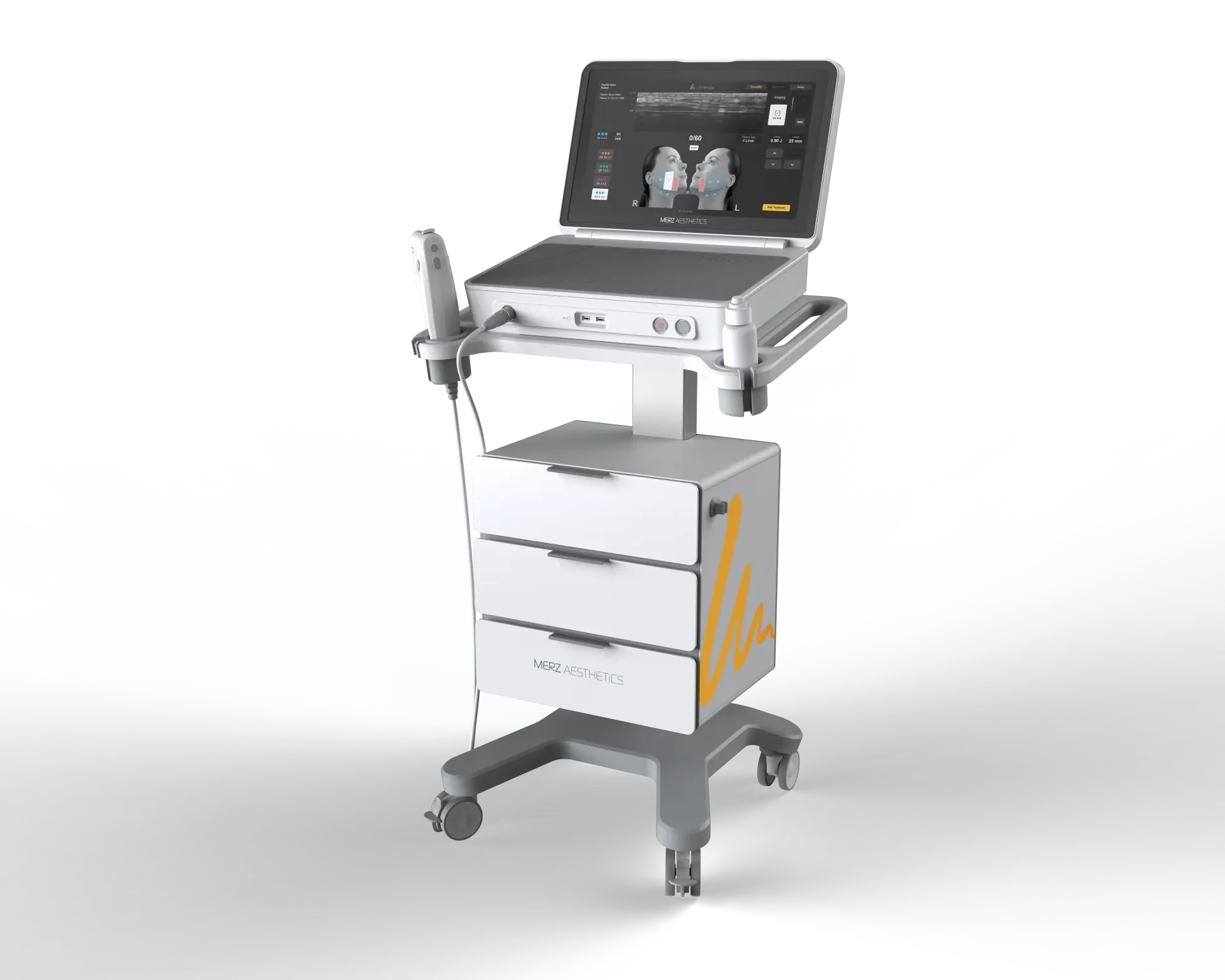
Ultherapy and Botox are two of the most commonly paired non-invasive aesthetic treatments because they address different layers and different problems on the same face. Ultherapy uses Micro-Focused Ultrasound to deliver heat into the deep dermis and the SMAS, the structural layer responsible for the lift of the lower face, jawline and brow; Botox uses a botulinum toxin injection to relax specific muscles whose repeated movement creates dynamic lines like the eleven, the forehead horizontals, and the crow's feet. One reshapes scaffolding over months. The other quiets motion within days.
That difference is the entire reason they belong on the same calendar but rarely belong in the same chair on the same afternoon. When I first started, I asked a Gangnam coordinator if I could do both in one Tuesday and fly out Wednesday morning. She said yes, technically, but she also said she wouldn't if it were her face — because Ultherapy creates a thermal injury that triggers gradual collagen remodeling for months, and Botox reaches its visible plateau around two weeks. Stacking them on the same day means you can't read either result cleanly. You also can't troubleshoot. If something doesn't look right at week three, you don't know which lever moved it.
What helped me was a frame my second-year coordinator drew on a sticky note: "Ultherapy is your structural anchor once a year. Botox is your maintenance cadence three to four times a year. They orbit each other." I wrote that down, and I now schedule from that orbit rather than from whatever my flight calendar allows. Studies suggest combination protocols can be complementary when sequenced thoughtfully, and a 2019 review in the Journal of Cosmetic Dermatology described non-invasive lifting and neuromodulator pairings as standard practice when timed appropriately.
The annual rhythm I actually use
Here is the calendar I now reuse every year, edited from three years of trial-and-error in Gangnam. It assumes one main Ultherapy session per year on the lower face and jawline, three to four Botox sessions for upper-face dynamic lines, and a few buffer windows around international travel. The exact dates flex with my work and flights, but the spacing is now non-negotiable.
My general approach: Ultherapy goes in the calendar first because it has the longest tail. Everything else gets scheduled around its remodeling window, not the other way around. Botox slots in roughly every three to four months on a maintenance rhythm. I leave at least two weeks between any Botox visit and any Ultherapy visit, in either direction, because I want each result clean enough to evaluate. And I keep a 4 to 6 week clearance from any Ultherapy session before booking a wedding, a major work event, or anything photographed under harsh light — not because it looks bad, but because the lift is still arriving.
This isn't a universal protocol — it's mine, and your provider may sequence differently based on your concerns and anatomy. But it gave me a structure to work from instead of booking on vibes. The rhythm has also made my Gangnam trips less anxious; I no longer try to do everything in one frantic week. I split the year into spring and fall trips, and each trip has a clear job.
| Window | Treatment | Why this slot |
|---|---|---|
| January | Botox maintenance (upper face) | Reset after winter dry skin and holiday tension |
| March | Spring Gangnam trip — Ultherapy lower face + jawline | Cool weather, summer is 4 months out, full remodel window ahead |
| April-May | Avoid layering. Walking, water, sleep | Let Ultherapy thermal injury settle for 4-6 weeks clean |
| May-June | Botox maintenance (eleven, forehead) | Re-up after spring rhythm, pre-summer photo season |
| September | Botox maintenance + crow's feet review | Post-summer, return-to-work energy, dynamic lines reset |
| October-November | Fall trip — Botox refresh, optional minor zone Ultherapy | Holiday lead-up, cool weather aftercare easier |
| December | Hands off. Hydration. Sunscreen. Sleep. | Year-end calm, evaluate full remodel from spring Ultherapy |
Sequencing rules I now follow without exception
After a few miscalibrated trips I built a short list of sequencing rules I actually keep. They aren't medical guidelines — they're personal guardrails that have made my outcomes more predictable and my trip planning saner. The first rule: I do not put Botox and Ultherapy on the same calendar week. Two weeks before, two weeks after, but not the same week. The reason is partly biology and partly evaluation. Both treatments produce changes I want to read clearly, and I can't read either if both are in motion at once.
The second rule: Ultherapy comes first in the year, not last. If I'm only making one Gangnam trip in a calendar year, I want the longer-arc treatment to have its full remodel window ahead of summer photographs and fall events. If I push Ultherapy to October, I'm essentially looking at peak collagen change in February, which doesn't help any of the moments I actually care about. Patients report results emerging from two months out and continuing through six, and I want those months to overlap the part of the year I see people in person.
The third rule: I never book a major event within four weeks of an Ultherapy session, and I never book one within four days of a Botox session. The Ultherapy window is about residual mild puffiness, occasional small redness lines, and the simple fact that the lift hasn't arrived yet. The Botox window is about the rare bruise, the occasional asymmetry that needs a small touch-up, and the two-week onset before the relaxation looks settled. Neither is a crisis — they're just facts, and I plan around them.
The fourth rule, which I had to learn the hardest way: I tell my provider every time about every other treatment in the same window. Filler I had eight weeks ago, a peel two weeks ago, an at-home retinoid I'm using nightly. Not because anything is forbidden, but because the protocol changes — energy levels, transducer choices, post-care timing. The first time I forgot to mention a peel from Berkeley, my Gangnam coordinator caught it at the consult, and the session got pushed back ten days. She was right. I've never forgotten again.
- No same-week Ultherapy + Botox combos. 14 day buffer minimum, both directions
- Ultherapy = early in the year, before peak photo season
- 4 weeks clear before a big event for Ultherapy, 4 days for Botox
- Disclose every other treatment in the same 8 week window at the consult
What changes about the Botox visit when Ultherapy is in the picture
When Ultherapy is on the same annual calendar as my regular Botox cadence, a few small things shift about how I approach the Botox visit itself. The Botox dose hasn't changed for me, the brand my provider uses hasn't changed, and the muscles being treated haven't really changed. What has changed is the timing relative to Ultherapy and how I read the result in the mirror.
The biggest shift: I now schedule Botox so its onset doesn't overlap with the early Ultherapy puffiness window. If I had Ultherapy in mid-March, I'm not booking Botox until late April at the earliest, and probably mid-May. By then any residual swelling from the Ultherapy session is fully resolved, the early collagen remodeling is underway but visually quiet, and the Botox has a clean canvas to do its specific job on the eleven and forehead. If I were to inject Botox at the three-week post-Ultherapy mark, I'd risk reading either result through the noise of the other.
The second shift: I don't ask for a fuller dose just because Ultherapy is in the calendar. Some patients assume that because Ultherapy is working on structure, they should push Botox harder for a more dramatic look during the same year. My experience has been the opposite — Ultherapy quietly fixes the structural issue that was making me overdose Botox in the first place. The first year I did the combo, my forehead actually needed slightly less Botox by fall, because the brow felt better supported and I wasn't compensating with my eyebrows the way I had been. Your mileage may vary, but I'd rather start lighter and add than over-treat in the first session of a paired year.
A detail my coordinator emphasized: Botox is reversible-by-time and Ultherapy is not. If a Botox visit produces a result I don't love, it wears off in three to four months. If an Ultherapy session is overly aggressive, the collagen change is what it is for the next 12 to 18 months. So when the two are paired, the conservative-first principle applies more strongly to Ultherapy, and Botox can carry a slightly more responsive role within the year. I now book Ultherapy with the most credentialed provider I can find and accept the visit price difference, and I use my regular Botox provider for the maintenance visits without renegotiating the relationship every six months.
Recovery overlap and the windows I keep clean
Recovery overlap is the part nobody tells you about until you're already booked, and it's the single most useful thing to plan in advance when running an Ultherapy and Botox calendar together. The two treatments have different aftercare requirements, different sun and heat tolerances, different timelines for when you can lie face-down on a massage table or sleep on your side without worrying.
Ultherapy aftercare for me runs roughly two weeks of "gentle." Day one is a quiet evening. Days two and three I'm sometimes a little puffy in the lower face, sometimes not. I avoid saunas, jjimjilbang, hot yoga, and intense cardio for at least seven days. Active ingredients like retinoids, glycolic acid, and aggressive vitamin C go on pause for ten days. Sun exposure gets minimized, and I wear a wide-brim hat in Gangnam even when it's overcast. By day fourteen I'm back to my normal routine, and the lift continues to arrive quietly over the next few months.
Botox aftercare is shorter and stranger. The day-of rules are the famous ones: stay upright for four hours, no exercise that day, no rubbing or massaging the area, no sleeping face-down that night. After 24 hours most providers I've seen in Gangnam have lifted those restrictions. The two-week onset window is when I evaluate the result and decide whether a small touch-up is needed. Bruising, when it happens, usually clears within a week, and I now schedule Botox visits so the visible-bruise window doesn't land on photographed events.
The overlap rule that matters: I do not stack Ultherapy aftercare windows on Botox aftercare windows. If I'm in the first 48 hours after Botox, I'm not also flying internationally, lifting heavy luggage, or dragging a suitcase up subway stairs in Sinsa-dong. If I'm in the first ten days after Ultherapy, I'm not booking a hot yoga class or a Korean spa day at a jjimjilbang. The two recovery curves don't conflict with each other directly, but they each demand their own discipline, and treating them like one merged window is how I used to make my own results worse.
- Ultherapy: 7-14 days gentle. No sauna, jjimjilbang, hot yoga, retinoids, peels
- Botox: 4 hours upright, no exercise day-of, no face-down sleep night-of, 24 hour gentle
- Don't stack travel days on Botox day-of
- Don't book a Korean spa day inside the 10 day Ultherapy window
How my budget and trip cadence shifted once I had a real rhythm
When I started treating my Gangnam visits as a real annual program rather than a series of impulses, the budget conversation also got more honest. Ultherapy is the largest single line item in my year — one session, but a meaningful one, and the per-line transducer pricing in Gangnam means the protocol matters more than the headline price. Botox is much smaller per visit but happens three to four times a year, so the annual sum is real. Once I added them up, the program became something I plan for like a flight schedule rather than something I justify trip by trip.
What helped: I stopped chasing single-trip discounts that compressed my treatments into a too-tight window. The first two years I'd see a clinic offer a "complete refresh package" that bundled Ultherapy and Botox in one visit at a flat rate, and my eye would go straight to the savings. After my second sub-optimal result from one of those packages, I stopped. The price was attractive; the timing was wrong; the outcome reflected the timing more than the device. The actual value lever turned out to be operator skill and protocol clarity, which doesn't bundle.
My trips also got fewer and longer. Two trips a year is enough for me — one in spring for Ultherapy and a longer Botox visit, one in fall for a Botox refresh and something light. That's down from the four-trip year I tried to run when I was still treating each visit as an emergency. Two trips means I can pre-book the named provider rather than whoever is available, I can build buffer days for any touch-ups, and I can actually rest for a day after a session instead of catching a 10pm flight back to SFO with a numb forehead. This part isn't medical advice. It's just the Gangnam logistics that finally let me stop apologizing to my own face.
What I'd tell someone starting their first year of layering
If a friend in Berkeley asked me how to start layering Ultherapy with Botox for the first time, I would tell her three things. First: book the Ultherapy session first, with a provider you trust, and let that anchor the year. Don't lead with Botox. Botox is the easier yes, the cheaper yes, the visible-faster yes, and that makes it tempting to start there — but if Ultherapy is going in your year at all, it's the longer-arc decision and it deserves the strongest provider conversation. The Botox cadence will sort itself out around it.
Second: build in two-week buffers in both directions. Don't get a Botox shot the week before you fly to Seoul for Ultherapy, and don't get a Botox refresh the week after you fly home from one. The buffers are not technically required by every provider, and you'll find clinicians who will inject sooner without issue. But the buffers exist for evaluation, not just for safety. You want to be able to read each result clearly before deciding what to do next, and overlapping windows blur the picture.
Third: keep a real log. I use the back pages of a paper planner; my friend Anna in Oakland uses a Notion page; my coordinator in Gangnam uses an actual treatment record. Whatever the medium, write down the date, the device or product, the muscle or zone, the dose or line count, the provider name, and a note on how it felt at week one and week eight. Patients report different responses across years even with the same protocol, and the only way to notice your own pattern is to keep notes. After three years of notes I now know that I respond slightly slower to Ultherapy than the average timeline and slightly faster to Botox in the upper face — and that knowledge changed how I plan every subsequent year. The rhythm is real, but the rhythm only becomes legible when you write it down.
Frequently asked questions
Can I get Ultherapy and Botox in the same Gangnam trip?
Yes, technically, and many clinics will book it that way if you ask. My personal preference, and the one most providers I've spoken with quietly suggest, is to separate them by at least two weeks within a single trip — for example, day one of an extended trip for Ultherapy and day fifteen for Botox. That gives the Ultherapy session time to settle past its early puffiness window and lets the Botox have a clean canvas to read. If your trip is shorter than two weeks, I'd pick one treatment and run the other on a different visit. Stacking both into a 48 hour window saves time and creates evaluation problems later.
Should I do Botox before or after Ultherapy if they're in the same year?
I do Botox before, but with a buffer of at least two weeks before any Ultherapy session. The reason is Botox onset takes about two weeks to plateau, and I want my upper face fully settled before adding the deeper structural work. Some providers prefer Botox after Ultherapy for the same reason in reverse — they want the lift to be visible before adjusting muscle activity. Either order works if the buffer holds. What doesn't work is doing them in the same week and trying to read which result is doing what.
Does Ultherapy reduce how much Botox I need?
In my experience, yes, slightly, but not dramatically. After my first paired year, my forehead Botox dose came down a little because the structural improvement to my brow meant I wasn't unconsciously raising my eyebrows to compensate. The eleven and crow's feet didn't change much. Studies suggest individual response varies, and I wouldn't promise a friend her dose would change. I'd just tell her not to ask for an aggressive Botox dose right after Ultherapy out of habit — give the structural change a few months to show, then re-evaluate the next refresh.
How do I plan this rhythm around international travel?
I anchor Ultherapy to whichever Gangnam trip is earliest in the calendar year, usually March, because the long remodel tail benefits from being ahead of summer photo season. Botox refreshes happen on shorter trips or with my home provider in California depending on the visa and timing. I leave at least four days between any Botox visit and a long flight to avoid the rare bruise becoming visible at the wrong moment, and I leave at least seven days between an Ultherapy session and a long flight because of cabin pressure, dehydration, and how tired my face looks the day after a transpacific haul. Build the buffers, then book the flights.
Is it safe to do this layered approach long-term?
Both devices and Botox itself have decades of clinical use, and a 2019 review in the Journal of Cosmetic Dermatology described combination protocols of energy-based devices and neuromodulators as common practice in aesthetic medicine when sequenced appropriately. Long-term safety data on the specific layering rhythm I run is thinner, because everyone's calendar is different. What I keep doing: an annual full check-in with my provider, including any new medical history, medications, or other treatments, and a willingness to adjust the rhythm if my face changes. This isn't medical advice — it's a personal program I've run for three years with a provider I trust, and I revisit it every year.
What if I miss a window — do I have to restart?
No. Missing a Botox refresh by a few weeks isn't a problem; the muscle activity gradually returns and the next visit picks up from where you are. Missing the spring Ultherapy slot and pushing it to summer just shifts the remodel window back by a quarter, which means the peak result lands in a slightly different season. The rhythm is a tool, not a contract. I treat my own calendar with flexibility — if work or family needs me at home in March, I move Ultherapy to April or May and adjust my fall trip accordingly. The point is to have a structure, not to be rigid about it.