
Travel & Culture
What I Eat in Gangnam When I'm Jet-Lagged and Can't Think
A Korean-American's real-world food map for the day you land — soft, warm, salt-forward, decision-light.
I've been flying LAX to ICN twice a year since college, and I have made every jet-lag food mistake there is to make. I've ordered Korean BBQ at 9 PM the night I landed and woken up at 3 AM regretting my entire life. I've tried to be a hero with samgyeopsal and soju on a five-hour-of-sleep brain. So this is the list I actually use now — what to eat in Gangnam when your body thinks it's 4 AM and your judgment is the first thing to go. It's mostly soft, mostly warm, mostly salt-forward, and mostly walkable from a hotel.
Day-one breakfast: bonjuk, every single time
Bonjuk is Korean rice porridge, and it is the food I trust most when I land. The texture is somewhere between risotto and oatmeal, the seasoning is gentle, and the protein options — abalone, beef-and-mushroom, pumpkin-and-shrimp — give you something to land on without overwhelming a system that's still on California time. The chain Bonjuk has locations all over Gangnam, including a reliable spot two blocks from Sinsa Station that I have personally tested in three different states of sleep deprivation. Order the abalone porridge if you can stretch the budget — it's the one that has actually fixed my brain on more than one occasion. Side note: the kimchi they serve with it is mild, water-based, and won't ambush you.
What to order if you've never had juk before
Beef-and-vegetable porridge is the universal entry point — savory, familiar in flavor, no aggressive funk. Add the seaweed seasoning at the table sparingly. If your stomach is genuinely upset, plain rice porridge with a soft-boiled egg is the move; the staff will not blink at this order.

The salt-and-broth lunch: seolleongtang or galbitang
Seolleongtang is the milky-white beef-bone soup I crave on landing day around 1 PM, when the food coma from breakfast has worn off and I need something that will both wake me up and keep me upright. The broth is simmered for hours, the seasoning at the table is salt and scallion and that's it, and the side of rice gives you carbs without dessert sugar. Gangnam has a hundred good seolleongtang spots, but I keep going back to Hadongkwan-style places near the Yeoksam-Gangnam-daero stretch because the bowls are clean, the wait is short, and the air conditioning is reliable. If you want something a touch more substantial, galbitang — short-rib soup — is the same energy with more chew.
Why salt-forward soup beats anything spicy
Spicy food on jet-lag day will absolutely not save you. Capsaicin plus dehydration plus an already-confused body equals a 3 PM crash that no nap will fix. Salt and bone broth, on the other hand, hydrates and settles you in roughly that order. Save the kimchi jjigae for day three when your system is back online.

The 4 PM problem: what to do when you're falling over
Around 4 PM on landing day, every single time, I hit a wall that no food will fix on its own — but the right snack plus a coffee can buy you another four hours so you don't go to bed at 5 PM and wake up at midnight. My move is a small Korean-style egg sandwich (gyeran sandwich) from a Paris Baguette or Tous Les Jours, plus an iced Americano, eaten on a bench in a side street. The egg salad is sweeter than American versions and the bread is fluffy in a way that does not punish your stomach. I would not, under any circumstances, attempt a full meal in the 3-to-5 PM window on day one. That is the danger zone.
- Egg sandwich + iced Americano (Paris Baguette / Tous Les Jours, 5,000-7,000 KRW)
- Sweet potato latte + plain croissant (any cafe — gentle on stomach)
- Tteok (rice cake) and barley tea from a convenience store — sounds weird, works
- Half-portion gimbap from Kimbap Cheonguk — protein and starch, no surprises

Dinner if you can hold out: Korean home-style sets
If you can make it to 7 PM on landing day, the dinner I always recommend is a Korean home-style set meal (baekban) — a single main with rice, soup, and a half-dozen small side dishes that arrive together on a tray. The portions are reasonable, the variety means you don't have to commit to one big flavor, and the structure of the meal makes it almost impossible to overeat. I'm partial to the grilled mackerel set (godeungeo gui) with doenjang jjigae as the soup, because the fish is rich enough to feel like a real meal and the soybean stew is the gentlest of the Korean stews. There's a small spot in Sinsa I keep returning to that does the set for around 13,000 KRW and the ajumma running it has, I swear, looked at my face and known I was jet-lagged on at least two separate visits.
What to skip on dinner one
Korean BBQ. Bossam. Anything with soju attached. I am not the food police — these are some of my favorite meals on earth — but day one is not their day. The grease load and the late hour will scramble your sleep architecture for another 48 hours. Save them for day three minimum. Day four is better.
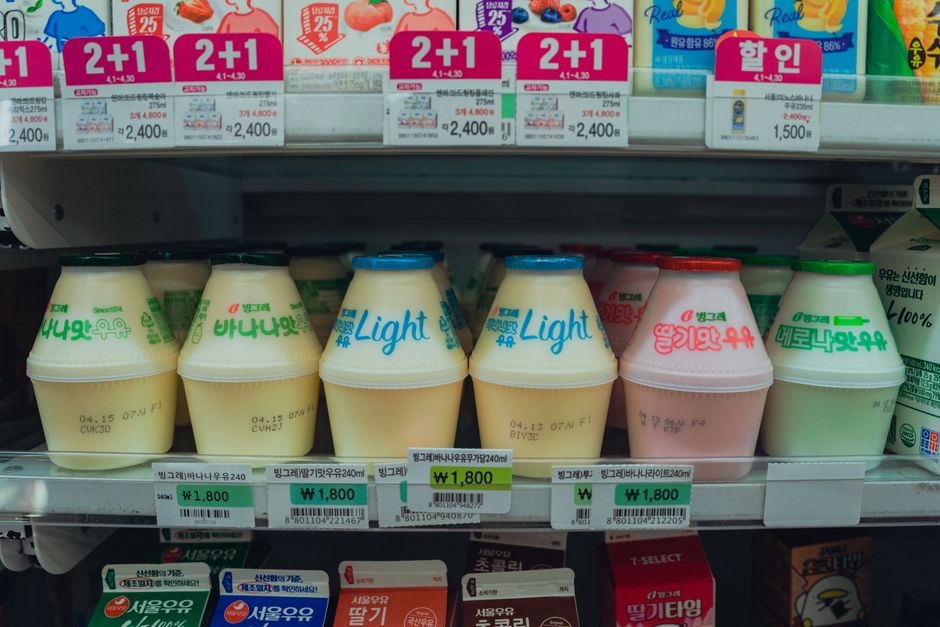
Hydration and the convenience store strategy
Korean convenience stores — CU, GS25, 7-Eleven, Emart24 — are genuinely one of my favorite jet-lag tools, because you can build a perfect emergency snack at 2 AM when your circadian rhythm collapses. My standard 2 AM kit is a bottle of barley tea (boricha), a banana milk, a hard-boiled egg in the spicy or plain seasoning, and a small pack of soft tofu pudding. None of it will wreck your sleep, all of it will hold you until breakfast, and the total comes to about 8,000 KRW. The barley tea in particular is my secret weapon — caffeine-free, gently hydrating, and somehow more soothing than water.
- Boricha (barley tea) — caffeine-free, hydrating, sold cold or warm
- Banana milk (Binggrae) — small, sweet enough, easy on stomach
- Soft tofu pudding (sundubu pudding) — soft, mild, oddly satisfying
- Plain hard-boiled eggs — protein without grease
- Yakult or Yakult Light — Korean version is smaller and less sweet
Day two and three: when to bring back the spice
By day two lunch, your system should be ready to handle one of the lighter spicy dishes — kalguksu in a clear anchovy broth with a side of kimchi, or a mild kongguksu (cold soybean noodle soup) if it's summer. Day three is when I bring back kimchi jjigae and budae jjigae and start eating like myself again. The progression matters more than people think; if you skip the gentle two days and dive straight into Korean BBQ at midnight on landing day, you will spend day three on the bathroom floor of your hotel and miss your entire morning plan. I have, regrettably, done this. Pace it. Day one soft, day two warm, day three normal — and by the weekend you'll be eating live octopus at Noryangjin like you mean it.
A note on coffee timing
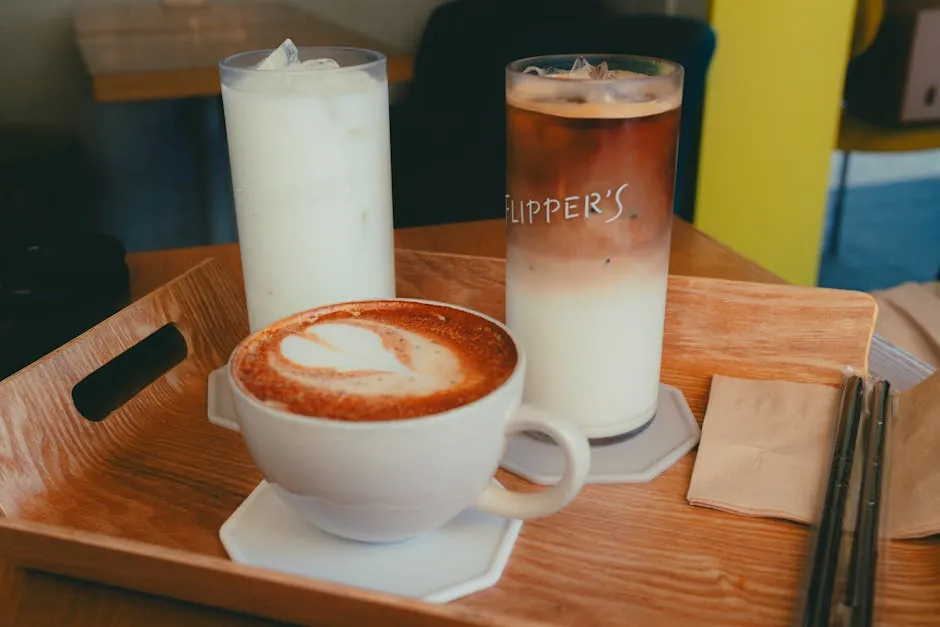
Korea runs on iced Americanos, and I am no different — but on landing day I cut my last coffee at 2 PM Korea time, no exceptions. The Korean coffee shops are fantastic but the drinks tend to run stronger than American chain coffee, and a 4 PM Americano on a five-hour-of-sleep brain will guarantee you're awake at 1 AM staring at the ceiling. Trust me on this one.
“Day one soft, day two warm, day three normal — and by the weekend you'll be eating live octopus at Noryangjin like you mean it.”
Editor's note
Frequently asked questions
What's the single best food to eat right after landing at Incheon?
Bonjuk (Korean rice porridge), full stop. It's gentle on a flight-stomach, it's warm without being heavy, and the seasoning is mild enough that you can actually taste what you're eating. The chain Bonjuk has locations near most Gangnam hotels and is open from breakfast through dinner. Beef-and-vegetable or abalone are my standard orders.
Should I really avoid Korean BBQ on day one?
Yes, and I say this as someone who plans entire trips around Korean BBQ. The grease load plus the late dinner hour plus alcohol plus a system that's still confused about what time it is will wreck your sleep for the next 48 hours. Day three minimum, day four is even better. You'll enjoy it more when your taste buds aren't running on jet fuel.
Is it okay to eat at convenience stores in Korea?
Korean convenience stores are genuinely good — CU, GS25, 7-Eleven, and Emart24 carry fresh-made gimbap, hard-boiled eggs, soft tofu pudding, and decent prepared meals. I rely on them for 2 AM jet-lag emergencies. The food turnover is fast and the quality is much higher than the American convenience-store equivalent.
Are there vegetarian options for jet-lag day?
Yes — pumpkin porridge (hobakjuk) is naturally vegan, kongguksu in summer is vegetarian, and most Korean home-style sets can be ordered with extra side dishes in place of the main protein. Doenjang jjigae (soybean stew) without seafood is widely available. Buddhist temple cuisine spots in Insadong are also worth a day-two trip if you want a more curated vegetarian meal.
What about water — should I drink tap water in Seoul?
Seoul tap water is officially safe to drink, but most locals — myself included — drink boiled water (boricha is essentially this) or bottled water out of habit. Hotels universally provide bottled water, and convenience stores sell 500ml bottles for about 1,000 KRW. For jet-lag specifically, barley tea hydrates better than plain water in my experience and won't keep you awake.
How long does it usually take to fully adjust to Korea time from California?
For me, three days to feel functional and five days to feel actually normal — and that's with the food strategy above plus a hard rule about morning sunlight. Without the food strategy, I usually need a full week. Eating gentle for the first 48 hours is, in my experience, the single biggest variable I can control. Sleep is the rest of it.