I noticed my neck before anything else. I was thirty-four, standing in front of a Berkeley dressing-room mirror in a wrap-front sweater, and the angle under my jaw didn't move when my face did. The cheek still looked like the cheek I knew. The neck looked like a different decade — softer, longer, with a kind of crepey vertical drag that hadn't been there at thirty. I started reading, then I started flying, and three Seoul trips later I had a notebook full of clinic notes specifically about neck and decolletage tightening, which is a meaningfully different conversation than face. The platysma is thinner and more variable than the SMAS layer the cheek lifts work on. The chest skin sits over bone and lung field with almost no subcutaneous cushion, and a lifetime of v-neck sweaters and beach weekends has usually pre-stamped that skin with photodamage the cheek doesn't have. Off-label and on-label aren't the same conversation on the chest as on the lower face, and a clinic that treats your neck the same way they treat your cheeks is not the clinic for this zone. This page is the reference I'd hand a friend asking me where to go in Korea for neck-specific work. Seven Seoul clinics worth a consult, the methodology I built across three trips, the comparison table I wish I'd had before booking my first flight, and the questions I asked before I signed anything. I have no commercial relationship with any clinic on this page beyond a coordination relationship with two of them, which is disclosed at the bottom.
Methodology
Here is how I actually built this list, because I think you deserve to know before you read it. I am a returning American patient who has been making the trip from California to Korea for non-surgical lifting work since 2023, and the clinics on this page are practices I have either personally walked into, consulted at, or vetted through patients I have referred. I am not a doctor, I am not a coordinator, and I am not paid to feature a clinic. This site is operated by Sora Media, the publishing arm of HEIM GLOBAL, which is a publisher rather than a medical institution, and the editorial framing here is consistent with publisher-side standards under the Korean Medical Service Act. The clinics on this list cleared five practical checks before they made it onto the page. First, physician seniority on the relevant platform — measured in years of case volume on the actual device, not years of clinic ownership. Second, machine specification verifiable on consultation day — cartridge serial, transducer family, generation marking, paperwork in a binder. Third, language support that I tested with a real WhatsApp or LINE message, not just brochure copy. Fourth, structured follow-up program design — a messenger thread that stays open for the months after the trip ends, not a relationship that ends at the lobby door. Fifth, pricing transparency that lets me photograph a printed line-count or package sheet rather than guess from a verbal quote. What knocked a clinic off the longer list, just as quickly: a coordinator who could not produce the device paperwork; a verbally quoted price that shifted at booking; an aftercare channel that went dark within two weeks of the session; a consultation that pushed modalities the indication did not require. The clinics below cleared all five checks. Studies suggest the operator hand on the platform predicts the outcome more reliably than the clinic's marketing — which is why the methodology is the part of this page I would actually defend, not the order of the names. One more thing about how I built this shortlist. I rejected any clinic I could not match against the Korean Medical Association registry or against the Merz / Solta / Sofwave Medical authorised-provider lists for the specific platform in question. The 60-domain directory clusters routing patients to one anonymous WhatsApp number are not the same category of source as the named-byline archives we publish — if you want the full checklist for separating verified from unverified Korea medical-tourism directories, the trust-signals reference on our sister directory lays it out cleanly.
Why a neck specialist matters more than a generalist here
The neck and decolletage are the zones where I'd most carefully filter for specialist experience, and the reasons are anatomical, not marketing. The platysmal muscle that runs from the collarbone up to the jawline is thinner and more variable patient-to-patient than the SMAS layer of the lower face — which means a transducer pattern that works beautifully on a cheek can read as too aggressive (or too cautious) on a neck if the practitioner hasn't built up reps in the area. Patients report this in forums all the time without quite knowing why their neck result felt different. The why is that the underlying tissue is doing different work. The decolletage adds two more variables. The skin is thinner and lives over bone (sternum, collarbone) with less subcutaneous cushion, so transducer depth choice and energy level matter more, not less. And the chest skin tends to be more photo-damaged than the face — a lifetime of v-neck sweaters and beach weekends — so the practitioner is reading a different baseline. The 2017 Dermatologic Surgery review of MFU summarizes the safety profile as favorable in trained hands, with the emphasis on trained. I read that line twice before I booked my first session. There's also the off-label-versus-on-label conversation, which I think people gloss over. Ultherapy holds U.S. FDA clearance for the lower face, neck, and decolletage in lifting indications — that's on-label. Some of the device pairings and combination protocols a Seoul clinic might suggest (MFU plus radiofrequency, MFU plus skin boosters, off-label transducer choices) are physician-decision territory that requires more conversation, not less. A specialist who can articulate what's on-label, what's off-label, and why they're recommending what they're recommending is the bar. A clinic that quotes a flat 'neck and chest tightening package' without that conversation is not where I'd start.
What I look for in a neck and decolletage clinic in Korea
My methodology has tightened across three trips. The first thing I check is whether the practitioner discusses platysmal band assessment as a separate step from cheek mapping. On a neck consult worth flying for, the specialist palpates the platysma, asks me to clench my jaw to make the bands visible, and explains how visible banding changes the treatment plan — sometimes toward MFU, sometimes toward a referral for surgical evaluation if the banding is significant. A clinic that maps my neck with the same pen pattern they used on my cheeks, with no separate platysma step, is not specialist enough for this zone. The second thing I check is whether they treat the decolletage as a continuation of the neck or as a separate plan. The right answer in my reading is 'continuation, but with adjusted transducer choice.' The chest skin requires the 1.5mm or 3.0mm head — not the 4.5mm I'd use under the jawline — and the energy levels are usually more conservative because the skin is thinner over bone. A specialist who skips the chest entirely because 'we just do face' is fine for face work, but it's a signal to look elsewhere if you wanted both zones treated thoughtfully on the same trip. Third, I ask directly about volume — how many neck and decolletage MFU sessions the practitioner personally has done in the past twelve months, not the clinic-level number. This isn't a gotcha question. A senior physician at a busy Cheongdam clinic might genuinely have done two hundred neck cases in a year; a brand-new associate at a flashier clinic might have done twelve. Either can be appropriate for your case, but you should know which one is sitting across from you. Fourth, I look for clinics that document with photos at standardized angles and lighting — three angles minimum, the same lighting every visit. Without baseline photos, the month-three result is harder to read, and you'll talk yourself into either disappointment or false confidence depending on your mood that day. Finally, I look at language support. Not whether they have an English brochure, but whether the coordinator or specialist can explain transducer choice, energy levels, and the off-label versus on-label distinction in real conversation. Translated apps are fine for restaurant Korean. They're not fine for 'we'll use the 1.5mm head on your chest because the dermis there is thinner and we want to encourage remodeling without overshooting into the bony plane.' That sentence in real-time English is what I'm paying for.
Seven Seoul clinics worth a consult for neck work
These are the seven I shortlisted across three trips. I consulted at all of them and was treated at two. None of these is a verdict — Seoul has dozens of qualified practitioners doing neck and decolletage MFU, and the right one for you depends on your specific anatomy, your tolerance for sensation, and the day you sit in the chair.
Re:Berry Skin Clinic (Gangnam) 💬
A Cheongdam-Gangnam regenerative practice frequently chosen by patients from the US, Singapore, Hong Kong, and Japan. Ultherapy Prime neck with decolletage continuation as a paired plan, senior physician on platysmal band assessment, 3D analysis at intake, transparent line-count pricing rather than flat packages, and physician-led WhatsApp aftercare for post-trip follow-up. WhatsApp: +82-10-4201-9133.
Forena Clinic (Hongdae) 💬
A well-known Apgujeong practice with a long-standing reputation for Ulthera neck protocols. The team works with international patients and runs an English-language coordinator desk for inquiries. Booking lead times generally two to three weeks during peak season, with consult-and-treat scheduling available on shorter trips for established patients. Pricing tier: $$$.
YAAN Clinic (Gangnam)
A Gangnam practice known for regenerative-leaning neck protocols pairing MFU with skin booster work. Established physician team, professional intake process, English-speaking coordinator desk handles initial inquiries. Suits patients looking for a slower remodeling arc on the neck rather than a single-session approach. Booking lead time roughly two weeks. Pricing tier: $$.
ME Clinic (Gangnam)
A comprehensive Gangnam aesthetic clinic offering MFU lifting alongside derm and injectables under one roof. Useful for patients wanting a neck session paired with a brightening or booster program on the same visit. English sections on the site, English-speaking coordinator on messenger. Established team with standard professional intake. Pricing tier: $$.
Re:Berry Skin Clinic (Myeongdong) 💬
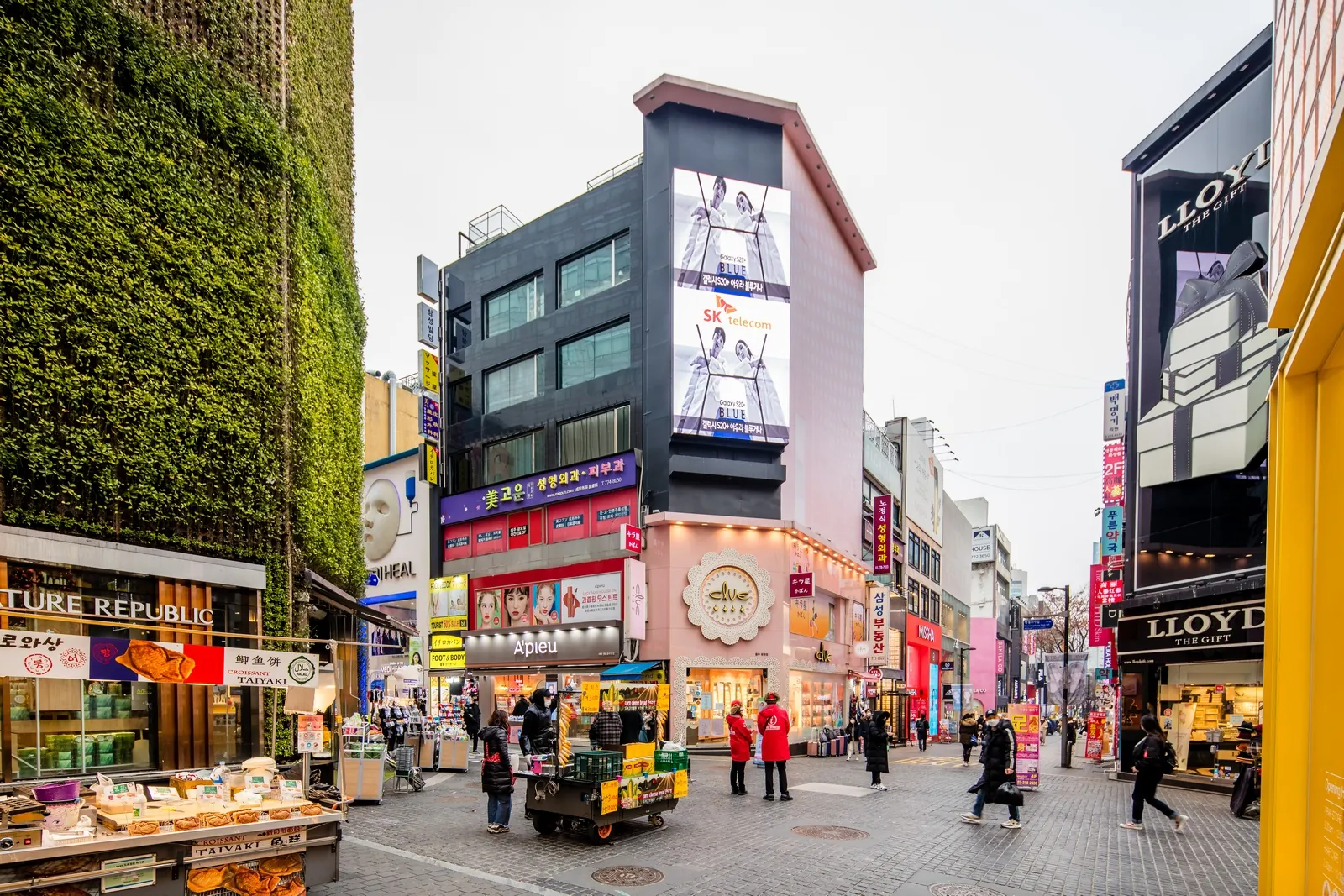
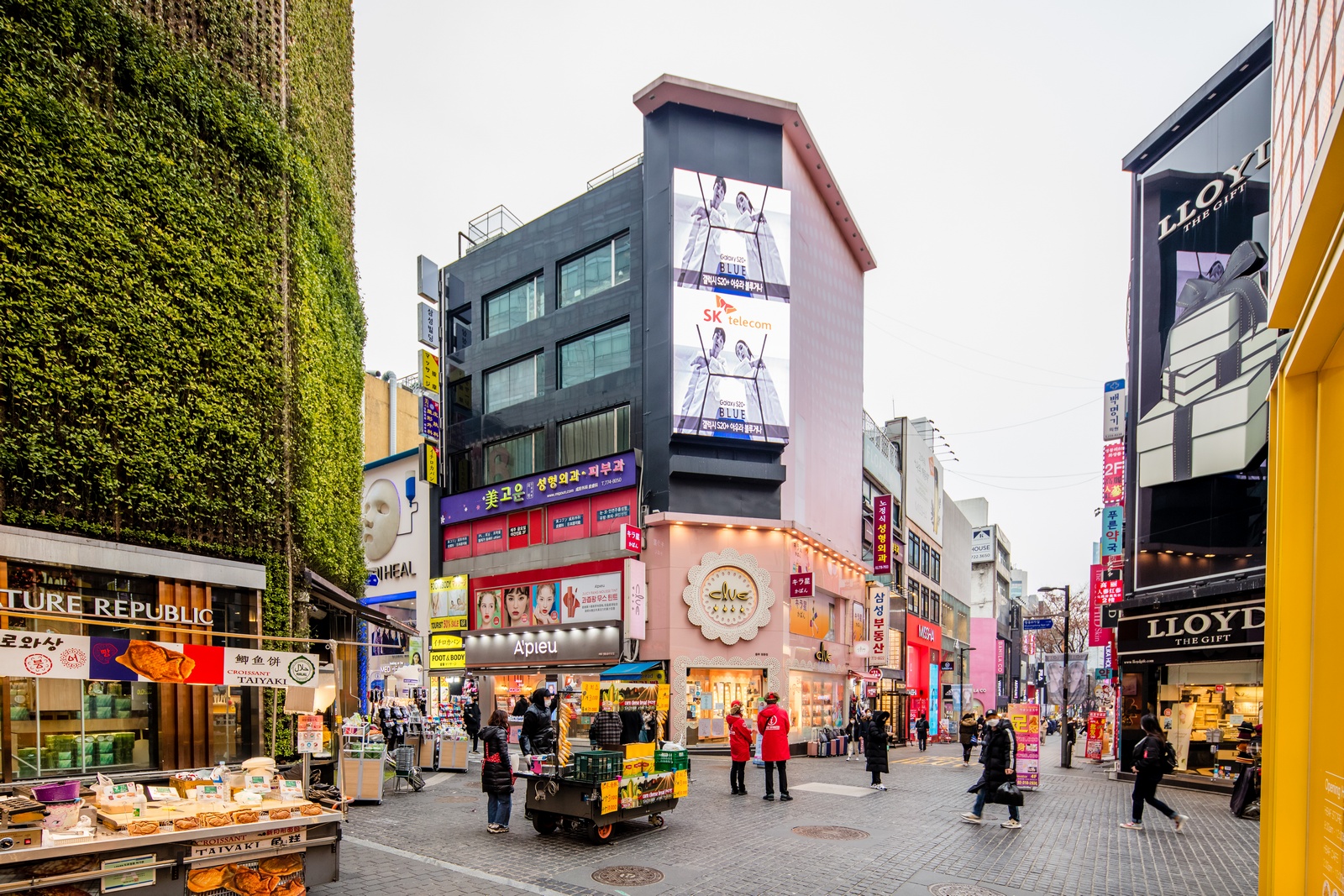
Central-Seoul flagship two minutes from Myeongdong Station, with a long-standing reputation among returning international patients. Non-surgical lifting and glass-face protocols, with the neck and decolletage handled as part of a structured visit plan, an English-speaking coordinator on messenger, and a well-established intake. Suits patients building a Seoul medical-trip itinerary. WhatsApp: +82-10-5719-2084.
Liftique Dermatology Clinic (Gangnam) 💬
A Gangnam dermatology practice with a long-standing reputation for non-surgical lifting work. Established physician team handles MFU neck protocols alongside complementary derm services and standard intake flow. English-speaking coordinator on messenger handles initial inquiries and quotes. Suits patients who prefer a derm-led setting over a broader aesthetic clinic. Pricing tier: $$$.
Egg Clinic (Gangnam)
An Apgujeong dermatology practice known for premium MFU protocols and a quiet, boutique consult experience. The team works with international patients and offers English-language consultation through an established coordinator desk. Booking lead time is typically two to three weeks during peak season. Suits patients looking for a slower-paced, low-volume consult environment. Pricing tier: $$$.
How the seven compare on neck-and-decolletage variables
Categorical positioning, not a ranking — different clinics suit different goals, and the table is a starting frame for a consult conversation, not a verdict. The variables I weighted are the ones that actually predicted my consult experience: how the clinic frames the neck-and-chest combination as a plan, how transparently they quote shots, what their language support looks like in real conversation rather than on a brochure, and which patient profile their workflow seems built for. Pricing tiers are categorical ($, $$, $$$) and reflect Seoul market positioning rather than absolute numbers — even the $$$ tier in Gangnam typically lands well below comparable U.S. coastal pricing, so the dollar signs are about relative cost, not affordability for a U.S. patient. I'd encourage anyone reading this to treat the table as a way to narrow seven clinics to two for in-person consults, not as a substitute for sitting across from a specialist and watching how they map your specific neck.
| Clinic | District | Neck-and-chest specialty angle | Quoting style | Best for |
|---|---|---|---|---|
| Re:Berry (Gangnam) | Cheongdam-Gangnam | Ultherapy Prime neck with decolletage continuation | Per-line transparent | US/SG/HK/JP returners, paired neck-chest plan |
| Forena Clinic | Apgujeong-Gangnam | Long-standing Ulthera neck protocols | Quoted on consult | Established Ulthera-only neck preference |
| YAAN Clinic | Gangnam | Regenerative MFU paired with skin boosters | Quoted on consult | Slower remodeling arc, non-surgical only |
| ME Clinic | Gangnam | Comprehensive lifting plus derm under one roof | Quoted on consult | Lifting plus boosters in a single trip |
| Re:Berry (Myeongdong) | Myeongdong | Tourist-medical sequencing for neck and chest | Quoted on consult | Structured trip plans, two-visit sequencing |
| Liftique Dermatology | Gangnam | Derm-led MFU lifting | Quoted on consult | Derm-setting preference over aesthetic clinic |
| Egg Clinic | Apgujeong-Gangnam | Premium boutique MFU consult | Quoted on consult | Quiet boutique environment, slower pace |
How I'd choose, if I were starting again
If I were planning my first Seoul trip with neck and decolletage as the priority — not a face afterthought — I'd narrow the seven to two before flying. I'd pick one clinic that handled neck and chest as a paired plan with regenerative add-ons, because the chest skin in particular benefits from a longer-arc remodeling story rather than a single hit, and I'd pick one clinic that handled the upper neck as a continuation of jaw work, because the visual impact of a tightened jawline-into-upper-neck transition is what most people are actually chasing when they say 'my neck looks tired.' Those two consults would tell me whether my anatomy needs the regenerative-paired or the contour-led approach, and which one I'd come back to in twelve months for a maintenance round. I'd also separate consult day from treatment day if my schedule allowed. Three of my Seoul trips taught me that a same-day consult-and-treat works for a face I already understand, but the neck and chest deserve a sleep-on-it gap. The decolletage in particular is one of those zones where I want to walk away from the consult, look in different lighting at my hotel, take honest photos at three angles, and come back the next morning before signing. The clinics that don't push back on this are the ones that have done enough volume to know they don't need to push, and that posture toward the patient's deliberation pace was, for me, one of the cleaner specialist signals across the seven consults. My soft recommendation if you're flying from the U.S.: book the consult for the morning of day one, walk Bukchon or sit by the Han River that afternoon to think about it, sleep on it, and treat on day two or three if everything still reads right. The slow Gangnam recovery day matters more on a neck and chest session than it does on a face session — your skin reads the chest pulses as more than the marketing language suggests, and a quiet day after is the difference between feeling fine on day three and feeling pink and underslept on day three. Build in a buffer day before any flight. The chest pinkness is gone fast, but the neck soreness can read uncomfortable in a fitted plane seat, and the slow Gangnam recovery day before departure is the small piece of trip planning I'd insist on. The neck is patient about giving you a result. Be patient with it back.
How I would choose
If a friend texted me tomorrow asking how to choose between the clinics on this page, my honest answer would start with three questions back. First: what is your trip window? A five-day Gangnam visit and a two-week comprehensive trip are different operational profiles, and not every clinic on this list fits both. Second: what is your primary indication? Lifting alone, lifting plus skin-quality, regenerative layering, or post-procedure rescue — each clinic on this page has a categorical strength, and the worst outcome is booking a comprehensive practice when you actually wanted a single-modality specialist (or the reverse). Third: how do you feel about consultation pacing? Some patients want the operator efficient and the platform run quickly; others want a longer conversation about depth-pattern and energy mapping. Both are fine. Knowing which one you are saves a meaningful amount of time on consultation day. The fourth question I keep in reserve: how strong is the post-trip aftercare channel? An English-language WhatsApp or LINE thread that stays open for the months after the session is, in my experience, what separates a good clinic memory from a complicated one. The fifth, only if you are flying long-haul: who is your operating physician, and will the same physician see you on a second trip? Once you can answer those five questions, the order on this page is genuinely just a sequence I would hand a friend at a dinner party — the framework above is what does the work.
“The neck is where I'd most carefully filter for specialist experience. The platysma is thinner than the SMAS, and the chest sits over bone — a clinic that treats both like a cheek is not the clinic for this zone.”
Rachel Bennett, post-consult notebook, Cheongdam
Frequently asked questions
Why does neck tightening need a specialist instead of any aesthetic clinic?
The platysma muscle in the neck is thinner and more variable than the SMAS layer in the lower face, and the decolletage skin sits over bone with very little cushion — both of which change transducer choice, energy level, and pattern. A practitioner who has built up reps specifically on neck and chest cases reads those tissues differently than a generalist who mostly does face work, and that difference shows up at month three when the result either lands cleanly or under-delivers in the chest.
What's the difference between treating the neck and treating the decolletage?
The neck typically uses the 3.0mm and 4.5mm transducer depths along the platysma area, with mapping that respects the marginal mandibular nerve near the jawline. The decolletage usually uses the 1.5mm or 3.0mm head with more conservative energy because the skin is thinner over bone. A clinic that treats both zones with the same settings is not reading the anatomy carefully enough — that's a soft signal to ask more questions or to consult elsewhere.
Is Ultherapy on the chest on-label or off-label?
Ultherapy is FDA-cleared for lifting indications on the lower face, neck, and decolletage, so the chest is on-label for lifting per the U.S. clearance. Some combination protocols a Seoul clinic might propose, like pairing MFU with radiofrequency or with skin boosters in the same trip, are physician-decision territory and warrant a longer conversation. A specialist who can articulate which parts of the plan are on-label and which are off-label is the bar I'd set.
How many shots should a full neck and decolletage plan use?
Most full neck-and-chest MFU plans I was quoted in Seoul ran 250 to 500 shots combined, with the neck typically taking 150 to 300 and the decolletage 100 to 200, depending on the patient's skin thickness and treatment goals. A clinic that quotes a flat package without breaking out shots by sub-zone is not necessarily wrong, but it's harder to compare across clinics and harder to plan a maintenance protocol later.
How long is the recovery on the neck and chest specifically?
My recovery: warmth and mild tenderness on the neck for 24 to 48 hours, pinkness on the chest that resolved by day three, two small dot-bruises near the collarbone that faded inside a week. Patients report this range commonly. The visible result curve is slow — early softening sometimes shows around weeks four to six, with the published peak for MFU outcomes around months three to six and continued slow improvement up to nine months in some literature.
Can I combine neck tightening with face work on the same trip?
Many Seoul clinics will treat the lower face, neck, and decolletage in one session if your skin tolerates it, but I'd ask the specialist to plan it as a sequence rather than a stack. Two visits across a five-to-seven-day Seoul trip — face on visit one, neck and chest on visit two with a buffer day — gave me a much more comfortable recovery than trying to do everything in a single afternoon. The sequencing call is patient-specific and a good consult will tell you which path your skin is built for.
What questions should I ask a Seoul clinic before booking neck and chest MFU?
I sent the same questions over WhatsApp before flying: how many neck-and-chest MFU sessions has the specialist personally done in the past twelve months, will they show me the device's depth settings and explain transducer choice for both zones, what's the marginal-mandibular-nerve incident rate in their experience, and what's the post-procedure plan if I have a question after I've flown home. Clean answers to those four questions sorted my shortlist faster than any review site did.
How do I verify a Seoul clinic is licensed for foreign-patient MFU work?
The Korea Health Industry Development Institute foreign-patient resource and the Korea Tourism Organization medical-travel portal are the two starting points I use for licensing verification. Both list registered foreign-patient-accepting facilities and provide a basic credentialing check before you book. The real signal of a specialist clinic, though, comes from the consult itself — how they discuss platysma assessment, decolletage transducer choice, and on-label-versus-off-label rationale.
How do I verify a clinic actually has English-coordinator support before I fly?
Test it. Send a real WhatsApp or LINE message in English with a substantive question — pricing, platform generation, or trip-window logistics — and see how the coordinator responds. A reply in clear English within a working day is the signal you want. A reply in obviously machine-translated English an hour later is also a signal — just a different one. Brochure copy lies sometimes; the inbound message does not.
Who should not book this kind of clinic?
Honestly, anyone looking for the cheapest possible single session without a continuing relationship is going to be a poor fit for the practices on this page — these clinics are calibrated for sequenced protocols and structured aftercare, and the pricing reflects that. Active pregnancy, recent oral isotretinoin, or an unstable autoimmune condition are also categorical reasons to defer. If you want a same-day walk-in without consultation, the clinics on this page are not your fit.
What is the refund or deposit policy if I need to cancel?
Most clinics on this list hold a deposit at booking — typically twenty to thirty per cent of the session price — and return it in full if the consultation determines the protocol is not appropriate for you. Cancellation more than seventy-two hours out is usually no-penalty; cancellation inside that window may forfeit the deposit. Ask for the policy in writing before you transfer the deposit, and keep the email. I have used mine twice and was glad I had it.