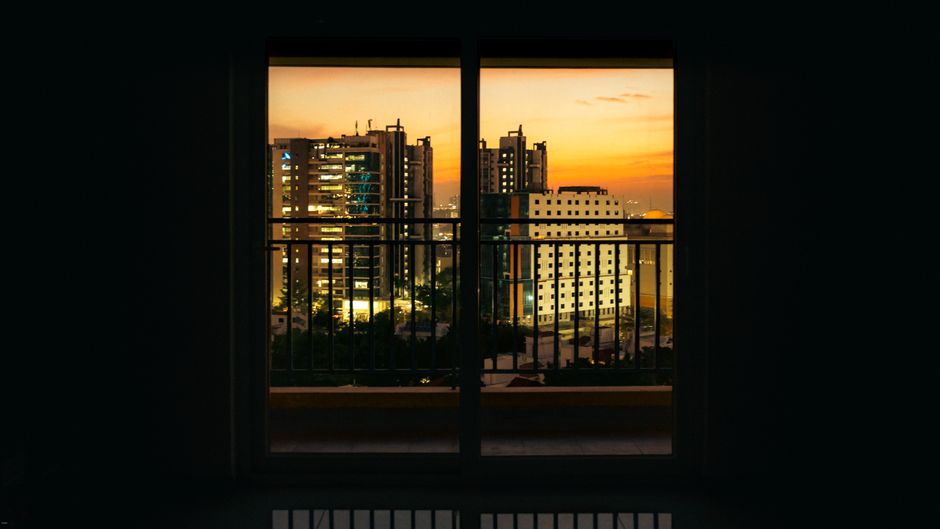
Travel & Culture
Why I Keep Flying Back to Seoul (And Mostly Just Stay in Gangnam)
Four trips in, I've stopped pretending I'm going to branch out. Gangnam is the trip.
I've flown LAX-ICN four times in five years. Every trip I tell myself I'll spend at least one night in Seongsu, maybe a weekend in Busan. And every trip I end up checking back into the same Gangnam hotel, ordering the same naengmyeon at the same place near Sinnonhyeon Station, and walking the same loop between Apgujeong and Garosu-gil at night. I'm not proud of it. But I'm also not stopping. Here's why.
The first trip ruined me for the rest
My first Seoul trip was 2021, right after the borders reopened. I'd grown up in the Sunset District in San Francisco — Korean-American, fluent enough to order food and disappoint my grandmother — and I'd somehow never been. My cousin booked us into a hotel near Gangnam Station. I remember stepping out of the lobby on a Thursday at 11 p.m. and the streets were busier than my entire neighborhood at lunch. There were people getting their nails done at midnight. There was a 24-hour bakery with three different kinds of garlic bread. There was a queue for a cafe that didn't open until the next morning. My cousin laughed at my face. "This is a slow night," she said. I think about that walk a lot. The thing about being raised Korean-American in the Bay Area is — you grow up with one version of Korean. Your parents' version. Frozen in whatever year they left. Then you go to actual Seoul and the country has kept moving. It's wild. It's also a little destabilizing. That first trip I kept catching myself recognizing things I'd never seen before.
Why Gangnam, specifically
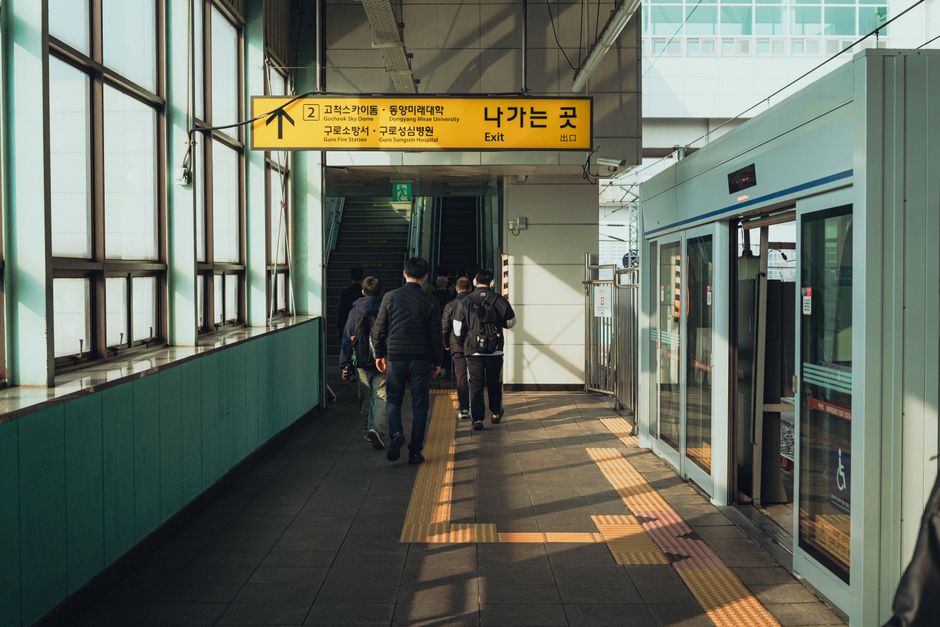
I get asked this a lot — usually by friends planning their first trip who've read that Gangnam is "too commercial" or "the basic neighborhood." Maybe. I won't argue. But here's what Gangnam actually is, in my experience: it's the part of Seoul where everything works. The metro signs are in four languages. The cabs take cards without sighing. Hotels know what a power adapter is. After a 13-hour flight from LAX with a layover in Tokyo, I do not want to figure out which alley my guesthouse is down. I want to drop my bag, take a hot shower, and walk five minutes to dinner. Gangnam delivers that. Every single time. The other thing is — and this took me three trips to admit — I like being able to walk around at 1 a.m. without thinking about it. SF taught me to keep one earbud out and clutch my keys. Gangnam at midnight feels like a Tuesday afternoon. That's not nothing.

The food I keep coming back for
I've tried, on every trip, to be adventurous about food. Trip two I ate at a different place every meal. Trip three I made a list. Trip four — last November — I gave up and just rotated between four restaurants for a week. Naengmyeon, specifically the cold beef-broth kind, at a tiny place near Sinnonhyeon Station that's been there since the 80s. The broth is so cold it makes my teeth hurt. I order it in February. I don't care. There's a Korean BBQ place near Apgujeong Rodeo that does galbi the way my dad's friend used to make it at backyard cookouts in Daly City — that specific marinade, slightly sweet, slightly fruity, with the right ratio of fat. The first time I ate there I almost cried. My cousin said I was being dramatic. I was. I'd also been off the plane for six hours.
Garosu-gil at night is for the cafes. There's a place with cardamom lattes and a window seat where I've watched it rain three different trips. And then street food at the alley markets — tteokbokki that's so spicy I have to drink milk after, hotteok in winter, the little egg-bread things called gyeran-bbang in fall. I'm not going to pretend I've found hidden spots. These are not hidden. They're just — mine, by now.
The hotel question
Here's the truth about Gangnam hotels: most of them are fine. Some are great. Pricing in Seoul has crept up — I'm not going to lie about that. A four-star in Gangnam runs roughly what a three-star in central SF runs. But the rooms are cleaner, the staff actually knows English, and the buffet breakfast usually includes both kimchi and croissants which is honestly all I want from life. I rotate between two hotels. One is closer to Gangnam Station, one is closer to Sinsa. The Sinsa one has better light in the morning and a cafe downstairs that serves a flat white that's almost — almost — as good as the one I get in the Mission. The Gangnam Station one has a gym I actually use. I'm not naming either because I don't want them to get worse. If you want recommendations I'll say this: stay within a 10-minute walk of any of these subway stations — Gangnam, Sinnonhyeon, Sinsa, Apgujeong. Don't book based on photos. Book based on station distance. The photos lie. The station distance does not.

What changes between trips, and what doesn't
The cafes change. The cafes always change. There's a place I loved on trip two that became a different place on trip three and is now a third thing entirely. I've stopped being sad about it. The fashion changes — I went from seeing oversized blazers everywhere to seeing tiny cardigans everywhere in 18 months. The pace of language change is wild too. Slang my cousin taught me on trip one was already dated by trip three. She laughed at me when I used it.
What doesn't change: the way the city smells in late October, like roasted chestnuts and exhaust and fallen ginkgo leaves. The way the older ladies at the bathhouse near my hotel still try to tell me my Korean is "cute." (It is not cute. It is broken. They are being kind.) The way ICN Airport still feels nicer than any U.S. airport I've ever flown through. The way I always, always, get jet-lagged the same way — fine for two days, then collapsing on day three around 4 p.m. I've learned to plan around it now. I keep day three open. I nap. I order delivery. I watch a Korean drama I don't understand. It's part of the trip.
The skincare and beauty thing — yes, it's real
I won't get into specifics here because I save that for other posts, but I'd be lying if I said it wasn't part of why I come back. Korean beauty culture is just — different. The stores stay open late. The staff actually answers questions. Things that are prescription-only or specialty-clinic-only in California are casual conversation at a department store counter in Apgujeong. I'm not saying that's universally a good thing. (I have opinions. I have many opinions.) But if you grew up Korean-American with a mom who flew home with suitcases full of products every two years, walking through the basement of a Sinsa department store is a kind of homecoming. My mom calls me from California while I'm there and asks me to pick things up. I always say yes. I always come home with double what she asked for. For research on specific clinics and what to know before booking, I keep a separate set of notes — see my <a href="/first-time-in-gangnam-american-survival/">first-timer's Gangnam guide</a> if you're planning a trip and want the practical version.
The thing nobody tells you about coming home
Every time I come back to California I have what I call "the slump." It lasts about four days. Everything in SF feels slower, dirtier, more expensive, and more closed than I remember. The grocery store closes at 9 p.m. and I'm furious about it. My usual coffee place feels like it's overcharging. I send my cousin texts that just say "send help." She sends me back a photo of the same naengmyeon place. Then it passes. I settle back in. I remember why I live here — the friends, the work, the apartment I love, the fact that my mom is a 40-minute drive away. Seoul isn't somewhere I'd actually live, I think. It's somewhere I keep going to remember a part of myself I don't get to live with full-time. Four trips in, I've stopped trying to make the trips bigger or more ambitious. The next one is already booked. Same hotel. Same naengmyeon place. I'll see you there.
“Seoul isn't somewhere I'd actually live. It's somewhere I keep going to remember a part of myself I don't get to live with full-time.”
Rachel Bennett
Frequently asked questions
Is Gangnam really the best part of Seoul to stay in for a first trip?
It's the easiest part. Whether it's the best depends on what you want. Gangnam has the best subway access, the most international hotels, the cleanest streets, and the most English signage. If you want walkable cafes, late-night food, and zero stress on logistics, yes. If you want hanok stays, traditional markets, and that more historic Seoul feel, you'd want Bukchon or Insa-dong instead. I do both — Gangnam as a base, day trips north.
How much should I budget per day in Gangnam?
Honestly more than guidebooks from 2019 say. I plan on roughly $150-200 USD per person per day for a mid-range trip — that covers a four-star hotel, three meals out (one of them at a nicer place), public transit, and a cafe stop or two. You can do less if you stay further from the station and skip the upscale BBQ places. You can do way more if you want.
Do I need to speak Korean to get around Gangnam?
No. Most service workers in Gangnam know enough English to handle basic transactions, and signage in the subway is in Korean, English, Chinese, and Japanese. That said — knowing how to read hangul, even just sounding it out, makes everything 30% easier. It's a two-hour skill to learn. Worth it.
When's the best time of year to go?
October. It's not even close. The weather is perfect — like 60-72°F and dry — the ginkgo leaves turn yellow, the chestnut vendors come out, and the humidity that makes August unbearable has finally lifted. April is also great for cherry blossoms but it's more crowded. Avoid mid-June through mid-August unless you love wet heat.
Is it safe for solo female travelers?
I've walked back to my hotel alone past midnight on every trip and never felt nervous. That's anecdotal — I'm one person — but Gangnam in particular has very high foot traffic, well-lit streets, and a low crime rate by international standards. The Korea Tourism Organization has more on solo travel safety in their <a href="https://english.visitkorea.or.kr/svc/main/index.do" rel="dofollow">visitor information</a>.
Can I get by with just credit cards or do I need cash?
Cards work almost everywhere in Gangnam — restaurants, cafes, hotels, taxis, subway machines. The only places I've needed cash are some small market stalls and the occasional traditional restaurant. Pull about $50 USD worth of won at the airport ATM and you'll be fine for a week.